-
Ageing Populations Could Create a Care Crisis—Or Millions of Jobs
›
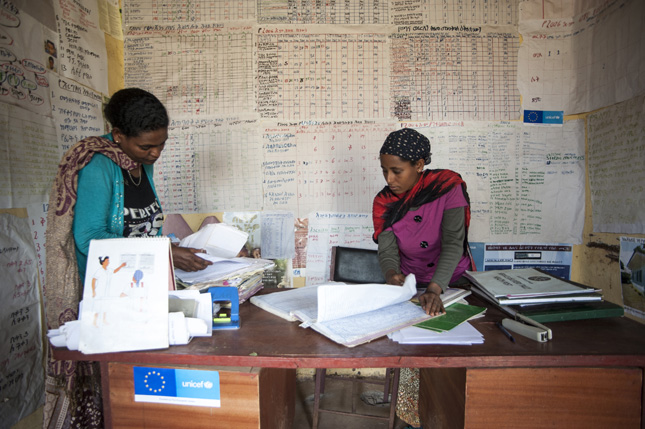
The silver tsunami is approaching: Many countries, not all of them rich, are facing the challenges of an ageing population thanks to growing life expectancies and shrinking birth rates.
-
From Day One: Malawi President Joyce Banda on Girls Ages 0-10
›
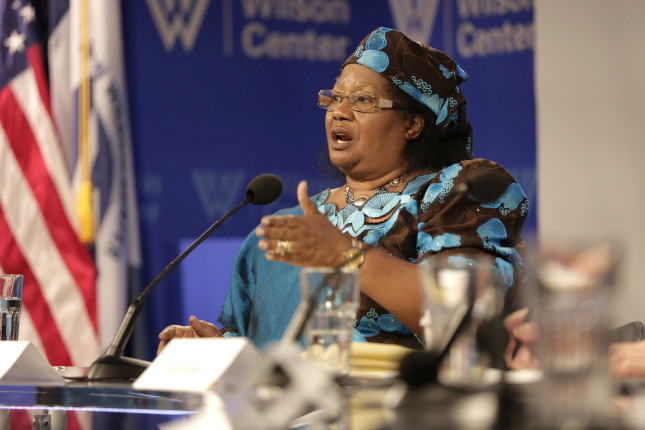
“Over 130 million girls around the world are not in school through no fault of their own,” said Her Excellency Joyce Banda, former president of the Republic of Malawi, at the launch of her new book, From Day One: Why Supporting Girls Aged O to 10 Is Critical to Change Africa’s Path, at the Center for Global Development.
-
Family Planning Can Mean Big Progress for the Sustainable Development Goals—And Here’s How
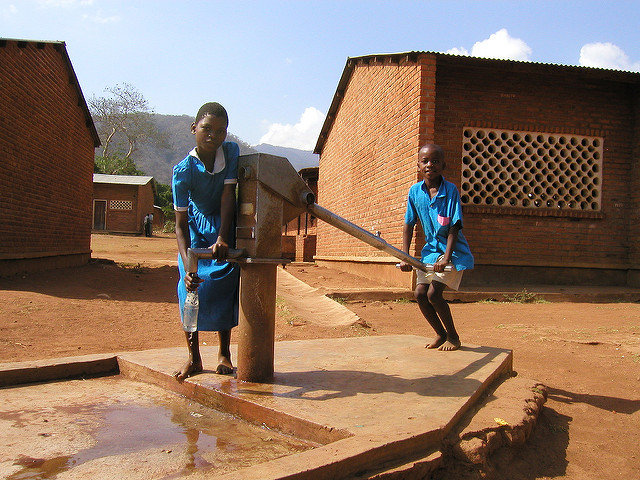
›As the UN High-Level Forum on Sustainable Development continues this week, member states and civil society are taking a hard look at countries’ progress toward securing safe drinking water, sanitation, and adequate housing. Achieving these and the other Sustainable Development Goals (SDGs) requires recognizing the synergies among them—including the role that reproductive health and family planning can play. You may ask, “Why does family planning matter for the SDGs not related to health?” The answer is that it is one of the most cost-effective investments for achieving the SDGs. Increasing access to family planning provides sweeping social, economic, and environmental benefits for every dollar spent.
-
This Indian Women’s Union Invented a Flexible Childcare Model
›In 1971, the wives of textile workers in Ahmedabad, western India, became the main earners in their families overnight, after several large textile mills closed down. They were part of the 94 percent of India’s female labor force working in the informal sector—recycling waste, embroidering fabric, and selling vegetables—and thus they remained largely invisible to the government and to formal labor unions. In response, Ela Bhatt, a young lawyer, met with 100 of the women in a public park to establish the Self-Employed Women’s Association (SEWA), which would later register as a trade union and swell to the two million members it boasts today. -
Doris Chou on Measuring Maternal Health in the SDG Era
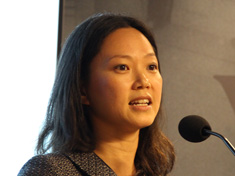
›“How do we present things in a responsible way?” asks Dr. Doris Chou of the World Health Organization (WHO) during a Wilson Center panel discussion on “Maternal and Women’s Health, Two Years In: Measuring Progress Towards Meeting the SDGs.” “My job is to make sure things don’t get misinterpreted,” says Chou. -
Maternal and Women’s Health, Two Years In: Measuring Progress Towards Meeting the SDGs
›“The aspirations of the 2030 Agenda and the SDGs are really high, and the data that will enable that have a long way to go,” said Rachel Snow from the United Nations Population Fund at a Wilson Center event on July 14, 2017.
-
Blair A. Ruble, Urban Sustainability Laboratory
Making Cities Work as Holistic Communities of Promise
›Shortly after the completion of the Empire State Building, the novelist F. Scott Fitzgerald was shattered by a visit to its observation deck. “Full of vaunting pride,” he wrote, “the New Yorker had climbed here, and seen with dismay what he had never suspected. That the city was not the endless succession of canyons that he had supposed, but that it had limits, fading out into the country on all sides into an expanse of green and blue. That alone was limitless. And with the awful realization that New York was a city after all and not a universe, the whole shining edifice that he had reared in his mind came crashing down.”
-
Wilson Center’s Lisa Palmer Launches ‘Hot, Hungry Planet’
›A steadily increasing global population, growing food demand, and changing climate necessitate new kinds of thinking in agriculture but also fields like public health and energy, concludes a new book, Hot, Hungry Planet, by former Wilson Center Public Policy Scholar and current Senior Fellow at the National Socio-Environmental Synthesis Center Lisa Palmer.
Showing posts from category SDGs.
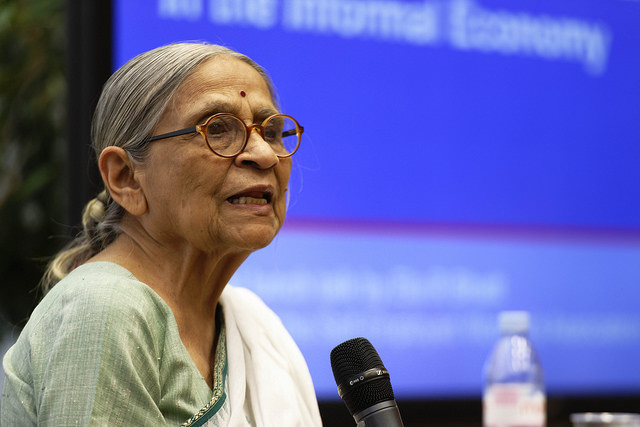 In 1971, the wives of textile workers in Ahmedabad, western India, became the main earners in their families overnight, after several large textile mills closed down. They were part of the 94 percent of India’s female labor force working in the informal sector—recycling waste, embroidering fabric, and selling vegetables—and thus they remained largely invisible to the government and to formal labor unions. In response, Ela Bhatt, a young lawyer, met with 100 of the women in a public park to establish the Self-Employed Women’s Association (SEWA), which would later register as a trade union and swell to the two million members it boasts today.
 “How do we present things in a responsible way?” asks Dr. Doris Chou of the World Health Organization (WHO) during a Wilson Center panel discussion on “