-
Water and Conflict: Updates from the Russia-Ukraine War
›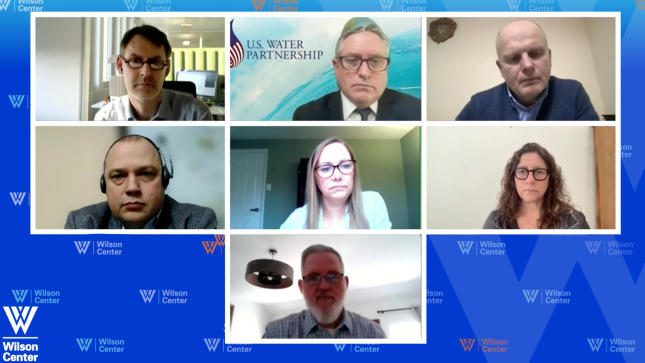
The first anniversary of Russia’s invasion of Ukraine is also a reminder of the long-term challenges faced by that embattled country, including one of the most important resources for human survival: water.
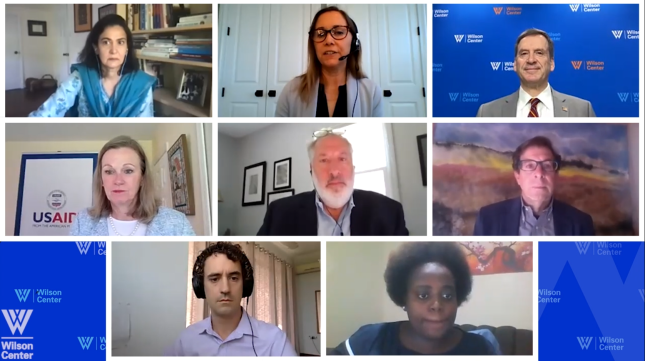
“For Ukrainians, water has been under fire for nearly a decade,” observed Erika Weinthal, Professor of Environmental Policy and Public Policy at Duke University, at a recent Water @ Wilson Series event: “Water and Conflict: Updates from the Russia-Ukraine War,” co-hosted by the U.S. Water Partnership.
-
Achieving SDG 6.2: Adequate and Equitable Sanitation and Hygiene for Who?
›
International development organizations do not exist outside of global systems of oppression. However virtuous their intentions, the power held by development actors remains largely in the hands of the western elite, echoing colonial-era global dynamics.
-
50 Years and Billions Spent: Achieving Universal Access to Water, Sanitation, and Hygiene (WASH) Within Reach
›“Reporting on the progress made, the challenges that remain, and impact of COVID-19 on the WASH sector is crucial,” said Ambassador Mark Green, President, Director, and CEO of the Wilson Center and former USAID Administrator, during his opening remarks at a recent event hosted by the Wilson Center and Circle of Blue to discuss the WASH Within Reach project.
-
Innovation in Financing Brightens WASH Galaxy: Funding for Water, Sanitation and Hygiene Starts to Arrive Faster, With Clearer Requirements
›People devoted to financing water, sanitation and hygiene in developing nations worried for much of 2020. Utility customers stopped paying their water bills. Funders altered their priorities. Heads of state turned their attention to other virus-related emergencies.
But did COVID-19 affect funding enough to slow progress toward universal access to clean water, safe sanitation, and hygiene? And if it did, by how much?
-
Pandemic Brings WASH to Rare Inflection Point: Despite Fears of Collapse, Water, Sanitation, and Hygiene Draw Closer to Epic Goal
›Until 2016, the agrarian residents of east Kenya’s Kitui county had never encountered a water quality monitor like Mary Musenya. Wearing a bright blue company jersey and furnished with sample bottles and plastic trays, the young Kenyan is a water safety officer for FundiFix, a tiny rural water supply service company. She is one of 20 staff who manage 130 pumps, plus pipes and water tanks that serve 82,000 people across a 1,000 square-mile service area in Kitui and Kwale counties.
-
A New Year Brings Enduring Challenges: Financing for Water and Sanitation Utilities During COVID-19
›Eleven months have passed since COVID-19 was declared a global pandemic by the World Health Organization (WHO). As we rang in the new year, the world surpassed two million deaths due to COVID-19. While it is encouraging that 77 countries have distributed 168 million COVID-19 vaccine doses, only a small fraction of these are in low-income countries. Vaccinations may not be widely distributed in most of sub-Saharan Africa until 2022-2023. Furthermore, the new COVID-19 variant recently discovered in South Africa is estimated to be 50 percent more contagious, underscoring the need for a collaborative international response.
-
Unlikely Heroes: We Neglect Water and Sanitation Service Providers at Our Own Peril
›Six months into the World Health Organization (WHO) declaration of COVID-19 as a global pandemic, many countries, including the United States, are still struggling to contain the spread of the virus which, as of this writing, has taken 744,649 lives globally. Before mask-wearing was recommended as the simplest and most effective defense against contagion, epidemiologists and public health experts recommended regular handwashing with soap and practicing social distancing as fundamental to curbing the spread of the COVID-19 virus. Briefly it appeared as if WASH (water, sanitation, and hygiene) services were actually being accorded the importance they deserved. The critical need for water for handwashing, the millions who lack regular supplies of both water and soap, and the difficulties of social distancing in settlements where thousands share a single toilet with no soap were finally headline news.
-
USAID’s New Center for Water Security Signals Progress, But More is Needed
›As the COVID-19 crisis grew this spring, the U.S. Agency for International Development (USAID) revamped its Water Office, renamed it as the Center for Water Security, Sanitation, and Hygiene, and added it to the Bureau for Resilience and Food Security, home to the Feed the Future Initiative.
Placing the Center for Water Security in the Bureau for Resilience and Food Security was a strategic shift. With 70 percent of freshwater use designated for agriculture, this move elevates water as an integral component of resilience and food security. Referencing water security in the Center’s name also highlights the need for water supplies to be managed sustainably and the role that water plays in resilience and peace.
Showing posts from category sanitation.