-
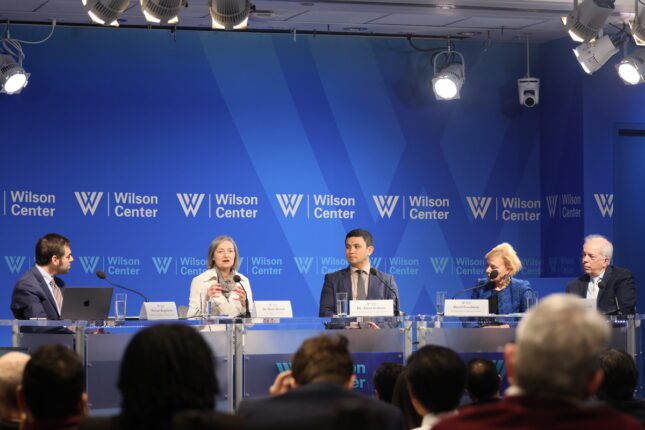
Key Takeaways from the Innovations in Climate Resilience Conference
›
Historically, efforts to mitigate climate change have taken precedence over building resilience to its impacts. But from Pakistan to the Amazon, communities on the front lines are already experiencing the devastating effects of a warming world.
In recent weeks, devastating floods have claimed the lives of over 450 people in East Africa, as heavy rains linked to El Niño and changing climate patterns overwhelmed communities and infrastructure. Similar tragedies unfolding in Brazil, Pakistan, and Afghanistan underscore the human cost of being unequipped to protect against the worst impacts of climate change.
-
Thought-leaders and Frontline Workers in Environmental Peacebuilding: An Oral History | Dr. Dhanasree Jayaram
›Environmental Peacebuilding Oral History // New Security Broadcast // May 10, 2024 // By Claire Doyle
In today’s episode of New Security Broadcast, ECSP’s Claire Doyle speaks with Dr. Dhanasree Jayaram, Program Manager at Climate Diplomacy and Assistant Professor at the Manipal Academy of Higher Education in India. Dr. Jayaram describes what environmental peacebuilding looks like in the context of South Asia, how climate diplomacy connects to environmental peacebuilding, and how the field has evolved. In looking at the future of environmental peacebuilding, she also raises insights and questions that an environmental peacebuilding lens can help us consider as we push forward on climate action.
-
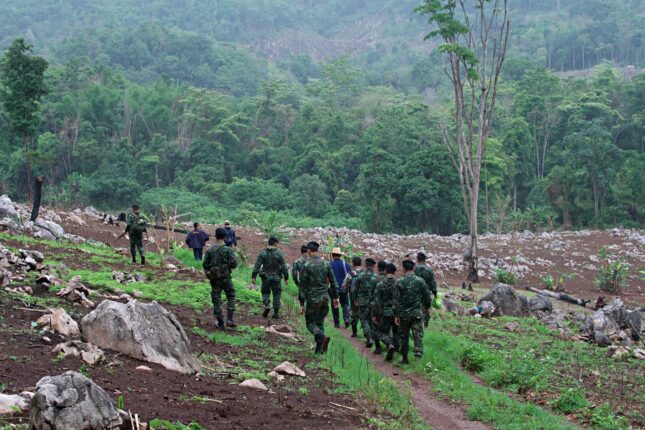
Beyond Complicity, Obstruction and Geopolitics: Military Forces and Climate Security
›The contentious and ambiguous entanglement that military forces have with their natural environment inevitably sparkles public interest and academic research. So how does the existing scholarly work inform our assessment of this convergence?
-
Water @ Wilson | MODSNOW: A New Tool for Water Security in Central and South Asia
›Central and South Asia’s water resources are critical for the region’s water, energy, food and environmental security. Major rivers in the region originate from the Hindu-Kush-Himalaya, Pamir, and Tien Shan Mountain Ranges and flow across multiple countries. Unique geographical characteristics make water management a complex and challenging task that is further complicated by a changing climate and increasing demand affecting diminishing water resources.
-
ECSP Weekly Watch | March 11 – 15
›A window into what we are reading at the Wilson Center’s Environmental Change and Security Program
China is Leading the World on Renewable Energy (Yale 360)
In November, Chinese and U.S. climate envoys pledged to triple global renewable energy by 2030, signaling renewed cooperation between the top two greenhouse gas emitters. However, the two countries are not quite on equal footing when it comes to renewable energy.
-
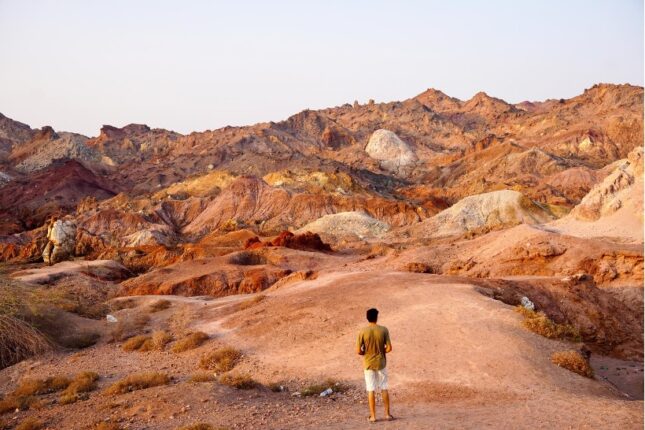
Heat, Oil, and Dust: The State of Iran’s Lakes and Its Climate Future
›Iran’s southeastern province of Khuzestan—which borders Iraq—was already a dry and dangerous place. It was the site of the fiercest battles in the Iraq-Iran war which followed the Iranian Revolution in 1979, and to this day, the region still has many unexploded landmines.
Yet this legacy of violence is not the only issue facing its residents. As climate impacts mount in Khuzestan, the future looks bleak for both the region’s ecosystems and the people already living on this borderline.
-
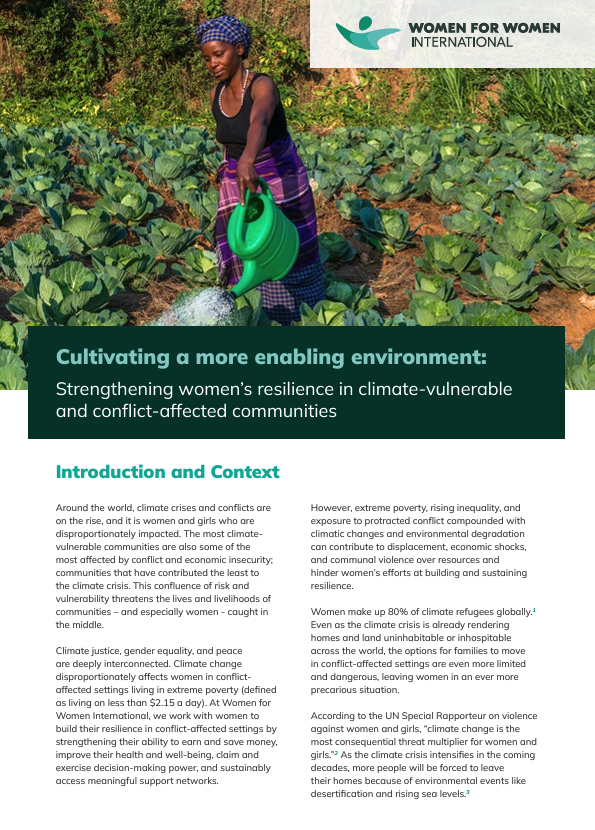
The Arc | Climate, Conflict, and Women’s Resilience: A Recent Women for Women International Report
›
In today’s episode of The Arc, ECSP’s Angus Soderberg and Claire Doyle interview Nisha Singh and Kavin Mirteekhan from Women for Women International. We dive into the organization’s recent report, “Cultivating a more enabling environment: Strengthening women’s resilience in climate-vulnerable and conflict-affected communities,” to hear how women around the world are disproportionately impacted by conflict and climate shocks—and what we can learn from their solutions.
-
ECSP Weekly Watch: March 4 – 8
›A window into what we are reading at the Wilson Center’s Environmental Change and Security Program
Climate Change Disproportionately Impacts Rural Women (U.N. Food and Agriculture Organization)
A recent report by the U.N. Food and Agriculture Organization analyzed data from 24 low- and middle- income countries (LMICs) across five regions and over 100 thousand rural households to measure the impacts of climate change on rural women, youth, and people living in poverty. It found that climate change’s impacts disproportionately impact households headed by women, with income losses due to extreme heat (8% income loss) and flooding (3% income loss), relative to households led by men. The income gap between men and women was also widened as a result.
Showing posts from category risk and resilience.