-
From Octopus Conservation to Disaster Relief: Vik Mohan on PHE in Madagascar
›
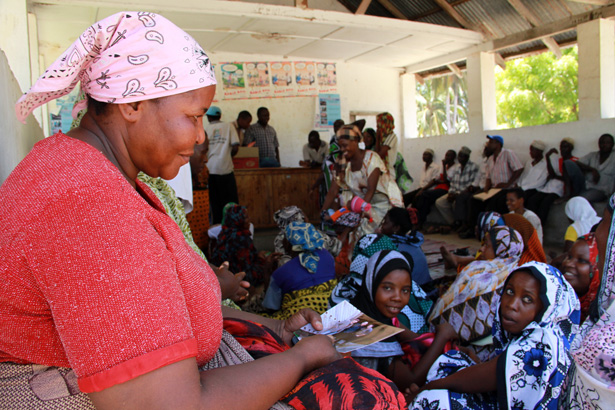
When Tropical Cyclone Haruna struck in February 2013, leaving thousands without shelter and tens of thousands without water, it was a test for Blue Ventures’ integrated approach to development in southwest Madagascar. According to Dr. Vik Mohan, they passed.
“By the time the first aid organization arrived just to collect information, we had distributed to 17 villages already,” Mohan says in this week’s podcast. “We were the mouthpiece of the community, and because of our infrastructure on the ground, because of our good relationships with the community, we were able to procure and disseminate supplies that the community needed.”
-
Five Years of Population, Health, and Environment Programs: What Works and What’s Next?
›
More than 20 percent of the world’s population live in ecological hotspots, places rich in biodiversity but often lacking basic government services. Population, health, and environment – or PHE – programs address compounding stresses in these areas by helping to meet people’s needs for basic health services, including reproductive health care; promoting food security and poverty reduction; and teaching sustainable natural resource management. [Video Below]
-
Geoff Dabelko on Avoiding Conflict From Climate Adaptation
›
Although major global action remains stymied in many respects, policymakers around the world are increasingly at least recognizing the need to increase resilience to the effects of climate change. But are the consequences from hastily implemented initiatives being adequately considered? Perhaps not.
-
Coastal Resource Management, Family Planning Integration Build Resilience in Madagascar and The Gambia
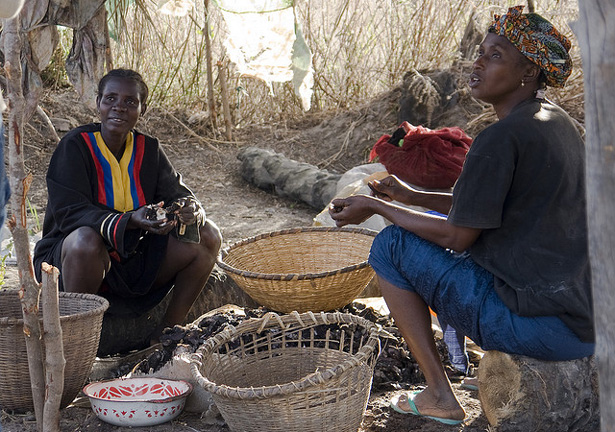
›Growing awareness of the connected challenges of natural resource management, economic growth, and human health has encouraged more integrated models of international development. The experience of two organizations – TRY Oyster Women’s Association, based in The Gambia, and Blue Ventures, based in Madagascar – demonstrates the success of a community-based approach to building resilience, enabling communities to bounce back from adversity and establish a long-term basis for development. [Video Below]
-
Flooding and Food Security in Trinidad and Tobago: Roger-Mark Interviewed for ‘A Sea Change’
›August 21, 2013 // By Schuyler Null“Climate change is one of the greatest challenges that we are facing in today’s world; it is particularly important for us in the Caribbean and for a country like Trinidad and Tobago,” says ECSP Director and Trinidad-native Roger-Mark De Souza in an upcoming documentary by Sustain T&T, a non-profit based in the islands.
-
Vulnerability View: GAIN Index Rates Climate Change Preparedness
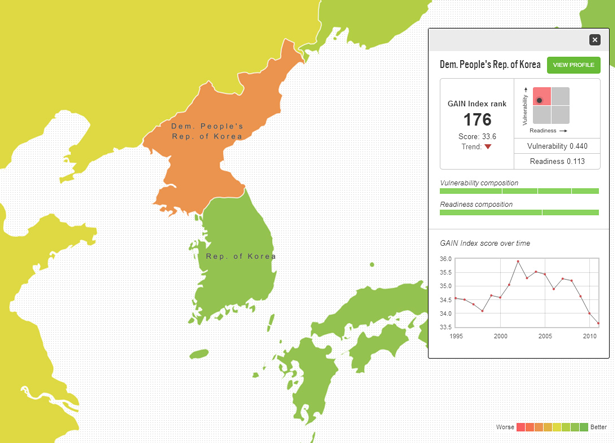
›According to the UN, the planet has warmed faster since the turn of the century than any other period on record. Sea-level rise has also increased pace to 0.12 inches a year – almost double the rate observed during the 20th century. This “unprecedented” rate of climate change is expected to disproportionally impact developing countries, whose socio-economic, political, and physical landscapes make them particularly vulnerable to the effects. The GAIN Index, an interactive mapping tool recently acquired by the University of Notre Dame, can help policymakers prepare for these changes by comparing the climate change vulnerability and readiness of countries around the world.
-
Is Resilience Too Accurate to Be Useful?
›Resilience is a wonderful metaphor. It somehow conveys in a single word the qualities of bending without breaking, of healing after an injury, of tensile rather than brittle strength. Oak and palm trees are resilient to the power of strong winds, before which they bend and then straighten again. Resilient people pick themselves up after being knocked down, draw on their reserves of ideas and strength to deal with difficult challenges, or hunker down until the gale has blown itself away. Resilient economies bounce back, and resilient ecosystems restore themselves after the fire or the flood has passed.
-
Measuring Community Resilience: Implications for Development Aid
›A staggering amount of development dollars – one in three, in fact – are lost due to natural disasters and crises. Certain communities are less affected than others by such disasters; they are more resilient. Knowing where vulnerability and strength exist and how to bolster them could help avoid these losses. Yet, today, very little data exists to help development practitioners understand which adaptive capacities are lagging in a given community.
Showing posts from category risk and resilience.