-
Religion and Climate Diplomacy in Small Island Developing States
›
Island states contribute only .03 percent to global emissions, but “nineteen major Caribbean cities are in the bullseye of the climate threat” and Pacific island states such as Kiribati and Tuvalu face an existential threat from sea level rise, said Selwin Hart, Barbados’ ambassador to the Organization of American States and the United States. At the same time, Small Island Developing States (SIDS) in the Pacific and the Caribbean are leading efforts to combat climate change, said experts at the Wilson Center on July 10.
-
Gaming Your Way to Disaster Risk Insurance
›
Fear fends off disaster, but does fear give us the tools to manage risk? Do we need to spend precious time learning complex risk management techniques? Perhaps not: learning disaster reduction techniques could be as easy as playing a game. “Well-designed games, like risk management measures, involve decisions with consequences. While games can never fully capture the complexity of climate risk management decisions, through gameplay these complexities can be revealed, discussed, and processed,” writes Pablo Suarez, the Climate Centre’s associate director for research and innovation.
-
Saving for a Rainless Day: Microfinancing for Resilience
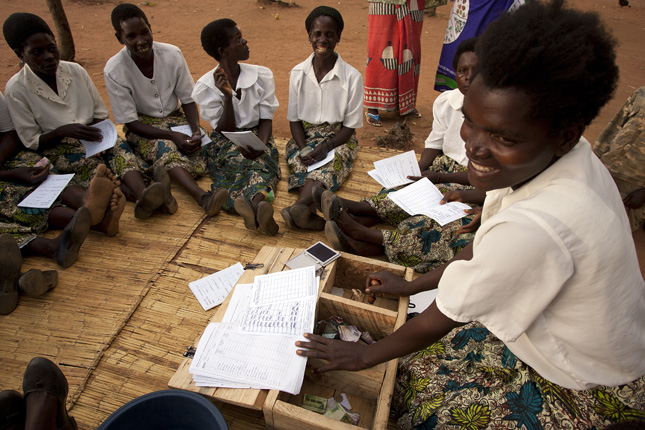
›“The sooner you save, the better off you’ll be in life, wherever you live, at whatever age you start,” said Sophie Romana, director of community finance at Oxfam America: “Saving is the key.” Microsavings groups—informal community-based financial pools–can help vulnerable communities build resilience, said representatives from support organizations CARE International, Oxfam America, and the Grameen Foundation at a Wilson Center event on June 29, 2017.
-
From Basket Case to Test Case: Bangladesh as a “Weak Power” Climate Leader
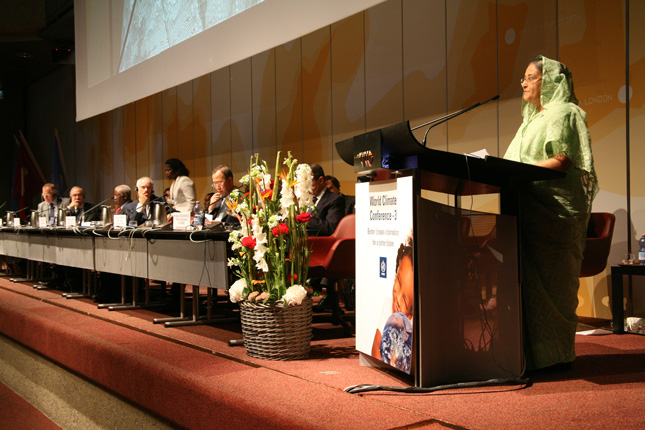
›In 2015, Bangladesh’s Prime Minister Sheikh Hasina received the United Nations Champion of the Earth award for her “outstanding leadership on the frontline of climate change.” One of the world’s most populated countries, Bangladesh is also one of the least developed and most vulnerable to climate change. While Bangladesh is well-known for the natural calamities that regularly leave millions of people homeless and displaced, far fewer know that it is also one of the most proactive countries in the fields of disaster risk reduction (DRR) and climate adaptation, as well as a leading voice among the poorest countries in climate negotiations.
-
Observing Earth: Using Satellite Data for International Development
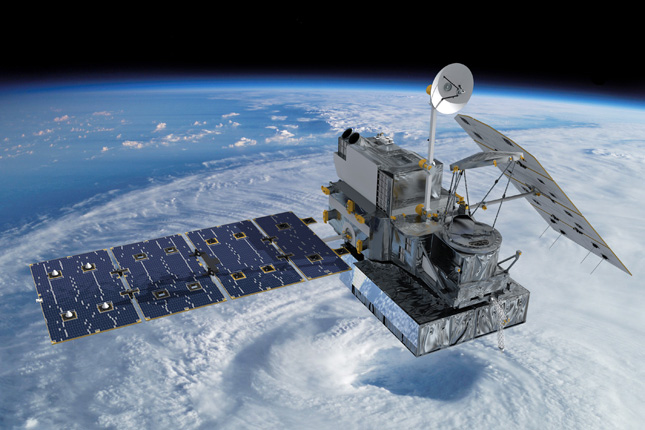
›“Interest in earth observation—and in particular, the value to what we do in development internationally—has never been higher,” said Jenny Frankel-Reed, adaptation team lead at the U.S. Agency for International Development (USAID). Frankel-Reed spoke at the Wilson Center’s recent panel discussion of the earth observation data program known as SERVIR, which included insights from USAID’s soon-to-be-released evaluation of the program.
-
Understanding Loss and Damage from Climate Change
›The idea of an insurance pool to address damage from rising sea levels started in 1991 as mere whispers, but by 2015 it grew to become Article 8 of the Paris Agreement. In Climate Change Loss and Damage, Julia Kreienkamp and Lisa Vanhala explore the history of loss and damage in international negotiations and the prospect of its future. One of the more contentious topics in climate negotiations, loss and damage confronts the culpability of wealthy states for the unavoidable consequences of climate change in more vulnerable, non-Western countries. According to Kreienkamp and Vanhala, “the urgency of the issue for developing countries will rise in inverse proportion to how much action is undertaken to mitigate and adapt to climate change.” -
Patrick D. Nunn, The Conversation
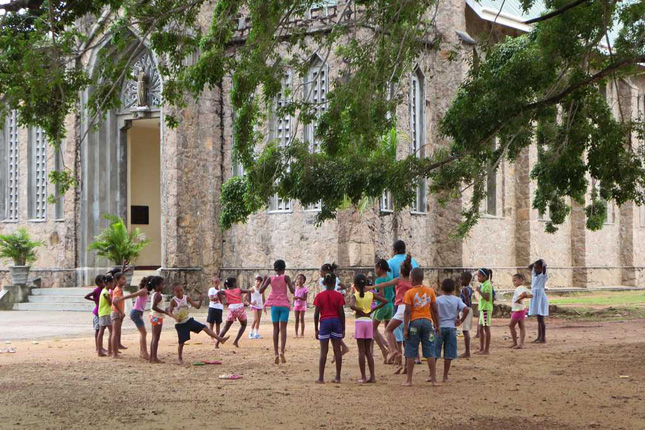
Sidelining God: Why Secular Climate Projects in the Pacific Islands are Failing
›July 7, 2017 // By Wilson Center StaffUnless you are cocooned in a tourist bubble, it is hardly possible to miss God when you visit the Pacific Islands. In every village and on every main street there seems to be a church or temple, packed to bursting point on holy days. It is testament to the considerable influence of spirituality on the way people live in the Pacific.
-
Environmental Sustainability, Does It Make Dollars and Sense?
›While governments will play the central role in delivering the Sustainable Development Goals, they can’t do it without the private sector, said experts at the Wilson Center on April 12.
Showing posts from category risk and resilience.

 The idea of an insurance pool to address damage from rising sea levels started in 1991 as mere whispers, but by 2015 it grew to become Article 8 of the