• woodrow wilson center
  • ecsp

New Security Beat

Subscribe:
  • rss
  • mail-to
  • Who We Are
  • Topics
    • Population
    • Environment
    • Security
    • Health
    • Development
  • Columns
    • China Environment Forum
    • Choke Point
    • Dot-Mom
    • Friday Podcasts
    • Navigating the Poles
    • Reading Radar
  • Multimedia
    • Water Stories (Podcast Series)
    • Backdraft (Podcast Series)
    • Tracking the Energy Titans (Interactive)
  • Films
    • Water, Conflict, and Peacebuilding (Animated Short)
    • Paving the Way (Ethiopia)
    • Broken Landscape (India)
    • Scaling the Mountain (Nepal)
    • Healthy People, Healthy Environment (Tanzania)
  • Publications
  • Events
  • Contact Us

NewSecurityBeat

The blog of the Wilson Center's Environmental Change and Security Program
Showing posts from category research.
  • Building a Case for Integrated Development: A New Research Agenda and Examples From the Field

    ›
    From the Wilson Center  //  September 20, 2016  //  By Sreya Panuganti

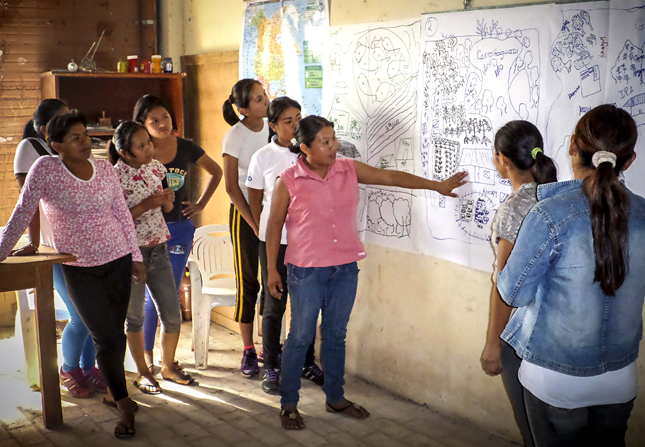
    Zunilda Arce (center) and young women from the Ita Guasu indigenous community in Paraguay, participate in the development of their community development plan. This activity is part of USAID’s efforts to strengthen civil society participation in municipal governance. Through its local partner Federation of Production Cooperatives (FECOPROD), USAID also works with indigenous communities to help them identify and advocate for their needs within a political context. /Luciano González, FECOPROD

    With the Sustainable Development Goals nearing their one-year anniversary, the global community continues to strive toward eradicating poverty by 2030. In order to achieve this ambitious target, many international development practitioners are embracing a more holistic approach to development, combining traditionally single-sector programming, like health or environment work, into more comprehensive efforts. But such integrated development is sometimes easier said than done.

    MORE
  • Protection and Prosperity: A New Environmental Research and Education Agenda for a Changing World

    ›
    March 30, 2016  //  By Roger-Mark De Souza
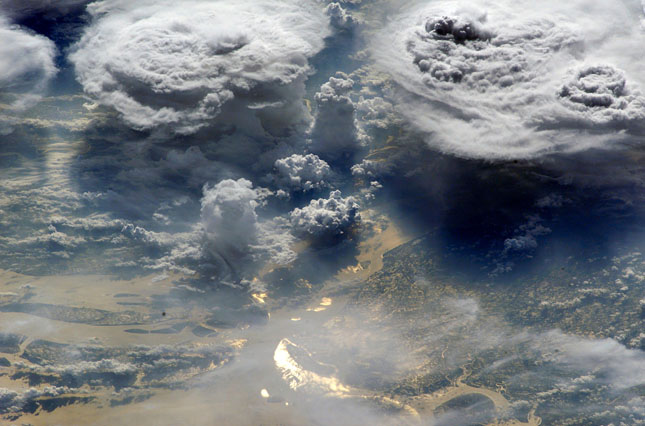
    Bangladesh monsoon

    Some, especially in the scientific community, get frustrated at the seeming lack of scientific literacy among the general public and policymakers. This is a two-part problem, however. The general public must understand the implications of science and data, yes, but it is also important for the scientific community to effectively convey their work and educate the next generation.

    MORE
  • Kenneth Weiss, Worldwatch Institute

    Environmental Researchers and the Touchy Topics of Family Planning and Population

    ›
    January 20, 2016  //  By Wilson Center Staff
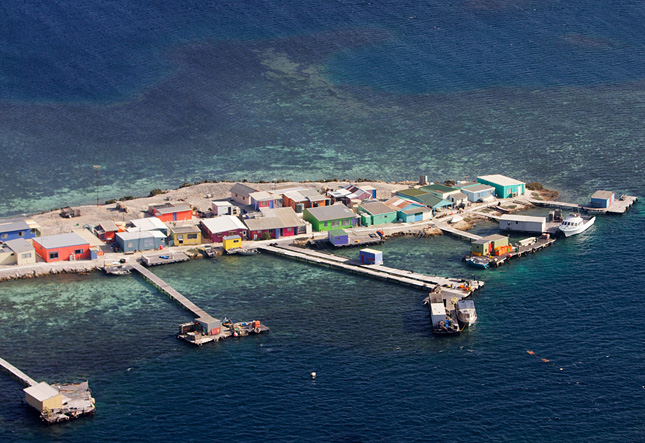
    pearl-farming-Australia

    The original version of this article, by Kenneth Weiss, appeared on the Worldwatch Institute’s Family Planning and Environmental Sustainability Assessment (FPESA) blog.

    As a young and promising marine biologist, Camilo Mora led a team of 55 scientists assessing the rapid decline of fish on the world’s coral reefs. It was a global enterprise with broad implications. Hundreds of millions of people rely on reef fish for their primary source of animal protein. Healthy reefs protect coastal communities from devastating storms and provide a multitude of livelihoods, including jobs in the fast-growing tourism industry.

    MORE
  • Sherri Goodman on the Need for U.S. Leadership on Ocean Research

    ›
    Friday Podcasts  //  March 13, 2015  //  By Schuyler Null
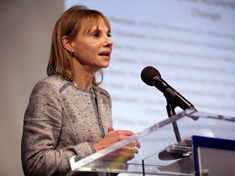
    goodman_small

    “I firmly believe that U.S. global leadership depends on our ocean leadership,” says Sherri Goodman in this week’s podcast.

    MORE
  • Why Do People Move? Research on Environmental Migration Coming of Age

    ›
    From the Wilson Center  //  June 23, 2014  //  By Moses Jackson
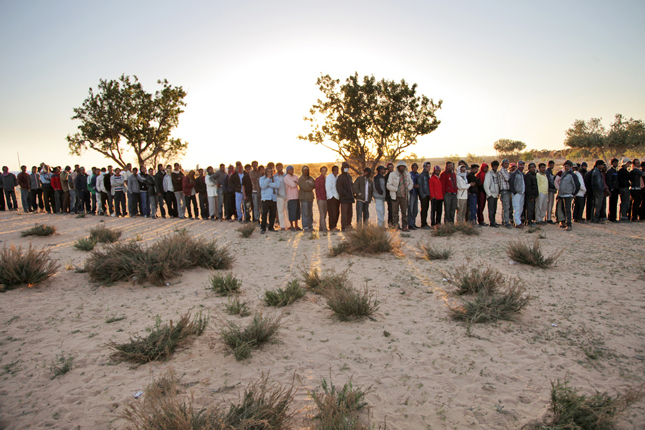
    libyan_refugees

    When she finished her dissertation on migration as a response to climate change in 2003, it was one of only a handful of scholarly papers published on the topic that year, said Susana Adamo, an associate research scientist at Columbia University’s Center for International Earth Science Information Network. But in the decade since, interest in climate migration has exploded – in 2012, more than 10 times as many papers were published. [Video Below]

    MORE
  • State of Population-Climate Change Research

    ›
    Reading Radar  //  May 1, 2014  //  By Paris Achenbach

    pop_env_journalWhat is the future of population and climate change research, and how can this research impact international policy? In a special issue of Population and Environment, environmental and social scientists look at these questions. “One of the most exciting developments in the climate change research community at present is the development of a new generation of climate scenarios,” write Adrian C. Hayes and Susana B. Adamo in the introduction. These can help facilitate more interdisciplinary research.

    MORE
  • Storytelling Is Serious Business: Narratives, Research, and Policy

    ›
    From the Wilson Center  //  October 21, 2013  //  By Laura Henson

    The use of storytelling, through evocative writing, short films, infographics, and maps, to convey global issues is increasingly popular, yet few organizations are able to invest the time and energy needed to develop emotionally compelling and visually expressive content. [Video Below]

    MORE
  • Apply Now for the Compton Foundation/PRB International Fellowship

    Doing Research on Reproductive Health, Environment, and Security?

    ›
    January 19, 2011  //  By Hannah Marqusee

    The Population Reference Bureau and Compton Foundation’s International Fellows Program deadline is rapidly approaching on January 24. The fellowship is for students from sub-Saharan Africa or Latin America seeking to affect policy and/or improve the effectiveness of population, family planning, and reproductive health programs in the developing world. Master’s students may be awarded up to $10,000 and PhD students up to $20,000 to perform capstone/internship work or dissertation research on the intersection between reproductive health, the environment, and security.

    2010 Compton/PRB Fellow Kennedy Maring, a Ugandan student at UNC Chapel Hill, spent a year researching the feasibility of integrating family planning services into HIV/AIDS programs in Masindi, Uganda, in order to address high rates of mother-to-child transmission of HIV. Maring interviewed 182 pregnant women and 11 health providers in Masindi, and found that while more women in the area understood that HIV could be passed from mother to child than the national average, few were using available services such as HIV counseling or family planning. Her research resulted in many recommendations to improve prevention of HIV transmission and use of family planning, including: integrate family planning into HIV prevention; train more health providers; involve men in reproductive health care; encourage hospital delivery; bring services to the people; and provide free breast milk supplements.

    Patrick Kipalu, an American University student from the Democratic Republic of Congo (DRC), traveled deep into his country’s forests to interview indigenous people about their perspective on and awareness of climate change, deforestation, and mitigation programs such as the UN Reducing Emissions from Deforestation and Forest Degradation program (REDD). Kipalu’s research showed that weak forestry governance, widespread ignorance of forestry laws, corruption, and lack of indigenous community participation, among other challenges, will make successful implementation of REDD difficult. If the current style of forestry management in the DRC continues, REDD will only provide incentives for more corruption and deforestation, he found. In this highly centralized government process, the government, logging companies, and other powerful stakeholders will reap all the benefits without any revenue going back to benefit indigenous forest communities.

    How to Apply

    2011 fellowship applications are being accepted until January 24, 2011. To apply, send a completed application form, curriculum vitae, cover letter, transcript, abstract of proposed research, budget, and two letters of recommendation to Dr. Ashley Frost at afrost@prb.org. Master’s students must also provide a letter from the organization where their capstone/internship will take place, and Ph.D. students must provide proof of an approved research proposal.

    For full instructions, visit the fellowship site on PRB.

    Photo Credit: Adapted from “photoshot,” courtesy of flickr user hippolyte.

    MORE
Newer Posts   Older Posts
View full site

Join the Conversation

  • RSS
  • subscribe
  • facebook
  • G+
  • twitter
  • iTunes
  • podomatic
  • youtube
Tweets by NewSecurityBeat

Trending Stories

  • unfccclogo1
  • Pop at COP: Population and Family Planning at the UN Climate Negotiations

Featured Media

Backdraft Podcast

play Backdraft
Podcasts

More »

What You're Saying

  • Volunteers,At,The,Lagos,Food,Bank,Initiative,Outreach,To,Ikotun, Pan-African Response to COVID-19: New Forms of Environmental Peacebuilding Emerge
    Rashida Salifu: Great piece 👍🏾 Africa as a continent has suffered this unfortunate pandemic.But it has also...
  • A desert road near Kuqa An Unholy Trinity: Xinjiang’s Unhealthy Relationship With Coal, Water, and the Quest for Development
    Ismail: It is more historically accurate to refer to Xinjiang as East Turkistan.
  • shutterstock_1779654803 Leverage COVID-19 Data Collection Networks for Environmental Peacebuilding
    Carsten Pran: Thanks for reading! It will be interesting to see how society adapts to droves of new information in...

What We’re Reading

  • Rising rates of food instability in Latin America threaten women and Venezuelan migrants
  • Treetop sensors help Indonesia eavesdrop on forests to cut logging
  • 'Seat at the table': Women's land rights seen as key to climate fight
  • A Surprise in Africa: Air Pollution Falls as Economies Rise
  • Himalayan glacier disaster highlights climate change risks
More »
  • woodrow
  • ecsp
  • RSS Feed
  • YouTube
  • Twitter
  • Facebook
  • Home
  • Who We Are
  • Publications
  • Events
  • Wilson Center
  • Contact Us
  • Print Friendly Page

© Copyright 2007-2021. Environmental Change and Security Program.

Woodrow Wilson International Center for Scholars. All rights reserved.

Developed by Vico Rock Media

Environmental Change and Security Program

Woodrow Wilson International Center for Scholars

Ronald Reagan Building and International Trade Center

  • One Woodrow Wilson Plaza
  • 1300 Pennsylvania Ave., NW
  • Washington, DC 20004-3027

T 202-691-4000