• woodrow wilson center
  • ecsp

New Security Beat

Subscribe:
  • rss
  • mail-to
  • Who We Are
  • Topics
    • Population
    • Environment
    • Security
    • Health
    • Development
  • Columns
    • China Environment Forum
    • Choke Point
    • Dot-Mom
    • Friday Podcasts
    • Navigating the Poles
    • Reading Radar
  • Multimedia
    • Water Stories (Podcast Series)
    • Backdraft (Podcast Series)
    • Tracking the Energy Titans (Interactive)
  • Films
    • Water, Conflict, and Peacebuilding (Animated Short)
    • Paving the Way (Ethiopia)
    • Broken Landscape (India)
    • Scaling the Mountain (Nepal)
    • Healthy People, Healthy Environment (Tanzania)
  • Publications
  • Events
  • Contact Us

NewSecurityBeat

The blog of the Wilson Center's Environmental Change and Security Program
Showing posts from category sexual and reproductive health.

  • Chitra Nagarajan on What’s Changed for Women in Lake Chad Region

    ›
    Africa in Transition  //  Friday Podcasts  //  March 27, 2020  //  By Wania Yad

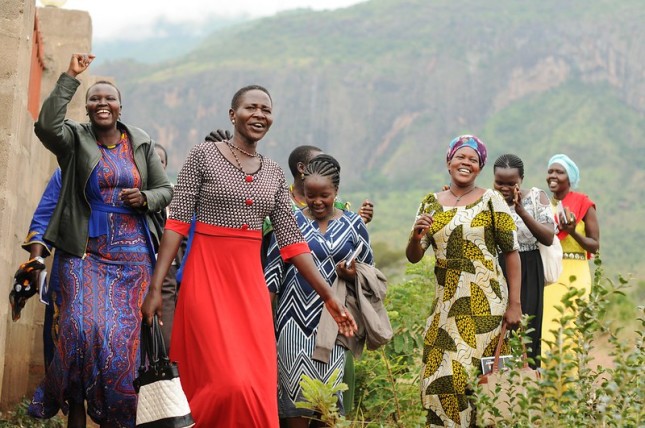
    32897153005_4a8706bb01_k“Women and men face very different risks and challenges,” said Chitra Nagarajan, a writer and journalist who covers climate change, conflict, and gender. She spoke in this week’s podcast about what’s changed in the Lake Chad region. In the last few years the combination of profound climate change and high levels of insecurity have made life harder for the local population. To get a sense of how recent changes have affected Lake Chad’s residents, Nagarajan interviewed more than 250 people. These are some of her findings.

    MORE
  • Midwives Needed to Achieve Universal Health Coverage by 2030

    ›
    Dot-Mom  //  From the Wilson Center  //  March 25, 2020  //  By Deekshita Ramanarayanan

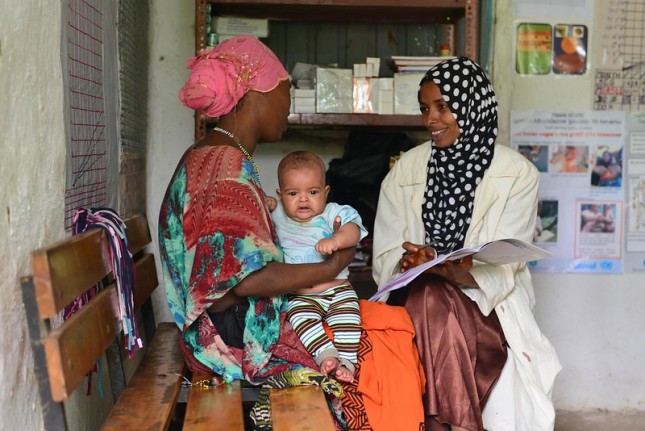
    midwifeWe are in the decade of action, said Anneka Knutsson, Chief of the Sexual and Reproductive Health Branch at the United Nations Population Fund (UNFPA), at a recent Wilson Center event on midwives’ crucial role in achieving universal health coverage by 2030. The World Health Organization (WHO) has designated 2020 as the Year of the Nurse and the Midwife to celebrate the accomplishments and importance of nurses and midwives in providing not just maternal health care, but care across the lifespan. Currently, 22 million nurses and 2 million midwives globally deliver 80 percent of all healthcare services in low-resource settings. However, the world will need 9 million more nurses and midwives by 2030 to meet rising healthcare demands.

    MORE
  • Sexuality Education Begins to Take Root in Africa

    ›
    Africa in Transition  //  Guest Contributor  //  March 24, 2020  //  By Robert Engelman
    engelman photo

    In Kenya, primary and secondary school students take courses called Life Skills Education. So do students in Malawi, Mozambique, Namibia, and Swaziland. South Sudan adds “peace-building” to the subject title. Lesotho, Madagascar, Rwanda, Tanzania, Uganda, and Zambia are more direct. These countries add the word “sexuality” to the course name.

    MORE
  • Cardiovascular Disease Can be a Silent Killer During and After Pregnancy

    ›
    CODE BLUE  //  Dot-Mom  //  Guest Contributor  //  March 18, 2020  //  By Lisa M. Hollier

    shutterstock_388548328

    Stacy Ann Walker could have died.

    During what she thought was going to be a normal exam, Stacy learned that she would need to have a C-section. While recovering in the hospital, she began to have breathing problems and after some testing was told that her heart had been scarred by an earlier bout of rheumatic fever. Shortly after, she also learned that she had heart failure, an enlarged heart, and problems with multiple heart valves.

    She was 29.

    MORE
  • Multiple Stressors Shape Mothers’ Mental Health in Nairobi, Kenya

    ›
    CODE BLUE  //  Dot-Mom  //  Guest Contributor  //  March 11, 2020  //  By Sangeetha Madhavan

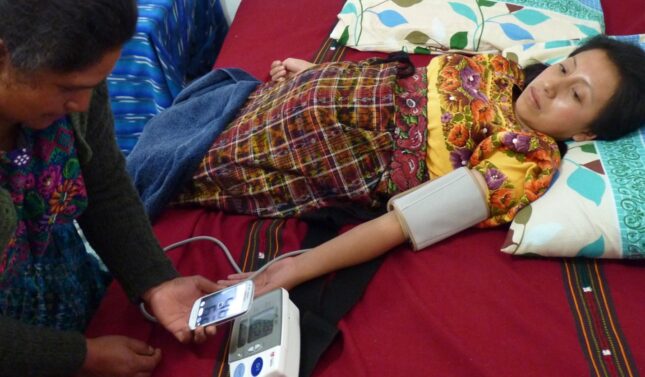
    14319713178_3da612f64c_oThe mental health of mothers cannot be studied in isolation, as just a psychological snapshot in time. Their complex lives both past and present must be taken into consideration. When I was researching marriage, motherhood, and social support in Korogocho, an informal settlement in Nairobi, stories I heard underscored how a range of life experiences conspire to affect a woman’s mental health. I heard life histories like this:

    When Ann was 17, she met Fredrick, got pregnant and moved in with him when she was 18. Two years later, Fredrick got arrested and was gone for two years. When he came back, she got pregnant with child No. 2 within a month but then left the relationship seven months later because of ongoing conflict. When she was about 23 with a 2-month-old and 5-year-old, Frederick shot her. Two months later, he himself was killed. Four months later, she met the man who would become her second husband. After living together for three years, he took her back to his home to meet his family. She then had her third baby.

    MORE
  • To End Fistula by 2030, First Strengthen the Healthcare Workforce

    ›
    Dot-Mom  //  Guest Contributor  //  March 4, 2020  //  By Vandana Tripathi

    surgeons nigeriaWhen childbirth takes place without skilled birth attendants or adequate emergency obstetric care, a woman may suffer from obstetric fistula. Women with fistula live with uncontrollable urinary and/or fecal incontinence, because a hole has formed between the birth canal and bladder or rectum. They have usually survived prolonged/obstructed labor, often lost their child to stillbirth, and frequently face severe social isolation and stigma. There are also now more and more women suffering from iatrogenic fistula caused by injuries during pelvic surgery, especially obstetric or gynecological surgery. Between 1 million and 2 million women currently need fistula repair, with thousands of new cases each year. However, most fistulas can be treated, enabling women to resume healthy, productive lives in their communities. Recognizing this, the United Nations has issued a call to end fistula by 2030.

    MORE
  • Emulating Botswana’s Approach to Reproductive Health Services Could Speed Development in the Sahel

    ›
    Guest Contributor  //  January 27, 2020  //  By Richard Cincotta
    106907616_a4bd57663b_c

    The Western Sahel region—a cluster of arid, low-income countries stretching from Senegal, on Africa’s Atlantic coast, inland to Mauritania, Burkina Faso, Mali, Niger, and Chad—is home to the world’s most youthful populations. According to current UN Population Division estimates, about 57 percent of this six-country region’s population is 19 years old or younger. As security conditions deteriorate across the rural Sahel, governments in Europe and North Africa are taking notice of these countries’ demographic status—and for good reasons. Sustained population youthfulness (often called a “youth bulge”) contributes to low levels of educational attainment, joblessness and social immobility, and ultimately to rapid population growth, which tends to drive declines in per-capita availability of freshwater and other critical natural resources: factors that are associated with the risk of persistent violent conflict and represent powerful push factors for migration.

    MORE
  • ICPD25: Midwives are a Key Part of any Health Workforce Dream Team

    ›
    Dot-Mom  //  December 19, 2019  //  By Sarah Barnes

    15099418374_497bab529e_c-e1576765283513 382“Midwifery is a fix, it is not an add-on,” said Franka Cadée, President of the International Confederation of Midwives (ICM) at the Nairobi Summit on ICPD25. The World Health Organization designated 2020 the Year of the Nurse and the Midwife in recognition of the invaluable contributions of these two professions.  To meet the Sustainable Development Goals by 2030, midwives and nurses must be valued and utilized as essential members of the health workforce.  Increased utilization of skilled midwives will also help countries achieve universal health coverage and improve access to sexual and reproductive health services, two key actions from the 1994 International Conference on Population and Development (ICPD).

    MORE
Newer Posts   Older Posts
View full site

Join the Conversation

  • RSS
  • subscribe
  • facebook
  • G+
  • twitter
  • iTunes
  • podomatic
  • youtube
Tweets by NewSecurityBeat

Trending Stories

  • unfccclogo1
  • Pop at COP: Population and Family Planning at the UN Climate Negotiations

Featured Media

Backdraft Podcast

play Backdraft
Podcasts

More »

What You're Saying

  • Volunteers,At,The,Lagos,Food,Bank,Initiative,Outreach,To,Ikotun, Pan-African Response to COVID-19: New Forms of Environmental Peacebuilding Emerge
    Rashida Salifu: Great piece 👍🏾 Africa as a continent has suffered this unfortunate pandemic.But it has also...
  • A desert road near Kuqa An Unholy Trinity: Xinjiang’s Unhealthy Relationship With Coal, Water, and the Quest for Development
    Ismail: It is more historically accurate to refer to Xinjiang as East Turkistan.
  • shutterstock_1779654803 Leverage COVID-19 Data Collection Networks for Environmental Peacebuilding
    Carsten Pran: Thanks for reading! It will be interesting to see how society adapts to droves of new information in...

What We’re Reading

  • Rising rates of food instability in Latin America threaten women and Venezuelan migrants
  • Treetop sensors help Indonesia eavesdrop on forests to cut logging
  • 'Seat at the table': Women's land rights seen as key to climate fight
  • A Surprise in Africa: Air Pollution Falls as Economies Rise
  • Himalayan glacier disaster highlights climate change risks
More »
  • woodrow
  • ecsp
  • RSS Feed
  • YouTube
  • Twitter
  • Facebook
  • Home
  • Who We Are
  • Publications
  • Events
  • Wilson Center
  • Contact Us
  • Print Friendly Page

© Copyright 2007-2021. Environmental Change and Security Program.

Woodrow Wilson International Center for Scholars. All rights reserved.

Developed by Vico Rock Media

Environmental Change and Security Program

Woodrow Wilson International Center for Scholars

Ronald Reagan Building and International Trade Center

  • One Woodrow Wilson Plaza
  • 1300 Pennsylvania Ave., NW
  • Washington, DC 20004-3027

T 202-691-4000