Showing posts from category protected areas.
-
Environmental Disaster or Impetus for Cooperation?
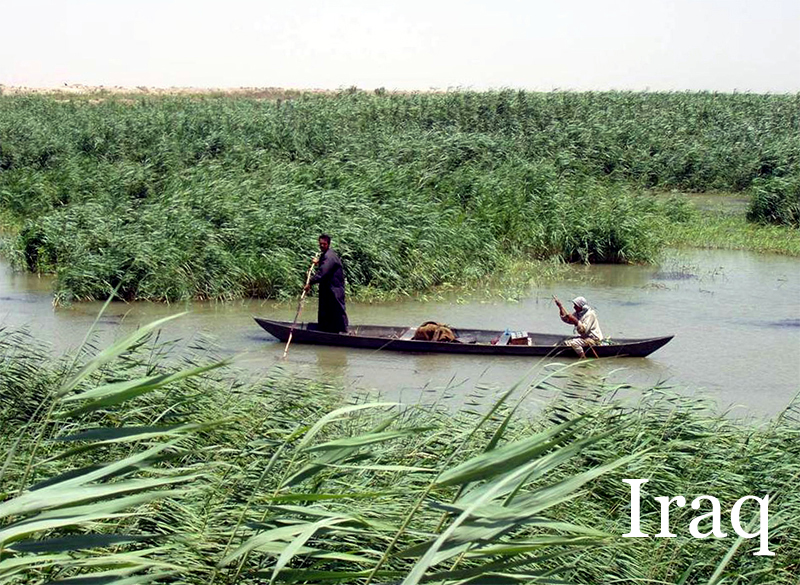
Iraq: Steve Lonergan on the Southern Marshes
›September 21, 2010 // By Schuyler Null
Iraq’s Southern Marshes, once the Middle East’s largest and most ecologically diverse wetlands, have survived the Iran-Iraq war, systematic drainage by Saddam Hussein, American invasion, and record-breaking drought. Today, however, the prospects for survival are dimming, as water consumption across the region continues to increase and security remains unsettled. Despite these challenges, the marshes’ location along the Iranian border and their reliance on flow from Turkey upstream offers unique potential for environmental peacemaking in this troubled region.
-
Environmental Security Along the U.S.-Mexico Border
›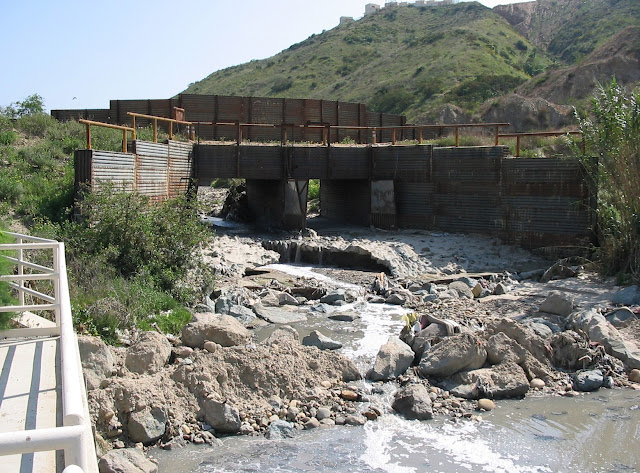
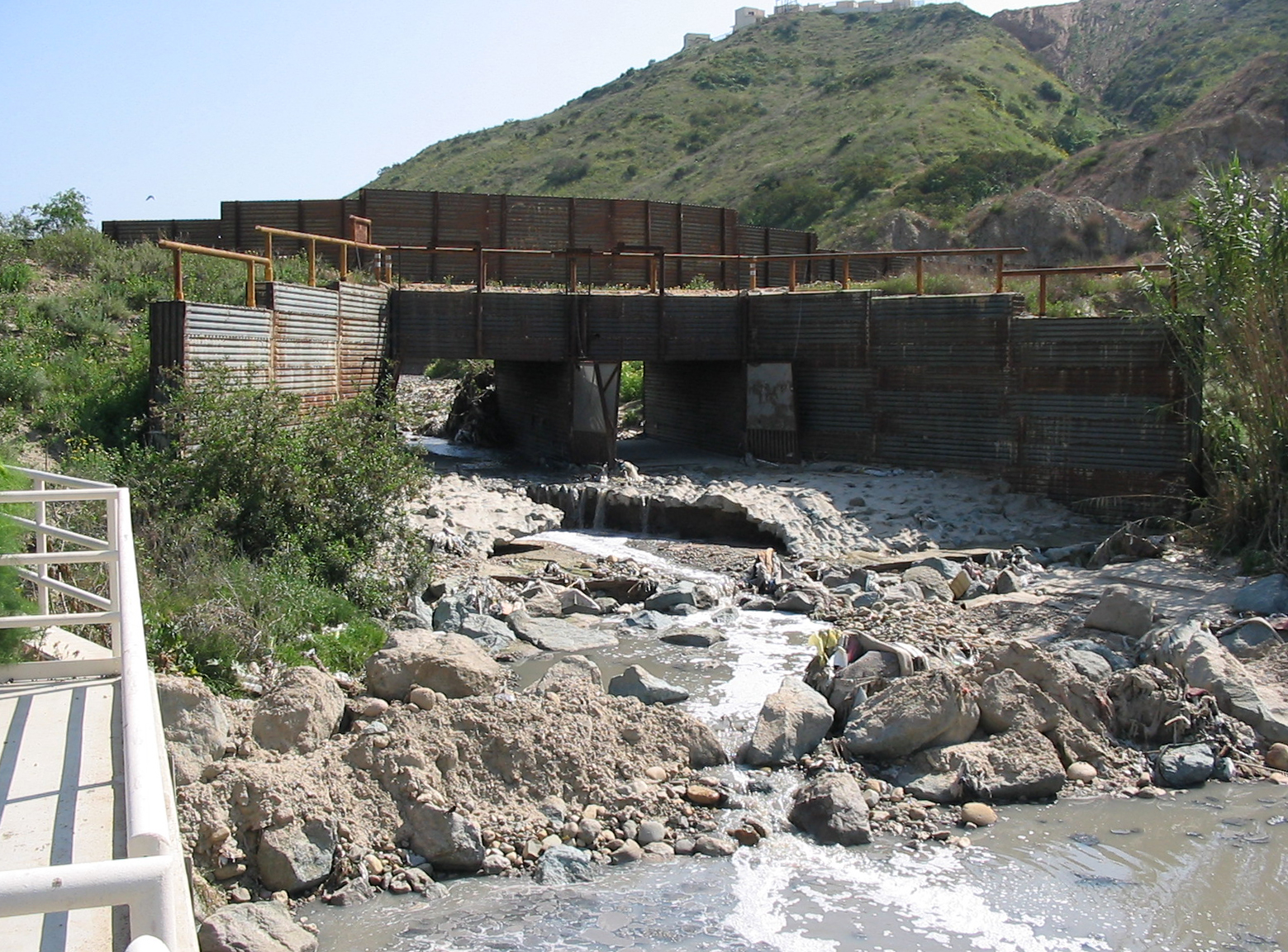
In 2005, the U.S. Department of Homeland Security (DHS) began the construction of a massive earthen, concrete, and metal security barrier along much of the U.S.-Mexico border, from the Pacific Ocean to the Gulf of Mexico.
Framing it as an issue of national security, DHS used provisions in the Real ID Act to waive environmental laws and citizen review for the controversial infrastructure project.
Unfortunately in Imperial Beach, California – my corner of the U.S.-Mexico border – the poorly engineered barrier has caused serious environmental mishaps and damage. In 2009 the Voice of San Diego reported that DHS circumvented numerous local and state laws in the course the barrier’s construction:Were it anyone else’s project, state regulators would’ve required irrigation to ensure that plants grew. But the federal government is responsible for the $59 million effort to complete and reinforce 3.5 miles of border fence separating San Diego and Tijuana. The Department of Homeland Security exempted itself from eight federal laws and any related state laws that would have regulated the project’s environmental impacts.
The Voice goes on to report that state water regulators also have no jurisdiction over the project since it has been exempted from the federal Clean Water Act.
“They did better engineering in 8th century China,” said Joe Sharkey of The New York Times, whom I took on a tour of the border, about the massive amphitheater of dirt that DHS dumped in Smuggler’s Gulch a few miles from the Pacific.
Ironically, while DHS has focused its efforts on the massive earthen and concrete wall, the agency has virtually ignored the tidal wave of polluted sewage water and garbage that flows across this section of the U.S.-Mexico border, a problem that makes the very people charged with safeguarding our security – border patrol agents and even Navy Seals – often unable to carry out their mission.
Over the past 20 years, border patrol agents have become ill from contact with the region’s polluted rivers, as well as the Pacific Ocean. In the Calexico-Mexicali region, border patrol agents worked directly with the Calexico New River Committee to clean up the New River – a drainage canal turned toxic hot spot.
Navy Seals based in Coronado, California, about 10 miles north of the U.S.-Mexico border, train in an area of the ocean that is directly impacted by polluted water flowing across the border from Mexico, bypassing the vaunted concrete and metal border barrier.
The organization I run, WiLDCOAST, is now working with U.S. agencies such as the International Boundary and Water Commission and the Environmental Protection Agency along with agencies in Mexico (e.g., CONANGUA and the state of Baja California) to reduce the threats to our military personnel and federal employees as well as border residents from cross-boundary pollution.
This cooperation has required a significant investment on the part of both the Mexican and U.S. governments in developing real solutions to our environmental security crisis on the border. Unfortunately the massive Berlin Wall-style barrier on our southern border is of little assistance in this effort.
Solving complex transboundary issues sometimes requires ignoring the cacophony of politics from distant capitals and instead working on the ground with colleagues from both nations who are experts in their shared geography. It appears the Obama administration is now slowly trying to repair some of the damage done to local communities, the cross-boundary relationship with Mexico, and our fragile shared environment.
But much more work and investment is needed to safeguard those we entrust to protect our security along the borderlands, as well as the residents of the region, from pollution that ignores international divisions and concrete walls. We must remember not only the national security component of our border-strengthening efforts but also the effect on human and environmental security as well.
Serge Dedina is the executive director of WiLDCOAST. He grew up and still lives on the U.S.-Mexico border in Imperial Beach, California. He is the author of Saving the Gray Whale and the forthcoming Wild Sea: Eco-Wars and Surf Stories From the Coast of the Californias.
Sources: Defenders of Wildlife, Environmental Protection Agency, University of Arizona, Voice of San Diego, WiLDCOAST.
Photo Credit: Serge Dedina. -
Saleem Ali at TEDxUVM on Environmental Peacemaking
›“The use of the term ‘peace’ is in many circles still considered taboo, because immediately people think you are talking about something that is utopian,” said University of Vermont Professor Saleem Ali at a recent TEDx event on sustainability. “But I’m here to tell you that peace is pragmatic. Peace is possible.”
Ali points out the value of peace to every sector of society and, using an example from Ecuador and Peru, argues for the utility of the environment as a peacemaker. Other longstanding conflict areas like Cyprus, Iraq, Israel, and Korea are also ripe for environmental peacebuilding efforts, he says.
Professor Ali has written for The New Security Beat before on the strengths and weaknesses of viewing conservation and sustainability efforts through a strictly security lens. He points out that environmentalists must tread a fine line when assigning causality between the environment and conflict, but even when natural resources or climate are not central to a conflict, environmental peacebuilding can still play a role in creating shared ground (sometimes literally) between combatants.
“Treasures of the Earth,” Ali’s latest book, examines the thorny subject of how best to balance resource extraction in developing countries with long-term sustainability. Recent examples, such as Angola and Liberia’s blood diamonds, the DRC’s conflict minerals, and concerns over Afghanistan’s potential reserves have shown the difficulty in striking that balance.
“Ultimately, conflict trumps everything else” in terms of what we ought to be concerned with, Ali argues, and therefore, anyone, no matter their profession or capacity, should keep the pursuit of peace in mind – and all options on the table – when making decisions that affect others. -
Philippines’ Bohol Province: Elin Torell Reports on Integrating Population, Health, and Environment
›For 10 years, I have been working on marine conservation in Tanzania with the University of Rhode Island’s Coastal Resources Center. As part of that effort, I’ve helped forge links between HIV/AIDS prevention in vulnerable fishing communities and marine conservation. However, family planning and reproductive health (FP/RH) were relatively new to me. But a recent study tour of an integrated Population, Health, and Environment (PHE) program in the Philippines helped me understand that combining family planning services and marine conservation can help reduce overfishing and improve food security.
Together with developing country representatives from seven African and Asian countries, I spent two weeks in February visiting three PHE learning sites and a marine protected area in Bohol province in the central Philippines, as part of a South-to-South study tour sponsored by the USAID-funded BALANCED Project, for which I work. The tour focused on the activities of the 10-year-old Integrated Population and Coastal Resource Management Initiative (IPOPCORM) project, which is run by PATH Foundation Philippines, Inc. (PFPI).
IPOPCORM has garnered a wealth of lessons learned and best practices to share with PHE newbies like me. Its integrated programs train people to be community-based distributers (CBDs) of contraceptives and PHE peer educators, as well as work with local and regional government officials to build support for family planning as a means to improve food security.
I was most impressed with the ways in which PFPI identifies and cultivates dynamic and motivated local leaders–men, women, and especially youth–to reach out to the members of their community who are highly dependent on marine resources for their survival. My Tanzanian colleagues and I would like to foster the volunteer spirit and “can do” attitudes we experienced through our work in East Africa. (Similar PHE peer educators are successfully working in Ethiopia’s Bale Mountains, as reported by Cassie Gardener in a previous edition of the “Beat on the Ground.”
My favorite part of the tour was a trip to the Verde Island Passage to see PFPI’s efforts in this fragile hotspot. The insights my Tanzanian colleagues and I gained from talking to the field practitioners in the Verde Islands helped us refine our ideas for translating some of the PHE techniques used in the Philippines to the Tanzanian cultural context, including an action plan for strengthening our existing PHE efforts with CBDs and peer educators.
Thanks to the study tour, I now have a better understanding of how to address population pressures in the context of conservation. Overall, my Tanzanian colleagues and I were inspired by the successes we saw firsthand and hope to emulate them to some degree in our own projects.
Elin Torell is a research associate at the Coastal Resources Center at the University of Rhode Island. She is the manager of CRC’s Tanzania Program and coordinates monitoring, evaluation, and learning within the BALANCED project. -
Population, Health, and Environment
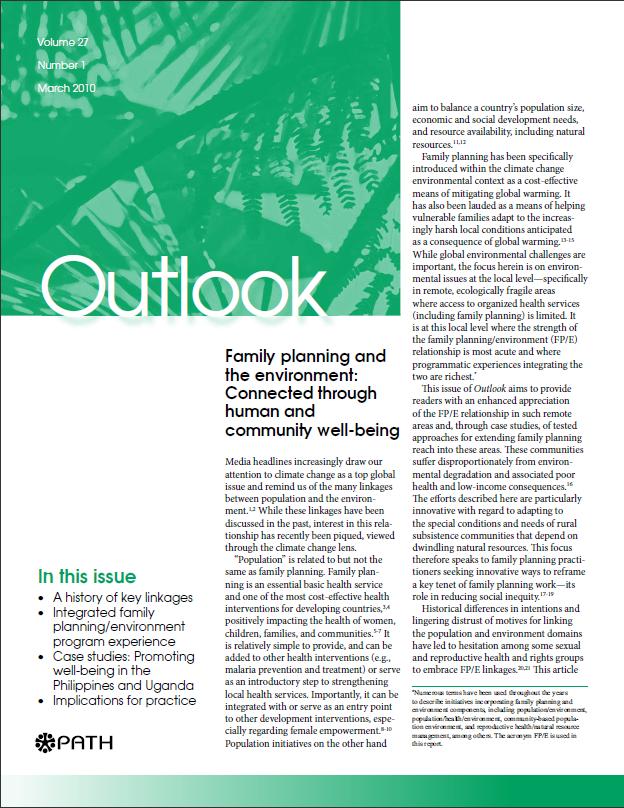
›The WWF and Equilibrium Research released a report on the interplay between the environment and human health. Vital Sites: The Contribution of Protected Areas to Human Health documents the environmental-human health connection, provides case studies from both the developed and developing worlds, and offers recommendations to enhance the health outcomes that can be gained from environmental good governance. “[P]rotected areas are not a luxury but are key sites to protect not only biodiversity, but also ecosystem services and our wider well-being,” the World Bank’s Kathy MacKinnon writes in the foreword.“Family Planning and the Environment: Connected Through Human and Community Well-Being,” part of PATH‘s Outlook series, details the importance of family planning-environmental projects to communities living in remote and ecologically vulnerable areas. Designed for practitioners, the article aims to promote cross-discipline dialogue and offers case studies from the Philippines and Uganda. The article concludes that “more collaborative family planning and environmental efforts aimed at reducing inequities would better ensure sustainable community development as well as the right of individuals to achieve what they value.”