-
Addressing Urban Environmental Health and Maternal Mortality in Developing Countries
› Although climate change is a global phenomenon, developing countries – especially urban centers – are the most vulnerable to the negative health impacts of climate change. In “Urban Governance of Climate Change and Health,” a working paper for the Norwegian Institute for Urban and Regional Research, author Siri Bjerkreim Hellevik reviews the existing literature on governments’ responses to climate change and health in developing urban centers. Overall, Hellevik concludes that there is a substantial need for more research specifically linking the two. She offers several recommendations for urban policymakers to consider, including developing an integrated and multi-level approach, and recognizing that human health and urban development are issues of global justice.
 -
Maternal Health in India: Making Progress in a Key Arena
›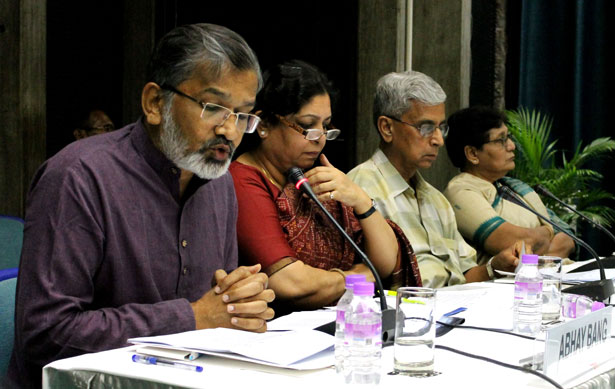
Maternal mortality causes 56,000 deaths every year in India, accounting for 20 percent of maternal deaths around the world, said John Townsend, vice president and director of the Population Council’s reproductive health program. It is a key battleground for maternal health advocates. But maternal health is sometimes eclipsed by other major health and development issues on the sub-continent. For example, nearly five times as many people suffer from HIV/AIDS and more than 400 million people live on less than $1.25 a day. [Video Below]
-
Wilson Center Premieres ‘Healthy People, Healthy Environment’ and ‘Transcending Boundaries’ at Environmental Film Festival
›Environmental security and international development aren’t typical movie-going fare, but at the 2013 DC Environmental Film Festival, ECSP premiered two short documentaries with unique environmental stories: Healthy People, Healthy Environment: Integrated Development in Tanzania shows how improving health services and environmental conservation can empower coastal communities in Africa; and Transcending Boundaries: Perspectives from the Central Albertine Rift Transfrontier Protected Area Network explores the opportunities for “peace parks” along the shared borders of Uganda, Rwanda, and the Democratic Republic of Congo.
-
Once-in-a-Species Opportunity: For a World Free of Poverty, Seize the Demographic Dividend in Africa
›April 11, 2013 // By Laurie MazurA world “free from the stain of poverty” is within our grasp, declared World Bank President Jim Yong Kim in a speech at Georgetown University last week. Kim then announced a plan to virtually eradicate extreme poverty by 2030.
-
Jay Gribble, Behind the Numbers
Four Steps to Thailand’s Demographic Dividend
›April 4, 2013 // By Wilson Center StaffThailand often is held up as a model of success for its efforts in family planning, but it’s amazing how quickly the country has transformed from rural and very poor to the modern economic powerhouse it is today in a matter of a few decades. Yet Dr. Kosit Panpiemras, former minister of finance and industry of Thailand, laid out the story of Thailand’s success in four succinct points. It wasn’t easy for Thailand to accomplish its goals, but the policies and investments the country made were strategic and targeted.
-
After Cyclone Haruna, Blue Ventures Leverages Its PHE Program for Disaster Response in Madagascar
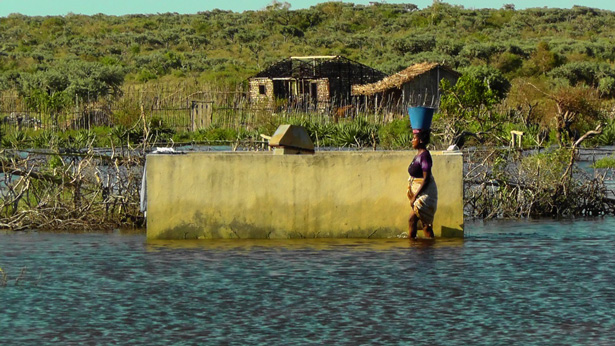
›Balbine is moving through her coastal village of Andavadoaka with a sense of urgency. Normally she works as a community-based distributor for Blue Ventures’ integrated population, health, and environment (PHE) program in southwest Madagascar, providing health information and products to her community. However, since Cyclone Haruna swept through the region several weeks ago, Balbine has been especially busy distributing diarrhea treatment kits to mothers caring for sick infants, providing families sleeping out in the open with mosquito nets to protect against malaria, setting up water filtering stations, and emphasizing the importance good hygiene practices.
-
Demographic and Environmental Dynamics Shape ‘Global Trends 2030’ Scenarios
›“However rapid change has been over the past couple decades, the rate of change will accelerate in the future,” states the newest quadrennial report from the National Intelligence Council (NIC), Global Trends 2030: Alternative Worlds. Released late last year, the report identifies the “game-changers, megatrends, and black swans” that may determine the trajectory of world affairs over the next 15 years, including demographic dynamics and natural resource scarcity. [Video Below]
-
Jason Beaubien, Shots
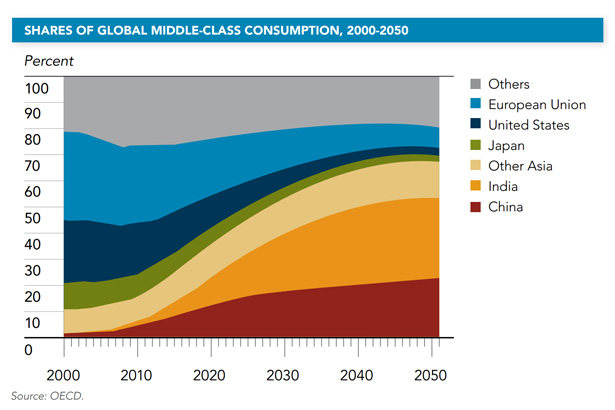
Power Shift Under Way As Middle Class Expands In Developing World
›March 19, 2013 // By Wilson Center StaffThe original version of this article, by Jason Beaubien, appeared on NPR’s health blog, Shots.
“The meek shall inherit the earth” – that seems to be the latest message from the United Nations Development Program.
Showing posts from category poverty.