• woodrow wilson center
  • ecsp

New Security Beat

Subscribe:
  • rss
  • mail-to
  • Who We Are
  • Topics
    • Population
    • Environment
    • Security
    • Health
    • Development
  • Columns
    • China Environment Forum
    • Choke Point
    • Dot-Mom
    • Friday Podcasts
    • Navigating the Poles
    • Reading Radar
  • Multimedia
    • Water Stories (Podcast Series)
    • Backdraft (Podcast Series)
    • Tracking the Energy Titans (Interactive)
  • Films
    • Water, Conflict, and Peacebuilding (Animated Short)
    • Paving the Way (Ethiopia)
    • Broken Landscape (India)
    • Scaling the Mountain (Nepal)
    • Healthy People, Healthy Environment (Tanzania)
  • Publications
  • Events
  • Contact Us

NewSecurityBeat

The blog of the Wilson Center's Environmental Change and Security Program
Showing posts from category poverty.
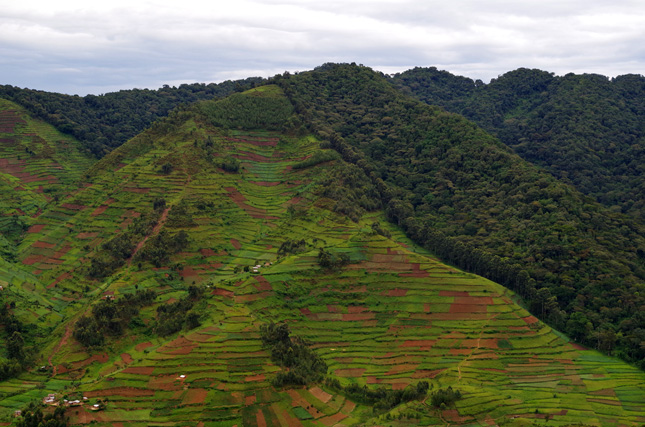
  • Melinda Harm Benson and Robin K. Craig, Ensia

    The End of Sustainability?

    ›
    July 30, 2014  //  By Wilson Center Staff
    end-of-sustainability

    The original version of this article, by Melinda Harm Benson and Robin K. Craig, appeared on Ensia.

    The time has come for us to collectively reexamine – and ultimately move past – the concept of sustainability. The continued invocation of sustainability in policy discussions ignores the emerging realities of the Anthropocene, which is creating a world characterized by extreme complexity, radical uncertainty, and unprecedented change. From a policy perspective, we must face the impossibility of even defining – let alone pursuing – a goal of “sustainability” in such a world. It’s not that sustainability is a bad idea. The question is whether the concept of sustainability is still useful as an environmental governance framework.

    MORE
  • Don’t Forget About Governance: The Risk of Tunnel Vision in Chasing Resilience for Asia’s Cities

    ›
    Guest Contributor  //  July 28, 2014  //  By Jim Jarvie & Richard Friend
    jakarta_slum

    Asia is going through an unprecedented wave of urbanization. Secondary and tertiary cities are seeing the most rapid changes in land-use and ownership, social structures, and values as peri-urban and agricultural land become part of metropolitan cityscapes. All the while, climate change is making many of these fast-growing cities more vulnerable to disasters.

    MORE
  • Babatunde Osotimehin: “The Youth Agenda Has Never Been More Important”

    ›
    Friday Podcasts  //  July 25, 2014  //  By Moses Jackson
    Osotimehin_small

    More than 1.8 billion people – nearly a third of the global population – are between the ages of 10 and 24, comprising the largest-ever generation of young people. According to Babatunde Osotimehin, executive director of the United Nations Population Fund (UNFPA), “how we meet the needs and aspirations of these young people will define the world’s future.”

    MORE
  • India’s Faltering Energy Production, Damaged Water Resources Demand Modi’s Close Attention

    ›
    Choke Point  //  July 24, 2014  //  By Keith Schneider
    AParker_India_Coal_MG_8267

    India’s new prime minister swept into office in May on a message of aspiration and a reputation for action.

    During the nearly 13 years that Narendra Modi served as chief minister of Gujarat before becoming prime minister, his successes included drastically curtailing the number of hours that manufacturers in India’s premier industrial state went without electricity. The state’s transmission grid was strengthened and he promoted the development of 900 megawatts of solar generating capacity (equivalent to a large nuclear plant).

    MORE
  • Antenatal Care as an Instrument of Change: Innovative Models for Low-Resource Settings

    ›
    Dot-Mom  //  From the Wilson Center  //  July 21, 2014  //  By Katrina Braxton & Schuyler Null
    jacaranda_health

    A roadside billboard in Malawi reads: “No woman should die while giving life.” But in many countries, death or grave injury during childbirth is an all too frequent occurrence. [Video Below]

    MORE
  • Quality vs. Quantity: Faith Muigai on Providing Antenatal Care in Nairobi

    ›
    Dot-Mom  //  Friday Podcasts  //  July 18, 2014  //  By Sarah Meyerhoff
    faith_small

    In the quest to improve maternal health care for the world’s poorest women, getting more mothers into clinics for regular check-ups during pregnancy is often trumpeted as a critical starting point. But delivering antenatal care to women in low-resource settings is as much about quality as it is about quantity, says Faith Muigai in this week’s podcast.

    MORE
  • Investing in the Leaders of Tomorrow: World Population Day 2014 Youth Infographic

    ›
    Eye On  //  July 11, 2014  //  By Schuyler Null
    Leaders-of-Tomorrow_INFOGRAPHIC-final

    World Population Day began in 1987 after public imagination was sparked by the idea that there could be 5 billion people on Earth. Today, we’re well past 7 billion and according to the latest UN projections, headed north of 9 billion by mid-century.

    MORE
  • Youth and Global Violence: Saving History’s Largest Generation of Young People

    ›
    July 9, 2014  //  By Moses Jackson
    Syria_youth_violence

    As the largest-ever generation of young people enters adulthood, armed conflict is having a profound effect on their future. People under the age of 24 comprise nearly half the world’s population but are the primary participants in conflict today. Conflict is more prevalent in younger societies, and half of all forcibly displaced people are children.

    MORE
Newer Posts   Older Posts
View full site

Join the Conversation

  • RSS
  • subscribe
  • facebook
  • G+
  • twitter
  • iTunes
  • podomatic
  • youtube
Tweets by NewSecurityBeat

Trending Stories

  • unfccclogo1
  • Pop at COP: Population and Family Planning at the UN Climate Negotiations

Featured Media

Backdraft Podcast

play Backdraft
Podcasts

More »

What You're Saying

  • Volunteers,At,The,Lagos,Food,Bank,Initiative,Outreach,To,Ikotun, Pan-African Response to COVID-19: New Forms of Environmental Peacebuilding Emerge
    Rashida Salifu: Great piece 👍🏾 Africa as a continent has suffered this unfortunate pandemic.But it has also...
  • A desert road near Kuqa An Unholy Trinity: Xinjiang’s Unhealthy Relationship With Coal, Water, and the Quest for Development
    Ismail: It is more historically accurate to refer to Xinjiang as East Turkistan.
  • shutterstock_1779654803 Leverage COVID-19 Data Collection Networks for Environmental Peacebuilding
    Carsten Pran: Thanks for reading! It will be interesting to see how society adapts to droves of new information in...

What We’re Reading

  • Rising rates of food instability in Latin America threaten women and Venezuelan migrants
  • Treetop sensors help Indonesia eavesdrop on forests to cut logging
  • 'Seat at the table': Women's land rights seen as key to climate fight
  • A Surprise in Africa: Air Pollution Falls as Economies Rise
  • Himalayan glacier disaster highlights climate change risks
More »
  • woodrow
  • ecsp
  • RSS Feed
  • YouTube
  • Twitter
  • Facebook
  • Home
  • Who We Are
  • Publications
  • Events
  • Wilson Center
  • Contact Us
  • Print Friendly Page

© Copyright 2007-2021. Environmental Change and Security Program.

Woodrow Wilson International Center for Scholars. All rights reserved.

Developed by Vico Rock Media

Environmental Change and Security Program

Woodrow Wilson International Center for Scholars

Ronald Reagan Building and International Trade Center

  • One Woodrow Wilson Plaza
  • 1300 Pennsylvania Ave., NW
  • Washington, DC 20004-3027

T 202-691-4000