

-
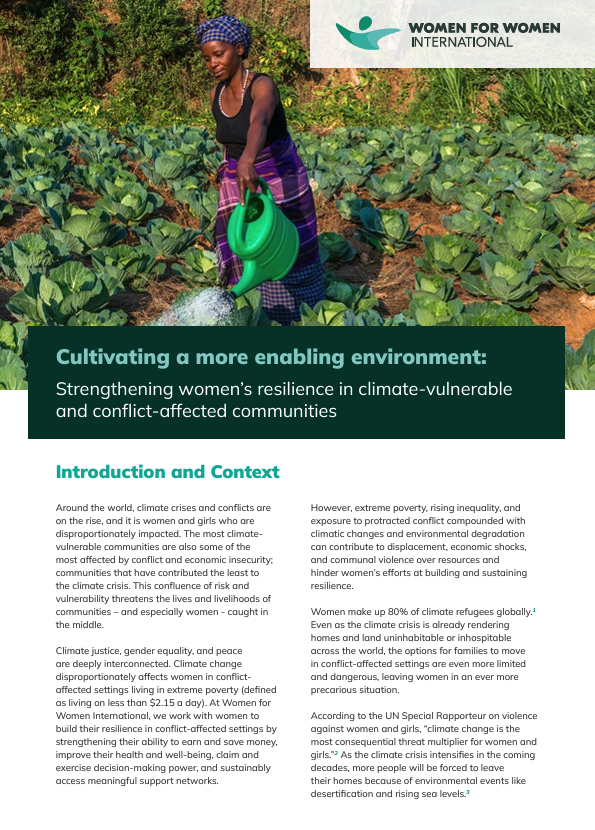
The Arc | Climate, Conflict, and Women’s Resilience: A Recent Women for Women International Report
›
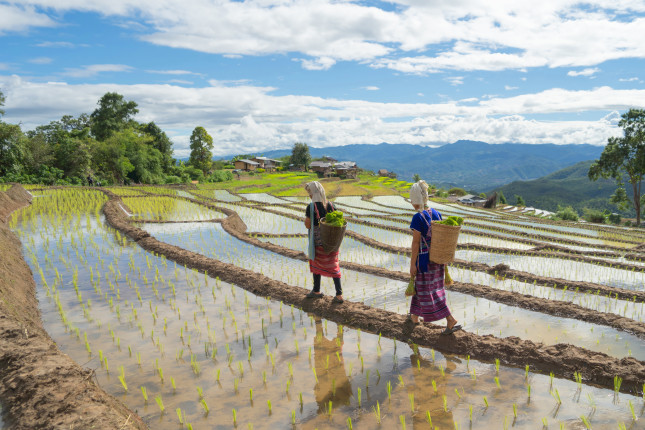
In today’s episode of The Arc, ECSP’s Angus Soderberg and Claire Doyle interview Nisha Singh and Kavin Mirteekhan from Women for Women International. We dive into the organization’s recent report, “Cultivating a more enabling environment: Strengthening women’s resilience in climate-vulnerable and conflict-affected communities,” to hear how women around the world are disproportionately impacted by conflict and climate shocks—and what we can learn from their solutions.
-
REPORT LAUNCH | Population Trends and the Future of US Competitiveness
›From the Wilson Center // February 5, 2024 // By Jennifer Dabbs Sciubba, Lauren Herzer Risi & Sarah B. Barnes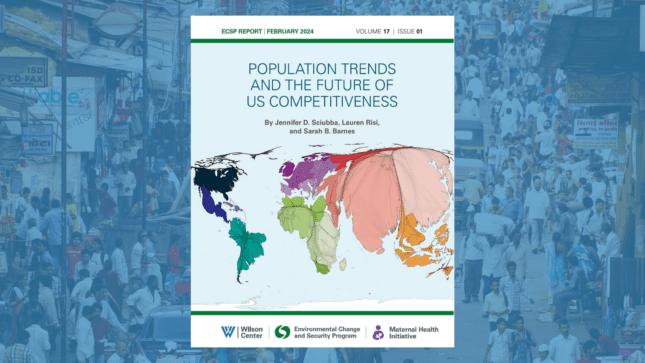
This article is adapted from “Population Trends and the Future of US Competitiveness”
Demographic issues intersect with a number of policy priorities on the congressional agenda, including the economy, immigration, health care and foreign policy, but how population trends influence policy outcomes is often overlooked or misunderstood. In a new report, we explore how population dynamics have changed dramatically over the last few decades, and what these changes mean for the economic and security interests of the United States.
-
Age Structure: The Root of sub-Saharan Africa’s Governance Problems?
›The research presented in this article was subsequently published in a peer-reviewed article: https://www.degruyter.com/document/doi/10.1515/spp-2023-0029/html
Sub-Saharan Africa’s sluggish economic growth and brittle political structures are clear challenges for the region. And two major development theories—one strictly political, the other demographic—seem to steer parallel courses in explaining them.
-
Gaza, Yemen, Syria, Human Rights, and Oil: The Elephants in the COP28 Room
›The annual multilateral Conference of the Parties (COP) has become one of the most important meetings on the global agenda. So the fact that the United Arab Emirates (UAE) will host COP28 starting this week in Dubai—on the coattails of another Arab country, Egypt, hosting COP27 in 2022—is a big deal. Bringing such important international meetings to the Global South is a step forward in decentering and reorienting global climate action.
-
The Next Feminist Wave: Heat
›The summer of 2023 featured some of the hottest days ever recorded. Feminists should be alarmed.
Climate change may not seem like a feminist issue on its face. A warming planet poses a cross-cutting and common threat. But the perception that climate impacts result in uniform harm produces partial solutions that neglect the world’s most vulnerable populations. This alone makes environmental justice a gender justice issue as well.
-
ECSP Weekly Watch | October 23 – 27
›A window into what we are reading at the Wilson Center’s Environmental Change and Security Program
DRC Mining Project Displaces a Local Community
Kolwezi is the “cobalt capital of the world.” But residents of this city in the Democratic Republic of Congo are being compelled to relocate under questionable circumstances in order to make room for a new mine sponsored by the Chinese mining company COMMUS.
-
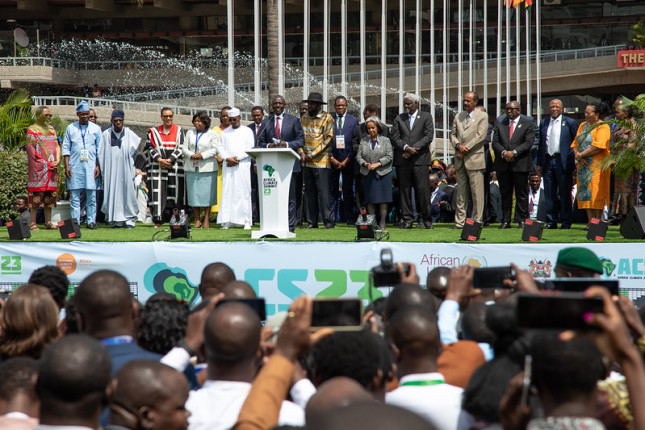
Africa’s First Climate Summit: From Victim to Leader?
›The UN Environment Programme has described Africa as the most vulnerable region in the world to climate change. Despite only being responsible for 3% of global emissions, the continent has been battered by extreme weather events, including droughts, cyclones, wildfires, and sandstorms. One in three people across Africa faces water scarcity. The continent’s agricultural sector, which represents a significant share of African countries’ GDP and employment, is highly exposed to climate change.
-
“You Will Find Your People Here” with Dr. Caroline Wanjiku Kihato and Clare Loveday
›On today’s episode of New Security Broadcast, ECSP Director Lauren Risi and Distinguished Fellow Dr. Blair Ruble talk with Clare Loveday and Dr. Caroline Wanjiku Kihato about their collaborative installation, “You Will Find Your People Here,” currently on view at La Biennale di Venezia. Loveday is a Johannesburg-based composer, and Kihato is an urban sociologist who specializes in gender, migration, and governance; they worked in concert with pianist, Mareli Stolp, and Ghanian artist, Awo Tsegah, to bring the installation to life at the Biennale.
Showing posts from category population.
 On today’s episode of New Security Broadcast, ECSP Director Lauren Risi and Distinguished Fellow Dr. Blair Ruble talk with Clare Loveday and Dr. Caroline Wanjiku Kihato about their collaborative installation, “

