-
ECSP Weekly Watch | March 18 – 22
›
A window into what we are reading at the Wilson Center’s Environmental Change and Security Program
WMO Says 2023 Saw Record Heats (World Meteorological Organization)
In a new report, the World Meteorological Organization (WMO) revealed that records for greenhouse gas levels, surface temperature, ocean heat & acidification, sea level rise, Antarctic Sea ice cover, and glacial retreat were smashed over the past year. The State of the Climate study also confirmed that 2023 was the warmest year on record, with temperatures 1.45 degrees Celsius above pre-industrial levels. The WMO also noted that the past decade marked the warmest 10-year period on record.
-
Confronting Seismic Shocks: New WQ Article Looks at “Russia’s War on Natural Resources”
›July 29, 2022 // By Claire Doyle When Russia struck a deal with Ukraine on July 15, there was hope that millions of tons of food would once again be able to flow from the embattled country. Under the agreement, brokered by Turkey and the UN, Russia would lift naval blockades and allow large-scale shipments of grain to leave Ukraine’s ports.
 -
System Shock: Russia’s War and Global Food, Energy, and Mineral Supply Chains
›Russia’s invasion of Ukraine is sending shockwaves through global systems for natural resources like food, oil and natural gas, and critical minerals. But a recent Wilson Center event assessing the fallout of the conflict also looked to the deeper implications and lessons from the crisis.
-
Grains and Hydrocarbons: The Middle East and the War in Ukraine
›May 3, 2022 // By Achref ChibaniThe war in Ukraine is likely to have immediate effects on many countries in the MENA region. Ukraine is an important global producer of sunflower oil and grain, and alongside Russia, it provides a third of the world’s wheat and barley. Russia’s invasion also will severely disrupt food transport logistics within Ukraine and across its borders due to the suspension of shipping from Ukraine’s commercial ports.
-
New Security Broadcast | Jeff Colgan on Oil Politics and International Order
›Debates around whether and to what extent international order is changing can be misguided “so long as we are thinking about international order as a single, monolithic thing,” says Jeff Colgan, Associate Professor of Political Science and director of the Climate Solutions Lab at Brown University in this week’s episode of New Security Broadcast. Colgan spoke at a recent Wilson Center event featuring his new book, Partial Hegemony: Oil Politics and International Order. In the book, Colgan challenges the idea of a monolithic ‘global order’ and shows that international order instead comprises a set of interlinked “subsystems.” In a world where there is no single, all-encompassing hegemon to trigger universal global change, this framework of subsystems allows us to explore how particular geopolitical realms can alter without fundamentally changing the geopolitical landscape, he says. -
The Environmental Collateral Damage of the South China Sea Conflict
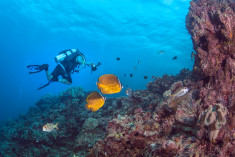
›Tensions in the South China Sea increased last April when a Chinese coast guard ship sank a Vietnamese fishing boat near the Paracel Islands—a fiercely disputed territory in the South China Sea. Disputes over island territories in the region have endured for decades, with China, Vietnam, the Philippines, Taiwan, Indonesia, Malaysia, and Brunei all making overlapping territorial claims. The region is rich in natural resources and biodiversity, holding vast fish stocks and an estimated 11 billion barrels of oil and 190 cubic feet of natural gas.
-
Where the Oil Runs Deep, Water Turns Foul
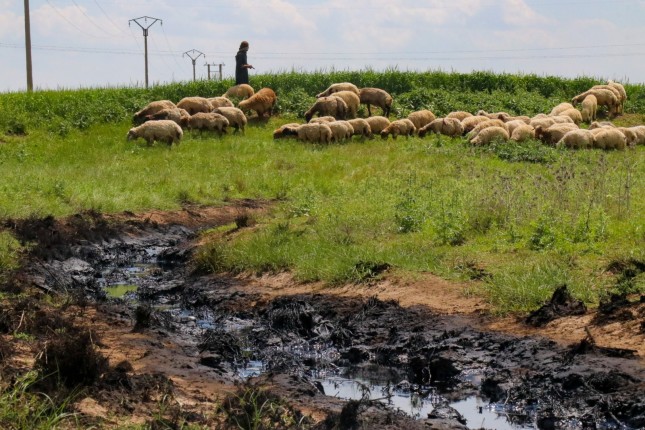
›When Farhad Ahma returned to his native country last year on a work trip, his first thought was of his small daughter back home. The air around him was so thick with pollution, he couldn’t imagine she would survive the climate in this region of northeastern Syria. Ahma himself struggled to breathe almost as soon as he arrived, nauseated by the heavy smell within a couple hours. He was born and raised nearby, in a city called Qamishli, but he had lived in Berlin for some time now. Returning was a shock to his system.
-
China’s Risky Gamble on Coal Conversion
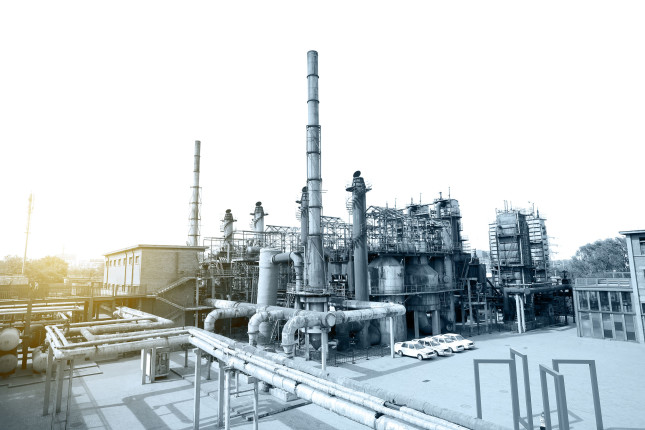
›China Environment Forum // Choke Point // January 9, 2020 // By Richard Liu, Zhou Yang & Xinzhou QianAt the September 2019 United Nations General Assembly (UNGA) Climate Summit, the U.S. delegation, under the shadow of intended withdrawal from Paris, did not volunteer a speaker. Attention instead focused on China. As the world’s largest carbon emitter, China was poised to assert leadership on the climate crisis. However, perhaps lacking the sibling rivalry pressure that brought the U.S. and China together in 2014 on a joint climate agreement, State Councilor and Foreign Minister Wang Yi offered no new commitments: no carbon tax, no increased investment in renewables, and no announcement to set a more ambitious coal consumption cap.
Showing posts from category oil.
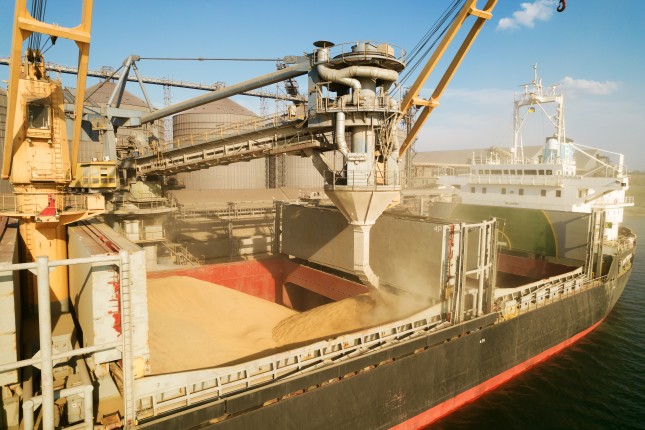 When Russia struck a deal with Ukraine on July 15, there was hope that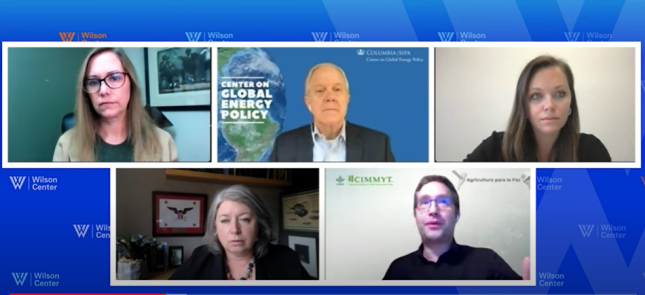
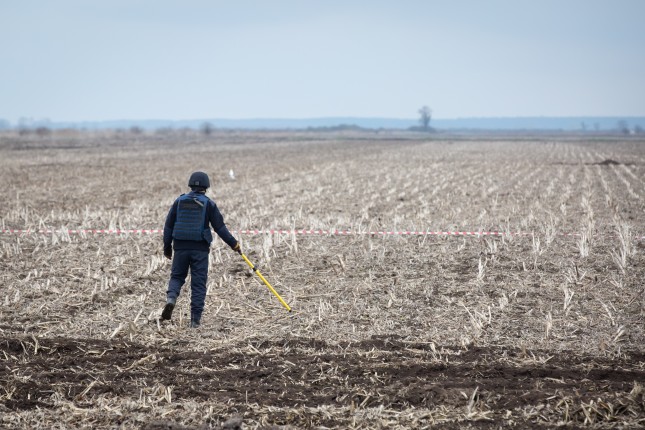
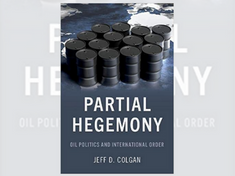 Debates around whether and to what extent international order is changing can be misguided “so long as we are thinking about international order as a single, monolithic thing,” says Jeff Colgan, Associate Professor of Political Science and director of the Climate Solutions Lab at Brown University in this week’s episode of New Security Broadcast. Colgan spoke at a recent Wilson Center