Showing posts from category natural resources.
-
Remembrance: Wangari Maathai, Nobel Peace Prize Winner, Linked Environment and Conflict
›September 26, 2011 // By Schuyler NullSad news today as Wangari Maathai, the first African woman and the first environmentalist to win the Nobel Peace Prize, has passed away in Nairobi. The Green Belt Movement, which Maathai founded in 1977, has planted over 30 million trees and advocates for what Maathai called the three essential components of a stable society: sustainable environmental management, democratic governance, and a culture of peace. [Video Below]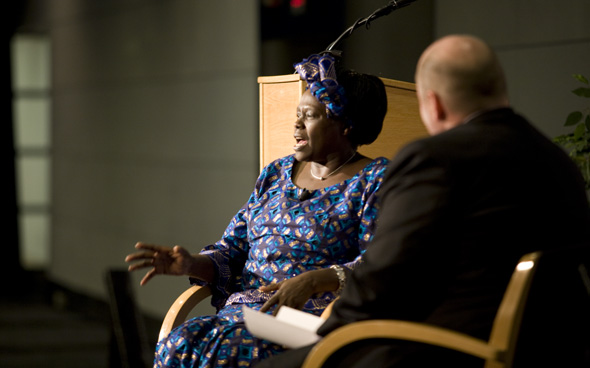
“Almost every conflict in Africa you can point at has something to do with competition over resources in an environment,” said Maathai during her visit to the Wilson Center in 2009:Unless you deal with the cause, you are wasting your time. You can use all the money you want for all the years you want; you will not solve the problem, because you are dealing with a symptom. So we need to go outside that box and deal with development in a holistic way.
Maathai’s message was molded from her experiences in Kenya and across sub-Saharan Africa in general. She was not shy about condemning African leaders and advocating for women in the political space. In ECSP Report 12, she wrote, “I come from a continent that has known many conflicts for a long time. Many of them are glaringly due to bad governance, unwillingness to share resources more equitably, selfishness, and a failure to promote cultures of peace.”
Importantly, though, Maathai advocated for addressing these issues in concert, not separately. She said at the Wilson Center:I can’t say, ‘Let us deal with governance this time, and don’t worry about the resources.’ Or, ‘Don’t worry about peace today, or conflicts that are going on; let us worry about management of resources.’ I saw that it was very, very important to use the tree-planting as an entry point.
A Message to the World
Some raised questions when Maathai won the Nobel Peace Prize in 2004 – the first awarded to someone from the environmental field – but the recognition was more than deserved, wrote Environmental Change and Security Program (ECSP) Director Geoff Dabelko on Grist:Maathai is on the front lines of the struggle over natural resources that fuels conflicts across the world. While there is no dramatic footage of tanks rumbling across borders or airplanes flying into buildings, the everyday fight for survival of those who depend directly on natural resources – forests, water, minerals – for their livelihoods is at the heart of the battle for peace and human security.
Maathai explained in Report 12 that she thought her winning of the prize was intended as a message to the world to “rethink peace and security.”
…
Elevating such a strong Southern voice – and one whose elephant’s skin bears the scars of the fight for peace – is a noble choice.
The Nobel Committee “wanted to challenge the world to discover the close linkage between good governance, sustainable management of resources, and peace,” she wrote. “In managing our resources, we need to realize that they are limited and need to be managed more sustainably, responsibly, and accountably.”
Sources: Grist, The New York Times.
Photo Credit: David Hawxhurst/Wilson Center. -
Carl Haub, Yale Environment 360
What If Experts Are Wrong On World Population Growth?
›September 22, 2011 // By Wilson Center StaffThe original version of this article, by Carl Haub, appeared on Yale Environment 360.
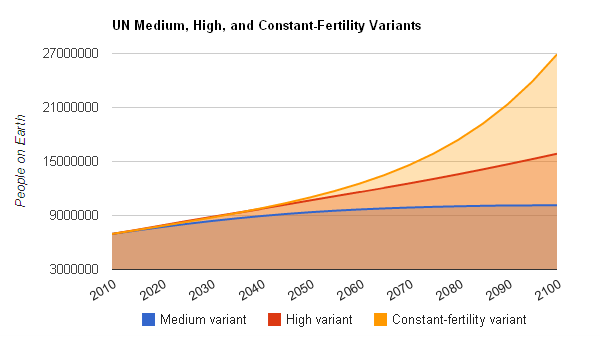
In a mere half-century, the number of people on the planet has soared from 3 billion to 7 billion, placing us squarely in the midst of the most rapid expansion of world population in our 50,000-year history – and placing ever-growing pressure on the Earth and its resources.
But that is the past. What of the future? Leading demographers, including those at the United Nations and the U.S. Census Bureau, are projecting that world population will peak at 9.5 billion to 10 billion later this century and then gradually decline as poorer countries develop. But what if those projections are too optimistic? What if population continues to soar, as it has in recent decades, and the world becomes home to 12 billion or even 16 billion people by 2100, as a high-end UN estimate has projected? Such an outcome would clearly have enormous social and environmental implications, including placing enormous stress on the world’s food and water resources, spurring further loss of wild lands and biodiversity, and hastening the degradation of the natural systems that support life on Earth.
It is customary in the popular media and in many journal articles to cite a projected population figure as if it were a given, a figure so certain that it could virtually be used for long-range planning purposes. But we must carefully examine the assumptions behind such projections. And forecasts that population is going to level off or decline this century have been based on the assumption that the developing world will necessarily follow the path of the industrialized world. That is far from a sure bet.
Continue reading on Yale Environment 360.
Image Credit: Data from UN Population Division, chart arranged by Schuyler Null. -
Perfect Storm? Population Pressures, Natural Resource Constraints, and Climate Change in Bangladesh
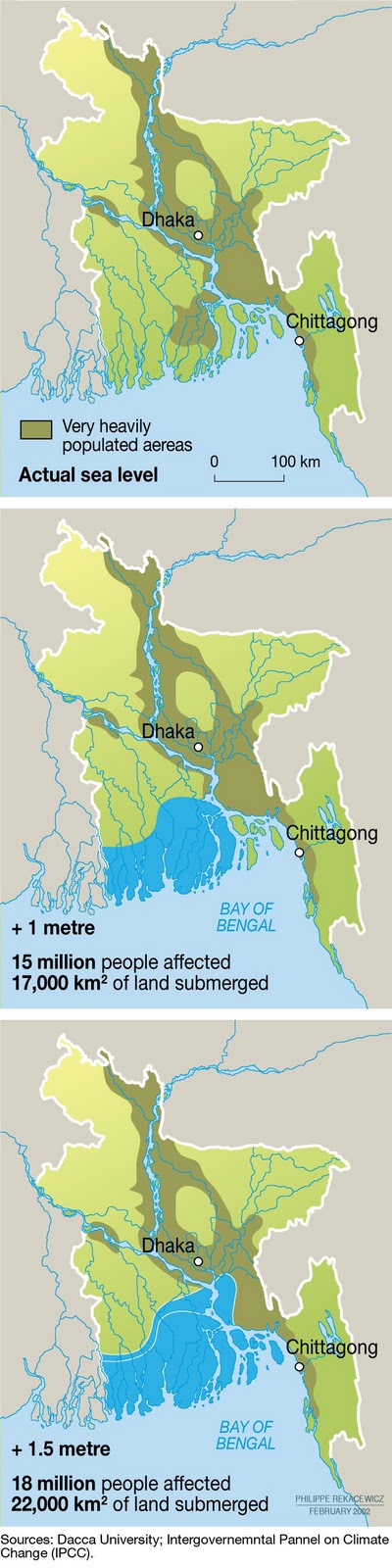
›Few nations are more at risk from climate change’s destructive effects than Bangladesh, a low-lying, lower-riparian, populous, impoverished, and natural disaster-prone nation. The UN Intergovernmental Panel on Climate Change estimates that by 2050, sea levels in Bangladesh will have risen by two to three feet, obliterating a fifth of the country’s landmass and displacing at least 20 million people. On September 19, the Wilson Center’s Asia Program, with assistance from ECSP and the Comparative Urban Studies Project, hosted a conference that examined Bangladesh’s imperiled environmental security.
Climate Change and PopulationThe first panel focused on manifestations, drivers, and risks. Ali Riaz addressed the threat of climate refugees. Environmental stress, he said, may produce two possible responses: fight (civil conflict or external aggression) or flight (migration). In Bangladesh, the latter is the more likely outcome. Coastal communities, overwhelmed by rising sea levels and flooding, could migrate to Bangladesh’s urban areas or into neighboring India. Both scenarios pose challenges for the state, which already struggles to provide services to its urban masses and has shaky relations with New Delhi.
Mohamed Khalequzzaman examined Bangladesh’s geological vulnerability in the context of climate change. In a deltaic nation like Bangladesh, he explained, sedimentation levels must keep up with rates of sea level rise to prevent the nation from drowning. However, sediment levels now fall below 5 millimeters (mm) per year – short of the 6.5 mm Khalequzzaman calculates are necessary to keep pace with projected sea level rises. He lamented the nation’s tendency to construct large dams and embankments in the Bengal Delta, which “isolate coastal ecosystems from natural sedimentation,” he said, and result in lower land elevations relative to rising sea levels.
Adnan Morshed declared that Bangladesh’s geographic center – not its southern, flood-prone coastal regions – constitutes the nation’s chief climate change threat. Here, Dhaka’s urbanization is “destroying” Bangladesh’s environment, he said. Impelled by immense population growth (2,200 people enter Dhaka each day) and the need for land, people are occupying “vital wetlands” and rivers on the city’s eastern and western peripheries. “Manhattan-style” urban grid patterns now dominate wetlands and several rivers have become converted into land. Exacerbating this urbanization-driven environmental stress are highly polluting wetlands-based brickfields (necessary to satisfy Dhaka’s construction needs) and city vehicular gas emissions.
Adaptation Responses
The second panel considered possible responses to Bangladesh’s environmental security challenges. Roger-Mark De Souza trumpeted the imperative of more gender-inclusive policies. Environmental insecurity affects women and girls disproportionately, he said. When Bangladesh is stricken by floods, females must work harder to secure drinking water and to tend to the ill; they must often take off from school; and they face a heightened risk of sexual exploitation – due, in great part, to the lack of separate facilities for women in cyclone shelters. He reported that such conditions have often led to early forced marriages after cyclones.
Shamarukh Mohiuddin discussed possible U.S. responses. On the whole, American funding for global climate change adaptation programs has lagged and initiatives that are funded often focus more on short-term mitigation (such as emissions reductions) rather than adaptation. She recommended that Washington’s Bangladesh-based adaptation efforts be better coordinated with those of other donors.
Mohiuddin also suggested that to convey a greater sense of urgency, Bangladesh’s climate change threats should be more explicitly linked to national security – and particularly to how America’s strategic ally, India, would be affected by climate refugees fleeing Bangladesh.Philip J. DeCosse highlighted Bangladeshi government success stories in the famed Sundarbans – one of the world’s largest mangrove forests. Officials have banned commercial harvesting in some areas of the forests and shut down a highly polluting paper mill. He also praised civil society and the media for bringing attention to the Sundarban’s environmental vulnerability. As a result of efforts such as these, the Sundarbans are “coming back,” he said, with mangrove species growing anew. Thanks to a range of actors – from the forestry department to civil society – these forests are also now being “governed more than managed,” said DeCosse.
The Sundarbans – click to view larger map.
DeCosse’s fellow panelists identified additional hopeful signs. Morshed shared a photograph of a green, pristine park in Dhaka. De Souza underscored how family planning programs have worked in Bangladesh in the past, with fertility rates declining considerably in recent years, and several speakers spotlighted efforts by civil society and the media to bring greater attention to Bangladesh’s environmental security imperatives.
Nonetheless, major challenges remain, and panelists offered a panoply of recommendations. Khalequzzaman called for a major geological study of soil loss and siltation. De Souza implored Bangladesh to ensure that women’s roles and family planning considerations are featured in climate change negotiations and adaptation policies. Morshed advocated for imposing urban growth boundaries and enhancing public transport in cities. And several speakers spoke of the need to pursue more effective natural-resource-sharing arrangements with India. Ultimately, in the words of De Souza, it may not be possible to eliminate Bangladesh’s “perfect storm” – but much can be done to calm it.
Event ResourcesMichael Kugelman is a program associate with the Wilson Center’s Asia Program.
Sources: UN.
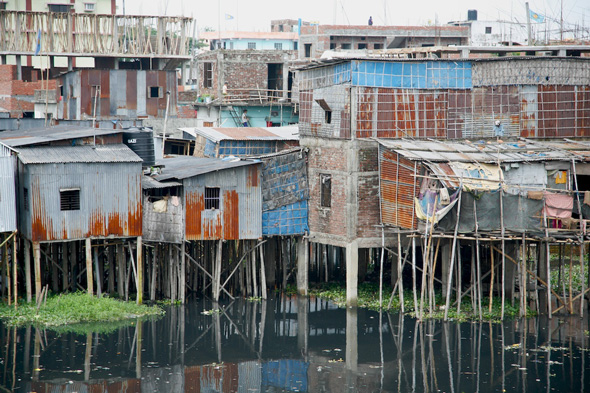
Photo/Image Credit: “Precarious Living, Dhaka,” courtesy of flickr user Michael Foley Photography; “Impact of Sea Level Rise in Bangladesh,” courtesy of UNEP; and the Sundarbans courtesy of Google Maps. -
Watch: Don Lauro on How Integrated Development Deepens Community Involvement
›September 7, 2011 // By Schuyler NullPopulation, health, and environment (PHE) projects address an impressive range of issues – natural resource management, family planning, maternal and child health, water, sanitation, nutrition, and strengthening health systems – but perhaps their most important advantage is the level of community involvement elicited, said long-time PHE expert Don Lauro in an interview with ECSP.
“There’s a depth to these programs,” Lauro said. Tools like rural participatory appraisal allow communities to map out their problems and then come up with solutions on their own. “If you get deep enough, it becomes they who own the project, and I think that that’s your ultimate goal,” he explained. “You have a much greater prospect for sustainability of that effort, no matter what happens to the funding.”
Lauro recently visited the USAID-funded BALANCED Project in Tanzania as part of a wider look at integrated development projects. He emphasized that what exactly this integrated approach is called – be it PHE, HELP, or HELPS – is insignificant; what matters is that these disparate elements are combined. -
Population and Development, Scarcity and Fairness
›Monica Das Gupta, John Bongaarts, and John Cleland’s World Bank working paper, “Population, Poverty, and Sustainable Development: A Review of the Evidence,” analyzes the evidence so far on three questions: 1) Does high fertility affect low-income countries’ prospects for economic growth and poverty reduction?; 2) Does population growth exacerbate pressure on natural resources?; and 3) Are family planning programs effective at lowering fertility, and should they be publicly funded? They find the answers to these questions mainly to be “yes,” but more so in low-income countries with “poor policy environments,” where reducing fertility can lessen the pressure on natural resources – the management of which frequently faces “deep challenges” – and allow economic growth. Gupta et al. highlight sub-Saharan Africa in particular as a region that could gain from these policy levers.Resource Scarcity, Fair Shares and Development, a discussion paper by Alex Evans of the Center on International Cooperation at New York University, published in cooperation with WWF and Oxfam, tackles what Evans writes is an oft-ignored issue in relation to resource scarcity: the notion of fairness in a world of environmental limits. The need to advocate for “fair shares” will become a major issue for poor people and poor countries, and is therefore an important part of the development agenda, he writes. “Scarcity isn’t just relevant to specialists in environment, climate and rural livelihoods,” writes Evans. “On the contrary, resource scarcity will become increasingly central to governance, economics, social development and conflict advisers, and should be incorporated into training and professional development across these areas.” -
IRP and TIME Collaborate on Indonesia’s Palm Oil Dilemma
›“Everything the company does goes against my conscience. But the question remains, who should work from the inside to inform everyone? Who should be pushing that these things are right, these things are acceptable, and these things are not?” says Victor Terran, in this video by Jacob Templin for TIME and the International Reporting Project (IRP). Templin traveled to Indonesia as part of IRP’s Gatekeeper Editor program in May 2011.
Terran is a resident of a village west of Borneo in the Kalimatan province, where he works as a field supervisor for one of the largest palm oil companies in Indonesia. Although the industry has supplied his village with much-needed employment and economic development, he worries that the influx of jobs has come at the expense of the health of the forests, agriculture, and clean rivers that sustain his village. “It’s not just about the money,” he says. “Will they sincerely keep the regulations and be fair to our community?”
An Industry with a Checkered Past
Terran’s skepticism of the industry is justified – palm companies, such as Sinar Mas, have a nasty track record of “abusing local labor and pilfering forests” for what they call “liquid gold,” says Templin.
Greenpeace released a report, “How Sinar Mas is Pulping the Planet,” in 2010 that alleged that Sinar Mas cut down important wildlife preserves, illegally planted on peat lands, and that these actions resulted in the release of considerable amounts of carbon into the atmosphere and loss of critical wildlife habitat.
As a result, the company lost major contracts with Unilever, Kraft, and Nestle. Sinar Mas CEO Franky Widjaya tells Templin that the company is taking definitive steps to prevent such instances from happening again, but that change will not happen overnight.
Akhir bin Man, a manager for another palm oil company, PT Kal, says he does not want to experience a public relations nightmare similar to Sinar Mas, so his company is seeking certification from the internationally recognized Roundtable on Sustainable Palm Oil (RSPO). The RSPO certification requires PT Kal to conserve nearly half of its land, use safer pesticides, and negotiate profit-sharing agreements with villagers.
Global Benefits
“These are not only vast forest landscapes which are home to species such as orangutans, elephants, and rhinos, but they’re also some of the globally most important reservoirs of carbon,” Adam Tomasek, director of the WWF Heart of Borneo Initiative, tells Templin.
Due to the wide-scale implications of disrupting such a substantial carbon sink, Tomasek and his colleagues see the destruction of these habitats as not just a local problem: “Sustainably managing the forest and carbon stocks that they contain here in Indonesia is not only important locally, not only important regionally, but an extremely important critical in the global approach to dealing with climate change,” he says.
Resisting the Juggernaut
Recognizing the inherent value of their natural resources, some villages are fighting to keep palm companies off of their land. Pak Bastarian is the head of such a village: “In my opinion, [palm] plantations are only owned by certain groups of people, and they don’t necessarily bring prosperity,” he tells Templin.
Bastarian is a reformed environmentalist whose hesitance toward the palm industry is a by-product of his own experiences – in the 1990s he worked for years running a timber company that illegally cut down trees. “I don’t know how many trees I cut down…a countless number.” Now, he uses his elected power to preserve trees like the ones he once cut down.
However, keeping the companies out of his village is an uphill battle, Templin explains. Bastarian says he faces mounting pressure from governmental officials, who make threats, and many villagers, who would rather have the jobs. He tells Templin that he even received bribes from PT Kal (an accusation they deny).
Bastarian’s position may cost him though – with elections right around the corner, he said does not know how much longer he can keep the palm companies out.
“My worry is that if our forests are cleared, our children will not be able to see what protected wood looks like, or what protected animals look like,” he tells Templin. When the palm oil companies first came, he chose to wait and see how the other villages fared before allowing them to come in. “To this day,” he says, “I’ve never changed my mind.”
Video Credit: “Indonesia’s Palm Oil Dilemma: To Cash In or Fight for the Forests?,” courtesy of the International Reporting Project. -
Zo Zatovonirina, PHE Champion
Improving Human Health and Conservation in Madagascar’s Forest Communities
›This PHE Champion profile was produced by the BALANCED Project.
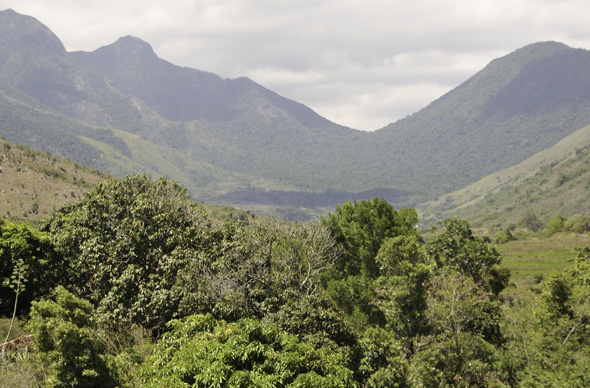
Madagascar is one of the world’s most unique ecosystems, with a total of eight plant families, five bird families, and five primate families that live nowhere else on Earth. Madagascar’s tropical forests and marine environments are home to endemic species of flora and fauna, although tragically 15 species are now extinct. At the same time, Madagascar is rich in freshwater resources, yet more than 60 percent of the island’s 19.7 million people do not have access to safe drinking water.Since 2003, Zo Zatovonirina has worked for Conservation International (CI) in Madagascar, and he has seen up-close the challenges of reaching remote forest communities, often requiring one- or two-day hikes over treacherous roads. As coordinator for USAID’s Healthy Families, Healthy Forests Program, Zo worked with two Malagasy nongovernmental organizations (NGOs), MATEZA, and the Association for Health Action and Security, to implement integrated population, health, and environment (PHE) approaches in response to community needs in the Ankeniheny Zahamena forest corridor in eastern Madagascar.
From 2003-2008, CI and partners reached more than 25,000 village residents with PHE messages; increased contraceptive prevalence in target zones from 17 percent in 2005 to 30 percent in 2008; constructed 3,000 latrines; and improved environmental health in all priority sites.
Today, biodiversity in Madagascar is under increased pressure, in light of political instability since 2009 and continued population pressures. Recognizing CI and partner experience and investments in conservation efforts to improve human well-being, USAID Madagascar and World Learning recently awarded a new 15-month grant to CI Madagascar and two Malagasy NGO partners – Voahary Salama and Ny Tanintsika – to implement an integrated PHE project in the southeastern Ambositra Vondrozo forest corridor. All three organizations have implemented PHE projects in Madagascar, and they have established trusting relationships with the people living in these fragile ecosystems.
Madagascar has a rich history of implementing successful PHE projects, and this project represents a new PHE pilot phase in the midst of political uncertainty. According to Zo, PHE approaches remain constant – simultaneously addressing several complex and linked problems such as poverty, child survival, and unsustainable dependency on natural resources. In Zo’s experience, CI’s PHE approach touches on all these aspects and delivers a pragmatic, integrated package of interventions designed to increase community capacity to better manage their health and environment. Utilizing PHE approaches, CI, Voahary Salama, and Ny Tanintsika will strive to reach communities for the first time ever with family planning, water, sanitation, and hygiene services while helping them conserve their biological heritage.
This PHE Champion profile was produced by the BALANCED Project. A PDF version can be downloaded from the PHE Toolkit. PHE Champion profiles highlight people working on the ground to improve health and conservation in areas where biodiversity is critically endangered.
Photo Credit: The forests of Madagascar, courtesy of Conservation International/Russ Mittermeier, and Zo Zatovonirina, courtesy of Conservation International. -
Russell Sticklor, World Politics Review
The Hungry Planet: Global Food Scarcity in the 21st Century
›August 16, 2011 // By Wilson Center StaffThe original version of this article, by Russell Sticklor, appeared on World Politics Review.
At the dawn of the 20th century, the world population was inching toward a modest two billion. In the 111 years since, notwithstanding the impact of war, genocide, disease, and famine, the global population has soared, reaching three billion around 1960 and now quickly approaching the neighborhood of seven billion. By 2050, the planet will likely be home to two billion more.
We may not be witnessing the detonation of the “population bomb” that Paul Ehrlich warned of in his seminal 1968 book, but such rapid demographic change is clearly pushing the international community into uncharted territory. With a limited amount of arable land and a finite supply of fresh water for irrigation, figuring out how to feed a planet adding upward of 70 million people each year looms as one of the 21st century’s most pressing challenges.
The push to ensure global food security transcends the desire to avoid repeating the famines that devastated the Soviet Union, China, North Korea, Ethiopia, and so many other corners of the world during the past century. Instead, aid and development organizations today rightly view food insecurity problems as deeply intertwined with issues of economic development, public health, and political stability, particularly in the developing world. To maintain order in the international community and prevent the emergence of new failed states in the decades ahead, it will be critical to find innovative means of feeding the rapidly growing populations of sub-Saharan Africa, the Middle East, and South and East Asia.
Continue reading on World Politics Review.
Note: World Politics Review has graciously white-listed all entrances from NSB for this article, so as long as you use the above link, you should be able to read the full article for free.
Russell Sticklor is a consultant for the Environmental Change and Security Program.
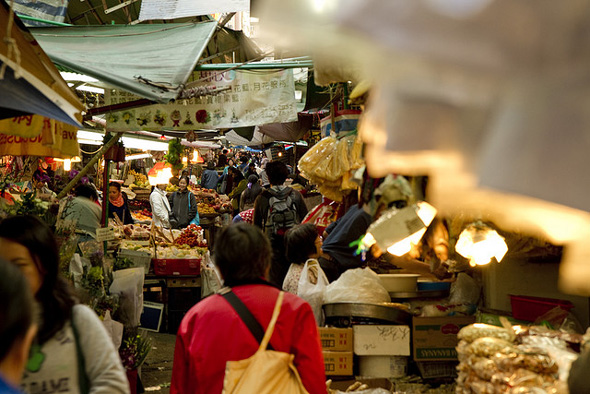
Photo Credit: “Crowded market street,” courtesy of flickr user – yt –.