-
Eelke Kraak, ChinaDialogue
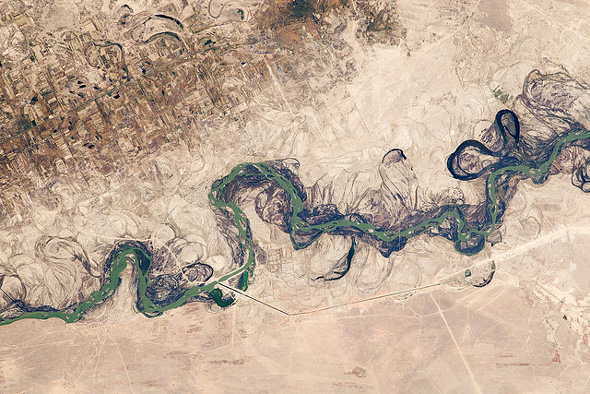
Central Asia’s Dam Debacle
›March 13, 2012 // By Wilson Center StaffThe original version of this article, by Eelke Kraak, appeared on ChinaDialogue.
The Toktogul Dam in Kyrgyzstan is an imposing structure. The dam guards the largest and only multi-annual water reservoir in central Asia. The cascade of five hydroelectric stations downstream produces 90 percent of Kyrgyzstan’s power. Cotton fields thousands of kilometers away in Kazakhstan and Uzbekistan depend on the release of water from this dam.
The Toktogul is literally and figuratively the “valve” of the Syr Darya River. But by relying on large-scale engineering projects to control the river, these countries have ignored the fundamentally political nature of water management.
The significance of the Toktogul dam goes beyond its economic benefits. It was the center piece of the Soviet Union’s efforts to conquer nature in its drive to modernize central Asia. When it became fully operational in the late 1980s, the project to control the region’s rivers seemed complete.
But the costs have been high. The Aral Sea, the terminal lake of the main sources of water in central Asia, the Syr Darya and Amu Darya rivers, has shrunk to almost nothing. Many areas surrounding what is left of the lake are heavily polluted. Moreover, the now independent Syr Darya riparian countries – Kyrgyzstan, Uzbekistan, Tajikistan and Kazakhstan – disagree on how the Toktogul should be operated.
Continue reading on ChinaDialogue.
Syr Darya River Floodplain, Kazakhstan, courtesy of NASA and the Center for Philosophy of Sciences of the University of Lisbon. -
More People, Less Biodiversity? The Complex Connections Between Population Dynamics and Species Loss
›March 8, 2012 // By Laurie Mazur“For if one link in nature’s chain might be lost, another and another might be lost, till this whole system of things should vanish by piece-meal.”
~ Thomas Jefferson, 1799This much is clear: As human numbers have grown, the number of species with whom we share the planet has declined dramatically. While it took about 200,000 years for humanity to reach one billion people around 1800, world population has grown sevenfold since then, surpassing seven billion last year.
-
Elizabeth Grossman, Yale Environment 360
How a Gold Mining Boom Is Killing Children in Nigeria
›March 5, 2012 // By Wilson Center StaffThe original version of this article, by Elizabeth Grossman, appeared on Yale Environment 360.
In early 2010, while working in the impoverished rural region of Zamfara in northwestern Nigeria, the group Médecins Sans Frontières – Doctors Without Borders – encountered many young children suffering from fevers, seizures, and convulsions. An unusually high number of very young children, many under age five, were dying, and there were many fresh graves.
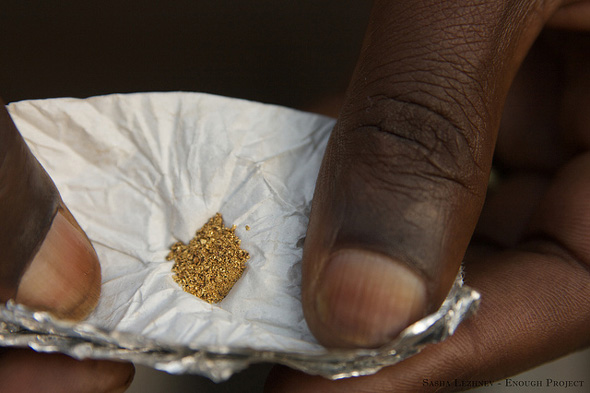
The doctors initially suspected malaria, meningitis, or typhoid, all common in the region. But when the sick children didn’t respond to anti-malarial drugs or other antibiotics, one of the physicians began to wonder if local mining activity might be implicated. Historically an agricultural area, Zamfara had been experiencing a small-scale gold rush, thanks to rapidly rising gold prices that encouraged the pursuit of even the most marginal sources of ore. Mining work was taking place in and around the villages and within many of the mud-walled compounds where families were using flour mills to pulverize lead-laden rocks to extract gold.
Médecins Sans Frontières (MSF) doctors sent children’s blood samples for testing and the results revealed acute lead poisoning. Many of the children had blood lead levels dozens, even hundreds, of times higher than international safety standards. Within a week, an emergency medical and environmental remediation team arrived and began to grapple with an epidemic of childhood lead poisoning that is being called unprecedented in modern times. In the past two years, more than 400 children have died in Zamfara, more than 2,000 have been treated with chelation therapy, and thousands more have been – and continue to be – severely poisoned by exposure to pervasive lead dust.
Continue reading on Yale Environment 360.
Photo Credit: “Conflict minerals 1,” courtesy of the ENOUGH Project/Sasha Lezhnev. -
USAID’s New Climate Strategy Outlines Adaptation, Mitigation Priorities, Places Heavy Emphasis on Integration
›February 29, 2012 // By Kathleen MogelgaardIn January, the U.S. Agency for International Development released its long-awaited climate change strategy. Climate Change & Development: Clean Resilient Growth provides a blueprint for addressing climate change through development assistance programs and operations. In addition to objectives around mitigation and adaptation, the strategy also outlines a third objective: improving overall operational integration.
The five-year strategy has a clear, succinct goal: “to enable countries to accelerate their transition to climate-resilient low emission sustainable economic development.” Developed by a USAID task force with input from multiple U.S. agencies and NGOs, the document paints a picture of the threats climate change poses for development – calling it “among the greatest global challenges of our generation” – and commits the agency to addressing both the causes of climate change and the impacts it will have on communities in countries around the world.
These statements are noteworthy in a fiscal climate that has put development assistance under renewed scrutiny and in a political environment where progress on climate change legislation seems unlikely.
Not Just Challenges, But Opportunities
To make the case for prioritizing action on climate change, the strategy cites climate change’s likely impact on agricultural productivity and fisheries, which will threaten USAID’s food security goals. It also illustrates the ways in which climate change could exacerbate humanitarian crises and notes work done by the U.S. military and intelligence community in identifying climate change as a “threat multiplier” (or “accelerant of instability” as the Quadrennial Defense Review puts it) with implications for national security.
Targeted efforts to address climate change, though, could consolidate development gains and result in technology “leap-frogging” that will support broader development goals. And, noting that aggregate emissions from developing countries are now larger than those from developed countries, the strategy asserts that assisting the development and deployment of clean technologies “greatly expands opportunities to export U.S. technology and creates ‘green jobs.’”
In addition to providing a rationale for action, the strategy provides new insights on how USAID will prioritize its efforts on climate change mitigation and adaptation. It provides a clear directive for the integration of climate change into the agency’s broader development work in areas such as food security, good governance, and global health– a strong and encouraging signal for those interested in cross-sectoral planning and programs.
Priorities Outlined, Tough Choices Ahead
President Obama’s Global Climate Change Initiative, revealed in 2010, focuses efforts around three pillars: clean energy, sustainable landscapes, and adaptation. USAID’s climate strategy fleshes out these three areas, identifying “intermediate results” and indicators of success – such as the development of Low Emission Development Strategies in 20 partner countries, greenhouse gas sequestration through improved ecosystem management, and increasing the number of institutions capable of adaptation planning and response.
In laying out ambitious objectives, however, the authors of the strategy acknowledge constrained fiscal realities. The strategy stops short of identifying an ideal budget to support the activities it describes, though it does refer to the U.S. pledge to join other developed countries in providing $30 billion in “fast start financing” in the period of 2010 to 2012 and, for those USAID country missions that will be receiving adaptation and mitigation funding, establishes “floors” of $3 million and $5 million, respectively.
The final section of the strategy lists over thirty countries and regions that have already been prioritized for programs, including Bangladesh, India, Kenya, Malawi, and Peru. But “we are unable to work in every country at risk from climate change impacts or with the potential for low carbon sustainable growth,” the strategy asserts. An annex includes selection criteria to guide further funding decisions, including emission reduction potential, high exposure to physical climate change impacts, a suitable enabling environment, coordination with other donors, and diplomatic and geographic considerations.
“Integration” Central to Strategy
The concept of integration figures prominently throughout the 27-page document. For those of us working in the large and growing space where the global challenges of climate change, food security, health, livelihoods, and governance overlap, this attention is heartening. While it may sometimes seem simply fashionable to pay lip service to the idea of “breaking out of stovepipes,” the strategy identifies concrete ways to incentivize integration.
“Integration of climate change into USAID’s development portfolio will not happen organically,” the strategy says. “Rather, it requires leadership, knowledge and incentives to encourage agency employees to seek innovative ways to integrate climate change into programs with other goals and to become more flexible in use of funding streams and administrative processes.”
To this end, USAID plans to launch a group of pilot activities. USAID missions must submit pilot program proposals, and selected programs will emphasize integration of top priorities within the agency’s development portfolio (including Feed the Future and the Global Health Initiative). Among other criteria, pilots must demonstrate buy-in from multiple levels of leadership, and will be selected based on their potential to generate integration lessons and tools over the next several years.
This kind of integration – the blending of key priorities from multiple sectors, the value of documented lessons and tools, the important role of champions in fostering an enabling environment – mirrors work carried out by USAID’s own population, health, and environment (PHE) portfolio. To date, USAID’s PHE programs have not been designed to address climate challenges specifically, and perhaps not surprisingly they aren’t named specifically in the strategy. But those preparing and evaluating integration pilot proposals may gain useful insights on cross-sectoral integration from a closer look at the accumulated knowledge of more than 10 years of PHE experience.
Population Dynamics Recognized, But Opportunities Not Considered
Though not a focus of the strategy, population growth is acknowledged as a stressor – alongside unplanned urbanization, environmental degradation, resource depletion, and poverty – that exacerbates growing challenges in disaster risk reduction and efforts to secure a safe and sufficient water supply.
Research has shown that different global population growth scenarios will have significant implications for emissions growth. New analysis indicates that the fastest growing populations are among the most vulnerable to climate change and that in these areas, there is frequently high unmet need for family planning. And we have also clearly seen that in many parts of the world, women’s health and well-being are increasingly intertwined with the effects of changing climate and access to reproductive health services.
In its limited mention of population as a challenge, however, the strategy misses the chance to identify it also as an opportunity. Addressing the linked challenges of population growth and climate change offers an opportunity to recommit the resources required to assist of the hundreds of millions of women around the world with ongoing unmet need for family planning.
The strategy’s emphasis on integration would seem to be an open door to such opportunities.
Integrated, cross-sectoral collaboration that truly fosters a transition to climate-resilient, low-emission sustainable economic development will acknowledge both the challenge presented by rapid population growth and the opportunities that can emerge from expanding family planning access to women worldwide. But for this to happen, cross-sectoral communication will need to become more commonplace. Demographers and reproductive health specialists will need to engage in dialogues on climate change, and climate specialists will need both opportunities and incentives to listen. USAID’s new climate change integration pilots could provide a new platform for this rare but powerful cross-sectoral action.
Kathleen Mogelgaard is a writer and analyst on population and the environment, and a consultant for the Environmental Change and Security Program.
Sources: FastStartFinance.org, International Energy Agency, Maplecroft, Population Action International, The White House, U.S. Department of Defense, USAID.
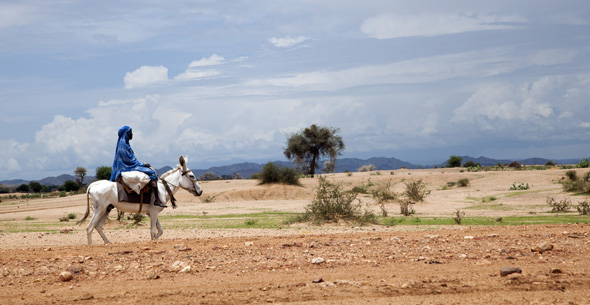
Photo Credit: “Displaced Darfuris Farm in Rainy Season,” courtesy of United Nations Photo. -
The U.S. Military, Climate Change, and Maritime Boundaries
›The Defense Science Board, which advices the U.S. military on scientific and technical matters, writes in a recent task force report that the most immediate and destabilizing effects of climate change will impact U.S. security indirectly, through American reliance on already-vulnerable states that are “vital” sources of fuel and minerals or key partners in combatting terrorism. The report singles out three specific themes as particularly important to responding to near-term climate-driven threats and adapting to climate change’s long-term impacts: providing “better and more credible information [about climate change] to decision makers,” improving water management, and building better local adaptation capacity, particularly in African nations. Ultimately, the report concludes that the most effective, most efficient way the United States can respond to climate change is not militarily but “through anticipatory and preventative actions using primarily indigenous resources.”In “Maritime Boundary Disputes in East Asia: Lessons for the Arctic,” published in International Studies Perspectives, James Manicom writes that as climate change makes access and exploration easier, there are lessons to be learned from East Asian states’ handling of maritime disputes for Arctic nations. Manicom finds that simply because a state may be party to the UN Convention on the Law of the Sea (UNCLOS), disputes over boundaries and “over the methods used to settle disputes” persist. Domestic identity politics also can and do affect the extent to which a state attempts to exert influence over disputed areas – a noteworthy conclusion given growing rhetoric in Arctic states over the national importance of disputed territories. Finally, Manicom points out that, while “high expectations of resource wealth” may fuel disputes and “political tension,” those expectations do not inevitably doom competing states to conflict over resources. -
The Ramsar Convention: A New Window for Environmental Diplomacy?
›In seeking ways to connect conservation with peacemaking, the Institute for Environmental Diplomacy and Security (IEDS) has released a study that examines an expanded role for the international wetlands treaty, the Ramsar Convention.
The Ramsar Convention: A New Window for Environmental Diplomacy? describes the wetlands convention, its place within the international environmental treaty world, and its potential to enhance environmental security during this dynamic time of increasingly insecure water supplies and climate change. With more than 40 years of work, the treaty has been quietly and effectively conserving wetlands and increasing recognition of the need to build international cooperation around them. The treaty has also helped define wetlands within greater biogeographic regions and led to formal identification of transboundary wetlands.
In the article, we set out to combine information from the convention’s 234 listed wetlands (13 of which have formal transboundary plans) with the Global Peace Index, which ranks countries using 23 indicators, such as number of conflicts, conflict deaths, military expenditures, and relations with neighboring countries. The result is a prioritized list of countries most in need of tools of conflict resolution.
Working within the framework of the convention builds capacity between high-conflict-risk nations and has potential to develop otherwise-difficult-to-establish trust because the process is transparent and all stakeholder voices are heard. This can be important even when the existing conflict has nothing to do with international wetlands.
The convention is active in many countries with ongoing conflicts, such as Afghanistan, the Democratic Republic of the Congo, Iran, Iraq, and Sudan, and efforts there may help inform the ongoing debate as to the efficacy of conservation as a tool for peacemaking.
As environmental conditions continue to evolve rapidly, the need for institutions that can work in the transboundary environment will increase. The established international infrastructure of the convention has the potential to be a greater force in peacemaking. Further research may help focus on the strengths and weaknesses of the current system and reveal ways for more effective peacemaking efforts.
Suggestions for ways to enhance the convention’s role in environmental diplomacy include working more closely with researchers and practitioners directly involved in the environmental peacemaking field, increased focus on developing capacity for increased flexibility to react to dynamic conditions, and more active promotion of formal transboundary agreements.
Pamela Griffin is an independent scholar at IEDS where she focuses on the diplomatic potential of transboundary wetlands. -
Taking a Livelihoods Approach to Understanding Environmental Security
›February 17, 2012 // By Kate DiamondSince the concept of “environmental security” first gained traction in the early 1990s, research on the issue has been overwhelmingly focused on how environmental change impacts state security. That has been to the detriment of policymakers trying to preempt instability and conflict, according to the University of Toronto’s Tom Deligiannis in his article, “The Evolution of Environment-Conflict Research: Toward a Livelihood Framework,” published in February’s Global Environmental Politics.
-
‘Marketplace’ and ‘NewsHour’ Highlight Population, Health, and Environment Program in the Philippines
›The Danajon reef is the only double barrier reef in the Philippines, “one of the richest marine biodiversity hot spots in the world,” and it’s being devastated as the country’s exploding population depends on its waters for their food and livelihoods, reported Sam Eaton in a recent two-part series on population, health, and environment issues in the Philippines broadcast last month for American Public Media’s Marketplace and the PBS NewsHour.
The report is part of joint project called Food for 9 Billion, with Homelands Productions, the Center for Investigative Reporting, APM, and PBS. Previous reports examined food security in East Africa and Egypt.
The Philippines “import more rice than any other country on the planet,” said Eaton. The “highest population growth rates in all of Southeast Asia” as well as dwindling natural resources – nearly 100 million people live in a land area the size of Arizona – have created a cycle of poverty. The first step to breaking that cycle, he said, is improving access to family planning.
Growing Families, Growing Poverty
The Canayong family, living on the edge of a garbage dump in a Manila slum, offers a vivid example of what poverty means in the Philippines. Clarissa Canayong has had 14 children – 4 died from measles and dengue fever, the remaining 10 spend their days alongside Clarissa, sifting through the dump for things they need and things they can sell. At the end of a good day, the family has earned around $7 to survive on. All in all, Clarissa’s “inability to provide enough food, and to pay for her children’s education, all but guarantees she and her family will remain poor,” said Eaton.
The archipelago adds about two million people every year, putting population on track to double in size sometime around 2080. “And that’s only if something is done to close the birth control gap,” said Eaton, as those projections build in an expectation that growth will slow.
“As cities all across the country expand, the displaced often end up migrating to urban slums,” he said. “Population growth among poor Filipinos is twice the national average,” meaning that once a family enters poverty, they end up in a cycle “that’s nearly impossible to break.”
The Difference Family Planning Can Make
If Clarissa had had access to family planning, she told Eaton, she would have wanted to have only two children. In Humayhumay, where residents have access to a community-based family planning distribution program started by PATH Foundation Philippines, Inc., families have that luxury of choice.
Working through local partners, the PATH Foundation identifies and trains community-based vendors to sell contraception – both pills and condoms, said Dr. Joan Castro, who began the program in Humayhumay. The idea is to make buying contraceptives “as easy as buying soft drinks or matches.”
Both Jason Bostero, a farmer and fisherman in Humayhuay, and his wife, Crisna, grew up in large families – so large, in Crisna’s case, that “sometimes, we would only eat once a day because we were so poor. We couldn’t go to school. I did not finish school because there were just so many of us,” she told Eaton.
Now that they have access to contraceptives, a smaller family size means their income is “just right” to feed everyone three times a day. For the community as a whole, smaller family sizes mean that the nearby fish stocks that provide the community with food and income have a chance to replenish themselves in the absence of overfishing.
“In just six years since the program was first established here,” reported Eaton, “family sizes have plummeted from as many as 12 children to a maximum of about 4 today.”
Exception to the Rule
Humayhumay is an exception to the rule in the Philippines. There is no state funding for birth control in the country, and over the past few years, major international donors like USAID and the United Nations have ended their family planning work in the country. More than a quarter of poor Filipinos have no access to any type of family planning service, and more than half of all pregnancies are unintended, said Eaton.
Family planning has long been a contentious issue in the country. Eaton spoke to Congressman Walden Bello, who has spent more than a decade trying to pass legislation to establish universal access to birth control and improve other family planning and reproductive services. The Catholic Church, said Bello, is a powerful (80 percent of Filipinos are Catholic) and consistent opponent. In October 2010, the Church went so far as to threaten President Benigno Aquino with excommunication after he voiced support for access to contraception.
Rather than limit population growth, the Church argues the country should increase food production. But land is limited, rice imports are already the highest in the world, and, “according to the World Bank, every major species of fish here shows signs of severe overfishing,” said Eaton.
Looking Forward and Abroad
Eaton pointed to the Philippines’ neighbors as examples to emulate: “A long history of government-supported family planning has…paved the way for Thailand to become one of the world’s biggest rice exporters” and helped to cut back poverty in the country, said Eaton.
Indonesia too, he pointed out, has largely avoided the population growth-resource depletion-poverty cycle, thanks in part to a state- and faith-backed family planning program. (As Elizabeth Leahy Madsen wrote in a recent New Security Beat post, the decision of Indonesia’s religious leaders to throw their support behind family planning in the 1960s was a key factor in success there.)
Considering the obstacles, the Philippines face an uphill battle before family planning services become similarly universal. But the political tides may already be turning: last April, the President said he would support the reproductive health legislation even if it meant excommunication.
Meanwhile, PATH Foundation’s Castro is hopeful that Humayhumay’s success story will lay the seeds for widespread public support for family planning. “The vision of the project is in this community you see more children educated who are able to become leaders and speak out for themselves in the future and be able to become stewards of their own sexuality and the future environment,” said Castro. “This is the legacy.”
Sources: BBC, Bloomberg News, Catholic News Agency, The Guardian, Population Reference Bureau, TIME Magazine, US Agency for International Development, U.S. Catholic.
Showing posts from category natural resources.