-
Choke Point China Part II: Food Supply, Fracking, and Water Scarcity Challenge a Juggernaut Economy
›
The original version of this article, by Keith Schneider, appeared on Circle of Blue. Choke Point: China is a research and reporting initiative produced in partnership between Circle of Blue and the Wilson Center’s China Environment Forum.
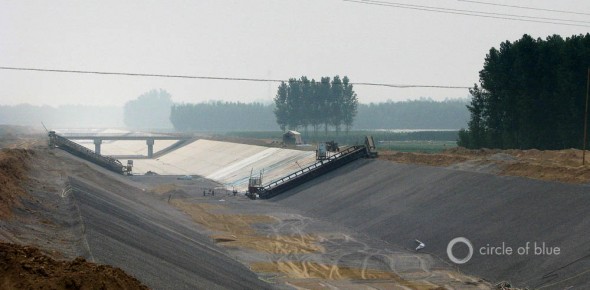
Where the wide, muddy waters of the Songhua River flow north from Jiamusu to the Russian border, just 150 kilometers (90 miles) distant, the whole of China’s largest treeless prairie sweeps to the horizon. This expanse of fertile grasslands endures the dark fright of cold Siberian winters and the raging winds of Mongolian summers. At night, in the scattered villages, the sky fills with stars so thick and bright that walking along unlit streets is easy.
-
Population and Environment in Saadani National Park, and Repositioning Family Planning in Sub-Saharan Africa
›
Tanzania’s Saadani National Park is a hotbed of biodiversity and, like other national parks in the region, it’s surrounded by human activity. A report by the BALANCED Project, “Population, Health, Environment Situational Analysis for the Saadani National Park Area, Tanzania,” provides a snapshot of the population, health, and environment situation inside the park to serve as a baseline for future activities of the Tanzania Coastal Management Partnership (TCMP) – a joint initiative of the government of Tanzania, USAID, and the University of Rhode Island’s Coastal Resources Center. A behavioral monitoring system implemented in June 2009 used surveys that reached a total of 437 respondents (54 percent women) from eight villages to analyze the “behaviors that positively and negatively influence the utilization and condition of natural resources.” The surveys found that arable land is scarce, fisheries are being depleted, and people have inadequate access to healthcare, water, sanitation, fuel, and family planning resources. The results suggest a strong case for expanding TCMP’s existing integrated approach – combining HIV/AIDS, conservation, and livelihoods goals – to include promotion of positive behavior changes, particularly as they relate to family planning and the effects of population growth on biodiversity loss and resource depletion.
-
Michael Kugelman, Global Times
Repairs Could Stifle South Asia’s Water War
›October 19, 2012 // By Wilson Center StaffThe original version of this article, by Michael Kugelman, appeared on Global Times.
In recent weeks, militants in Pakistan have escalated their hostile rhetoric toward India. The subject of their ire is water. Hafiz Saeed, the head of militant Islamist group Jamaat-ud-Dawa, has warned that India plans “to make Pakistan barren” by preventing the waters of the Indus Basin from flowing downstream to Pakistan.
-
Who Are the Most Vulnerable to Ocean Acidification and Warming?
›In 2011, a record 34 billion cubic tons of carbon dioxide were emitted from man-made sources. Half the emitted CO2 stays in the atmosphere, about a quarter is absorbed on land (as trees grow, for example), and the remainder is absorbed by the ocean. Unsurprisingly, this incredible amount of carbon dioxide significantly changes the ocean environment. Over time, increased absorption of carbon dioxide in the oceans has led to ocean acidification, and overall warming has also led to warming of ocean waters – both changes impact marine ecosystems and the people who rely on them.
-
Russell Sticklor, Stimson Center
The Race to Harness Himalayan Hydropower
›October 11, 2012 // By Wilson Center StaffThe original version of this article, by Russell Sticklor, appeared at the Stimson Center.
Spend a day in Kathmandu, Nepal’s sprawling capital of four million people, and you’ll quickly notice what has long been a fact of life in this landlocked Himalayan country, and many other South Asian nations – no reliable electricity supply exists. Up to eight times a day, neighborhoods throughout the city suffer rolling power cuts due to load shedding, causing residents and businesses alike to either carry on in the darkness or rely on expensive, diesel-consuming generators to keep the lights on. Although the country’s civil war ended in 2006, carrying the promise of restored domestic stability and accelerated economic development, Nepal’s economy has remained hamstrung by an inconsistent energy supply, with only 40 percent of the population having access to electricity. This situation persists despite the fact that the country sits on top of a virtual goldmine – an estimated 80,000 megawatts (MW) of untapped hydroelectricity, of which it has harnessed a scant 700 MW.
-
Water and Land Conflict in Kenya in the Wake of Climate Change
›Earlier this month, there was a flurry of stories about brutal mass killings in clashes between the Pokomo and Orma communities over water and land in southeast Kenya’s Tana River County. The Kenyan media reported that about 30 people, including eight security personnel, had been killed and scores wounded, and reports on the death toll since last month are more than 100.
-
The Role of Renewable Natural Resources and Gender in Conflict
›Devesh Kapur, Kishore Gawande, and Shanker Satyanath open their Center for Global Development working paper, “Renewable Resource Shocks and Conflict in India’s Maoist Belt,” with a crucial question: “Is there a causal relationship between shocks to renewable natural resources, such as agricultural and forest lands, and the intensity of conflict?” While the connection between the environment and conflict has been the focus of much study, Kapur et al. say that previous attempts have been plagued with “failure to address reverse causality and a failure to systematically control for alternative explanations for conflict.” Their report analyzes the relationship between the availability of resources and conflict by measuring rainfall, vegetation prevalence, and deaths due to the Maoist conflict in India. They find “a strong and substantively large relationship between adverse renewable resource shocks and the intensity of conflict,” and conclude that protecting the livelihoods of residents of the Maoist belt can help reduce violence. “Giving tribals greater access to forests and a range of forest products, whose consumption is the only available option during times of distress, can provide them with a critical self-insurance mechanism.”
-
Michael Klare on the Race for What’s Left
›Around the world, as the most easily accessible natural resources are depleted, states are beginning to turn to more remote reserves to meet their needs and the shift may spark international tensions or even conflict, said Hampshire College professor Michael Klare in a recent interview with ECSP. “I worry very much about this growing global competition for the remaining resources in those parts of the world,” he said.
Showing posts from category natural resources.