-
‘The New York Times’ Highlights Converging Development Trends in Brazil’s Amazon
›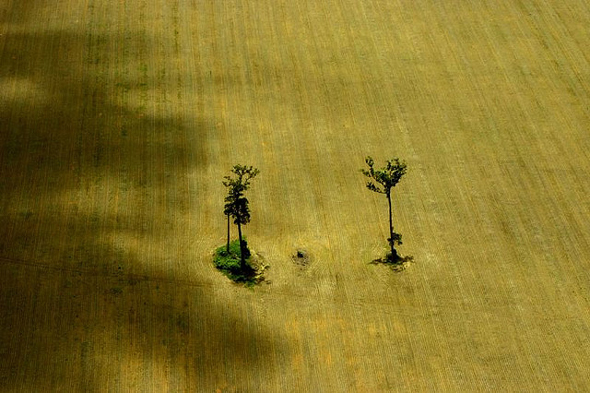
The Amazon is home to some of the world’s most expansive rainforest – and, increasingly, some of Brazil’s fastest growing cities. Urbanization and deforestation are upending the traditional image of the Amazon, turning one of the world’s most biodiverse regions into an economic and demographic explosion, according to an in-depth article by Simon Romero in The New York Times.
-
India’s Environmental Security Challenge: Water, Coal, Natural Gas, and Climate Change Fuel Friction
›November 23, 2012 // By Michael Kugelman
The original version of this article appeared in NATO Review.
Few regions are more environmentally insecure than South Asia.
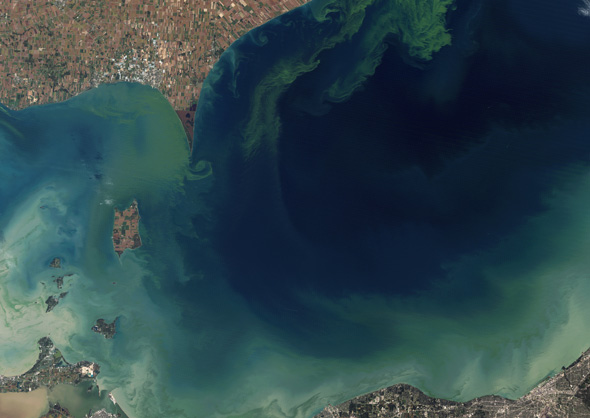
The region faces rising sea levels and regularly experiences coastal flooding – of particular concern in a region with heavily populated and arable-land-rich coastal areas. Additionally, it is highly vulnerable to glacial melt. The Western Himalayas, which provide water supplies to much of South Asia, have experienced some of the most rapid melt in the world.
-
Lydia Polgreen, The New York Times
As Coal Boosts Mozambique, the Rural Poor Are Left Behind
›November 14, 2012 // By Wilson Center StaffThe original version of this article, by Lydia Polgreen, appeared on The New York Times.
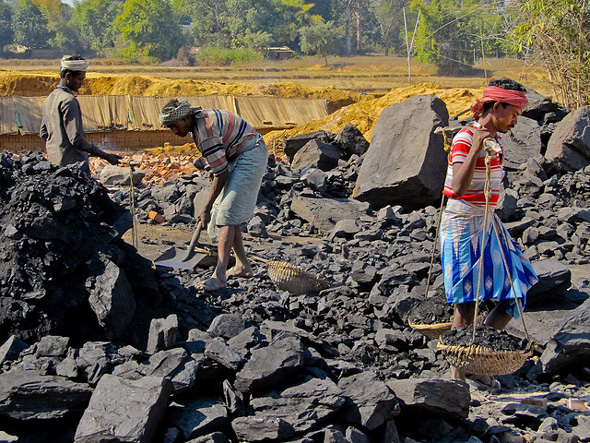
When Augusto Conselho Chachoka and his neighbors heard that the world’s biggest coal mine was to be built on their land, a tantalizing new future floated before them. Instead of scraping by as subsistence farmers, they would earn wages as miners, they thought. The mining company would build them sturdy new houses, it seemed. Finally, a slice of the wealth that has propelled Mozambique from its war-addled past to its newfound status as one of the world’s fastest-growing economies would be theirs.
-
Joel Cohen on Why Students Should Consider Demography
›“Why should you consider taking a demography course in college?” That’s the question Joel Cohen, noted demographer and professor at Rockefeller and Columbia University, looks to answer in a 45-minute introduction to demography produced by the Floating University and released for free on YouTube.
-
Liang Jialin and Jiang Han, ChinaDialogue
Overfishing Pushes 80 Percent of Chinese Fishermen Towards Bankruptcy
›November 9, 2012 // By Wilson Center StaffThe original version of this article, by Liang Jialin and Jiang Han, appeared in English on ChinaDialogue and in Chinese on Economic Information Daily.
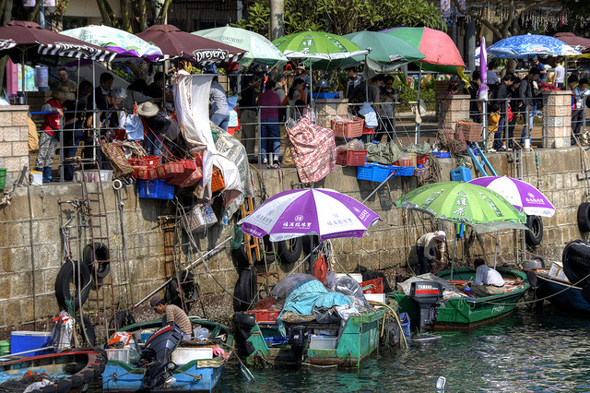
In mid-September, the fishing season got under way as usual in Ningbo, on China’s east coast, after the three-month season when fishing is forbidden. Over 2,000 steel-hulled boats headed out to sea. But, on board, there was little cause for optimism.
-
Connecting the Dots Between Security and Land Rights in India
›Across India, where I live and work, I can clearly see the connection between land rights and peace and security.
With respect to personal safety and security: 12 percent of all murders here are related to conflicts over land.
On a provincial level: few weeks go by without newspapers here reporting on violence between communities who are battling over land.
-
Clean Cookstoves and PHE Champions on Tanzania’s Northern Coast
›As our ferry slowly made its way across the Pangani River along the northern coast of Tanzania, I sat next to a woman whose child held her hand tightly. The boy and I exchanged smiles, but we mainly admired the view. The late morning sun was behind us as the royal blue river met the cloudless sky.
-
Michael D. Lemonick, Climate Central
Surprise Geoengineering Test Goes Forward Off Coast of Canada
›November 2, 2012 // By Wilson Center StaffThe original version of this article, by Michael D. Lemonick, appeared on Climate Central.
Harvard’s David Keith calls it the “goofy Goldfinger scenario” – a rogue nation, or even an individual, would conduct an unsupervised geoengineering experiment – and he confidently predicted in a story I wrote last month that it would never happen.
Showing posts from category natural resources.