-
Autumn Spanne, The Daily Climate
Colombia’s Unexplored Cloud Forests Besieged by Climate Change, Development
›December 13, 2012 // By Wilson Center Staff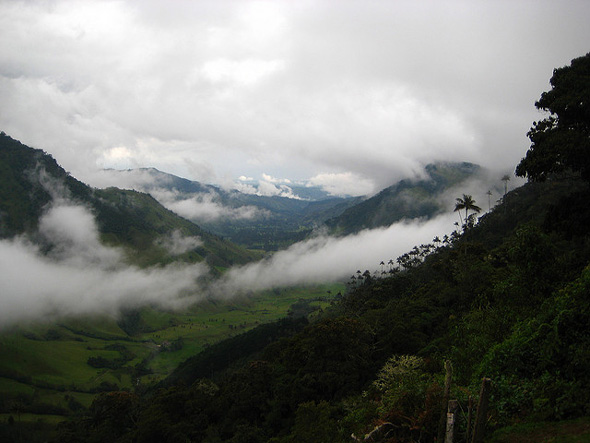
The original version of this article, by Autumn Spanne, appeared on The Daily Climate.
Five hours by truck and mule from the nearest town, a rumbling generator cuts through the silent night to power large spotlights as botanists crouch and kneel on large blue tarps spread across a cow pasture. It’s nearly midnight, and the team works urgently to describe every detail of the dozens of colorful orchids, ferns, and other exotic plants they have collected that day in Las Orquídeas National Park, one of the single most biologically diverse places on the planet.
-
National Intelligence Council Releases ‘Global Trends 2030’: Prominent Roles Predicted for Demographic and Environmental Trends
›
“We are at a critical juncture in human history, which could lead to widely contrasting futures,” writes the chairman of the National Intelligence Council (NIC) Christopher Kojm in the council’s latest forward-looking quadrennial report, Global Trends 2030: Alternative Worlds, released yesterday.
This year, principal author Mathew Burrows and his colleagues focus on a series of plausible global scenarios for the next 20 years and the trends or disruptions that may influence which play out. Among the most important factors in these projections are demography and the environment.
-
‘The Christian Science Monitor’ Explores the Global Water Crisis: Should We Charge More for Water?
›“There is as much of that water on the planet today as when the first amphibian flopped ashore; as much as when the ancient Greeks divined the future in the babble of brooks,” writes William Wheeler in The Christian Science Monitor. “So why do experts in science, economics, and development warn that a ‘global water crisis’ threatens the stability of nations and the health of billions?”
-
The Land Matrix Visualizes Ebbs and Flows of Global “Land Grabs”
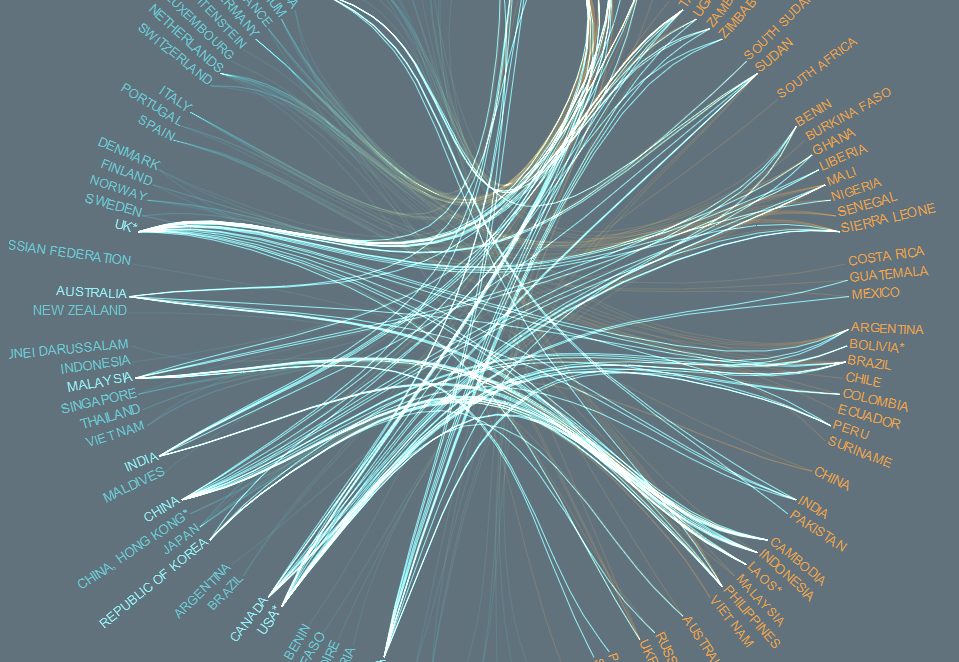
›Over the past few years, large-scale acquisition of land by foreign or domestic firms, be they public or private, have been making headlines. But although these “land grabs” have received a great deal of attention, their details remain largely unknown. Which countries are the primary investors? Which are the main targets? What is the land used for?
-
Linking the Environment and Women’s Health at the World Conservation Congress
›November 30, 2012 // By Payal ChandiramaniPeople don’t often think of gender issues when they think of the environment, but in fact sustainable development in many of the world’s most bio-diverse regions has a lot to do with women’s health and well-being.
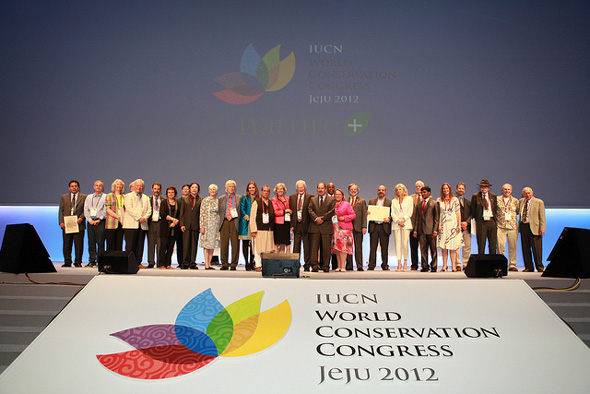
At this year’s World Conservation Congress, where the theme was improving the inherent resilience of nature, ECSP’s Sandeep Bathala presented alongside Blue Ventures’ Gildas Andriamalala about the connections between women’s health and the environment – specifically on the potential of population, health, and environment (PHE) approaches as an effective sustainable development strategy.
-
Considering “Soft Geoengineering”
›Even as the climate debate has been paralyzed by politics, the concept of geoengineering has been in the news lately, most notably in October when Russ George dumped 120 tons of iron particles into the Pacific Ocean in a scheme to try and score carbon credits. Earlier this month, the Wilson Center’s Science and Technology Innovation Program hosted an event taking a look at “soft geoengineering” – techniques that might have low or minimal environmental side effects but still address or reverse climate change.
-
‘The Global Farms Race’: Comprehensive Study of Large-Scale Land Acquisitions Launches at Wilson Center
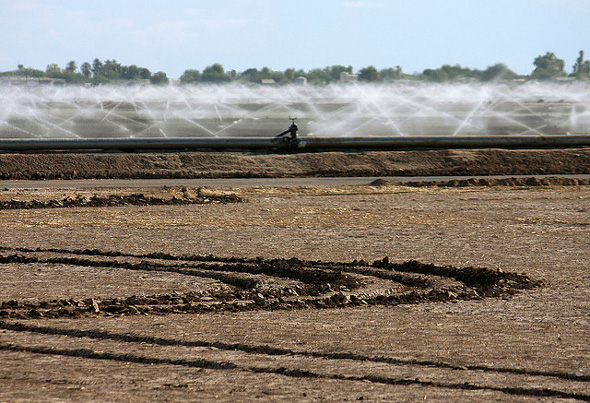
›Last month, Oxfam made an extraordinary request. It asked the World Bank to freeze its investments in agricultural land.
At a time when urbanization and growing service industries are bringing great neglect to agricultural sectors across much of the developing world, why would Oxfam want the World Bank to suspend its generous levels of agricultural funding?
-
‘The New York Times’ Highlights Converging Development Trends in Brazil’s Amazon
›The Amazon is home to some of the world’s most expansive rainforest – and, increasingly, some of Brazil’s fastest growing cities. Urbanization and deforestation are upending the traditional image of the Amazon, turning one of the world’s most biodiverse regions into an economic and demographic explosion, according to an in-depth article by Simon Romero in The New York Times.
Showing posts from category natural resources.