-
Wilson Center Roundtable on ‘Backdraft’: The Unintended Consequences of Climate Change Response
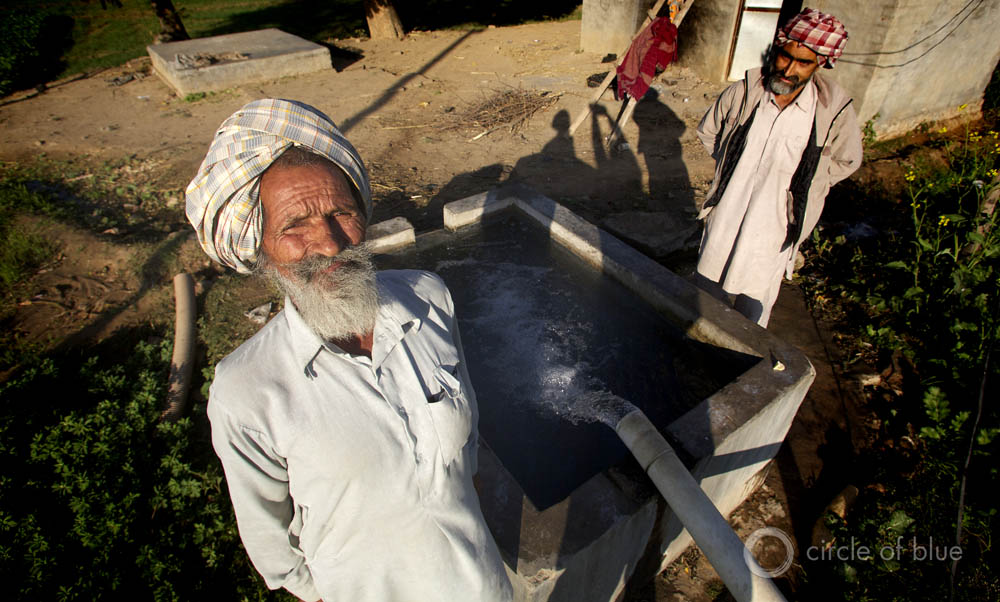
›As President Obama readies a new road map for addressing climate change in the United States, experts warn that poorly designed and implemented initiatives, especially in already-fragile parts of the world, could unintentionally provoke conflicts, rather than diffuse them.
-
What’s Worth Saving? Maoists, Forests, and Development in India’s Western Ghats
›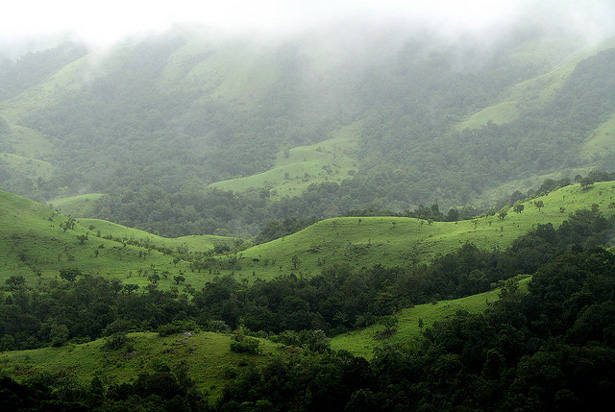
Arrayed along India’s southwest coast is a 1,600-kilometer-long mountain chain with forests older than the Himalayas: the Western Ghats. The mountains are one of the top biodiversity hotspots in the world, and UNESCO recently recognized the region as a World Heritage site. They’re also one of the tensest of India’s emerging battlegrounds between development and conservation and a potential recruiting ground for its Maoist insurgency, called the country’s “greatest threat to internal security.”
-
‘At the Desert’s Edge’ Gives a Glimpse of China’s Massive Desertification Challenge
›In may not be surprising that China, home to so many other superlatives, also faces desertification on a grand scale. According to China’s State Forestry Administration, over 27 percent of the country now suffers from desertification – more than 1,000,000 square miles, or about one-third of the continental United States – impacting the lives of more than 400 million people.
-
Lisa Dabek on How Papua New Guinea’s Tree Kangaroo Conservation Project Does More Than Conserve
›
“All through Papua New Guinea, in every province, there is logging and mining, but we are the first conservation area,” says Lisa Dabek in this week’s podcast.
Dabek is the director of the Tree Kangaroo Conservation Project (TKCP), an effort of the Seattle Woodland Park Zoo that works to protect tree kangaroos while empowering communities in Papua New Guinea’s YUS Conservation Area to manage their natural resources, health care, and food security.
-
The Leopard in the Well: Wilson Center and Circle of Blue Launch ‘Choke Point: India’
›The original version of this article, by Keith Schneider, appeared on Circle of Blue. Choke Point: India is a research and reporting initiative produced in partnership between Circle of Blue and the Wilson Center’s China Environment Forum and Asia Program.
Perhaps because India is so big, so bewildering and chaotic, and so determined to update its elusive rural identity with sleek urban flare, Indians and the national press are fascinated by how the nation’s wild animals are faring amid the dizzying change. In many cases, not well.
-
Despite “Greener Economy,” Extractive Industries’ Effects on Global Development, Stability Bigger Than Ever
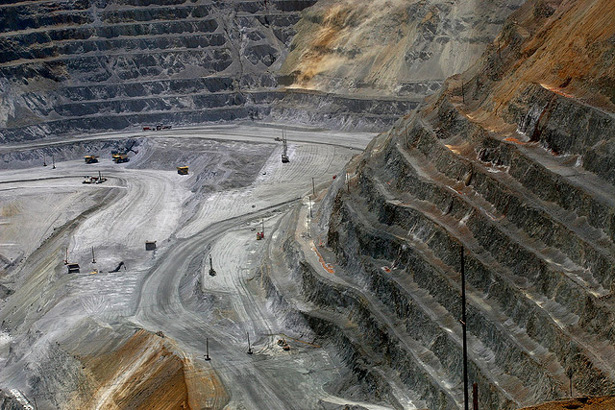
›Despite the appearance of a new, “greener” economy, extractive industries – mining, oil, and natural gas – are now responsible for “moving more earth each year, just for mining and quarrying, than the global hydrological cycle,” writes the Transatlantic Academy’s Stacy VanDeveer in a recent paper, Still Digging: Extractive Industries, Resource Curses, and Transnational Governance in the Anthropocene. The costs of this activity are high and extend well beyond the wallet, he explains.
-
Michael Kugelman, The Diplomat
Can Pakistan Avert Demographic Doom?
›June 7, 2013 // By Wilson Center StaffThe original version of this article, by Michael Kugelman, appeared on The Diplomat.
On May 11, Pakistan’s Election Day, approximately 60 percent of eligible voters went to the polls. This figure far exceeded the 44 percent who turned out for Pakistan’s previous election in 2008. Media reports have featured moving accounts of the elderly being carried to the polls, and of women standing in the heat for hours to cast their ballots.
-
Beyond Arctic Conflict: Prospects for Peace and International Cooperation
›Temperatures in the Arctic have increased at twice the global rate over the past 40 years, vaulting the region to international prominence as an emerging theater for maritime transportation and competition over newly uncovered resources.
The international community should start strategizing now to manage the ambitions of circumpolar states and minimize the potential for conflict, write authors Rob Huebert, Heather Exner-Pirot, Adam Lajeunesse, and Jay Gulledge in a report. Published by the Center for Climate and Energy Solutions, Climate Change and International Security: The Arctic as a Bellwether explores the geopolitical implications of climate change in the Arctic and puts forth several recommendations for policymakers to consider. Huebert et al. write that “maintaining security and peace in the Arctic will require adapting policies and institutions to the emerging environment there.” They recommend that Arctic states strengthen existing multilateral agreements by, for example, advocating the accession of the United States into the UN Convention on the Law of the Sea. Further, they propose that the Arctic Council lifts its ban on discussing security issues in order to become a forum for meaningful discussion.
Showing posts from category natural resources.