-
Mapping China’s Dam Rush – and the Environmental Consequences
›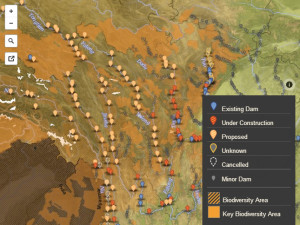
In southwestern China, three parallel rivers – the Nu, Lancang, and Jinsha (also known as the Upper Mekong, Salween, and Yangtze, respectively) – form a series of corridors that connect the tropical rainforests of Southeast Asia to the Tibetan Plateau. These areas are some of the most biodiverse in the world, and scientists argue they have value as “climate refugia” – places worth preserving in order to allow species to retreat to cooler, more suitable climates as temperatures rise. A cascade of dams, however, has been planned for the region, threatening to submerge habitats, reduce the flow of tributary rivers, and make the area less suitable for many plant and animal species.
-
A New Dimension to Geopolitics: Geoff Dabelko on the Latest IPCC Report
›“The Intergovernmental Panel on Climate Change is an attempt to get an international group of scientists together to assess what we know about climate change,” says Geoff Dabelko in an interview with the Wilson Center’s Context program. “That is not a quick process.”
-
Kathleen Mogelgaard: Four Steps to Better Link Climate Adaptation and Reproductive Health Strategies
›
Climate change vulnerability is closely tied to population dynamics, says Kathleen Mogelgaard in this week’s podcast. “We know that population size, composition and spatial distribution around the world is constantly changing, and that these changes do have implications for climate change exposure, sensitivity, and adaptive capacity – the three elements of vulnerability.”
-
Nick Snow, Oil and Gas Journal
Analyst Urges Broader Look at Amazon Oil’s Local Impacts
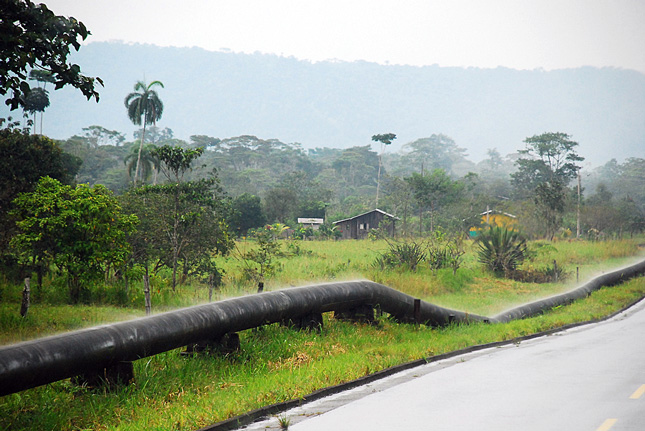
›March 27, 2014 // By Wilson Center StaffIncreasingly disruptive protests are likely if oil, gas, and mining companies and national governments don’t pay closer attention to indigenous populations’ needs as Western Amazon basin resources are developed, an expert warned.
-
In Nepal, Integrating Forest and Family Health Is Improving Lives
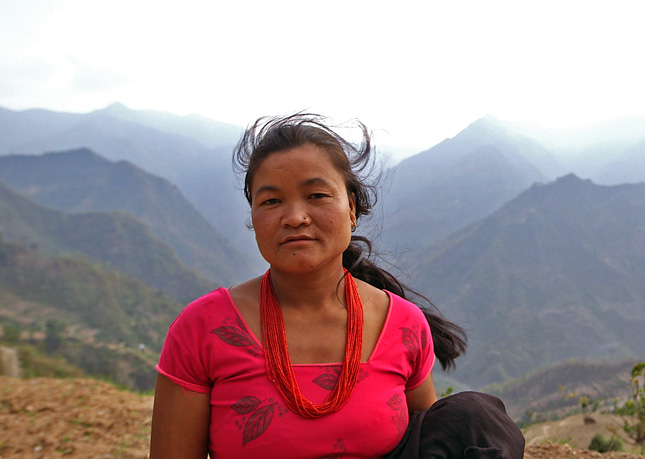
›March 24, 2014 // By Sean PeoplesFor years, the Chepang people have lived off the land in Nepal’s forested central foothills. Communities cleared trees to start small subsistence farms, harvested the surrounding area for firewood, and eventually moved on after the wood, soil, and water were depleted.
-
Gidon Bromberg: Jordan River Shows Water Can Be a Path to Peace, Generate Will for Change
›
At last month’s launch of the USAID Water and Conflict Toolkit at the Wilson Center, Gidon Bromberg explained that the toolkit is about much more than just conflict. “It’s put very much in forefront the possibilities of peacebuilding,” he says in this week’s podcast. “Water is an opportunity in areas where there aren’t many opportunities.”
-
Measurement Matters: Understanding Water Scarcity in an Increasingly Complex World
›March 21, 2014 // By Kathleen MogelgaardIt was a scorching hot April afternoon in Keur Moussa, a small farming community about 60 kilometers outside Dakar, Senegal. The landscape was mostly barren and very dry, and a fine red dust settled into our clothes as we walked with community leaders to learn about their efforts to cope with a changing environment. In this part of the world, adapting to climate change is figuring out how to manage water: how to survive for long periods without it, and what to do when too much comes at unexpected times.
-
A New Model of Development? The Role of Public-Private Partnerships in International Aid
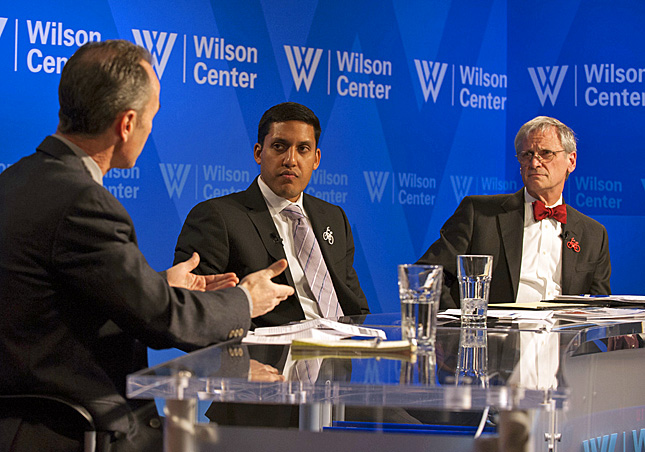
›USAID funding is “far outstripped” by private investment and business relationships in “nearly every country” in which it works – and that’s a good thing, according to USAID Administrator Rajiv Shah. [Video Below]
Showing posts from category natural resources.