

-
Reservoirs in Parched Chennai, City of Millions, Are Dry. Can Better Forecasting Avert Future Crises?
›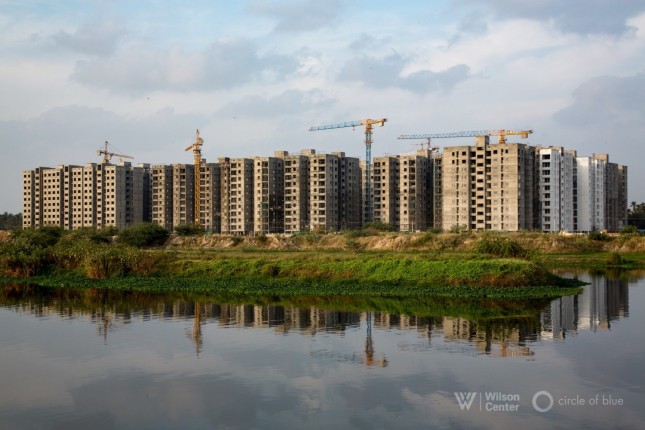
Residents of Chennai, by all accounts, are miserable and anxious. The city’s main reservoirs are dry, depleted by the failure of successive monsoons to provide replenishing rains. The shortfall has crippled the piped distribution network, which is now meeting just half of typical demand through a mix of secondary sources: desalinated water, groundwater, and the impoundments from nearby stone quarries. Even that supply is far from adequate. Piped water reaches households once a week or less. Tanker trucks, an expensive alternative, dole out water by the bucketful to desperate crowds.
-
Urban Elites’ Livestock Exacerbate Herder-Farmer Tensions in Africa’s Sudano-Sahel
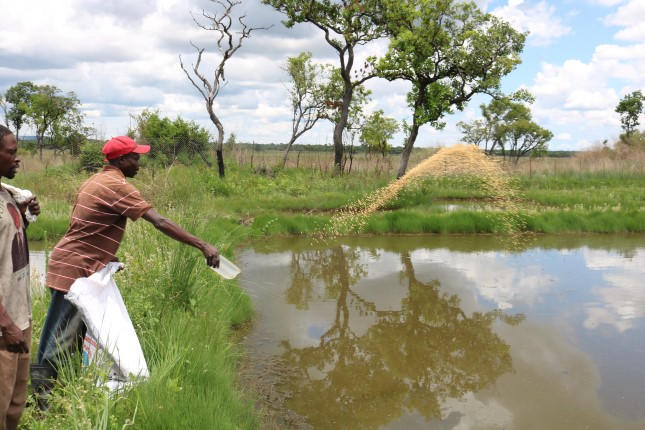
› In recent years, conflict between herders and farmers for access to increasingly scarce natural resources in Africa’s Sudano-Sahel has escalated. While the problems fueling these tensions are both hyper-local and transnational in nature, one important piece of the puzzle has been overlooked. The real “elephant in the room” is who owns the livestock.
 -
Middle East: EcoPeace Urges UN to Back Water-Energy Cooperation to Increase Security
›“Action is needed today,” said EcoPeace Middle East’s Palestinian Co-Director Nada Majdalani. EcoPeace’s Palestinian and Israeli Co-Directors spoke at a recent session of the United Nations Security Council that focused on potential solutions to the decades-old Palestinian-Israeli crisis. They emphasized the importance of cooperation over shared water resources to help address human health and national, regional, and global security concerns. While EcoPeace has been working to foster cooperation over water for more than 25 years, as a way to build peace in the Middle East, this was the first time the trilateral organization briefed the Security Council.
-
Water as a Tool for Resilience in Times of Crisis
›Water serves as a tool for resilience only when access to it is consistent and the system for making it consistent is in place, said David De Armey, Director of International Partnerships for Water for Good, an international NGO. He spoke at a recent Wilson Center event, “Water as a Tool for Resilience in Times of Crisis,” the second event in a three-part series, Water Security for a Resilient World, sponsored by the Wilson Center, Winrock International, the Sustainable Water Partnership, and USAID. Water for Good monitors 80 percent of wells across seven provinces in Central African Republic (CAR), he said. By keeping the water infrastructure working, the nonprofit creates a stable environment within an unstable country. “Thus,” he said, “we see reliability and services as a tool for resilience.”
-
Better Water Security Translates into Better Food Security
›“Food production is the largest consumer of water and also represents the largest unknown factor of future water use as the world’s population continues to balloon, and we face increasing weather-related shocks and stresses,” said Laura Schulz, Acting Deputy Assistant Administrator in USAID’s Bureau for Economic Growth, Education and Environment. She spoke at “Feeding a Thirsty World: Harnessing the Connections Between Food and Water Security,” an event sponsored by the Wilson Center, Winrock International, the Sustainable Water Partnership, and USAID. Currently about 70 percent of global water goes to agriculture, a number that is projected to rise “as high as 92 percent,” said Rodney Ferguson, the President and CEO of Winrock International.
-
Democracy Under Assault: Guatemala Attempts to Silence Eco-populists
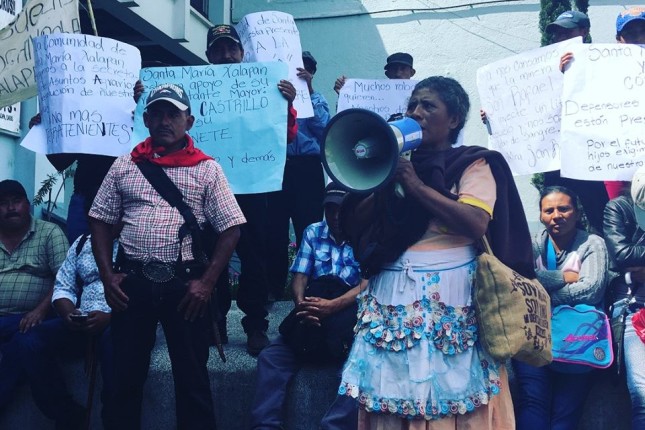
›While the U.S. has been fixated on President Trump’s contentious border wall project, another more ominous threat facing Guatemalans is building internally. In a swift reversal, many politicians and scholars who have previously argued for directing increased U.S. aid to communities in Central America’s Northern Triangle—Guatemala, El Salvador, and Honduras—as a humanitarian alternative to the border wall, are now calling on Congress to suspend some forms of aid to Guatemala, which they now see as the more humane option.
-
U.S. Intelligence Community Recognizes Climate Change in Worldwide Threat Assessment
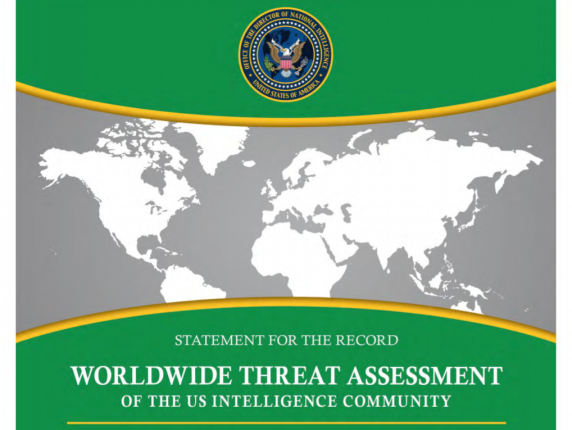
›February 5, 2019 // By Isabella CaltabianoThe 2019 Worldwide Threat Assessment of the US Intelligence Community, released on January 29, mentions climate change as a threat that is “likely to fuel competition for resources, economic distress, and social discontent through 2019 and beyond.” The report features new topics such as election interference and threats to economic competitiveness while still including continuing threats such as cyber espionage and attacks, terrorism, and climate change. As a statement from Director of National Intelligence (DNI), Daniel R. Coats, for the Senate Select Committee on Intelligence, the assessment provides an overview of the national security threats facing the nation.
-
Gidon Bromberg on Water and Environmental Peacebuilding
›“The Jordan River has been the lifeblood of the Levant,” says Gidon Bromberg, the Israeli co-director of EcoPeace Middle East, in this week’s Water Stories podcast. The river’s importance offers a unique platform for multi-level conflict resolution and environmental conservation efforts in a region wracked by conflict.
Showing posts from category natural resources.
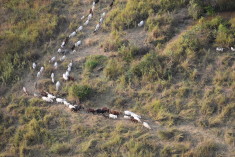 In recent years, conflict between herders and farmers for access to increasingly scarce natural resources in Africa’s Sudano-Sahel has escalated. While the problems fueling these tensions are both hyper-local and transnational in nature, one important piece of the puzzle has been overlooked. The real “elephant in the room” is who owns the livestock.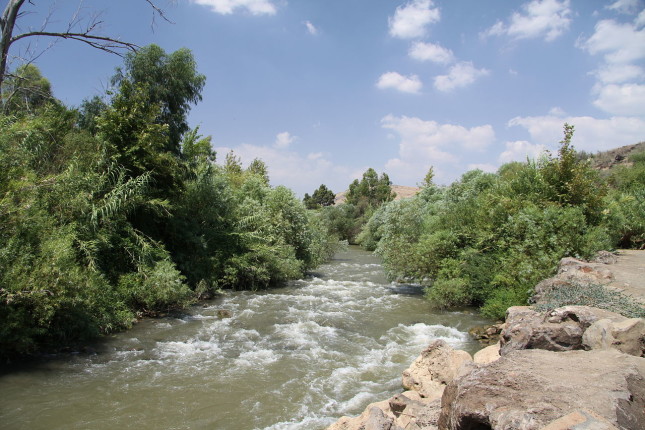
 “The Jordan River has been the lifeblood of the Levant,” says Gidon Bromberg, the Israeli co-director of EcoPeace Middle East, in this week’s Water Stories podcast. The river’s importance offers a unique platform for multi-level conflict resolution and environmental conservation efforts in a region wracked by conflict.

