-
Hidden Forces: The Role of Water in Economic Prosperity
›From the Wilson Center // Water Security for a Resilient World // October 22, 2019 // By Brigitte Hugh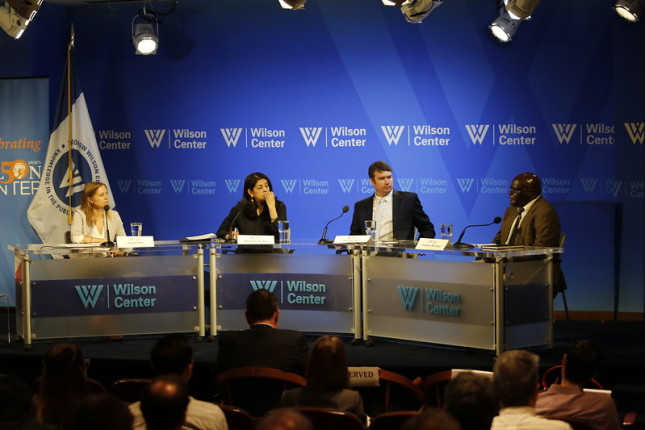
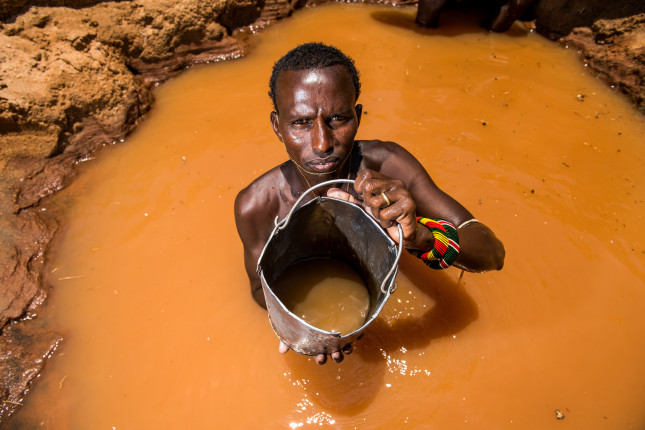
“If you woke up one morning and found the taps in your house were dry, the first thing many of us here would do is pick up our phone and call the utility,” said Gordon Mumbo, Team Leader for Sustainable Water for the Mara River Basin, Winrock International. But for people living in the Mara River Basin, if their taps run dry, there is no utility to call, said Mumbo. Their only choice is to grab the water container and head down to the river where water quality may be poor. Mumbo spoke at the September 30th event, “Hidden Forces: The Role of Water in Economic Prosperity,” part of the “Water Security for a More Resilient World” series co-hosted by the Wilson Center, Winrock International, and the Sustainable Water Partnership.
-
Untapped Opportunities? The Need to Integrate Young Women in Water Management
›
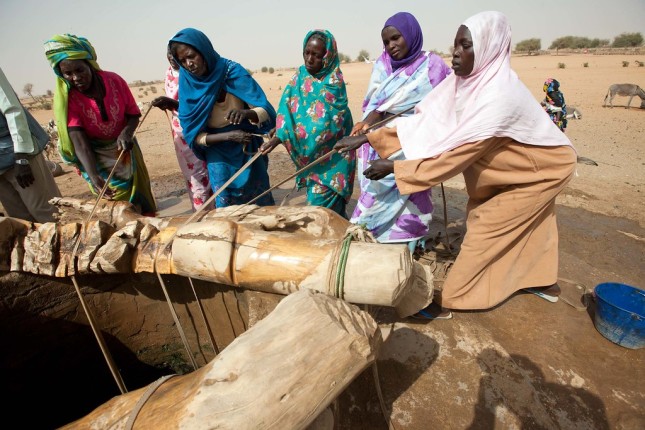
Water security is a pervasive climate issue and one that has increasingly been viewed as a gendered issue. Worldwide, women and girls spend 200 million hours collecting water every day. While doing so, they place themselves at increased risk of assault and become more likely to develop medical issues related to physical labor. They also pay an opportunity cost, as this time could be better spent in school or performing other productive tasks.
-
Lisa Palmer, Mongabay
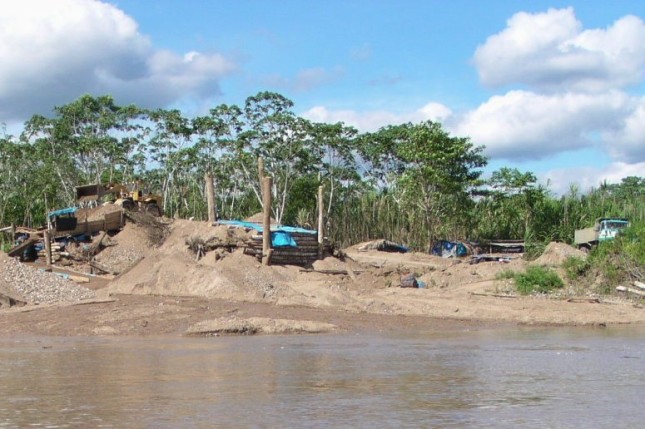
Precision conservation: High tech to the rescue in the Peruvian Amazon
›August 28, 2019 // By Wilson Center StaffThe mother capybara and her three babies chew on grasses along the Los Amigos River as we drift near. Around a bend, white caimans fortify each sandbar, mouths open, waiting. Kingfishers plunge into the water to retrieve a morning meal, as oropendolas fly overhead. Spider monkeys and red howlers balance in the treetops of the soaring canopy 30 to 60 meters (100 to 200 feet) high that lines both riverbanks.
-
Providing Water Security in an Uncertain World
›A problem is looming. Most water infrastructure isn’t designed to meet the demands of the increasingly volatile world that climate change is producing. Our modern landscape requires a reconceptualization of infrastructure’s demands and needs that often defies convention. And nowhere is a flexible and responsive approach more crucial than in water infrastructure, where we are experiencing unprecedented changes in flows and increasing pressures on consumption, according to Wellspring: Source Water Resilience and Climate Adaptation, a new report from the Global Resilience Partnership, the Alliance for Global Water Adaptation and The Nature Conservancy. The report explores some ways practitioners can take a new approach to source water protection that would enhance resilience and help sustain communities and ecosystems in a shifting climate.
-
In Search of Consensus on Climate-Conflict Links
›What do we (think we) know about the links between climate change and armed conflict? Early attempts to theorize what climate-related conflict might look like were exceptionally successful in sparking policymaker interest in and funding of research on climate-conflict links. But they were more like works of science fiction than science. Since then, research on climate-conflict links has exploded, with hundreds of articles and working papers published on the subject. Moreover, the findings have been all over the map, with some arguing for strong impacts of climate on conflict at multiple temporal and spatial scales, while others argue—in both specific instances, about the supposedly climate-fueled Syrian Civil War, and more generally—that climate-conflict links are overstated.
-
Concerns Rise Over Governance Gap in Arctic
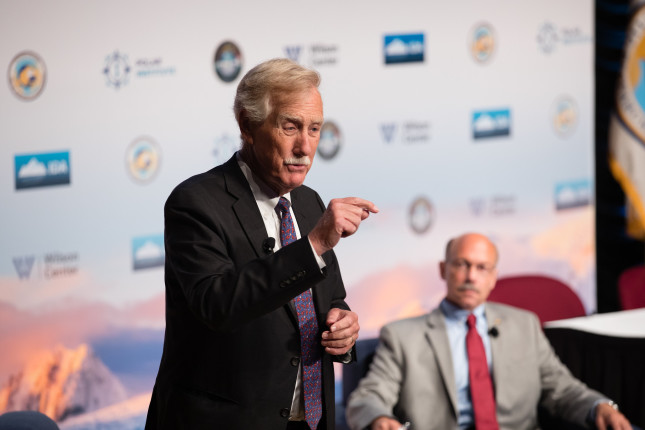
›“We’re attempting to do something that’s never been done before in world history,” said Senator Angus King (I-ME). “The peaceful development of a major new physical asset.” He spoke of the Arctic Ocean at the 8th Symposium on the Impacts of an Ice-Diminishing Arctic on Naval and Maritime Operations. The symposium was hosted by the Wilson Center’s Polar Institute, in partnership with the U.S. Arctic Research Commission, U.S. National Ice Center, Arctic Domain Awareness Center, Patuxent Partnership, St. Mary’s College of Maryland, and the Ronald Reagan Building and International Trade Center.
-
Lost in Translation: How Building “Strong” Institutions can Diminish Human Security in the Global South
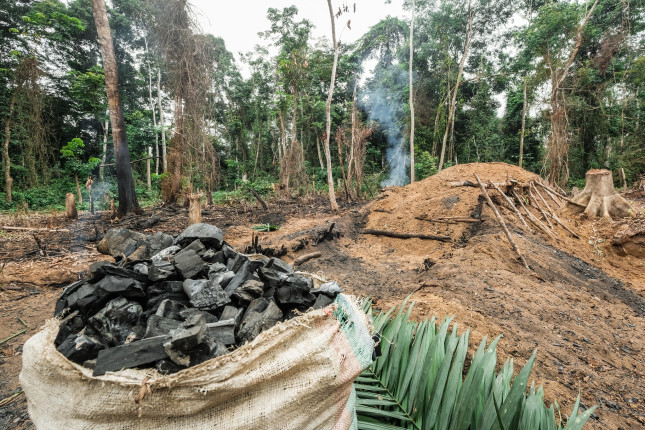
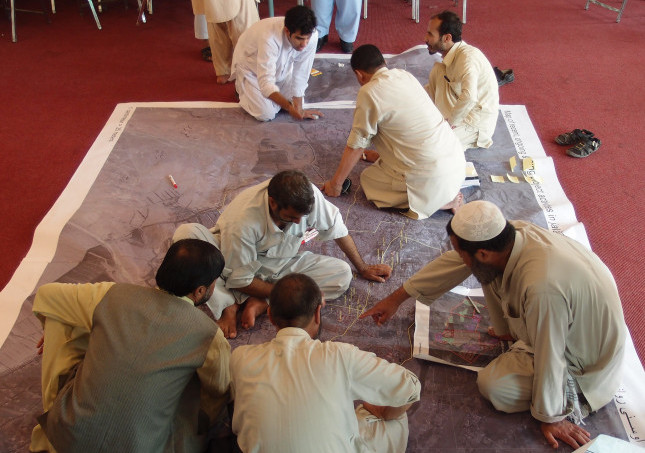
›In the Global South, natural resource conflict has largely been considered a consequence of poor governance and weak political institutions. The international community’s solution? Build “green” governance capacity as a way to mitigate violent conflict and improve environmental outcomes. For the international development community, this has meant introducing laws, policies, and practices based on international standards of best practice, and training local regulators to adhere to those standards.
-
When Climate Change Meets Positive Peace
›Climate change is being increasingly framed as a security issue—a “threat multiplier” that can amplify the risks of breakdowns in peacefulness. Yet, even extreme climate hazards do not always lead to higher levels of violence.
Showing posts from category natural resources.