-
Great Power Resource Competition in a Changing Climate: New America’s Natural Security Index
›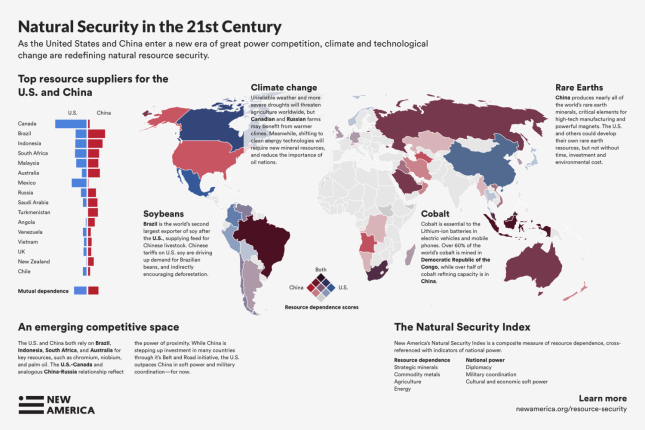
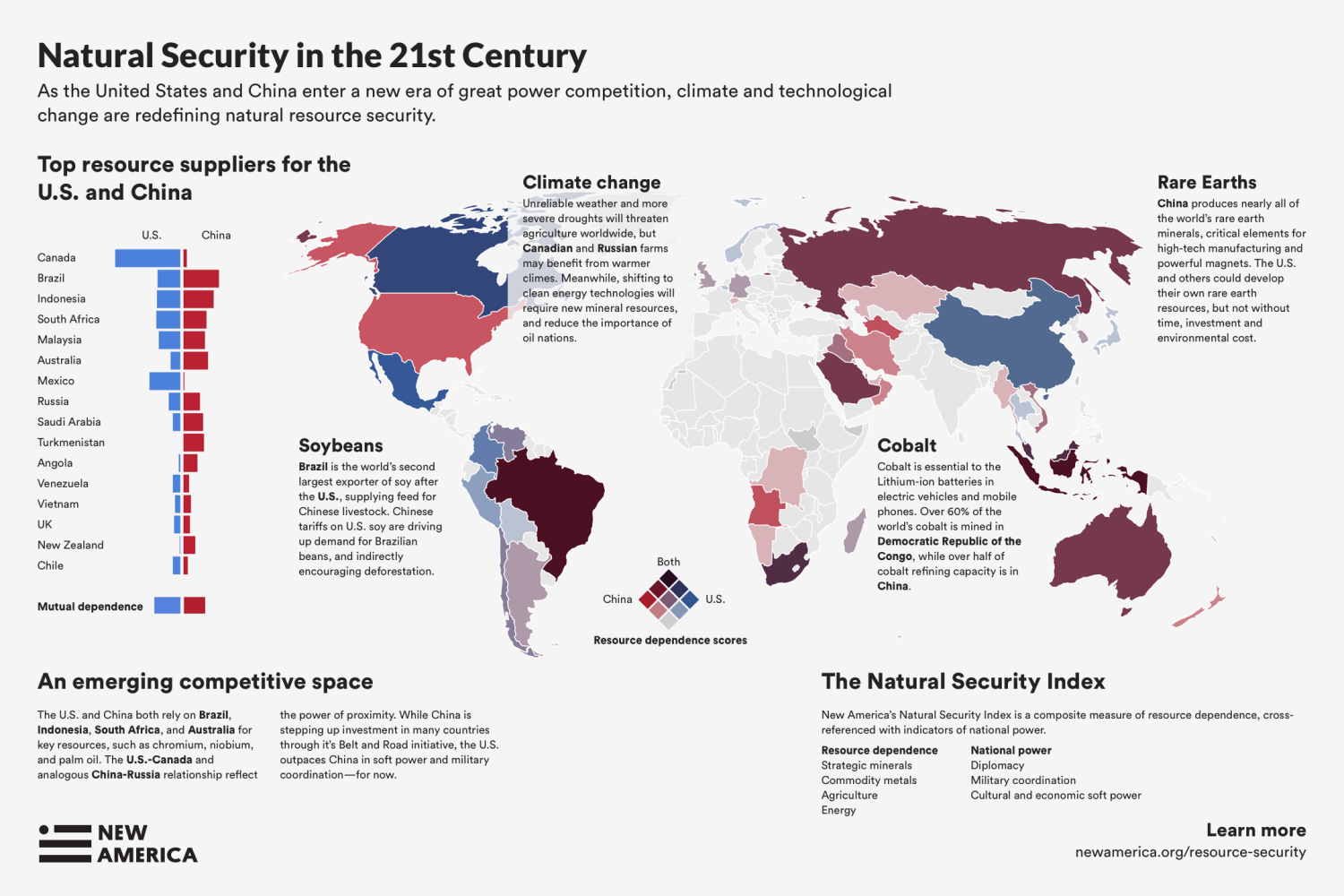
Late last year, Reuters reported that the U.S. Defense Department plans to fund mining and processing operations for rare earth elements—a class of minerals for which China dominates the global market, producing over 80 percent of the world’s supply. In the past, China has restricted exports of rare earths, and recently threatened to do so again. Even with a phase one trade deal hammered out between the United States and China, natural resources are likely to remain a point of geopolitical tension.
-
By, for, and of the People: How Citizen Science Enhances Water Security
›
In the Peruvian Andes, where cropland is irrigated and water availability is variable at best, knowledge of highland hydrology is crucial to survival. However, until recently, the locals did not have adequate information to be able to use their water efficiently. So the community worked with a nonprofit to develop a non-specialist/non-researcher run data-gathering project to monitor the water in the region to optimize its use: in short, they developed a citizen science project.
-
Without the Enforcement of Environmental Laws, Petroleum Infrastructure Projects in Timor-Leste Come at a Cost
›Ignoring environmental laws in Timor-Leste to build a petroleum infrastructure project could mean serious problems for communities including environmental destruction, loss of land, and loss of livelihoods. Communities are already facing some of these problems because project proponents haven’t fulfilled their legal obligations to do extensive environmental research and planning to mitigate any damage to the local environment. The supporters have also failed to meaningfully involve local communities, including interested experts, academics, and civil society groups, in this process.
-
Glass Half Full? Innovative Technologies Could Increase Global Water Security
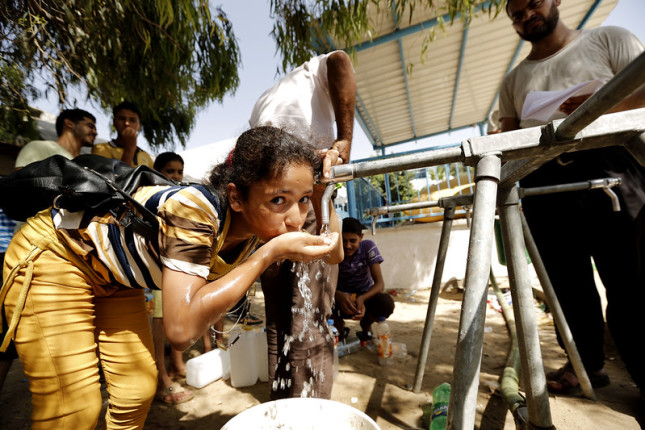
›By 2050, the UN estimates that 52 percent of the world’s population will be at risk for water insecurity. Climate change is threatening water availability through increased temperatures and drought, unpredictable rain, and the growing threat of more pollution. Globally, most wastewater reenters the water cycle without being treated, introducing dangerous unseen particles including pharmaceuticals, diseases, and larger waste products such as plastics.
-
Mohamed’s Story: The Climate Conflict Trap in the Lake Chad Basin
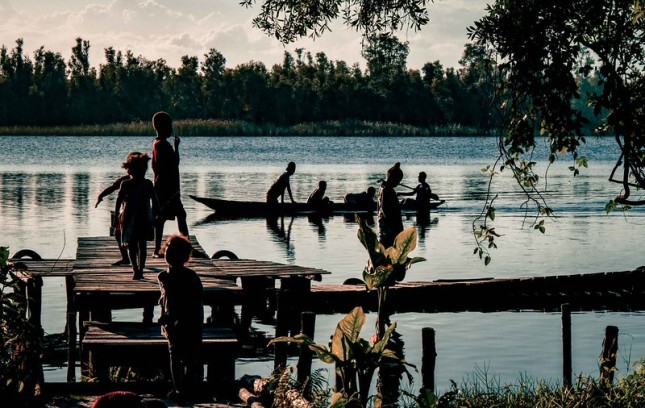
›Years ago, Mohamed’s family had enough to eat, despite being poor. His daughter owned a vegetable stall at a bustling market in northeastern Nigeria. The family had options: during the dry season, when Lake Chad was shallow, Mohamed could farm; and during the wet season, he could fish or graze his cattle.
-
The Environment Has Become a Hostage of Armed Conflict
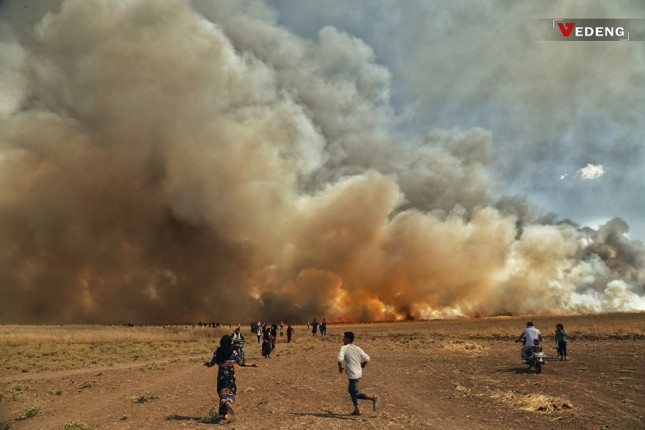
›This year, 2019, marked a new nadir for the environment that may reflect an ominous trend in warfare: Environmentally sensitive targets are being weaponized and taken hostage. Farmland went up in flames and burning oil tankers dominated the headlines, serving as a stark reminder of conflict’s ripple effects.
-
Upcycling ‘Beach Snow’: Clearing Taiwan’s Oyster Farming Marine Debris
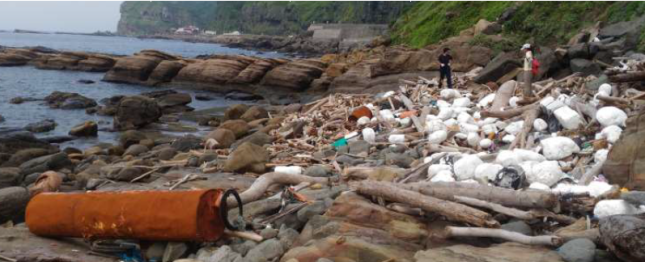
›“If you go to some Taiwan beaches, you can see snow,” said Chieh-Shen (Jason) Hu, Ocean Initiative Coordinator for Taiwan’s Society of Wilderness, a 6,000-member organization similar to Sierra Club. Hu was referring to pervasive Styrofoam marine debris from western Taiwan’s oldest industry, oyster aquaculture.
-
Hydro-Nationalism: Future Water Woes Call for Radical New Borders
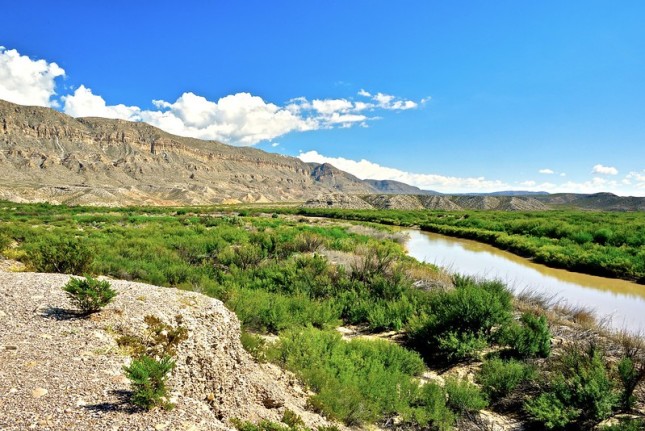
›International political boundaries are arbitrary creations. Today’s borders are better described as imaginary lines on maps, rather than hard barriers between states. Often using mountains, rivers, or other geographical landmarks, modern borders are entrenched in historic tradition rather than logic and fact. As a result, today’s international borders are poorly equipped to handle modern challenges, in particular climate change, which has already begun to threaten the most important state resource, fresh water.
Showing posts from category natural resources.