-
Weekly Reading
›The NYT’s Andrew Revkin muses about whether “whether family planning programs should be able to get into the carbon business,” citing a study released by Oregon State University that says that the number of children an American resident has could have the greatest environmental impacts of any decision taken by that individual. Reporting on the study, The Oregonian observes that “having fewer children is best way to reduce your carbon footprint.” An interactive graphic from Breathing Earth maps the relationship between population and carbon emissions.
-
Senate, Pentagon Focus on Climate-Security Challenges
›July 31, 2009 // By Brian Klein “Climate change may well be a predominant national security challenge of the 21st century, posing a range of threats to U.S. and international security,” said Sharon Burke, vice president for Natural Security at the Center for a New American Security (CNAS). Her remarks at a July 21 Senate Foreign Relations Committee hearing on climate change and security—along with those of two retired vice admirals and former Senator John Warner—amplified the growing chorus of national security experts and military personnel urging Congress to act promptly to address the security implications of climate change.
Vice Admiral Lee Gunn, USN (Ret.), called climate change “a clear and present danger to the United States of America,” while Burke cited a 2007 report from the Center for Naval Analysis that defined climate change as a “threat multiplier.”
Security Link Could Push Senate Climate Bill
Senator John Kerry, chair of the Senate Foreign Relations Committee, scheduled last week’s hearing on climate’s security links in a bid to bolster support for congressional action on climate change, which is currently stalled in the Senate. “Just as 9/11 taught us the painful lesson that oceans could not protect us from terror, today we are deluding ourselves if we believe that climate change will stop at our borders,” he said.
Former Senator John Warner echoed this sentiment, noting that the hearing was an opportunity to “educate the American public on these potential risks to our national security posed by global climate change.”
“Leading military, intelligence, and security experts have publically spoken out that if left unchecked, global warming could increase instability and lead to conflict in already fragile regions of the world. If we ignore these facts, we do so at the peril of our national security and increase the risk to those in uniform who serve our nation,” stated Warner, who recently launched the Pew Project on National Security, Energy, and Climate with the Pew Environment Group.
Pentagon Looks to Reduce Reliance on Oil and Drive Innovation
Burke explained that the phenomenon will not only pose “direct threats to the lives and property of Americans” from wildfires, droughts, flooding, severe storms, the spread of diseases, and mass migrations, but will also have “direct effects on the military,” including problems with infrastructure and the supply chain.
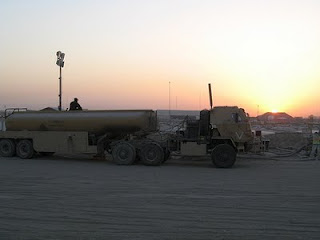
As a massive consumer of energy—110 million barrels of oil and 3.8 billion kilowatts of electricity in 2006 alone—the Pentagon has recognized its vulnerability to disruptions in fossil fuel supplies, as well as its potential to develop alternative technologies. As ClimateWire’s Jessica Leber writes in the New York Times: “The long logistics ‘tail’ that follows troops into the war zone—moving fuel, water and supplies in and waste out—risks lives and diverts major resources from fighting.”
According to Leber, two-thirds of the tonnage in Iraq convoys was fuel and water. To mitigate such vulnerability in the future—not to mention in arid, mountainous Afghanistan—DoD has begun testing ways to turn waste into energy, distribute power through “microgrids,” develop jet fuel from algae, desalinate water using little energy, and purify wastewater on a small scale.
“While the military by itself won’t make a market for plug-in vehicles or algae-based jet fuel,” notes Leber in an earlier ClimateWire article, “its investment power can bump emerging climate-friendly technologies onto a larger commercial stage.”
At the hearing, Burke warned against the possible knock-on effects of switching dependence from fossil fuel to other resources like lithium for lithium-ion batteries in electric cars.
The Military Must Manage Uncertainty
Vice Admiral Dennis McGinn, USN (Ret.), a member of the CNA’s Military Advisory Board, dismissed the argument that climate data and projections are too uncertain to form a solid basis for action. “As military professionals,” he told the Senate committee, “we were trained to make decisions in situations defined by ambiguous information and little concrete knowledge of the enemy intent. We based our decisions on trends, experience, and judgment, because waiting for 100% certainty during a crisis can be disastrous, especially one with the huge national security consequences of climate change.”
“The future has a way of humbling those who try to predict it too precisely,” Kerry said at the hearing. “But we do know, from scientists and security experts, that the threat is very real. If we fail to connect the dots—if we fail to take action—the simple, indisputable reality is that we will find ourselves living not only in a ravaged environment, but also in a more dangerous world.”
Photo: A convoy of the U.S. Army’s 515th Transportation Division moves fuel around Baghdad, Iraq. Courtesy Flickr user heraldpost. -
Lithium: Are “Blood Batteries” Next?
›July 17, 2009 // By Geoffrey D. DabelkoThe strategic minerals debate is back—but starring some new rocks. One that has received much recent attention is lithium, which is used in cell phone batteries, as well as those under development for electric cars.
Turns out lithium isn’t found in too many places. Around 50 percent of known reserves are in Bolivia, underneath some very dramatic and desolate salt flats. Worldfocus has a terrific news story that gives a glimpse of the place, the politics, and the battle over lithium extraction. Talk of an OPEC-like lithium cartel with China and Chile suggests that the politics at the international level will be just as contentious as the Bolivian domestic scene.
Our good friends over at the Center for New American Security are taking a fresh and systematic look at the strategic minerals question in their new Natural Security initiative. And we are hearing more and more about it from the advocacy community. For example, ENOUGH has ramped up its Come Clean 4 Congo campaign, which stresses the links between our cell phones, mineral extraction, and continuing violence in the Democratic Republic of the Congo. It is reminiscent of the “blood diamonds” campaigns that led to the Kimberly Process.
The lithium story and the complex social, economic, and political disputes it could engender in Bolivia should flag for us an important consideration in the fight against climate change: trying to do right by climate change and energy security might trigger unforeseen conflicts. Greening our transportation sector with more powerful batteries is going to create a new set of winners and losers around the material inputs like lithium.
We need to be much more cognizant of these impacts as we move forward in addressing climate change and the unsustainable use of fossil fuels. The Wilson Center’s Environmental Change and Security Program will be tackling this specific dimension of the climate and security debates—the potential for conflict induced by climate mitigation efforts—in the months ahead. -
Weekly Reading
›“A warming planet will spread disease, shrink water resources, and deplete crops, creating conditions that produce more famine and more conflict,” said President Barack Obama in Accra, Ghana, on his first trip to sub-Saharan Africa. “All of us–particularly the developed world–have a responsibility to slow these trends–through mitigation, and by changing the way that we use energy. But we can also work with Africans to turn this crisis into opportunity,” he went on to say.
The United Kingdom’s Department for International Development (DFID) released “Eliminating World Poverty: Building Our Common Future,” a white paper setting its goals for poverty alleviation and sustainable development, including improving climate change adaptation and reproductive health services in developing countries.
In Foreign Policy, Richard Cincotta compares Iran’s youth bulge and democratic reform movement with the experience of China 20 years ago, concluding that the conservative government’s ruthless response will impede the development of durable liberal democracy.
The Natural Resources Defense Council reports that global warming is exacerbating the spread of mosquito-borne dengue fever in the Americas. Harvard’s Dr. Paul Epstein recently discussed similar incidences of climate change-related disease proliferation at the Wilson Center.
In “Well Oiled: Oil and Human Rights in Equatorial Guinea,” Human Rights Watch “details how the dictatorship under President Teodoro Obiang Nguema Mbasogo has used an oil boom to entrench and enrich itself further at the expense of the country’s people.” -
Post-Conflict Recovery in Biodiversity Hotspots
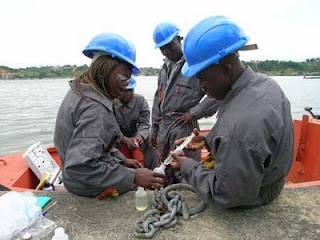
›The prevalence of armed conflict in areas of high biodiversity is alarming, though not entirely surprising. According to “Warfare in Biodiversity Hotspots” (abstract online), which was published earlier this year in Conservation Biology, 80 percent of the major armed conflicts between 1950 and 2000 took place in biodiversity hotspots. While natural resources are rarely the principal causes of conflict, their allocation and ownership are frequently among its drivers. -
Climate Change Threatens Water Supplies in Australia, California
›July 1, 2009 // By Brian KleinClimate change “could be the straw that breaks the camel’s back” for California’s precarious water system, said W. Michael Hanemann of the University of California, Berkeley, at an event hosted by the Wilson Center’s Environmental Change and Security Program on June 15, 2009. He was joined by Jon Barnett of the University of Melbourne, who discussed some of Australia’s policy responses to its increasingly dry, variable climate. -
VIDEO: Geoff Dabelko on the Global Environmental Change and Human Security Conference (Day Two)
›June 24, 2009 // By Wilson Center StaffThe second day of the Global Environmental Change and Human Security conference in Oslo illustrated the evolution of the environment, conflict, and security debate. The key discussion came from a panel entitled “Environmental Change, Conflicts, and Vulnerability in War-Torn Societies” that featured Ken Conca of the University of Maryland; David Jensen of the UN Environment Programme (UNEP); and Arve Ofstad of the Norwegian Agency for Development Cooperation.
In this short video, Geoff Dabelko, director of the Wilson Center’s Environmental Change and Security Program and chair of the panel, notes that in the last 10 years, researchers and practitioners have moved from a nearly exclusive focus on the connections between environmental scarcity or abundance and conflict to a wider set of questions about environment’s roles all along the conflict continuum—including prevention, active conflict, conflict termination, and post-conflict peacebuilding and reconstruction. This wider agenda includes questions of cooperation and peacebuilding around environmental interdependence. Jensen’s UNEP post-conflict office directly engages these multiple environment-conflict connections, and he shared both practical lessons learned and concrete UN points of entry.
Dabelko also comments that human security, enunciated most prominently in the 1994 UNDP Human Development Report, has raised the profile of a wider set of vulnerabilities than those coming directly from the end of a gun. This more inclusive agenda brings livelihoods, human rights, and social and cultural values more squarely into the analysis of insecurity. -
Managing Environmental Conflict in Latin America: Resolution Rests on Inclusion, Communication, Development
›June 23, 2009 // By Brian KleinPublic policies governing natural-resource extraction in Latin America “are often seen as arbitrary” and illegitimate by communities, said Mara Hernández, director of the Centro de Colaboración Cívica, A.C. – México, at the Wilson Center on June 3, 2009. Pablo Lumerman, director of Argentina’s Fundación Cambio Democrático, and Carlos Salazar, director of Socios Perú: Centro de Colaboración Cívica, joined Hernández to share methods of resolving environmental disputes. The event was co-sponsored by the Wilson Center’s Environmental Change and Security Program and Latin American Program and held in conjunction with Partners for Democratic Change.
The Balance of Power
Fashioning effective and equitable natural-resource policies requires the participation of all the relevant stakeholders, especially community members who are directly affected, Hernández contended. Consensus building must supplant unilateral decision-making by individual authorities, such as local or national governments.
For example, Fundación Cambio Democrático has successfully constructed a “Platform of Dialogue for Responsible Mining Development,” with the Argentinian government as an early and essential partner. The effort is an outgrowth of the organization’s Extractive Industries Program, which examines conflict over mining in Argentina.
Similarly, Salazar and Socios Perú have tried to ensure that the Peruvian government and companies operating in Peru build relationships with local communities from the moment they are interested in communities’ land, not just once a concession is secured.
When a conflict broke out in the Upper Sea of Cortez in 2005 between fishers and environmentalists over protection of the vaquita marina, a rare porpoise, Centro de Colaboración Cívica convened representatives from the community, NGOs, and corporations. The diverse stakeholders formed an organization called Alto Golfo Sustentable (“Sustainable Upper Gulf”), which successfully lobbied the Mexican government for better protection of the vaquita, improved monitoring of illegal fishing, and sounder management of marine resources.
Transparency and Communication“Lack of clear and on-time information to the communities” has been a primary driver of conflict around extractive industries, said Salazar. Stakeholders will often disseminate their own information, Lumerman cautioned, with each accusing the other of bias.
A neutral, third-party information provider can mitigate disagreement. For example, in order “to develop a system of information of public access…for all the stakeholders,” Fundación Cambio Democrático is creating a mining conflict map of Argentina, said Lumerman.
Cultural Sensitivity and Sustainable Development
Natural-resource extraction should be closely linked to the sustainable development of communities. Salazar emphasized that projects with a clear plan for “development, fighting against poverty, improving their way of life” are more likely to be met with approval. Lumerman cited the Cerro Vanguardia mining project as an example of a successful partnership that included local development into its long-term plan.
Top Photo: Heavy metal mine at La Oroya, Peru, one of the world’s most polluted places. Courtesy Flickr user Matthew Burpee.
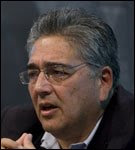
Photos of Mara Hernández, Pablo Lumerman, and Carlos Salazar courtesy Dave Hawxhurst and the Woodrow Wilson Center.
Showing posts from category natural resources.
 “Climate change may well be a predominant national security challenge of the 21st century, posing a range of threats to U.S. and international security,” said
 The prevalence of armed conflict in areas of high biodiversity is alarming, though not entirely surprising. According to “
 Climate change “could be the straw that breaks the camel’s back” for California’s precarious water system, said W. Michael Hanemann of the University of California, Berkeley,
  Public policies governing natural-resource extraction in Latin America “are often seen as arbitrary” and illegitimate by communities, said Mara Hernández, director of the
 “Lack of clear and on-time information to the communities” has been a primary driver of conflict around extractive industries, said Salazar. Stakeholders will often disseminate their own information, Lumerman cautioned, with each accusing the other of bias.