-
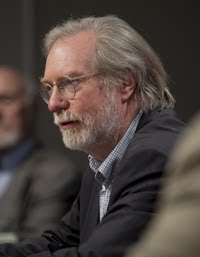
Interview With Wilson Center Scholar Jill Shankleman: Could Transparency Initiatives Mitigate the Resource Curse in Afghanistan?
›June 25, 2010 // By Schuyler Null
In the wake of The New York Times article detailing a potential mineral bonanza in Afghanistan, Senators Ben Cardin and Dick Lugar earlier this week published an op-ed in support of a bill that would create “an international standard for transparency in law” by requiring oil, gas, and mining industries to report amounts paid for drilling/mining rights in their SEC filings. A similar program, albeit a voluntary one, already exists – the Extractive Industries Transparency Initiative (EITI). The senators, however, raised questions about the ability of EITI to ensure transparency and accountability of payments for future mining rights to Afghanistan’s government. Joining EITI was a “good first step,” they say, “but too many countries and companies remain outside this system.”
-
Backdraft: The Conflict Potential of Climate Mitigation and Adaptation
›The European Union’s biofuel goal for 2020 “is a good example of setting a target…without really thinking through [the] secondary, third, or fourth order consequences,” said Alexander Carius, co-founder and managing director of Adelphi Research and Adelphi Consult. While the 2007-2008 global food crisis demonstrated that the growth of crops for fuels has “tremendous effects” in the developing world, analysis of these threats are underdeveloped and are not incorporated into climate change policies, he said. [Video Below]
-
Women Deliver in the Climate Change Debate
›One of the hottest topics at the “Women Deliver” conference earlier this month—where panels ran the gamut from HIV prevention and family planning to gender-based violence and maternal health—was the intersection of women’s reproductive health, global population growth, and climate change.
As panelists at three of the conference’s climate-focused events noted, women in poor, rural areas are especially vulnerable to the impacts of climate change. In many developing countries across Africa, Asia, and Latin America, women take on much of the burden of farming, gathering fuel, and supplying fresh water for their communities. As a result, they bear the brunt of hardships when climate change alters seasonal precipitation patterns, or increases scarcity of key natural resources.
In addition, “the more assets, the less vulnerable one person is,” said Lorena Aguilar of the International Union for Conservation of Nature. “Worldwide, compared to men, women tend to have more limited access to resources that would enhance their capacity to adapt to climate change—including land, credit, agricultural inputs, decision-making bodies, technology, and training services.”
Women’s hardship in the face of climate change can also have a negative effect on reproductive health. Aguilar remarked that during the dry season in parts of rural India and Africa, 30 percent or more of women’s daily caloric intake is spent on fetching water alone. The enormous physical strain placed on women’s bodies because of those tasks has resulted in higher miscarriage rates among those populations, she noted.
Educating Girls to Protect the Environment
Organizations like the United Nations and the Global Gender and Climate Alliance have been working in recent years to bridge the gap between women’s rights and climate change, and reframe climate change in terms of human development. But to date, women’s struggles with climate change have not translated into meaningful economic, educational, or healthcare support at the local government level, with women’s welfare “at the very bottom of the priority list” for most developing countries, according to Nickie Imanguli with Advocates for Youth.
The unmet need for family planning tools and services is perhaps the movement’s principal challenge going forward. With an estimated 200 million women having an unmet need for family planning, unintended pregnancies could be exacerbating environmental problems such as depletion of forests, water, and other finite resources. But most panelists expressed optimism that the growing recognition of a connection between climate change and women’s reproductive health might lead to a boost in funding for family planning initiatives in underserved areas of the world.
Speakers at Women Deliver emphasized that reproductive health can be bolstered by improving educational opportunities for girls in poor rural areas. Joy Nayiga with Uganda’s Ministry of Finance Planning Economic Development noted that “girls are more likely than boys to drop out of school to help their mothers gather fuel, wood, and water.” This trend, she said, robs females of an opportunity for educational advancement, and heightens the likelihood they will end up starting families of their own while very young.
Nayiga and other panelists asserted that empowering females through education leads them to take greater control over their own sexual health, making it easier for them to start their families later in life, or perhaps have a smaller number of children.
Encouraging women to take a more active role in family planning in this regard serves as “a win-win situation for women, their communities, and the nations of the world,” by “bending down the overall trajectory of population growth,” asserted the Worldwatch Institute’s Robert Engelman.
Some speakers also argued that enabling women to delay motherhood if they want could yield direct environmental benefits for nations of the Global South that are struggling to adapt to climate change. Since women are often responsible for overseeing agriculture and forest resource management practices in their communities, they help create localized carbon sinks across the developing world.
“Women pull carbon out of the atmosphere and bury it, in farm soils, in trees that they grow,” noted the Worldwatch Institute’s Engelman, who even suggested women’s aggregate impact removing carbon could be more effective than cap-and-trade plans.
Moving Slowly From Talk to Action
Given both their vulnerability to the effects of climate change—and their potential to help offset those same impacts—“women are critical stakeholders in climate change moving forward,” said Population Action International’s Kathleen Mogelgaard. So far, however, while there may be growing discussion about giving women a more prominent seat at the table when developing climate change adaptation and mitigation plans, that has not yet happened.
“We’re not seeing big government investment in empowering women on the issue of climate change,” remarked Leo Bryant, with Marie Stopes International, a U.K.-based NGO specializing in sexual and reproductive health. Instead, Bryant said, it has been NGOs that have been doing much of the heavy lifting of bringing women into the conversation.
But many panelists felt that, in time, governments will recognize it is in their enlightened self-interest to link issues of gender rights and climate change. “By upholding women’s rights,” concluded the IUCN’s Lorena Aguilar, “we are in fact making one of the most crucial preparations associated to climate change that any society can make.”
Click here for additional New Security Beat coverage of reproductive health talks at the Women Deliver conference, or here for more coverage of the interplay between traditional gender roles and family planning.
Sources: International Institute for Sustainable Development, International Union for the Conservation of Nature, Marie Stopes International, Population Action International, Population Reference Bureau, The Times (U.K.), United Nations Development Programme, Women Deliver, Worldwatch Institute.
Photo Credit: “Climate Change Canvas” courtesy of Amnesty International. -
Trillions of Dollars of Minerals? Misusing Geology and Economics to the Detriment of Policy
›Monday’s New York Times article, “U.S. Identifies Vast Mineral Riches in Afghanistan,” triggered a memory of a 70s-era Popular Science magazine cover that screamed “$3 trillion of minerals on the ocean floor!” That article, along with speeches from promoters of deep seabed mining, built up the anticipation that there were windfall profits to be had from the deep seabed. From this gross misuse of geologic speculation came all the difficulties with the negotiations of Part XI of the Law of the Sea Convention — and the United States’ continuing struggle to join the convention.
One of my roles on the U.S. delegation to the Law of the Sea Conference in 1979 and 1980 was to play defense against the misuse of geology and mineral economics in the negotiations, both by countries on the other side of the negotiating table and by seabed mining promoters at home. Part of that task was to gather and accurately “translate” the scientific and economic data from mineral statistics agencies, including the U.S. Bureau of Mines (since incorporated into the U.S. Geological Survey [USGS]), for policymakers and diplomats.
At times I felt like a goalie in the Part XI negotiations, blocking shots being taken by the forwards of the other teams that were promoting seabed mining as an economic bonanza. Unfortunately, by that time, too many groups had a vested interest in portraying the profitability of deep seabed mining and we couldn’t (yet) turn back the clock to a more reasonable approach.
When I read this week’s article in The New York Times, I had the same feeling of policy being manipulated by misuse of geologic data. With some help, I located the original DOD powerpoint presentation. The differences illustrate how science and economics can be misused to cause extensive damage in the policy process—a lesson I learned from the Law of the Sea negotiations.
The New York Times left out two important items from the DOD graphic accompanying the article:
First, the word “undiscovered” was left out; the original phrase reads “known and estimated ‘undiscovered’ resources anticipated by USGS and AGS and using prices as of 12/09.” Not only does that hide the important fact that the resources cited have not yet been discovered, it obscures that the estimates are largely defined by the USGS as either “hypothetical” and “speculative” resources — not the kind of numbers on which to stake a strategy for war and peace.
Second, the article omitted a caveat from DOD’s original powerpoint slide: “USGS agrees with the assertion: ‘At least 70 percent of Afghanistan’s mineral resources are yet to be identified.’”
Therefore, less than 30 percent of DOD’s estimated value is based on tangible evidence of deposits and 70 percent of the estimate is based on hypothetical or speculative resources of uncertain grade and abundance.
The value depends not just on metal content but also on the type of mineral, the grade (percent metal content) in the deposit, the size of the deposit, the distance from fuel and power, the amount of earth that covers the deposit, among other factors. If this report had geological merit as a USGS report, it would have said how much ore was in place at what grade.
Assigning a value to as yet undiscovered deposits is an effective way to influence a policymaker in a powerpoint presentation or generate a headline story from a reporter who has no experience with the terms of art used by geologists. But it has little to do with reality.
So, I drafted these points in response to the story in The New York Times:- According to the USGS, at least 70 percent of Afghanistan’s mineral wealth as estimated by the DOD is hypothetical or speculative, based on geologic theories, not measurement.
- The value estimates are grossly exaggerated by including sub-economic resources because they fail to consider capital and operating costs of recovery and processing to recover ore and convert it to finished metal.
- The DOD assessment fails to note whether the known or hypothetical deposits in Afghanistan are capable of competing economically with known and hypothetical deposits elsewhere in the world.
- Seventy-six percent of the estimated value comes from iron and copper, both of which are already found and produced in many locations around the world in commercially viable mines.
- The DOD values fail to distinguish between economically viable deposits and those that cannot be profitable in the foreseeable future, or to note those that are entirely speculative.
- The headline value of nearly $1 trillion is grossly in error and misinforms policymakers as to the economic potential of mineral deposits in Afghanistan.
Caitlyn L. Antrim is the executive director of the Rule of Law Committee for the Oceans. This article originally appeared in The Ocean Law Daily. To subscribe, please email caitlyn@oceanlaw.org.
Read more on Afghanistan’s mineral wealth and transparency initiatives on The New Security Beat.
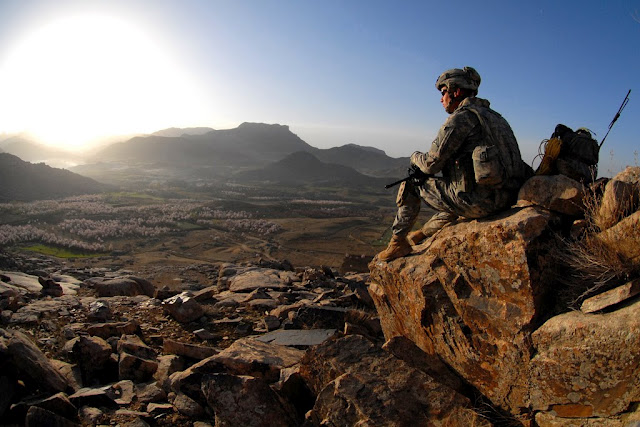
Photo Credit: “Sunrise in Afghanistan,” courtesy of flickr user The U.S. Army. -
Afghanistan’s Mineral Wealth: Gold Mine, Curse, or Illusion?
›June 15, 2010 // By Schuyler NullAccording to The New York Times, U.S. officials have discovered a veritable bonanza of heavy metals and rare earth minerals in Afghanistan that have the potential “to fundamentally alter the Afghan economy and perhaps the Afghan war itself”:The previously unknown deposits — including huge veins of iron, copper, cobalt, gold and critical industrial metals like lithium — are so big and include so many minerals that are essential to modern industry that Afghanistan could eventually be transformed into one of the most important mining centers in the world, the United States officials believe.
Reaction to the announcement has been mixed, with both Foreign Policy and Wired bloggers expressing skepticism about the timing of the announcement – in the midst of a difficult period of the war – and pointing out that the “discovery” is old news.
Others have expressed hope that the find, worth an estimated $1 trillion, might provide an injection of much-needed capital into one of the world’s worst economies. Environmental security expert Saleem Ali of the University of Vermont told Public Radio International’s The World that “there’s an opportunity now for the country to develop outside of a predominantly drug-dependent economy and if properly managed the minerals could provide a catalyst for all kinds of other activities as well.”
Afghanistan’s rare earth minerals in particular might prove to be extremely valuable as global demand continues to grow for these critical components of renewable energy technology and advanced electronics. The New York Times reports that an internal Pentagon memo says Afghanistan has the potential to become the “Saudi Arabia of lithium”:Just this month, American geologists working with the Pentagon team have been conducting ground surveys on dry salt lakes in western Afghanistan where they believe there are large deposits of lithium. Pentagon officials said that their initial analysis at one location in Ghazni Province showed the potential for lithium deposits as large of those of Bolivia, which now has the world’s largest known lithium reserves.
The existence of mineral reserves in Afghanistan is not new news, nor is foreign interest in them (see our coverage of Chinese copper investments at Aynak earlier this year). But the size of these resources warrants attention and raises new questions about the possibility of the unstable country falling victim to the natural resource curse – remaining mired in poverty while generating billions of dollars for an elite few.
Mineral wealth has a long history of fueling conflict in unstable countries, such as Sierra Leone, Nigeria, and the Democratic Republic of Congo. The DRC’s mining laws – which, like Afghanistan’s, were designed by the World Bank – have not prevented violent struggle to control the country’s valuable resources, as described by John Katunga in ECSP Report 12.
How can Afghanistan’s newly discovered mineral resources be developed without funding insurgents or fueling new conflicts? USAID’s Minerals and Conflict Toolkit offers a start with a set of recommendations and discrete steps that development agencies should take to avoid exacerbating the links between mining, valuable resources, and violent conflict.
Stay tuned for more analysis on Afghanistan’s development, resource curse dynamics, and what this all means for the continuing conflict.
Sources: Foreign Policy, National Public Radio, The New York Times, Public Radio International, Wired.
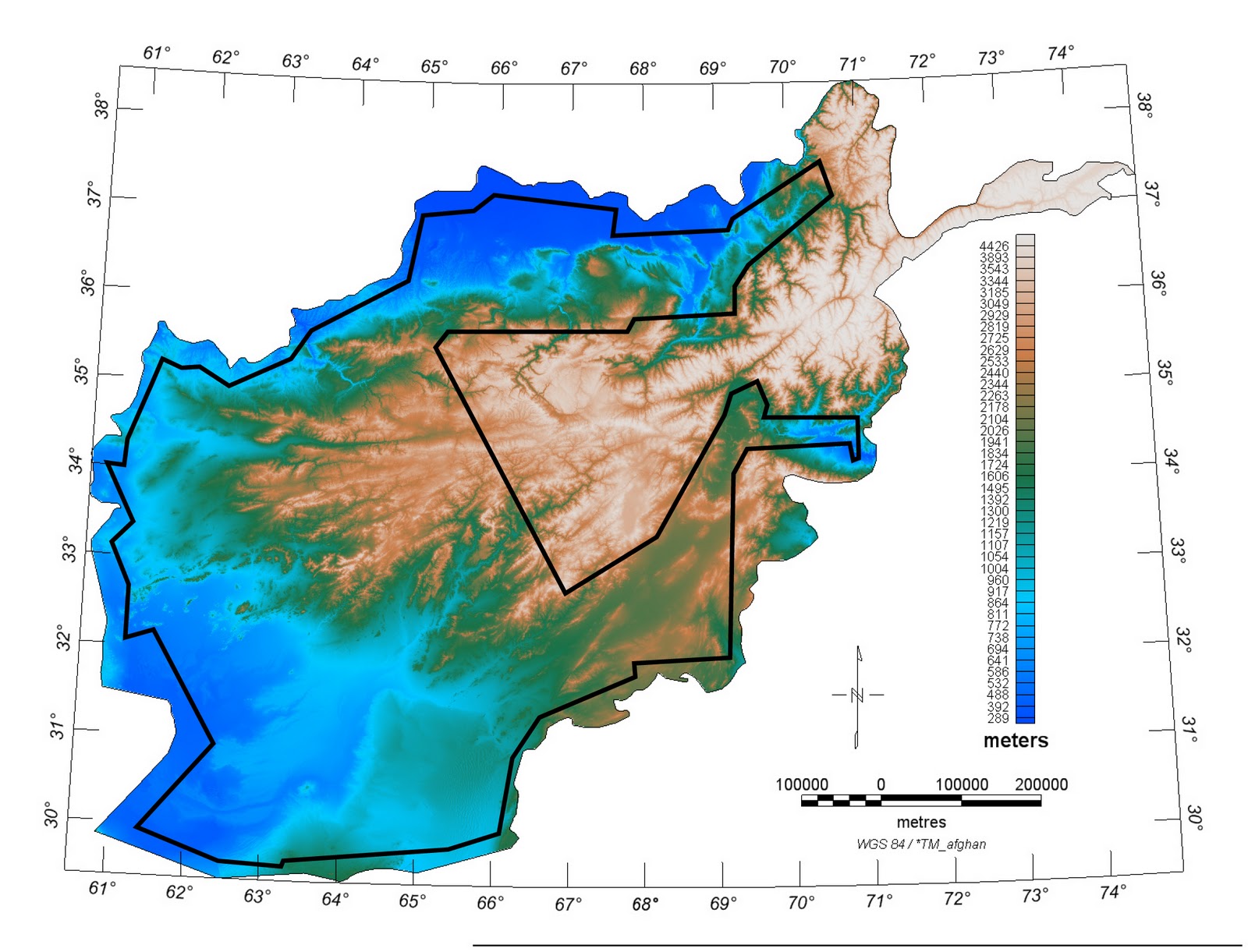
Photo Credit: “Remote Sensing Survey 2006” courtesy of the U.S. Geological Survey. -
Natural Resource Frontiers at Sea
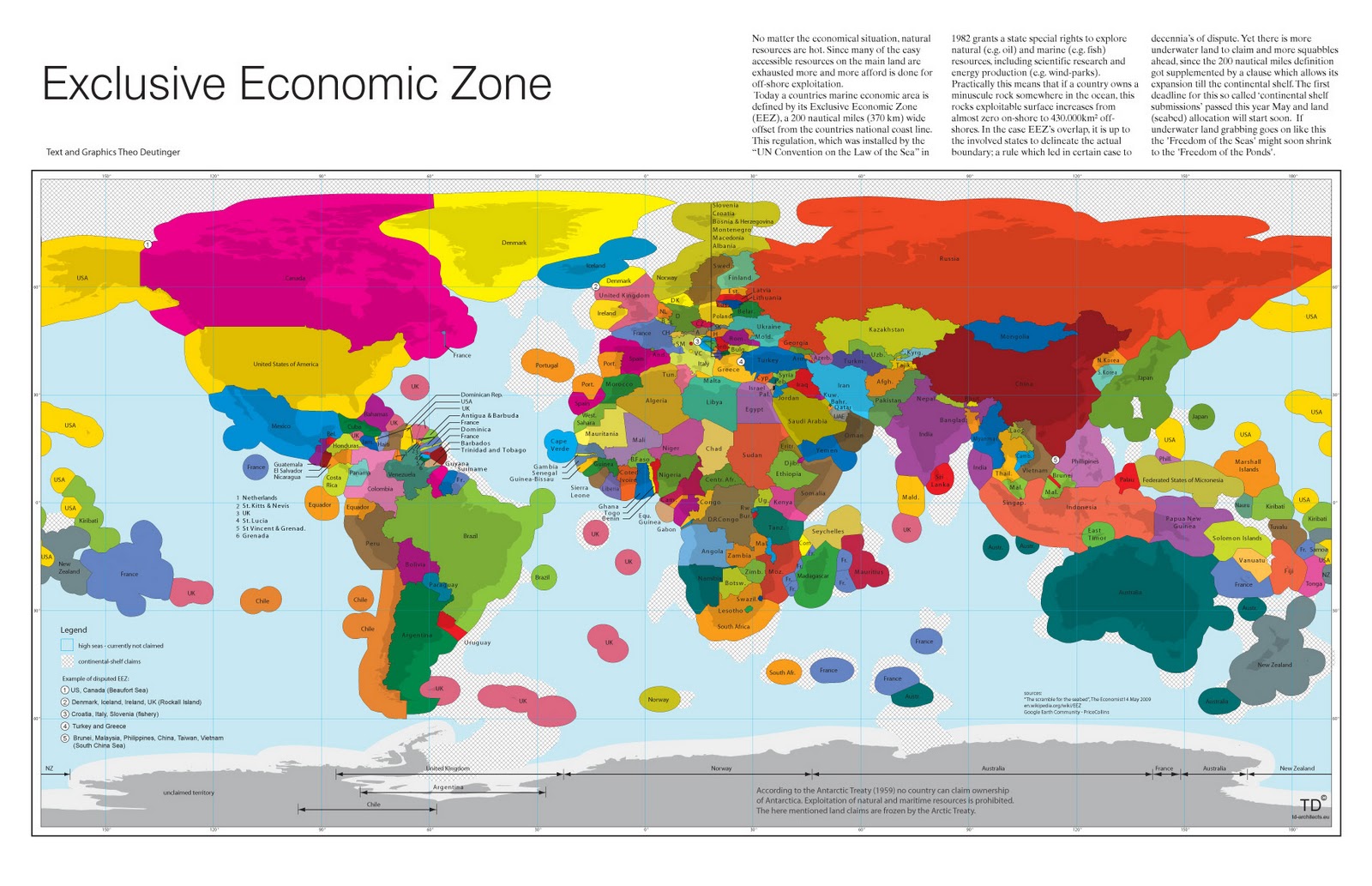
›As burgeoning populations and growing economies strain natural resource stocks around the world, countries have begun looking to more remote and difficult-to-access resources, including deep-sea oil, gas, and minerals. The UN Convention on the Law of the Sea (UNCLOS) guarantees exclusive access to these resources within 200 nautical miles of a nation’s sovereign territory – called an exclusive economic zone (EEZ). TD Architects’ “Exclusive Economic Zone” illustrates this invisible global chessboard and highlights some examples of disputed areas, such as the South China Sea, the Mediterranean, the Falkland/Malvina Islands, and the Arctic.
-
‘The Plundered Planet’: A Discussion With Paul Collier
›Who owns the planet’s natural wealth found underwater, below ground, and in the air? How do we reconcile our use of these assets with that of future generations? Such questions are the subject of Oxford Professor Paul Collier’s latest book, The Plundered Planet: Why We Must–and How We Can–Manage Nature for Global Prosperity, which he discussed at a recent Wilson Center event.
The author of The Bottom Billion and Breaking the Conflict Trap, Collier called Plundered Planet “the most important book I’ve written.” Resources are a “one-shot game,” he said; if we waste them, they’re gone. The next 10-20 years are “vital” to preserving natural assets as new technologies for removing them proliferate. We’re sucking fish up like “hoovers,” he said, and a combination of technology and economic growth are rapidly pushing mineral extraction into the few remaining frontiers.
Because time is short, Collier hopes his work will bring economists and environmentalists together. He said the two groups are largely at each other “cat and dog,” yet their objectives–environmental preservation and economic development–are not fundamentally opposed. In fact, to overcome polarization and produce key policy decisions, development and conservation must become partners.
Becoming Custodians, Not Curators
Collier said resource plunder can take one of two forms: “Where the few expropriate what belongs to the many”; and “where nature is expropriated by the present generation and burned up rather than benefiting future generations.” Both forms of plunder not only impede development, but are also unjust, he said.
Unlike other assets–such as books or records, which are typically owned by their authors or artists–natural assets have no human creators. A system whereby “natural assets are owned by the people who are lucky enough to live on top of them” creates “staggering inequality,” said Collier. Instead, resources must be shared equally among all citizens of a nation, including those not yet born.
Yet sharing nature’s wealth with generations to come does not mean leaving all fish in the sea, all trees on land, or all minerals underground. “We are not curators of natural artifacts,” Collier said. “We’re custodians of natural value.”
For the one billion people living in poverty, the development of natural resources can provide a path toward development, growth, and better lives, Collier argued, when properly and justly managed.
Filling the Gaps in Governance
Why have we largely plundered, rather than invested in, our resources thus far? What can be done to change the current principles of resource management? Collier’s short answer: governance.
For the poor countries in the “bottom billion,” Collier said the “broken decision chain” must be mended. The chain has six steps:- Discovering natural assets;
- Avoiding appropriation by a few at the expense of the many;
- Ensuring local inhabitants receive generous compensation for unavoidable environmental damage;
- Consuming in a way that benefits both the present and the future;
- Investing in the absorptive capacity of government; and
- Investing in domestic development.
Igniting a Movement
“There is no substitute…for building a critical mass of informed opinion,” Collier said. While technology enables plunder, it also creates a way for people to share knowledge at tremendous speeds and with wide audiences. The challenge, he said, “is to ignite the information transformation process.” A shift from plunder to sustainable management of transnational and developing country resources is a historic opportunity to benefit the world’s poor. “If these resources are harnessed for sustained development,” he said, “they can drag themselves decisively from poverty to prosperity.” The window of opportunity, however, is closing. -
Rare Earth: A New Roadblock for Sustainable Energy?
›June 7, 2010 // By Wilson Center Staff
The 2010 National Security Strategy emphasizes that energy independence is part of a larger strategy for national security, stating, “As long as we are dependent on fossil fuels, we need to ensure the security and free flow of global energy resources.”
However, the alternatives to fossil fuels–such as wind energy, hybrid vehicles, and energy-efficient light bulbs–could also lead to dependence on international resources. They require minerals known as rare earth elements or minerals (REEs). REEs are required for producing the magnets necessary for a variety of goods, including precision-guided munitions, computer hard drives, lasers, communication and radar systems, satellites, and color televisions.
But China has a virtual lock on the production of REEs. In response, U.S. policymakers requested the GAO produce a detailed assessment of REEs in the U.S. defense supply chain as part of the 2010 National Defense Authorization Act. At the same time, the Pentagon is changing its policies regarding acquiring and stockpiling REEs.
Demand for Rare Earth Predicted to Rise
CEO Mark Smith of Molycorp Minerals, a U.S. rare earth mining operation, told HardAssetsInvestor.com:Today the largest use of these magnets is in hard disk drives… We believe that may be changing as hybrid cars become more popular and the use of wind turbines becomes more widespread. Clearly, on a volumetric basis, these two new clean energy technologies could easily overtake hard disk drives in terms of the volume of permanent rare earth magnets required.
Despite their name, REEs are not necessarily rare–known stocks and demand vary widely by element–but supplies of some key elements are short, reports Robin Bromby of The Australian.
China Corners the Rare Earth Market
The growing attention paid to REE supply stems more from the location of mining and production facilities rather than pure scarcity concerns. According to the GAO assessment, China produced 97 percent of rare earth oxides in 2009, and it has established economic protections on rare earth exports. The United States Magnet Material Association has estimated that China’s consumption of rare earth materials will outpace its supply between 2012-2015.
“What we need to be careful of is that we don’t unknowingly change our dependence on foreign oil to a new dependence on Chinese rare earths,” Molycorp’s Smith told HardAssetsInvestor.com. While new technologies may change the type of battery used in hybrids, “the one thing that cannot change in electric vehicles or hybrid vehicles is the use of permanent rare earth magnets in the motors and generators. There is simply no substitute for those magnets,” said Smith.
U.S. Seeks Secure Supplies
Given the lack of substitutes, the United States is attempting to secure access to REEs. Known deposits exist in the United States, Australia, Brazil, India, Canada, South Africa, and Greenland. However, in order for the United States to procure secure access to REEs, they must both acquire mines and processing facilities for the multi-stage production process, which today takes place almost entirely in China.
The GAO estimates it may take up to 15 years for the United States to produce a finished product. In that time, Chinese consumption is expected to have vastly increased and demand for certain REEs may be very high.
Washington is taking this threat seriously. As pointed out by CNAS’ Christine Parthemore, the 180-day turnaround time on the GAO’s rare earth assessment was considerably shorter than for other assessments, including a plan for operational use of biofuels.
The Pentagon is revamping its stockpiling practices, reducing bureaucratic barricades to changing quotas, broadening buying options, and growing the array of stockpiled resources, the Wall Street Journal reported, adding:The rising competition for raw materials has sparked fears in the U.S. military that some materials that once seemed abundant could suddenly become hard to get at any price. In 2008 the military suspended or limited sales of 13 commodities it had previously considered excess. Last year it added 14 materials to its list of resources it considers for stockpiling, including specialty steels, lithium and some rare-earth elements, taking the total to 68. More additions are expected, said Ms. Stead of the Defense National Stockpile Center.
While it seeks secure supplies of REEs, the United States, and the defense community in particular, should take heed of the long history of minerals and conflicts around the world. Global demand for certain minerals has supported combatants in conflict areas; for example, control of coltan mines in the Democratic Republic of Congo, while producing only 1 percent of global supply, played a significant role in that country’s civil war.
The switch to alternative transportation fuels could similarly produce new patterns of global resource demand that spur or support conflict–a phenomena that will be explored in an upcoming ECSP event, “Backdraft: The Conflict Potential of Climate Mitigation and Adaptation.”
On the other hand, done correctly, mineral extraction could be a way to break the “resource curse” and increase cooperation rather than conflict. In Pakistan, “development and maintenance of an extractive mineral industry could revolutionize the Waziristan economy and infrastructure in the long-term,” says Natural Security, which could provide “an incentive for local cooperation.”
Ultimately, the way that the United States seeks to slake its hunger for resources will determine whether it can stockpile its way to security.
Tara Innes is a PhD student at the University of Maryland, studying conflict-environment linkages and an intern with ECSP.
Photo Credit: Adaptation of Periodic Table, courtesy Flickr user Destinys Agent
Showing posts from category natural resources.