Showing posts from category natural resources.
-
Watch: Alex Evans on Natural Resource Supply and Demand, Scarcity, and Resilience
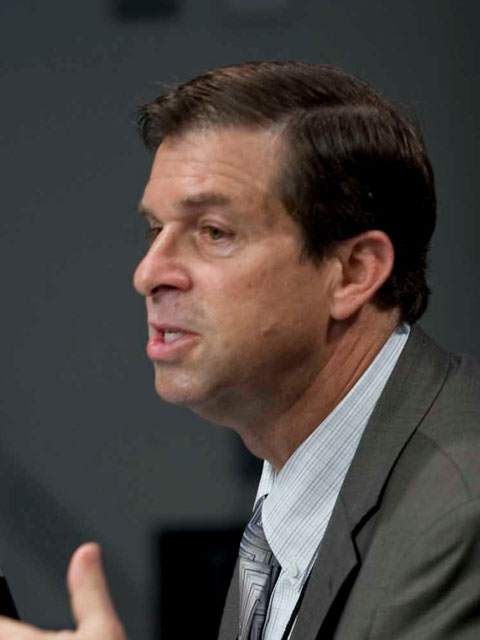
›October 27, 2010 // By Schuyler Null“The backdrop to the whole issue of scarcity is that demand is rising, but on the supply side, we’re increasingly hitting restraints,” said Alex Evans of NYU’s Center for International Cooperation in this interview with ECSP.
“Global population is growing, a kind of new global middle class is expanding, especially in emerging economies, and that means demand is rising across the board – particularly for energy, for food, water, and air space for our carbon emissions.”
Evans joined Mathew Burrows of the National Intelligence Council this September at the Wilson Center to talk about scarcity, natural resources, and conflict. He argued that building resilience and improving governance of natural resources is key to addressing growing demand, particularly in developing countries.
“With the Millennium Development Goals there’s been tremendous emphasis on increasing access to services, like health and education, which is important,” he said. “But we haven’t always brought the risk management aspect to the fore, and I think the emphasis we’re starting to see now on areas like social protection, climate adaptation, disaster risk reduction – these are areas that are much more concerned with resilience and it’s very welcome that they’re moving to the front of the development agenda.”
Poor governance in some developing countries has resulted in cases like in Nigeria and the Democratic Republic of the Congo, where natural resources are seen as more of a curse to the local people than a blessing. The intersection between supply and demand will continue to make these problems more acute.
“Over the last 10 years when international aid agencies have thought about governance, it’s usually been in terms of capacity building in the executive branch – areas like public financial management,” said Evans. “I think increasingly we’ll see more of the very, very political issues surrounding who owns natural resources like land, or water, or fisheries, or forests.”
Evans also highlighted other international governance issues like transboundary agreements (or lack thereof), the resiliency of the international trade system (or lack thereof), and existing legal infrastructure that will be challenged by a changing climate and growing demand.
“We haven’t really begun to think these issues through,” he said, “but these are potential conflict flashpoints for the future.” -
Rape, Resource Management, and the UN in Congo: What Can Be Done?
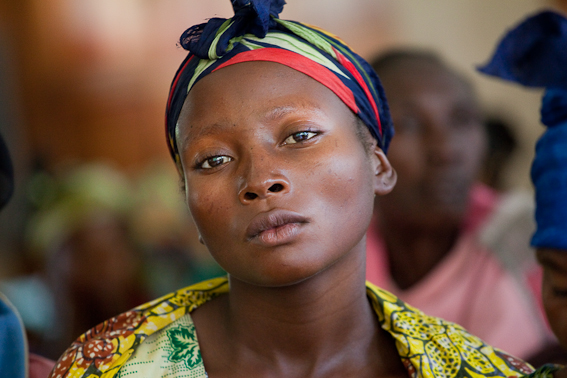
›Rape as a weapon of war is not unique to the Democratic Republic of Congo (DRC), but the scope and degree to which it occurs in this part of the world, especially in the resource-rich eastern provinces – an epicenter of violence during the war – is alarming and unprecedented.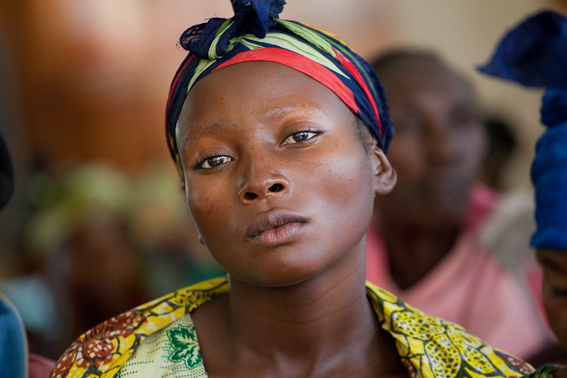
Walikale, the site of a recent scourge of rapes and violence is not unlike several other cities and villages in the Kivus and in the DRC in general. Rich in both tin and gold, Walikale is beset by a convergence of several opposing military factions: the rebel Congrès National pour la Défense du Peuple, (CNDP), whose members have supposedly been reintegrated into the official Congolese army; the FARDC, who have been accused of crimes as egregious as those committed by rebel armies; the Rwandan FDLR; Tutsi rebel factions; and numerous other smaller rebel groups and non-Congolese military groups.
The raping of more than 300 women, children, and men that occurred between July 31 and August 2 in the area of Walikale and the village of Ruvungi has made international news headlines and caused an uproar about the role and responsibilities of the United Nation mission in the DRC – MONUSCO (formerly MONUC) – and their capacity to actually keep the peace. UN peacekeepers, stationed about 30 kilometers away from the attacks, were reportedly aware of rebel activity in the area, but were not aware of the mass raping until after the crimes had been committed. Officials went on a fact-finding mission several days later once the rapes were reported by the International Medical Corps. Some, however, argue that officials should have acted differently, dispatching peacekeepers to the Walikale area as soon as they were made aware of rebel activity.
UN workers and other international organizations may have known about the rapes while they were occurring, and in retrospect the international community can criticize their inaction during the perpetration of this massive atrocity, but there are larger questions that loom: Why has the DRC become the “rape capital of the world?” And what can we do to enable UN peacekeeping forces to actually keep the peace?
More than two months after these crimes were perpetrated, rapes are no doubt still occurring across the region. The UN has declared that militias will be charged for the crimes in Walikale, arrests have already been made, and there are people doing good work to help the victims of sexual crimes after the fact. But despite these efforts and the ongoing presence of MONUSCO and efforts to integrate and train the FARDC as a legitimate army that protects the citizens of the country, sexual violence against civilians, and especially against women, has continued at an outrageous level.
The mandate of MONUSCO, carried over in part from its predecessor, MONUC, is to both protect civilians and backstop the efforts of the FARDC – a sometimes conflicting mandate. Designed to keep the peace and monitor the implementation of the ceasefire agreement, to “facilitate humanitarian assistance and human rights monitoring, with particular attention to vulnerable groups including women, children and demobilized child soldiers” (emphasis added), the UN mission has clearly not been able to successfully fulfill this mandate, even after almost 12 years on the ground. While the UN charter does not explicitly include the word “peacekeeping,” and there are those who argue that it is not properly structured to act as a peacekeeping body, the UN has more than 60 peacekeeping missions under its belt since its first mission in 1948 and the DRC is its largest ever. Still, the weak record of success of MONUC and of its successor MONUSCO together with the unreliability of the FARDC does not inspire confidence for the safety or security of civilians in the DRC.
Why the rapes continue and why neither MONUSCO nor the Congolese authorities are unable to stop them are complicated questions. Explanations range from political complications preventing peacekeepers from becoming involved in day-to-day human security to a simple lack of mission resources. The rapes in Walikale occurred in an area with abundant tin deposits and some of the largest gold mines in the country. The DRC, and the east in particular, is ripe with resources, and historically, underdeveloped regions characterized by such a heavy concentration of natural resources are often more cursed than they are blessed. The competition over resources and violence spurred by an unequal distribution of rents is perhaps part of the reason for such intense violence; it does not, however, explain why rape has become a weapon of choice, why women have become a target of war crimes in general, or why the level of violence against women in the DRC in particular has risen to such a horrifying level.
Justine Lindemann is program assistant with the Africa Program at the Woodrow Wilson Center.
Sources: AFP, AFRICOM, AllAfrica, BBC, Congo Siasa, IPS News, The New York Times, Panzi Hospital of Bukavu, UN, UN Office of the High Commissioner for Human Rights, VII Photo Agency.
Photo Credit: “Congo kivu,” courtesy of flickr user andré thiel. -
Watch: Population, Health, and Environment in Ethiopia
›Severely eroded and deforested, Ethiopia’s land is increasingly turning to desert, due to the country’s high population growth, unsustainable land use, and lack of land ownership. Featuring footage from my trip to Ethiopia last year, this video looks at the efforts of two projects to combat these devastating trends by meeting the country’s complex challenges with integrated solutions.
Ethiopia’s population is estimated at 85 million. Since 1900, the country has grown by nearly 74 million people, and the United Nations predicts this rapid growth will continue, reaching nearly 120 million people by 2025.
“Family planning is very crucial” to sustainable development, said Gebrehiwot Hailu of the Relief Society of Tigray (REST), located in the northern region of Tigray. “If the family has more children… he can’t feed them properly, he can’t send the children to school, because there is a food gap in the household.” REST uses a watershed planning model jointly developed by the community, health workers, and government agencies.
Realizing there is no silver bullet to development, projects like REST integrate population, health, and environment (PHE) programs to engage these challenges from all angles.
The Ethio Wetlands and Natural Resource Association (EWNRA), located in Ethiopia’s Wichi watershed, uses a combination of techniques to restore the watershed, create alternative livelihoods, strengthen health systems, and improve reproductive health.
“Through this integrated watershed intervention, the wetland is regaining its natural situation,” Shewaye Deribe of EWNRA told me. “The communities with their own bylaws, with their own watershed committee, with their own organization… are protecting these remaining forest patches.”
Sources: Population Reference Bureau. -
Assessing Our Impact on the World’s Rivers
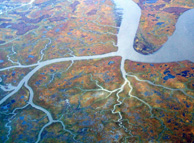
› In a special “Rivers in Crisis” issue of Nature, the lead article, “Global Threats to Human Water Security and River Biodiversity,” presents damning evidence that manipulation of river systems — through the construction of canals, levees, hydroelectric projects, and other infrastructure — has caused serious and lasting biological damage to watersheds throughout both the developing and developed worlds. The authors (all 11 of them!) report that key rivers have become shadows of their former selves in terms of the amount of aquatic life they can support. Without drastically improved stewardship of waterways, “we are pushing these river systems toward catastrophe,” warns Peter McIntyre, an article co-author.The human impact on the world’s river systems will be hard to reverse, says Margaret Palmer, author of a second Nature article on freshwater biodiversity loss, “Beyond Infrastructure.” Human-induced changes to watersheds affect local hydrology at a fundamental level, she contends, weakening rivers’ ability to deliver crucial “ecological goods and services” — such as clean water and nutrient-rich sediment loads — that help maintain the health of local environments and the human populations that depend on them. To fully understand the scope of the problem, Palmer says more research is needed to explore the linkages between biodiversity levels and “ecosystem services” that healthy rivers provide.
 -
Tracking the End Game: Sudan’s Comprehensive Peace Agreement
›The next nine months are critical for Sudan. The 2005 Comprehensive Peace Agreement (CPA) sets January 9, 2011, as the date when southern Sudanese will vote on secession or unity, and the people of disputed Abeyei will vote on whether to be part of North or South Sudan. Between now and July 2011, when the provisions of the CPA come to an end, we could see the birth of the new country of South Sudan—or a return to a North-South war if the referendum is stalled, botched, or disputed. (Few currently expect that a unity vote will create the “New Sudan” envisioned by the late John Garang.)
-
What You’re Saying: Uncommon Discourse on Climate-Security Linkages
›October 8, 2010 // By Wilson Center StaffMarc Levy’s response to Halvard Buhaug’s much ballyhooed paper, “Climate not to blame for African civil wars,” has drawn a number of thoughtful, interesting responses from our readers.
Idean Salehyan, of PRIO and the University of North Texas, defends Halvard’s paper and points out that Marshall Burke and his colleagues (see “Warming increases the risk of civil war in Africa”) are guilty of similar immodesty:I think Halvard would agree with all of this (I was a discussant on a previous version of this paper). His analysis simply points out problems with the Burke et al paper’s model specification. Buhaug’s is a modest contribution about model specification and appropriate data; it should be read as a response to an earlier paper rather than as a definitive statement about climate change and conflict. The headline is certainly provocative and unfortunate. However, he makes a useful corrective to overly simplistic causal claims, which typically dominate the popular literature on climate change and conflict. Yes, he could have been a little more modest with the title and with the conclusions, but then again, so could Burke and his colleagues.
Cullen Hendrix, of the Climate Change and African Political Stability team and also of the University of North Texas, highlights the complexity of the many degrees of conflict:Marc’s assessment is spot-on, so I won’t belabor the point other than to reiterate that Halvard is making a limited point about specific empirical relationships and causal pathways.
And Halvard himself chimes in as well:
In addition to the issues raised by Idean, I would add that there’s an unfortunate tendency to think about social conflict only through the lens of civil war. The environment and conflict literature is dominated by such studies. While civil war is undoubtedly an important subject of inquiry, there are many types of social conflict that could be related to climate change, warming, and environmental shocks. We need to pay increasing attention to conflict that doesn’t fit neatly into either the interstate or intrastate war paradigm.I believe we’re all pretty much on the same page here. My article has little to do with climate change per se; instead is focuses on short-term climate variability and the extent to which it affects the risk of intrastate armed conflict. Yet, as climate change is expected to bring about more variability and less predictability in future weather patterns, knowing how past climatic shocks or anomalies relate to armed conflict is relevant.
To follow the full conversation or respond yourself, see Marc Levy’s post, “On the Beat: Climate-Security Linkages Lost in Translation.”
I absolutely agree that breaking out of the state-centered understanding of conflict is an important next step. Similarly, as Marc points to, more research is needed on possible scope conditions and longer-term indirect causal links that might connect climate with violent behavior. That said, we should not ignore established, robust correlates of conflict. Climate change is not likely to bring about conflict and war in well-functioning societies, so improving the quality of governance and creating opportunities for sustainable economic growth, regardless of the specific role of climate in all of this, are likely to remain key policy priorities.
Photo Credit: “Symposium scene,” courtesy of flickr user Ian W Scott. -
Rare Earths Wake-Up, Aid Shocks, and the “Securitization” Distraction
›October 8, 2010 // By Geoffrey D. DabelkoHere are some useful links to environment, population, and security work that recently crossed my desk.
• China’s willingness to cut exports of rare earth elements to Japan over its East China Sea dispute woke up the larger world to the heavy dependency on China for supplying these key inputs into the modern (and green, in particular) industrial economy. Chinese attempts to take back their shot across the bow are bound to fail, as illustrated by U.S. Commerce Secretary Gary Locke’s call for the G20 to guarantee rare earth access, Wednesday at the Wilson Center.
• The National Geographic headline, “Replacing Oil Addiction With Metals Dependence?” raises another key long-term question, explored in detail on NSB in several previous posts.• “Aid Shocks Likely Cause Armed Conflict,” is the provocative title on a post from the new blog AidData. The post summarizes a forthcoming scholarly piece in the American Political Science Review that suggests cutting-off foreign assistance (what the author team calls an “aid shock”) significantly increases the likelihood of violent conflict.
• Dan Smith, Secretary-General of the UK-based NGO International Alert, has multiple nuggets in his latest riff, “From the UK gov’t, a good message on development and peace.” Like the Global Dashboard post I mentioned last week, Smith uses the recent speech by UK Development Secretary Andrew Mitchell as his foil. The MDGs aren’t the sum total of development and a new narrative is needed. “Securitization” is a distraction that should be put to rest, and integration and focus on conflict-affected countries are the centerpiece of a welcome new narrative coming out of London.
• Finally, Wilson Center President and Director Lee Hamilton is stepping down this fall after twelve years heading the Center. His time at the Center comes after 34 years as a Congressman from Indiana. Lee’s departure has engendered numerous profiles; this one in Foreign Policy is one of the best. -
Choke Point U.S.: Understanding the Tightening Conflict Between Energy and Water in the Era of Climate Change
›Without sharp changes in investment and direction, the United States’ current strategy to produce sufficient energy — including energy generated from clean sources — will lead to severe water shortages, and cause potentially major damage to the country’s environment and quality of life. These are the conclusions from a comprehensive reporting project, “Choke Point U.S.” presented by Circle of Blue at the Woodrow Wilson International Center for Scholars on Sept. 22, 2010.At the event hosted by the China Environment Forum and Environmental Change and Security Program, J. Carl Ganter, Director of Circle of Blue, Keith Schneider, Circle of Blue’s senior editor, and Jeffrey J. Fulgham, Chief Sustainability Officer and Ecomagination leader at General Electric, discussed the findings of “Choke Point: U.S.,” an analysis of the tightening linkage between the nation’s rising energy demand and finite domestic freshwater supplies. The four-month Circle of Blue project explored whether the nation’s transition to a clean-energy economy will have net dividends or deficits for U.S. freshwater resources in an era of climate change, rising population, and a projected 40-percent rise in energy demand by 2050.
“In the next decade, every single sector will need to reform due to water shortage. This is not in fifty years, this is in the next decade,” Schneider told an audience of more than 70 energy and environmental experts from the research, policy, business, and security sectors.As part of the project, Ganter said that Circle of Blue dispatched reporters to the coal fields of southern Virginia, the high plains of the Dakotas, California’s Central Valley, Midwestern farms, and other regions throughout North America. On one hand, their reporting revealed riveting narratives about the urgent contests between energy development and water supply, and how those contests can be resolved. On the other hand, the reports also recognized the extraordinarily difficult challenges that the energy-water nexus will pose to regional economies, governing practices, technological development, and the quality of natural resources.
Schneider, who directed the reporting, summarized the findings:- Unless the U.S. government plans more carefully, generating energy from clean alternatives is almost certain to consume much more water than the fossil fuels that green energy sources are meant to replace.
- The region confronting the energy-water choke point in the most dramatic fashion is the Southwest, where climate change is steadily diminishing snowmelt in the Rocky Mountains, and a prolonged drought is threatening to halt energy production at the Hoover Dam.
- The next era of hydrocarbon development is well underway in the United States, as energy companies invest billions of dollars a year to tap the “unconventional” oil sands of Canada, the oil shales of the northern Great Plains, and the gas shales of the Northeast, Texas, Oklahoma, and the Upper Midwest. However, tapping each of these carbon-rich reserves is using three to four times more water than the conventional oil and gas reserves they are replacing.
- Developers in North Dakota are spending roughly $7 billion annually to drill 1,000 wells a year now into the Bakken Shale. That effort will produce 100 million barrels of oil and 100 billion cubic feet of gas this year, but will use billions of gallons of North Dakota’s scarce groundwater.
- Each of the thousands of wells drilled each year into the unconventional gas shales underlying the Northeast, Gulf Coast states, the West, and Midwest requires three million to six million gallons of water injected under high pressure to fracture the rock and enable gas to flow out of the rock.
- In Kern County, California, where the agriculture and oil industries compete for diminished supplies of water for irrigation and energy production, the winner is the oil industry.
- The energy vector in the United States points strongly to more fossil fuel consumption, not less.
- All new energy technologies except wind and solar PV will require increased freshwater withdrawals.
Jeffrey J. Fulgham of General Electric addressed the potential solutions to the tight water-energy nexus, focusing on water demand, water pricing, and the use of new technologies. According to Fulgham, smarter policies coupled with the implementation of new low-flow irrigation technology could potentially reduce the use of water for agriculture by 50 percent. Applying the same “reduce before we produce” principle to energy production could achieve significant water-use reductions in that sector as well, he said.
From General Electric’s perspective, the next five to ten years will produce significant leaps in water technology that, if combined with efficient water use, appropriate valuation of water, and more holistic policies, will be key in avoiding an impending water Choke Point.
The speakers said that the trends identified in “Choke Point U.S.” could have serious implications not just for the United States, but also for freshwater supplies around the world. In August, Circle of Blue joined with the Wilson Center’s China Environment Forum to develop “Choke Point: China,” — a companion to the “Choke Point: U.S.” study — which will produce front-line research, reporting, and analysis about one of China’s most important resource competitions.
Peter Marsters is a Program Assistant with the China Environment Forum at the Woodrow Wilson Center.
Photo Credit: “Hoover Dam overlook,” courtesy of flickr user Creativity+ Timothy K Hamilton.