Showing posts from category natural resources.
-
Managing Our Forests: Carbon, Climate Change, and Fire
›“We cannot manage our planet if we cannot manage our forests,” said William Sommers, a research professor with the Center for Climate and Society at George Mason University, during a recent event at the Woodrow Wilson Center. The event, which coincided with the International Year of Forests, was the fourth in a series co-sponsored by George Mason University and the Environmental Change and Security Program on “Managing the Planet.” Sandra Brown, director and chief scientist of the Ecosystems Services Unit at Winrock International and David Cleaves, climate change advisor to the chief of the U.S. Forest Service, joined Sommers and moderator Thomas Lovejoy, professor at George Mason, to discuss the impact of climate change, carbon, and fire on the world’s forests. [Video Below]
Fire: A “Critical Element”
“Forests have evolved over Earth’s history,” said Sommers, with fire being a “constant shaper” of this evolution. Humans first used fire as a tool about 400,000 years ago, and around 10,000 years ago, we began using fire for agricultural purposes, which, Sommers said, can be considered the beginning of forest management.
The resulting carbon dioxide (CO2) emissions have been an important consequence of this human intervention, Sommers said. CO2 emissions have an “exceptional persistence” in the atmosphere, which, explained Sommers, “commits us to irreversible warming over the next 1,000 years.”
In order to counteract these warming effects, a replacement for the “business-as-usual” approach is needed, Sommers said. If not, he warned, CO2 concentrations could reach a thousand parts per million by the end of the century: “It has been 30 to 100 million years since Earth experienced that level of atmospheric CO2 concentration, and Earth was extremely warm at that time.”
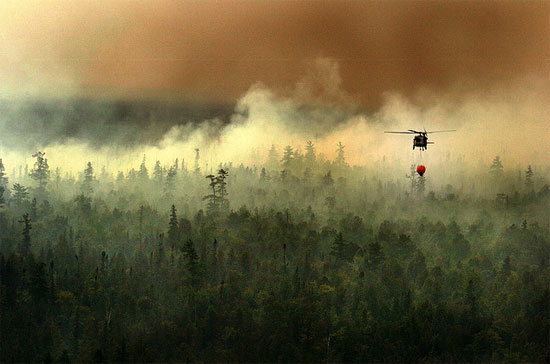
“Fire remains a critical element of the earth’s system and is highly sensitive to climate change,” said Sommers. The potential feedback relationship between fire and climate change was illustrated in dramatic fashion in the summer of 2010 with the outbreak of wildfires in Russia after the hottest summer temperatures on record.
Time is running short, Sommers warned, to answer the question of whether humans can anticipate and respond to climate change and manage forests in a sustainable manner.
Reducing Emissions & Improving Management
“Logging can be well-planned and well-designed or maybe not so well-planned,” said Brown as she spoke about her research on the logging industry in the tropics. Sustainable forest management in the tropics is still “a bit of the wild west” in some countries, though the situation is improving slightly, she said.
One way to improve management and reduce greenhouse gas emissions would be through the REDD+ (Reducing Emissions from Deforestation and Degradation) program of the United Nations. REDD+ can provide incentives, Brown said, for people to come up with useful innovations and improvements to forest management. But, she warned, “the longer we keep waiting, [the more] forests are diminishing.”
When a tree is felled, Brown said, there is a lot of collateral damage. An estimated one billion metric tons of CO2 are released every year from logging in the tropics of Africa and Latin America, she explained. One-half of these emissions are from the harvesting itself and the other half is from incidental damage and infrastructure, such as from the skid trails and haul roads needed to transport the logs out of the forest.
Therefore, it is important for all possible reduction steps to be taken, Brown said: “Where we have opportunities to produce goods with reducing emissions, we need to take those opportunities. We just can’t keep thinking, ‘That’s too small to worry about.’ If there’s what we call ‘low-hanging fruit,’ why not go for it?”
In order to reduce emissions and improve management, Brown suggested reducing avoidable waste by trimming more off of felled logs to increase volume, creating a management plan wherein felled logs are accurately mapped and skid trails are better planned, and using silvicultural treatments to speed the forest’s recovery.
Integrating Climate Change Into Risk Management
The job of the U.S. Forest Service has always been that of a “stress manager,” said Cleaves. Climate change is likely to ramp up existing stressors, such as drought and wildfires, which is why it is necessary for the Forest Service to integrate climate change adaptation techniques into the existing stress manager role. “We feel that there is no such thing as a separate climate change program,” he said.
Many difficult choices will have to be made to address climate change, Cleaves said: “We can’t afford the scale of the problem; we can’t afford to solve it all. We need to be able to prioritize.” These choices will have to be based on economic, social, and ecological values in order to “manage risks around the full sweep of the elements of sustainability,” he said.
The country’s forests are changing and we have already seen whole system change, Cleaves explained. For example, climate change has altered snow cover patterns leading to the decline of over half a million acres of yellow-cedar forest in Alaska.
Other threats facing U.S. forests include disease (such as white pine blister rust), increased variability of fires, increased housing growth near forested areas, and the possibility of forests turning from carbon sinks into carbon sources. That is to say, as forests are destroyed through fires, clearing, or disease, they release back into the environment the carbon they have absorbed.
Risk must be integrated into the decision-making process of the agency, and to this end the Forest Service has created the National Roadmap for Responding to Climate Change. But in order to meet these climate change challenges, Cleaves said, “we have to get moving.”
Sources: U.S. Fish and Wildlife Service, USA Today.
Photo Credit: “Michigan,” courtesy of flickr user The U.S. Army. -
Rukia Seif, PHE Champion
Making Life Easier in Rural Tanzania
›This PHE Champion profile was produced by the BALANCED Project.
Rukia Seif is a population, health, environment (PHE) peer educator who promotes simple economic, environmental, and health behaviors that make sense. In many ways, the Mkalamo village where Rukia lives is a typical rural Tanzanian agricultural village. In another important way it is very different. Mkalamo abuts the biodiversity rich Saadani National Park – the only wildlife park in Tanzania that borders the sea. Ironically, this park does not make life easier for people living in Mkalamo but more difficult. In the park, there is a ban on the cutting of wood, making it difficult to find enough to fuel villagers’ cooking stoves. Also, increasing numbers of the park’s wild animals often destroy the villagers’ precious crops.
As a PHE peer educator, Rukia talks with her fellow community members about simple things they can do to improve their lives. Her messages are clear:- By planning their families, women can ensure their own and their children’s health and can decide the optimal number of children that they can provide for.
- By using fuel efficient stoves, women can spend less time collecting fire wood, freeing up time for other chores or livelihood activities and reducing the amount of needed fuel, thus helping sustain the forests for future generations.
- By joining community-led savings and credit associations, women and men gain access to capital, allowing them to scale-up current livelihoods or diversify to new sources of income.
Rukia sets a good example of how doing these simple things can improve a family’s life and protect the environment. At age 36, she is a mother of three girls, ages 14, 12, and one and a half. Rukia and her husband, Seif Ramadhani, are taking measures to plan their family. Rukia used pills before they decided to have their last daughter. Now they are using condoms as a back-up while Rukia is breastfeeding the baby. Through her work, Rukia meets and talks to many people every day. She discusses family planning and if someone is interested, she refers them to community-based distributors and the dispensary for family planning services.
“I talk to my peers about planning their families so we have enough natural resources to meet the needs of the villagers who depend on these resources,” she said. “Also, when you plan your family, you will get more time to perform other activities.”
An active member of the savings and credit association, where she also acts as the accountant, Rukia is living proof of this last statement. Through savings and loans, Rukia has diversified her income by buying a sewing machine and a fuel-efficient oven. Today, she generates income from cow and poultry husbandry, tailoring, bread-making, selling soft drinks, and constructing fuel-efficient stoves. With this increased income, Rukia and her husband have been able to put an iron sheet roof on their house and send their first-born daughter to secondary school – a great achievement in a country where only five percent of women stay in school beyond the primary level.
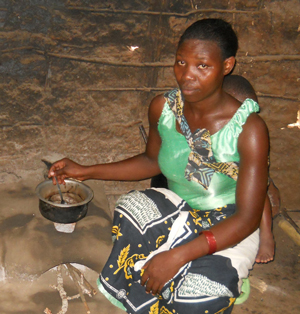
Rukia demonstrated her two fuel-efficient stoves: one is a metal oven that she uses for baking breads and cakes, the other is a simple mud stove that she uses for cooking. The mud stove, which costs less than $2 to build, is getting increasingly popular in the community. It saves fuel wood, prevents fires, produces less smoke (a serious health hazard), and cooks the food faster!
“I can even wear my best clothes and put on some lip shine when I use this stove, because it does not foul up the air,” Rukia explains with a laugh. Seeing the benefits of the fuel efficient stoves, she has inspired ten community-based distributors and five village leaders to join the team of individuals showcasing the fuel efficient technologies.
Rukia is a perfect example of practicing what one preaches. She is improving her own life, helping others learn to do the same, and protecting the very natural resources upon which almost everyone in Mkalamo depends.
This PHE Champion profile was produced by the BALANCED Project. A PDF version can be downloaded from the PHE Toolkit. PHE Champion profiles highlight people working on the ground to improve health and conservation in areas where biodiversity is critically endangered. -
Our Shared Future: Environmental Pathways to Peace
›Download Our Shared Future: Environmental Pathways to Peace from the Wilson Center.
How does globalization affect natural resource issues such as water on local, national, and international levels? Can our common dependence on these stressed resources be a force for bringing people together rather than dividing us? What lessons can we learn from sharing insights from communities at these very different levels of organization?
Pathways to Peace
In January 2010, the Woodrow Wilson International Center for Scholars and the Fetzer Institute invited 22 scholars and practitioners to a two-day seminar to discuss these questions and the deep connection between caring for the environment and caring for community. Pathways to Peace: Defining Community in the Age of Globalization was the second seminar in a three-year initiative to combine scholarship, public policy, and local practice to articulate and support global conflict transformation and reconciliation in communities throughout the world. Examining the effect of environmental peacebuilding on communities, the discussion explored how governments, NGOs, the private sector, and other interested parties can generate positive outcomes while minimizing negative ones.
Participants from Canada, Ecuador, Ethiopia, Israel, Kenya, Nepal, Switzerland, the Philippines, and the United States brought to the table a wide range of experience and expertise from diverse fields, including peacebuilding, community building, health care, economic development, conflict resolution, and foundation management. By convening leaders in environmental peacebuilding and community building, the Wilson Center and the Fetzer Institute drew on a wide range of experience and perspectives related to environment, conflict, and peacebuilding practice and research. The group used water access and peacebuilding case studies as a means to enter into dialogue about the challenges of global community engagement.
Shared Waters
In preparation for the seminar, geographer and renowned water expert Aaron Wolf of Oregon State University contributed a paper, “The Enlightenment Rift and Peacebuilding: Rationality, Spirituality, and Shared Waters,” in which he laid out the complicated, sometimes conflictual, and often surprisingly collaborative aspects of negotiations over water resources. For Wolf, given water’s life-sustaining quality but limited quantity, it seems intuitive that “water should be the most conflictive of resources.” However, he maintains that “while press reports of international waters often focus on conflict, what has been more encouraging is that, throughout the world, water also induces cooperation, even in particularly hostile basins, and even as disputes rage over other issues…there is a long, and in many ways deeper, history of water-related cooperation.”
On this foundation, Wolf illustrates four stages of water conflict: from adversarial, to reflective, to integrative, to action. Lessons from the “spiritual understanding of water conflict transformation” he says, “offer not only new understanding of current disputes, but also models, tools, and strategies for more effective water conflict management and transformation.”
Seminar participants used Wolf’s paper as a starting point from which to write short papers based on their own expertise and experience. From Kenya to Nepal to Harlem, participants shared their perspectives on the challenges and promises of environmental issues, community building and organizing, and peacebuilding.
This report, Our Shared Future: Environmental Pathways to Peace, draws from the rich dialogue of the seminar and seminar papers to share the broad range of experience and the insight of the participants. To learn more about these remarkable programs and the people working on natural resources, peacebuilding, and community development, see the complete list of papers on page 120, which can be downloaded from the Wilson Center. -
Climate Adaptation, Development, and Peacebuilding in Fragile States: Finding the Triple-Bottom Line
›“The climate agenda goes well beyond climate,” said Dan Smith, secretary general of International Alert at a recent Wilson Center event. “In the last 60 years, at least 40 percent of all interstate conflicts have had a link to natural resources” and those that do are also twice as likely to relapse in the five years following a peace agreement, said Neil Levine, director of the Office of Conflict Management and Mitigation at USAID. [Video Below]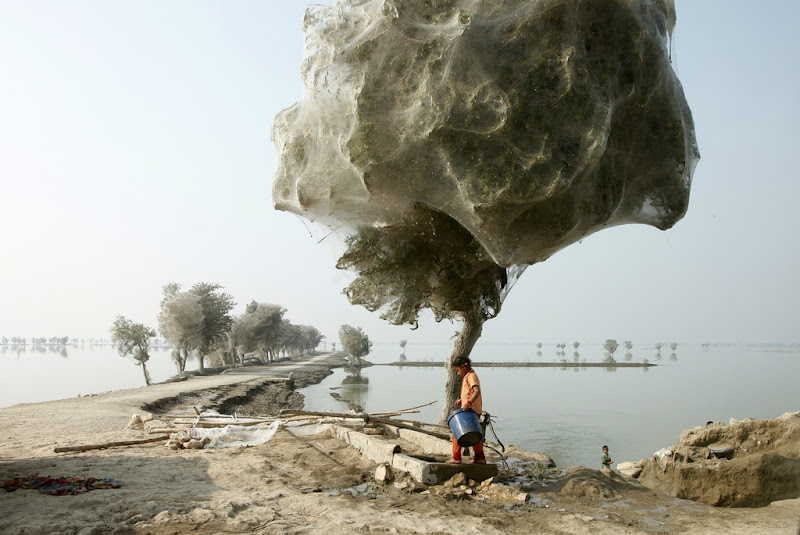
Development, peace, and climate stability are “the triple-bottom line,” said Smith. “How would you ever think that it would be possible to make progress on one, while ignoring the other two?” Levine and Smith were joined by Alexander Carius, managing director of Adelphi Research, who pointed out that climate change is both a matter of human security and traditional security. For example, as sea-level rise threatens the people of small-island states, “it also affects, in a very traditional sense, the question of security and a state’s sovereignty,” he said.
The Triple-Bottom Line
Conflicts are never attributable to a single cause, but instead are caused by “a whole pile-up, a proliferation, a conglomeration of reasons” that often include poverty, weak governance, traumatic memory of war, and climate change, said Smith. “Climate adds to the strains and the stresses that countries are under,” and works as a “risk-multiplier, or conflict multiplier,” he said.
Focusing development and peace-building efforts on those regions experiencing multiple threats is both a “moral imperative” and a “self-interested imperative,” said Smith. “We benefit from a more prosperous and a more stable world.”
There are currently one and a half billion people in the world living in countries that face these interlinked problems, said Smith, “and interlinked problems, almost by definition, require interlinked solutions.” Responding to the needs of these people requires developing resiliency so that they can respond to the consequences of climate change, which he called “unknown unknowns.”
“What we need are institutions and policies and actions which guard us not only against the threats we can see coming… but against the ones we can’t see coming,” said Smith. The strength and resilience of governments, economies, and communities are key to determining whether climate events become disasters.
Interagency Cooperation
“Part of making the triple-bottom line a real thing is to understand that we will have to be working on our own institutions, even the best and most effective of them, to make sure that they see the interlinkages,” said Smith.
But even though individuals increasingly understand the need to address security, development, and climate change in an integrated fashion, “institutions have only limited capacities for coordination,” said Carius. Institutions are constrained by bureaucratic processes, political mandates, or limited human resources, he said. “Years ago, I always argued for a more integrated policy process; today I would argue for an integrated assessment of the issues, but to…translate it back into sectoral approaches.”
Levine expressed optimism that with “a whole new avalanche of interagency connections” being established in the last few years, U.S. interagency cooperation has become “the culture.” However, if coordination efforts are not carefully aligned to advance concrete programs and policies, they run the risk of “getting bogged down in massive bureaucratic exercises,” he said. “‘Whole of government’ needn’t be ‘all of government,’ and it needn’t be whole of government, all of government, all the time.”
Building Political Will
Europe has a “conducive political environment to making [climate and security] arguments,” said Smith, but the dialogue has yet to translate into action. In 2007, the debate on climate and security was first brought to the UN and EU with a series of reports by government agencies and the first-ever debate on the impacts of climate change on security at the UN Security Council, said Carius. However, none of the recommendations from the reports were followed and “much of the political momentum that existed…ended up in a very technical, low-level dialogue,” he said.
More recently, the United Kingdom included energy, resources, and climate change as a priority security risk in their National Security Strategy. And Germany, which joined the UN Security Council as a rotating member this year, is expected to reintroduce the topic of climate and security when they assume the Security Council Presidency in July. These steps may help to regain some of the political momentum and “create legitimacy for at least making the argument – the very strong argument – that climate change has an impact on security,” said Carius.
Sources: AFP, UK Cabinet Office, Telegraph, United Nations
Image Credit: “Trees cocooned in spiders webs after flooding in Sindh, Pakistan” courtesy of flickr user DFID -
Madagascar, Past and Future: Lessons From Population, Health, and Environment Programs
›In Madagascar, “today’s challenges are even greater than those faced 25 years ago,” said Lisa Gaylord, director of program development at the Wildlife Conservation Society. At an event at the Woodrow Wilson Center on March 28, Gaylord and her co-panelists, Matthew Erdman, the program coordinator for the Population-Health-Environment Program at Blue Ventures Conservation, and Kristen Patterson, a senior program officer at The Nature Conservancy, discussed the challenges and outcomes of past and future integrated population, health, and environment (PHE) programs in Madagascar. [Video Below]
Nature, Health, Wealth, and Power
Gaylord, who has worked in Madagascar for nearly 30 years, gave a brief history of USAID’s activities on the unique island, which she called a “mini-continent.” She used the “nature, health, wealth, and power” framework to review the organization’s environment, health, and livelihoods programs in Madagascar and their results. Governance, she said, is the centerpiece of this framework, but this piece “maybe didn’t have an adequate foundation” in Madagascar to see the programs through the political crisis.
Though its programs started at the community level, Gaylord said USAID’s objective was to scale up to larger levels. “You can’t always work on that level and have an impact,” she said, and there was “tremendous hope” in 2002 for such scaling up when Madagascar elected a new president, Marc Ravalomanana.
Unfortunately, changes in funding, a lack of economic infrastructure, and poor governance forced development programs to scale down. After President Ravalomanana was overthrown in a military coup in 2009, the situation got worse – the United States and other donors pulled most funding, and only humanitarian programs were allowed to continue.
“What worries me is that I think we have gone back” to working on a village level, Gaylord said. “We want to go up in scale, and I think that we felt that we could in Madagascar, but that’s where you have the political complexities that didn’t allow us to continue in that direction.”
Going forward, Gaylord said that it is important to maintain a field-level foundation, take the time to build good governance, and maintain a balance in the funding levels so that no one area, such as health, dominates development activities.
Living With the Sea
Based in southwestern Madagascar, the Blue Ventures program began as an ecotourism outfit, said Erdman, but has since grown to incorporate marine conservation, family planning, and alternative livelihoods. One of its major accomplishments was the establishment of the largest locally managed marine protection area in the Indian Ocean, called Velondriake, which in Malagasy means “to live with the sea.” This marine area covers 80 kilometers of coastline, incorporates 25 villages, and includes more than 10,000 people. The marine reserves for fish, turtles, and octopus, as well as a permanent mangrove reserve, protect stocks from overfishing.
One of the biggest challenges facing the region is its rapidly growing population, which threatens the residents’ health and their food security, as well as the natural resources on which they depend. More than half the population is under the age of 15 and the infant and maternal mortality rates are very high, Erdman explained. Blue Ventures, therefore, set up a family planning program called Safidy, which means “choice” in Malagasy.
“If you have good health, and family size is based on quality, families can be smaller and [there will be] less demand for natural resources, leading to a healthier environment,” said Erdman.
The region’s isolation and lack of education and health services are a challenge, said Erdman, but over the past three years, the contraceptive prevalence rate has increased dramatically, as has the number of clinic visits. The program uses a combination of clinics, peer educators, theater presentations, and sporting events, such as soccer tournaments, to spread information about health and family planning.
A Champion Community
“There is a long history of collaborative work in Madagascar,” Patterson said. Focusing on the commune (county) level, she worked in conjunction with USAID, Malagasy NGOs, and government ministries to try to scale up PHE programs in Madagascar’s Fianarantsoa province, which has a target population of 250,000 people.
“We essentially worked at two different levels,” said Patterson. At the regional level, a coordinating body for USAID and local partners called the “Eco-Regional Alliance” met monthly. The “Champion Commune” initiative, which worked at local levels, had three main goals, she explained:
Though working in such remote areas is expensive, and all non-humanitarian U.S. foreign aid has been suspended since the coup, Patterson hopes that development programs will return to Madagascar. Pointing to its vast rural areas, she stressed the importance of integrated efforts: “The very nature of multi-sectoral programs is that they have the highest benefit in the areas that are most remote. These are the areas where people are literally left out in the cold.”- Create a strong overlap with neighboring communes;
- Promote activities that benefited more than one sector (such as reforesting with vitamin-rich papaya trees); and
- Capitalize on the prior experiences of Malagasy NGOs in implementing integrated projects to help build up civil society.
Image credit: “Untitled,” courtesy of flickr user Alex Cameron.
Sources: The New York Times, Velondriake. -
John Warburton, China Environment Series
UK Helping to Relieve Climate-Related Stress on China’s Agriculture
›The UK and China have been working together since 2001 to better understand how China is going to be impacted by climate change, particularly in the agriculture sector. But understanding must also lead to action, with adaptation needing to be integrated into the development process at both national and local levels. This work, which is ongoing, will increasingly provide a model for how to approach adaptation in other countries.
In my opinion, this work has also contributed to the realization among top-level Chinese officials that it is important to take global action on climate change as part of the international negotiation process; until very recently, most of the international engagement with China has focused on mitigation, with the result that the very real and urgent challenges that China faces in regards to its own adaptation needs have been sidelined.
Another Stressor for Chinese Agriculture
China’s Polices and Actions for Addressing Climate Change, issued in October 2008, state:The impacts of future climate change on agriculture and livestock industry will be mainly adverse. It is likely there will be a drop in the yield of three major crops — wheat, rice and corn; …enlarged scope of crop diseases and insect outbreaks; [and] increased desertification.
Even though assessing the likely impacts of climate change on crop yields is a complicated process, with some evidence showing that in some areas crops may benefit if agricultural technology can keep pace, the overall picture is grim for China.
Potential climate impacts are very worrying for a country which already faces so many other challenges within the agricultural sector, among them the facts that it has to feed nearly one quarter of the world’s population (1.3 billion people) with only seven percent of the world’s arable land; that it has only one-quarter of the world’s average per capita water distribution (one-tenth in large parts of northern China, which are heavily dependent upon agriculture); and that the agricultural land base is fast diminishing due to urbanization, industrialization, and the conversion of arable land to grasslands and forest.
Collaboration on Adaptation
Much of the evidence that supports the understanding of the likely adverse impacts on Chinese agriculture from climate change stems from collaborative work between the UK and China which started in 2001. A joint project, Impacts of Climate Change on Chinese Agriculture (ICCCA), has combined cutting-edge scientific research with practical development policy advice. Although national in scope, the project included pilot work to develop a stakeholder based approach to adaptation in the Ningxia region of northcentral China. ICCCA was successfully completed in December 2008. The UK-China collaboration is now continuing with a major new project which is going beyond agriculture and looking at additional socioeconomic sectors and geographic areas.
Continue reading in the China Environment Forum’s China Environment Series 11, from the Wilson Center. Other articles in the series can be found on CEF’s website.
John Warburton is a DFID senior environment adviser and is currently based in Beijing.
Photo Credit: “Field,” courtesy of flickr user totomaru. -
Forest Conservation Method a Fit for Canada’s Oil Sands?
›In Wednesday’s speech on U.S. energy security, President Obama stated clearly that the United States would continue to rely on oil imports from Canada and other stable nations. But serious environmental concerns continue to dog the Canadian oil sands industry. Could an agreement reached by Canada’s Forest Products Association provide a model for a way forward?
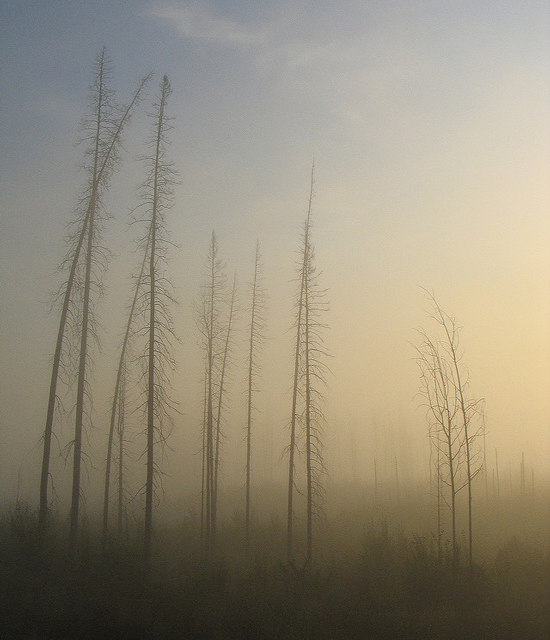
In May 2010, the Canadian Boreal Forest Agreement (CBFA) was signed by 21 members of the Forest Products Association of Canada (FPAC) and nine major environmental groups, including Greenpeace, the Nature Conservancy, and the Pew Charitable Trusts, without government involvement. The three-year agreement represents the largest forest conservation plan in history and protects more than 72 million hectares of Canada’s Boreal Forest. It also ended a long “do not buy” campaign of FPAC products, previously spearheaded by environmental organizations.
The CBFA essentially commits FPAC to the highest environmental standards of forest management and conservation, as well as the suspension of logging in environmentally sensitive areas, in part to protect endangered caribou populations. In return, environmental organizations agreed to support FPAC members.
The oil sands industry faces a similar challenge. In both cases, industry and environmental NGOs have clashed in a long and bitter battle over industry practices and their impact on the environment. The difference is that FPAC realized that directly engaging environmental groups in reasoned discussion might be a more intelligent approach to resolving environmental challenges than shouting back and forth at one another. FPAC also believes that buyers will be attracted to their newfound reputation for sustainable practices and higher ethical standards.
Model Agreements
Oil sands producers have much to gain by engaging the environmental community in new and innovative ways Should the CBFA model be followed, the oil sands industry may be able to negotiate an agreement with environmental organizations and voluntarily agree to higher environmental standards in return for recognition and support of their efforts from key environmental organizations.This wouldn’t be the first initiative where creative engagement between environmental organizations and industry served to mutually benefit both sides. For instance, in 1999, WWF and Unilever created the Marine Stewardship Council (MSC), a program that rewards fisheries employing environmentally sustainable practices by recognizing their efforts through MSC certification and eco-labeling. Member fisheries maintain that MSC labeling has helped them retain existing markets, expand into others, and in some cases obtain a price premium for their product.
Such an initiative would go a long way to allow oil sands producers to shed their damaging reputation for producing “dirty oil.” Even if an agreement could not be reached, the oil sands industry would be viewed at the very least as willing to listen to the concerns of environmental organizations and take such issues seriously.
Not Perfect, But It’s a Start
The CBFA model may not be a perfect fit for the oil sands but it demonstrates that environmental groups and industry can find common ground on extremely contentious issues.
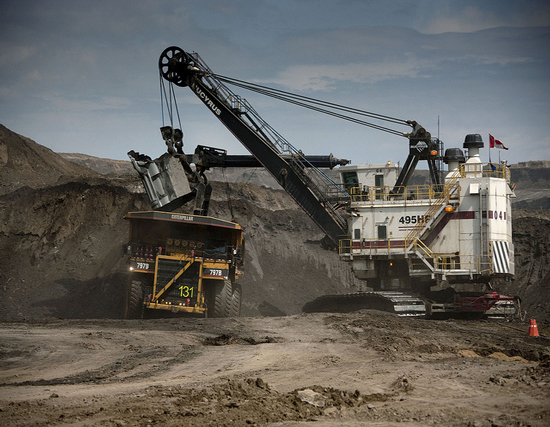
Finding this common ground must begin with accepting that the oil sands will never be “green.” According to a study by the Royal Society of Canada, in 2008, oil sands mining and development operations covered an area roughly the size of the state of Illinois and was responsible for emitting nearly 37 million tons of CO2. The study also found that there are legitimate concerns regarding the impact of oil sands development on the quality and quantity of regional freshwater supplies.
Nevertheless, the oil sands also represent a critical source of stable energy supplies for Canada and the United States, and calls by some environmental NGOs to halt oil sands production are unrealistic. More than 20 percent of U.S. oil is sourced from Canada, making it the United States’ leading supplier, and roughly half of that comes from the oil sands.
A CBFA-style agreement could help oil sands producers secure the U.S. market, which currently takes 99 percent of Canada’s oil exports, by quelling campaigns in the United States to stop imports from the oil sands. And under an agreement similar to the CBFA, the environmental community could have a larger say in how it is developed and extracted
As it stands, both industry and the environmental community remain engaged in a heated war of words, with neither side really listening to the other. Until they are willing to sit down and engage each other in new ways, both groups are likely to continue to talk over one another and make little progress on striking an environmental and economic balance that could ultimately benefit both sides.
Ken Crist is a program associate with the Canada Institute at the Woodrow Wilson International Center for Scholars.
Sources: Sources: The Canadian Boreal Forest Agreement, National Resources Defense Council, The New York Times, Royal Society of Canada, Vancouver Sun.
Photo Credit: “Athabasca oil sands digger,” courtesy of flickr user . Shell, and “Boreal forest 2009,” courtesy of flickr user Gord McKenna. -
The Impact of Environmental Change and Geography on Conflict
›“Environmental Change, Strategic Foresight, and Impacts on Military Power,” published in Parameters by Chad M. Briggs, the Minerva Chair of Energy and Environmental Security at the Air University, USAF, tackles the changing definition of “environmental security” and how the concept can help planners better prepare for the effects of climate change and an elevated focus on energy security. New potentially destabilizing issues like glacial melt, sea-level rise, and Arctic ice melt are on the horizon, writes Briggs. China and others are already planning for these events, and it’s important that the United States does the same, starting with a greater appreciation for the impact of environmental security on vulnerability and risk. “Due to past practices and bureaucratic stovepipes, implementation is limited more by initiative and imagination than actual resources,” he writes.Clionadh Raleigh of Trinity College Dublin and the International Peace Research Institute finds in “Seeing the Forest for the Trees: Does Physical Geography Affect a State’s Conflict Risk?” that a region’s geography does not have a uniform effect on its likelihood of experiencing conflict. Raleigh’s conclusions, published in International Interactions, run counter to traditional histories which often emphasize the importance of physical geography, specifically with regard to civil war and insurgencies. Focusing on the Great Lakes region of Africa, Raleigh finds that other factors – like how populated an area is and its proximity to valuable natural resources – correlate higher with an area’s propensity for violence than any other factor.