Showing posts from category minerals.
-
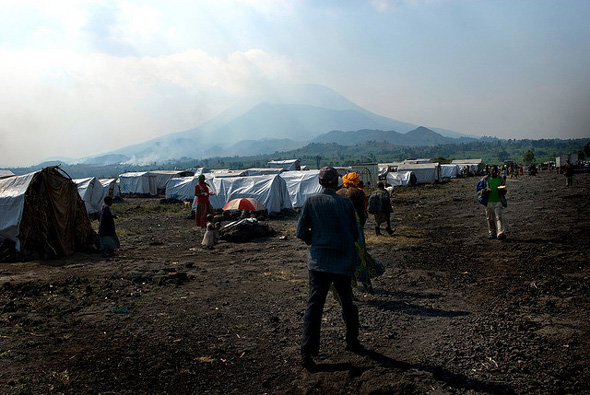
Conflict Minerals in the DRC: Still Fighting Over the Dodd-Frank Act, One Year Later
›August 11, 2011 // By Schuyler Null
One year after the Dodd-Frank Act passed Congress with a provision that was aimed at preventing the sourcing of “conflict minerals” by SEC-registered companies, backlash seems to be growing over the impact of the measure, particularly on artisanal miners in the Democratic Republic of the Congo (DRC).
-
Environmental Cooperation for Peacebuilding in Sierra Leone
›Sierra Leone’s decade-long civil war led to a complete collapse of environmental management in the country, according to Oli Brown, an environmental affairs officer with the UN Environment Programme (UNEP). Speaking at the Wilson Center last month, Brown highlighted the country’s current environmental conditions and how they have evolved since the war ended in 2002, while also outlining UNEP’s support for rebuilding the country’s natural resource governance.
Despite its wealth of natural resources, Sierra Leone is plagued by high unemployment, a massive gap between the poor and wealthy, and extreme poverty – 70 percent of the population lives on $1.00 a day. The country is still “very fragile,” said Brown; the poor distribution of resources is partly responsible for the current problems facing the country.
Sierra Leone’s environmental future and prospects for improving its natural resource governance depend on the answers to three key questions, said Brown:
The first 5 to 10 years after a civil war are a critical time for peacebuilding efforts, Brown emphasized. Natural resources can help in this peace building process, but countries must recognize the value of their natural resources, and establish policies that are sustainable – environmentally, economically, and socially.- How can the countries bountiful natural resources be shared more equitably?
- How can the countries natural resources improve local livelihoods and provide jobs?
- How can the war’s legacies be properly addressed while minimizing their negative impact?
Potential in Abundance: Agriculture, Minerals, Fisheries, and Tourism
Today, agriculture – including rice, palm oil, and sugar cane – accounts for 50 percent of Sierra Leone’s GDP, but current production methods are extremely inefficient, said Brown. Farmers use slash-and-burn clearing techniques to grow crops with zero consideration for the environmental effects, a practice which has led to a high level of deforestation. Only four percent of the country’s original forest cover remains, he said.
As part of its plan, Sierra Leone’s government is actively seeking large-scale investment in agricultural products for export. However, access to land development is complicated by the fact that more than 100 different chiefs control land and leasing rights around the country.
Additionally, some fear that companies investing in Sierra Leone may be exploiting the situation to achieve maximum profit without providing local development benefits, such as employment.
Water is also crucial to agriculture development, but Sierra Leone’s government does not know how much they have, said Brown, so they cannot properly plan for addressing the needs of their people. Reforming the sector is critical, as palm oil and sugar cane in particular have great potential for increasing the country’s GDP.
Sierra Leone also has an abundant supply of minerals: Diamonds, iron, rutile, gold, and oil currently account for about 20 percent of GDP and approximately 250,000 jobs, said Brown.
The planned Tonkolili iron mine will be the largest of its type built over the past 20 years anywhere in the world. If successful, the mine could double Sierra Leone’s GDP, he said. But the government must monitor these mining operations to ensure that the environmental damage does not undermine the economic benefits, said Brown. For example, rutile mining without proper safety precautions has produced acid lakes, he said, some of which have been measure with a PH level of 3.7 or greater.
While fishing operations in Sierra Leone make up only 10 percent of GDP, fish provide 80 percent of the animal protein consumed in the country’s households. However, lack of regulation and enforcement has left the door open for rampant illegal and unregulated fishing, said Brown, which has depleted local fish stocks and reduced the size of fish that are caught threatening the country’s food security.
On a more positive note, environmental tourism could be a potential source of sustainable revenue. The large chimpanzee population and the national parks could be strong tourist draws. However, the country must overcome its “blood diamonds” stigma in order to take advantage of its potential.
UNEP is seeking to help Sierra Leone’s government develop its environmental regulations and planning, said Brown, such as ways to measure and regulate water usage. The regulation of agriculture, minerals, fisheries, and tourism industries will be vital steps toward helping Sierra Leone build a sustainable economy and a sustainable peace.
Sources: Awoko Newspaper, Delegation of the European Union to Sierra Leone, Infinity Business Media, The Oakland Institute, UNDP, USAID.
Photo Credit: “mining57,” courtesy of flickr user thehunter1184. -
Beyond Supply Risks: The Conflict Potential of Natural Resources
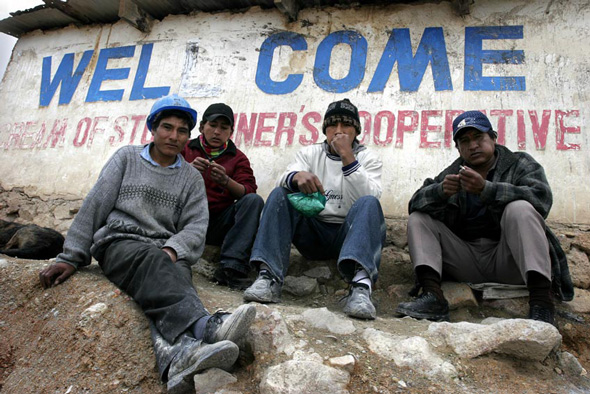
›While the public debate about resource conflicts focuses on the risk of supply disruptions for developed countries, the potentially more risky types of resource conflict are usually ignored. As part of a two-year research project on behalf of the German Federal Environment Agency, adelphi and the Wuppertal Institute for Climate, Energy, and Environment have analyzed the risks of international conflict linked to natural resources in a series of reports titled Beyond Supply Risks – The Conflict Potential of Natural Resources.
Resource extraction, transportation, and processing can create considerable crises and increase the risk of conflicts in producing and transit countries. This phenomenon – widely referred to as the “resource curse” – impacts consuming countries only if it leads to shortages and higher prices. However, in the producing and transit countries it can have much wider destabilizing effects – from increasing corruption to large-scale violent conflict. In addition, the extraction, processing, and transportation of resources often create serious environmental risks. Overexploitation, pollution, and the degradation of ecosystems often directly affect the livelihoods of local communities, which can increase the potential for conflict.
The eight reports that comprise Beyond Supply Risks explore plausible scenarios over the next two decades, focusing on four case studies: copper and cobalt in the Democratic Republic of Congo; the Nabucco natural gas pipeline project across Southern Europe and Turkey; lithium in Bolivia; and rare earth minerals in China.
Lithium in Bolivia
Bolivia possesses the world’s largest known lithium deposits, a potentially important resource for the development of electric vehicles. While the development of Bolivia’s lithium reserves could provide major economic benefits for one of the poorest countries in Latin America, our analysis identifies two main potential risks of conflict.
First, the environmental consequences of developing industrial-scale lithium production might have negative effects on the livelihoods of the local population. The local population in the lithium-rich department of Potosí has shown that it is capable of organizing itself effectively in defense of its interests, and past resource conflicts have turned violent, making a conflict-sensitive approach all the more important.
Second, the Bolivian economy is largely dependent on natural resources, and consequently is susceptible to price shocks. At present, this risk is primarily associated with natural gas. But lithium production, if developed, might be subject to the same dynamics, which could potentially destabilize the political system.
For consuming countries, these conflicts threaten supplies of lithium only if local protests or broader destabilization were produce bottlenecks in the supply chain.
Rare Earths and China
Like lithium, rare earths are likewise essential for some new technologies. China’s well publicized monopoly on 97 percent of the global production spurred a heated debate on the security of supply of strategic minerals. While our case study identifies supply risks for consuming countries, it also outlines some of the conflict risks China might face internally.
First, local populations could protest against the severe ecological impact of rare earth mining and production. In addition, conflicts might arise if those who profit from economic development (entrepreneurs or regional power-holders) undermine the traditional centralized party structures and expand their own influence.
International conflicts over access to Chinese rare earth resources, while they dominate the headlines, do not appear to be the dominant risk. Instead, internal political tensions could result in a weakened China that is not able to exploit its monopoly position for foreign policy gains. Or the government could enter into multilateral agreements and thus avoid a confrontational approach towards consumer nations.
Ultimately, the actual rate of diffusion of environmental technologies and the development of new technologies remain the key factors in determining whether relative shortages in global supply of rare earths will in fact occur. If industrialized nations and emerging economies commit to the same technologies to attain climate policy goals, international resource governance and coordinated promotion of (environmental) technology will also play a role in preventing conflict and crisis over rare earths.
The Way Forward
The series concludes with five recommendations to mitigate the risks of future resource conflicts:- Introduce systematic policy impact assessments to understand how policy goals and strategies, especially in regard to climate and environmental policy, interact with resource conflict risks.
- Increase the transparency of raw material markets and value creation chains to prevent extreme fluctuations in prices and improve information on markets, origins, and individual players.
- Improve the coherence of raw material policy by linking raw material policies with security, environmental, and development policies.
- Demand and promote corporate social responsibility along the whole value chain.
- Increase environmental and social sustainability as a means of strengthening crisis and conflict prevention by systematically taking into account social and conflict-related aspects in the resource sector.
The individual reports from the project can be downloaded here:- Conflict Risks (GERMAN only)
- Supply and demand (GERMAN only)
- Case Study: Nabucco Pipeline (GERMAN only)
- Case Study: Congo
- Case Study: Bolivia
- Case Study: China
- Conflict Resolution Strategies (GERMAN only)
- Summary and Recommendations
Sources: Government Accounting Office.
Photo Credit: “Potosí: miners in darkness,” courtesy of flickr user Olmovich. -
Rare Earths No More? Mineral Discoveries a Potential Game-Changer for East Asia
›July 7, 2011 // By Schuyler NullDiscoveries announced in a journal article over the weekend may prove a game-changer for global rare earth supplies and recent diplomatic maneuvering in East Asia between China, Japan, Vietnam, and the United States. A team of researchers from Japan’s Agency for Marine-Earth Science and Technology published findings in Nature Geoscience that indicate vast underwater reserves of rare earth minerals are scattered across a huge swath of the Pacific, including south and east of Japan. The U.S. Geological survey estimates current global reserves of rare earth minerals at about 110 million tons; Yasuhiro Kato, the lead author of the Japanese team, told Reuters that the sites surveyed could contain an additional 80 to 100 billion metric tons (yes, with a “b”) of the valuable resources.
The authors write that an “area of just one square kilometer, surrounding one of the sampling sites, could provide one-fifth of the current annual world consumption of these elements.” The team collected data from 78 sites in total, with the largest concentrations centered east of the Hawaiian and Polynesian islands (see a map of the surveyed areas here).
Resource Relationships
The discovery could prove crucial for Japan, as it has been seeking alternative sources of rare earth minerals after an embargo earlier this year by China, which controls 97 percent of the world’s current supply. The embargo (which China denied) was imposed in October of last year after the Japanese navy arrested the captain of a Chinese fishing boat, which was alleged to be encroaching on Japanese territorial waters. China’s response increased tensions across the region and produced a flurry of warnings in Washington over the security of U.S. supplies.
Although the embargo was later lifted, Japan and Vietnam reached an agreement for development of Vietnamese mines in November. The tensions sparked by the encounter also spread to the South China Sea where Chinese, Vietnamese, and Filipino forces have stepped up their jockeying over disputed and resource-rich waters to the highest levels in years. Vietnamese and Chinese naval forces recently held mirror exercises, and Filipino officials invoked a 1950-era defense pact with the United States. Chinese Vice Foreign Minister Cui Tiankai told reporters in June: “I believe the individual countries are actually playing with fire, and I hope the fire will not be drawn to the United States.”
Secretary of State Hillary Clinton called concerns over navigability and Chinese insistence on bilateral (as opposed to multilateral) negotiations in the South China Sea a matter of “national interest” for the United States last year.
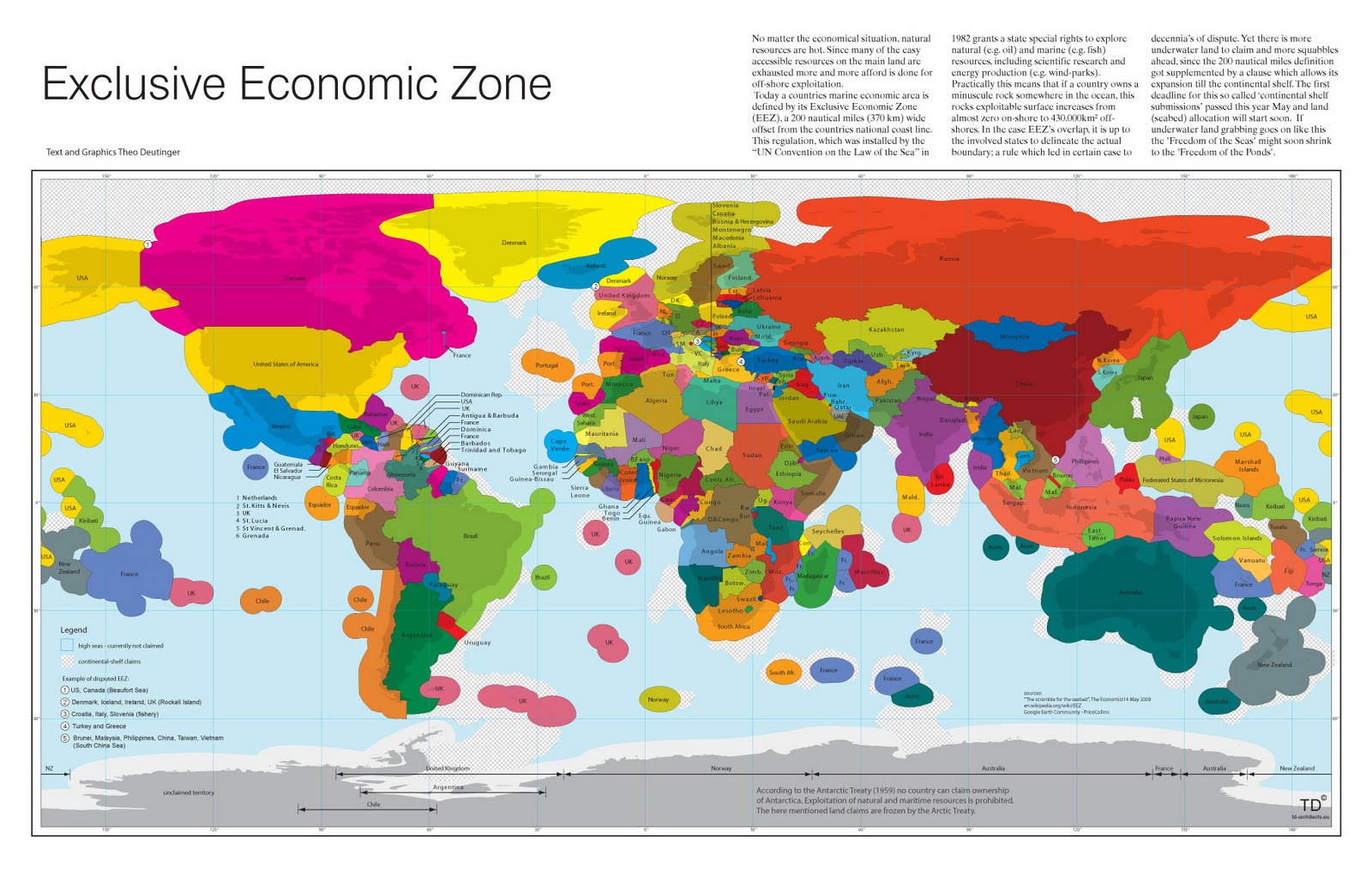
The Japanese team’s discovery has the potential to significantly impact the power dynamics behind these tensions. China has used its rare earth monopoly to pressure Japan and the United States, which in turn may have also helped embolden its recent more aggressive maritime policies. If the new rare earth discoveries prove viable, that calculus could change considerably.However serious questions remain: Many of the discoveries lie outside of established exclusive economic zones, so who has the rights to mine them? They’re also between 11,500 and 20,000 feet below the surface – how long before we have the technologies to extract them at an industrial scale? And how safe – both for humans and the environment – will those processes be? Aboveground rare earth mines are some of the most damaging to the environment – part of the claimed reason China curbed overall exports earlier this year, which drove up global prices and drew the ire of the World Trade Organization.
For more on the importance of rare earth minerals to the defense and electronics industries, see New Security Beat’s “Rare Earth: A New Roadblock for Sustainable Energy?” and “Reading Radar: The Mineral Security of the United States.” For more on the exclusive economic zones map, see “Eye on Environmental Security: Natural Resource Frontiers at Sea;” and on the South China Sea and what it reveals about future diplomatic fault lines between the United States and China, see “U.S. v. China: The Global Battle for Hearts Minds and Resources.”
Sources: Asia Sentinel, The Atlantic, BBC, Government Accounting Office, Nature Geoscience, The New York Times, Reuters, Tech News Daily, U.S. Department of State.
Photo Credit: Adapted from “USS Mustin underway in the Pacific Ocean,” courtesy of flickr user Official U.S. Navy Imagery, and “Exclusive Economic Zone,” used with permission courtesy of Theo Deutinger and TD Architects. -
Annie Murphy, International Reporting Project
Mozambique Coal Mine Brings Jobs, Concerns
›May 31, 2011 // By Wilson Center StaffThe original version of this article, by Annie Murphy appeared on the International Reporting Project and NPR (follow the links for the accompanying audio track as well). Murphy appeared with three other IRP fellows at the Wilson Center on April 28 to talk about their experiences reporting abroad.
As developing countries grow, their need for raw materials grows, too.
This is the case for Brazil, a country that has much in common with the nation of Mozambique: Both have a mix of African and Portuguese influences; both are rich in natural resources; and both fought long and hard to throw off European colonialism.
Today, however, a Brazilian coal mine in Mozambique has some wondering what the energy demands of growing economies like Brazil really mean for African countries like Mozambique.
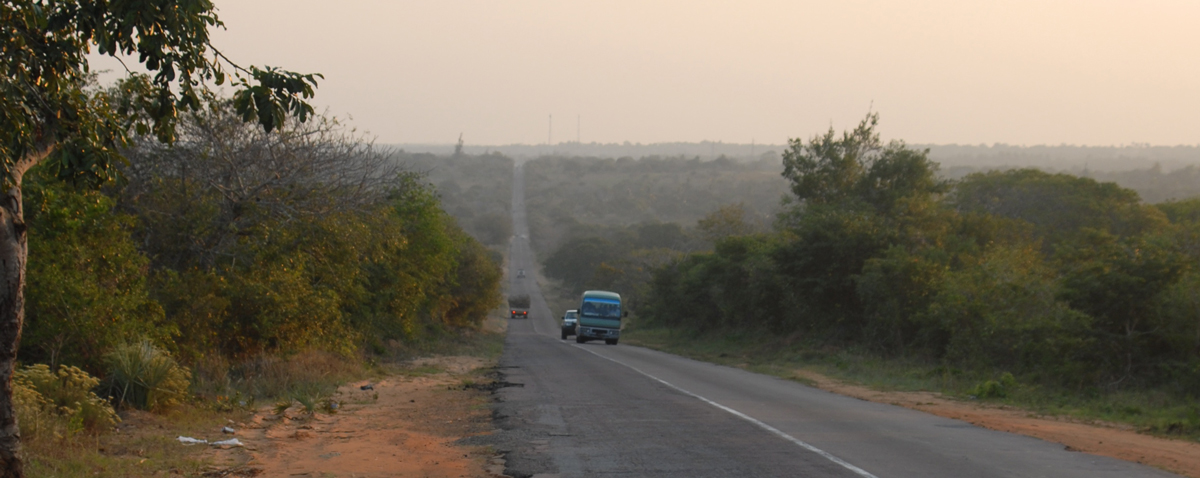
This coal mine in northwestern Mozambique is owned by the Brazilian company Vale — it’s a gaping, dark gray pit in the middle of a green, windswept savannah. Still under construction, it currently employees about 7,500 people.
Jose Manuel Guilengue, 23, a machine operator, says that he and a friend traveled 1,000 miles from the capital to get there, where they were both hired. That was a year ago. He now makes around $400 a month — which is more than four times the average salary in Mozambique.
According to the general manager overseeing construction, Osvaldo Adachi, this mine will produce about 11 million tons of coal each year, for at least three decades.
Continue reading and listen to the audio at the International Reporting Project.
Annie Murphy reported this story during a fellowship with the International Reporting Project (IRP). To hear more about Murphy and the IRP program, see the event summary for “Reporting on Global Health: A Conversation With the International Reporting Project Fellows.”
Photo Credit: Adapted from Mozambique, courtesy of flickr user F H Mira. -
Southern Africa, China, and “Sustainable Access”
The Mineral Security of the United States
›In a report titled “Elements of Security: Mitigating the Risks of U.S. Dependence on Critical Minerals,” author Christine Parthemore from the Center for a New American Security writes, “Growing global demand coupled with the mineral requirements necessary for both managing military supply chains and transitioning to a clean energy future will require not only clearer understanding, but also pragmatic and realistic solutions.” Minerals and rare earth elements such as lithium, gallium, and rhenium are critical elements for many defense technologies (e.g. jet engines, satellites, missiles, etc.) and alternative energy sources (batteries and wind turbines). Parthemore argues that U.S. policy should focus on preventing suppliers from exerting undue leverage (as China did in 2010), mitigating fiscal risk and cost overruns, reducing disruption vulnerability, and ensuring the United States is able to meet its growth goals in clean energy and other high-tech fields.In a report from the U.S. Air War College, author Stephen Burgess writes of the potential for conflict over competition for “strategic minerals” in five southern African states: South Africa, the Democratic Republic of the Congo, Zambia, Zimbabwe, and Namibia. The report, titled “Sustainability of Strategic Minerals in Southern Africa and Potential Conflicts and Partnerships,” states that growing industrial countries like China will compete, potentially aggressively, with the United States for sustainable access to elements such as chromium, manganese, cobalt, uranium, and platinum group metals. Burgess recommends that the United States become more engaged in southern Africa by providing development assistance to mining communities and developing strategic partnerships. -
‘Blood in the Mobile’ Documents the Conflict Minerals of Eastern Congo
›With Blood in the Mobile, Danish director Frank Poulsen dives into the eastern Democratic Republic of Congo (DRC) to document a vicious cycle of conflict that has claimed millions of lives, produced rampant humanitarian abuses, and is driven in part (though not entirely, it should be noted) by the area’s rich mineral resources – all under the noses of the world’s largest peacekeeping operation.
The minerals extracted in the eastern DRC – tin, tantalum, tungsten, and gold, mainly from North and South Kivu provinces – are used in cell phones around the world. The trailer shows Poulsen gaining access to an enormous tin mine in the area – the biggest illegal mine in the Congo, he says – capturing powerful footage of the squalid and dangerous conditions that thousands of often-teenage workers labor under for days at a time.
“Four years ago this place was nothing but jungle,” narrates Poulsen. “Today, 15,000-20,000 people are working here [and] different armed groups are fighting to gain control over the mine.”
Though Poulsen is pictured making dramatic phone calls to Nokia (the largest cell phone manufacturer in the world), the issue of conflict minerals from the DRC and places like it is in fact more than just a blip on the radar screens of most leading technology companies. The NGO the Enough Project in particular has been championing the cause and bringing it to tech companies’ doorsteps for quite some time. Their efforts have helped produce an action plan for certifying conflict-free supply chains (complete with company rankings) and also helped lead to passage of the United States’ first law addressing conflict minerals this fall.
However, Poulsen’s message of the developed world taking responsibility for sourcing is commendable. Efforts like this that have led to the adoption of corporate responsibility initiatives like the Cardin-Lugar amendment, a similar measure in the works for the European Union, the Extractive Industries Transparency Initiative, and the Kimberley Process for diamonds.
Blood in the Mobile premiered this fall at the International Documentary Film Festival and the producers are “in dialogue with different U.S. distributors,” according to their Facebook page, where those interested are advised to stay tuned.
Sources: BloodintheMobile.org, Enough Project, EurActiv.
Video Credit: Blood in the Mobile Official Trailer. -
A Crucial Connection: India’s Natural Security
›January 5, 2011 // By Michael KugelmanExcerpted from the original op-ed, “A Crucial Connection,” by Michael Kugelman in The Times of India:
With India’s soaring growth and rising global clout hogging media headlines, it is easy to forget the nation is beset by security challenges. Naxalite insurgency rages across more than two-thirds of India’s states, while long-simmering tensions in Jammu and Kashmir exploded once again this summer. Meanwhile, two years post-Mumbai, Pakistan remains unwilling or unable to dismantle the anti-India militant groups on its soil. Finally, China’s military rise continues unabated. As Beijing increases its activities across the Himalayan and Indian Ocean regions, fears about Chinese encirclement are rife.
It is even easier to forget that these challenges are intertwined with natural resource issues. Policy makers in New Delhi often fail to make this connection, at their own peril. Twenty-five per cent of Indians lack access to clean drinking water; about 40 per cent have no electricity. These constraints intensify security problems.
India’s immense energy needs – household and commercial – have deepened its dependence on coal, its most heavily consumed energy source. But India’s main coal reserves are located in Naxalite bastions. With energy security at stake, New Delhi has a powerful incentive to flush out insurgents. It has done so with heavy-handed shows of force that often trigger civilian casualties. Additionally, intensive coal mining has displaced locals and created toxic living conditions for those who remain. All these outcomes boost support for the insurgency.
Meanwhile, the fruits of this heavy resource extraction elude local communities, fuelling grievances that Naxalites exploit. A similar dynamic plays out in Jammu and Kashmir, where electricity-deficient residents decry the paltry proportion of power they receive from central government-owned hydroelectric companies. In both cases, resource inequities are a spark for violent anti-government fervor.
Continue reading on The Times of India.
For more on India’s Naxalite rebellion and its natural resource drivers, see The New Security Beat’s “India’s Maoists: South Asia’s ‘Other’ Insurgency.”
Michael Kugelman is program associate with the Asia Program at the Woodrow Wilson International Center for Scholars.
Photo Credit: “Mysore Coal Man,” courtesy of flickr user AdamCohn.