

Showing posts from category military.
-
World-Renowned Inventor Dean Kamen Talks Water, Energy
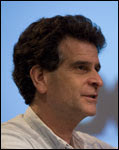
›May 20, 2009 // By Rachel Weisshaar “If you tell the world you’re going to do something and they go, ‘Yeah…?’ it’s probably that you’re making an incremental change in something that the world is already doing reasonably well,” said renowned inventor Dean Kamen at a May 2009 meeting co-sponsored by the Wilson Center’s Environmental Change and Security Program and Program on Science, Technology, America, and the Global Economy. “I’d rather work on the really big stuff.”
His track record proves it: He holds more than 400 U.S. and international patents, and his most famous inventions include an implantable insulin pump, a portable dialysis machine, and an artificial arm, as well as the Segway personal transporter.
Kamen now seeks to provide clean water to the 1.1 billion people who lack it with the Slingshot, a washing machine-sized device that uses just 500 watts of electricity to produce 10 gallons of clean water an hour.
Tackling the Big Problems: Water and Power
Kamen’s career as an inventor began in high school, when he would invent medical devices for his older brother, a doctor. The Slingshot grew out of a portable dialysis machine Kamen developed for patients with renal failure. After inventing a way to make perfectly sterile water for the dialysis machine, he explored whether he could adapt the water-purification technology for the developing world, where millions of people die each year from dirty water.
The data “take your breath away,” said Kamen. More than one billion people lack access to clean water, and 1.6 billion do not have access to electricity. Kamen thought he could address both of these problems with the Slingshot, which uses a Stirling-cycle generator to vaporize and condense the water, removing the impurities.
The generator runs on any kind of fuel, including the methane gas in cow dung, which is readily available in the Bangladeshi villages where Kamen conducted a six-month test of the Slingshot. The generator not only powers the water vaporizer, but also produces enough surplus electricity to power a light, cell phone, and computer for every household in a small village.
The Skepticism of Experts: A Bigger Problem?
In meetings with the World Bank and other international development organizations, Kamen was told that the Slingshot was more expensive than other ways of purifying water, including chlorine tablets, activated-charcoal filters, and reverse-osmosis desalination. But unlike these technologies, the Slingshot can remove any kind of contaminant from water; does not need filters, membranes, or chemicals; and does not require any technical know-how to use.
Kamen granted that the cheaper technologies might be more practical for urban areas, but argued that the Slingshot could have advantages in remote villages without access to technical expertise or a steady supply of chemicals or other components. He also suggested that microfinance might be a way to overcome the large initial cost of the Slingshot—although he emphasized that his expertise lies in developing the technology, and then partnering with experts who know how to surmount the various barriers to distribution.
“If everything I now say by way of recalling my history here seems to you like I’m frustrated, and angry, and disappointed, it’s mostly because I’m frustrated, angry, kinda disappointed,” said Kamen, adding, “But you’re going to fix all that.” Suggestions from audience members included learning from the experiences of venture capitalists who have invested in water technology in the developing world, as well as partnering with the military and defense contractors to manufacture and distribute the Slingshot.
Water, Electricity, and National Security
Kamen suggested that the Slingshot could be used to support U.S. foreign-policy and national-security objectives. For instance, the U.S. armed forces could bring water and electricity to an Afghani village with the Slingshot and Stirling-cycle generator. A telephone and camera mounted on the generator would provide communications technology.
“I would suspect that the Taliban…would be way more worried that everybody in town is happy, and healthy, and has light, and is communicating and showing pictures of everything going on” than about the threat of attack by the United States, said Kamen.
Photo: Dean Kamen. Courtesy of Dave Hawxhurst and the Wilson Center. -
Energy, Climate Change, National Security Are Closely Linked, Assert Retired Generals, Admirals
›May 18, 2009 // By Rachel WeisshaarThe United States’—and the Department of Defense’s (DoD)—dependence on fossil fuels poses a significant national-security threat, concludes Powering America’s Defense: Energy and the Risks to National Security (summary), the second report from CNA’s Military Advisory Board (MAB), a group of 12 retired three- and four-star admirals and generals. At the report’s launch this morning, several members of the MAB were joined by several of the people they are trying to influence, including Under Secretary of Defense for Acquisition, Technology, and Logistics Ashton Carter and Deputy Assistant Secretary of State for Energy, Sanctions, and Commodities Douglas Hengel.
Carter outlined some of the ways DoD is attempting to increase its energy efficiency, from insulating air-conditioned tents in Iraq with foam, which can lead to a 45 percent reduction in energy usage, to incorporating the fully burdened cost of fueling vehicles into the acquisitions process, to tripling the amount of spending on energy research and development over the past two years.
Hengel echoed the report’s emphasis on the interconnectedness of energy, climate change, and security, explaining that President Obama added the Secretary of Energy to the National Security Council for precisely this reason.
On May 28 at 3:00 p.m., ECSP will host a discussion of the report’s findings, featuring CNA General Counsel Sherri Goodman; General Charles Wald USAF (Ret.), chairman of the MAB; and Vice Admiral Dennis McGinn USN (Ret.), a member of the MAB. ECSP also hosted a discussion of the MAB’s previous report, National Security and the Threat of Climate Change. -
Weekly Reading
›Focus author Gladys Kalema-Zikusoka, who founded and directs the Ugandan NGO Conservation Through Public Health, won the Whitley Gold Award (see video of her work) for her efforts to protect the endangered mountain gorillas while improving local communities’ quality of life. The other five finalists were also seeking to reduce human-wildlife conflict in diverse contexts.
In Seed magazine, seven experts—including Peter Gleick and Mark Zeitoun—weigh in on whether “water wars” are a serious menace or an improbable threat, inflated by breathless media coverage of water shortages.
A major report on managing the health effects of climate change, co-authored by University College London and The Lancet, claims that climate change is the biggest health threat of the 21st century.
On his blog, Signs From Earth, National Geographic editor Dennis Dimick has collected a variety of resources about the possibility of “climate refugees.”
It’s not news that the U.S. and U.K. militaries are studying climate change’s potential security impacts, or seeking to increase energy efficiency on bases and in combat zones. But Geoffrey Lean, the environment editor of the Independent, is surprised that legendary Vietnamese General Vo Nguyen Giap has come out against bauxite mining in Vietnam’s central highlands, which he says “will cause serious consequences on the environment, society and national defense.”
Photo: Gladys Kalema-Zikusoka receives the Whitley Gold Award from Her Royal Highness The Princess Royal. Courtesy of the Whitley Fund for Nature. -
Next QDR Could Include Climate Adaptation Measures
›May 14, 2009 // By Rachel WeisshaarClimate-change adaptation measures, including military-to-military collaboration on disaster preparedness and response, could be part of the 2010 Quadrennial Defense Review (QDR), currently under preparation, reports Defense Environment Alert (one free article provided to new users). Congress mandated that the next QDR address the national-security impacts of climate change in 2008 defense-authorization legislation.
“Speaking at a conference hosted by the International Institute for Strategic Studies (IISS) in Washington, DC, May 5, Kent Butts, a professor with the US Army War College and global warming expert, told delegates that while much attention is being paid to climate change mitigation measures, preparations for inevitable global warming effects have garnered too little attention at the Pentagon,” said Defense Environment Alert. “The armed services have invested considerable resources in developing new energy strategies to reduce consumption and switch to alternative sources of energy, but have yet to really focus on adaptation, Butts says.”
“While the military should not be the lead agency handling climate change impacts in the United States or other developed countries, Butts said, in many developing nations the military may be the only government agency capable of providing services such as disaster response and preparedness work. Civilian government in the developing world is often weak and lacks basic resources such as manpower, transportation and engineering capability, Butts said.”
Environmental-security concerns appear to enjoy considerable traction in the Obama administration. Director of National Intelligence Dennis Blair cited energy, food, and water scarcity, as well as the impacts of climate change, as potential security threats in his February 2009 testimony to the Senate Select Committee on Intelligence. Last month, Under Secretary of Defense for Policy Michele Flournoy echoed these concerns. -
Under Secretary Flournoy: Climate Change, Demography, Natural Resources Pose Security Challenges
›May 5, 2009 // By Rachel WeisshaarIn a recent talk (transcript) at the Center for Strategic and International Studies, Under Secretary of Defense for Policy Michele Flournoy (formerly of the Center for a New American Security) laid out five trends that are affecting U.S. national security:- The global economic recession;
- Climate change;
- Demographic shifts;
- Dwindling natural resources; and
- The spread of destabilizing technologies.
Here’s what Flournoy had to say on these trends:
Climate change: “I believe that over time, as the results of this manifest, it’s going to be an accelerant. It’s going to accelerate state failure in some cases, accelerate mass migration, spread of disease, and even possibly insurgency in some areas as weak governments fail to cope with the effects of global climate change.”
Demography: “In some regions we are seeing tremendous youth bulges. We can all point to a number of countries in the Middle East and elsewhere where the average age is 20 or younger. Contrast that with the number of aging societies in Europe, Japan, Russia where you see depopulation trend[s] happening in some of these major powers.”
Natural resources: “[K]ey natural resources are increasingly scarce and we are likely to see in the future [an] increase in competition for everything from oil, gas, water, and so that is likely to exacerbate some of our challenges.” -
Environmental Cooperation Could Boost U.S.-Chinese Military Engagement, Says ECSP Director Dabelko
›April 23, 2009 // By Wilson Center Staff“Recently, the Defense Department warned that lack of Chinese transparency and dialogue between the Chinese and US militaries could lead to dangerous miscalculations on both sides. The tense confrontation between a US Naval survey vessel and five Chinese ships in the South China Sea in March echoed the rather serious 2001 Hainan Island incident, which was characterized by mutual suspicion and public acrimony. That event affected US-China relations for years.
To avoid further incidents, the Defense Department desires ‘deeper, broader, more high-level contacts with the Chinese,’ said Pentagon Press Secretary Geoff Morrell. The White House issued a statement stressing the ‘importance of raising the level and frequency of the US-China military-to-military dialogue,’ and President Obama quickly laid the groundwork by meeting with Chinese President Hu Jintao in London and agreeing to work to improve military-to-military relations.
One such way to begin military dialogue between the United States and China is by using environmental issues.
Environmental collaboration is unlikely to hit politically sensitive buttons, and thus offers great potential to deepen dialogue and cooperation. Military-to-military dialogue can facilitate the sharing of best practices on a range of environmental security issues.”
To read the rest of this op-ed, co-authored by ECSP Director Geoff Dabelko and Kent Hughes Butts, director of the National Security Issues Branch of the Center for Strategic Leadership at the U.S. Army War College, please visit the Christian Science Monitor. -
Reading Radar– A Weekly Roundup
›April 10, 2009 // By Wilson Center StaffUncharted Waters: The U.S. Navy and Navigating Climate Change, a working paper by the Center for a New American Security, examines climate change’s implications for the U.S. Navy.
Defense Secretary Robert Gates recently chose Admiral James Stavridis, the former head of U.S. Southern Command known for his “smart power”/“sustainable security” approach, to lead U.S. European Command.
An Economist article highlights some of the linkages between water and political instability, energy, food, demography, and climate change.
The Governance of Nature and the Nature of Governance: Policy That Works for Biodiversity and Livelihoods, a report by the International Institute for Environment and Development, explores the success of local-level conservation. It features case studies from India, Tanzania, and Peru.
Sheila Herrling of the Center for Global Development argues that the USAID Administrator should become a permanent member of the National Security Council.
The Nation wonders whether nations go to war over water; Nature (subscription required) and Slate say “no.” ECSP has weighed in on this issue in the past.
Lisa Friedman of ClimateWire reports on Bangladesh’s attempts to prepare for the impacts of climate change. -
Teaching Geographic Perspectives on Environmental Security
›The intersection of the environment, security, and policymaking is often glossed over, even at a venerable institution like the U.S. Military Academy at West Point, which trains the future officers of the U.S. Army. I am teaching a new mini-course within the geography program that aims to change this situation, using a region-specific approach. The course is designed to show geography majors how the environment can act as a catalyst for conflict or simply as an amplifier of existing problems. A series of 14 lessons will focus on defining environmental security, the role it plays in policymaking decisions, the significance of the military in these situations, and the intelligence-gathering and dissemination processes.
The military is evolving, and the armed services often find themselves involved in activities clearly classified as “other than war”; a key example is the recent formation of the U.S. Africa Command (AFRICOM), which focuses on “war prevention rather than war-fighting.” The bottom-line goal of West Point’s environmental security course is to educate future Army leaders on the interrelatedness of the environment and human activities, because these are issues they are likely to face in their careers.
The 11 students taking the course this semester will be required to read, comment on, and analyze a New Security Beat blog topic they find especially interesting, as well as pitch an idea for a potential blog entry. The blogging project is being incorporated into the course to expose students to near real-time perspectives from subject-matter experts in environmental security and related fields. Other readings will come from peer-reviewed journals, the Army War College, and other U.S. government sources. The course will conclude with an integrative experience where students apply what they have learned to a set of “what-if” scenarios from across the globe.
The mini-course, along with the blog exercise, has been a welcome addition to the geography program’s line-up. Feedback from this first-ever attempt to teach environmental security to geography majors at West Point will be compiled, and environmental security will either be developed into a more comprehensive course or split among several existing courses within the geography curriculum, such as environmental geography, climatology, and several regional geography courses. I look forward to sharing my reflections on teaching the mini-course with New Security Beat readers in the coming months.
Photo: U.S. Military Academy at West Point. Courtesy Flickr user Devonaire Eye.
Lieutenant Colonel Luis A. Rios USAF is an assistant professor in the Department of Geography and Environmental Engineering at the U.S. Military Academy at West Point.
 “If you tell the world you’re going to do something and they go, ‘Yeah…?’ it’s probably that you’re making an incremental change in something that the world is already doing reasonably well,” said renowned inventor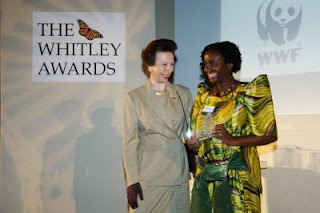
 The intersection of the environment, security, and policymaking is often glossed over, even at a venerable institution like the U.S. Military Academy at West Point, which trains the future officers of the U.S. Army. I am teaching a new mini-course within the geography program that aims to change this situation, using a region-specific approach. The course is designed to show geography majors how the environment can act as a catalyst for conflict or simply as an amplifier of existing problems. A series of 14 lessons will focus on defining environmental security, the role it plays in policymaking decisions, the significance of the military in these situations, and the intelligence-gathering and dissemination processes.

