-
Top 10 Posts for January 2013
›December and January were busy months. The U.S. National Intelligence Council released their latest quadrennial Global Trends Report, we saw a progress report on USAID’s Feed the Future Initiative, and Typhoon Bopha showed why developing countries are so vulnerable to climate change. Laurie Mazur also responded to Blair A. Ruble’s Wilson Center policy brief on 21st century urbanization with a look at how sustainable cities really are, and we heard from Ethiopia’s PHE community about the challenges of project monitoring and evaluation. Some past-year favorites emerged again as well, with Yemen’s demography, a look at Mongolia’s mining boom, and a great map of the world’s exclusive economic zones.
-
2012’s Top Posts on the Environment, Demography, Development, and Security
›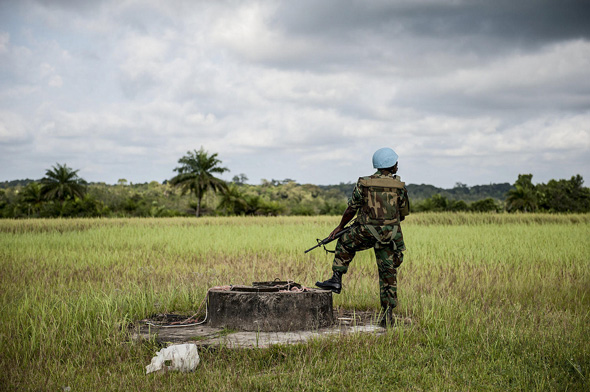
If 2011 was the year of political demography, then 2012 was perhaps when the full intersection of natural resource management, population dynamics, development, and security came into focus. The U.S. drought; global food price spikes; the return of famine in the Sahel and Horn of Africa; continued unrest in youthful countries across the Middle East; the Rio+20 and London Family Planning summits; new oil and mineral development in unstable countries; and increasingly more noticeable climate change around the world – all were big stories that brought the intersection of these issues to the forefront.
-
Top 10 Posts for November 2012
›Population and environment stories nearly swept the top 10 last month (ranked by unique pageviews). Sean Peoples’ first short film on population, health, and environment projects in Tanzania led the charge, followed by a guest post from Tim Tear and Craig Leisher of The Nature Conservancy; Ken Weiss’ Beyond Seven Billion event; Elizabeth Leahy Madsen’s look at Yemen’s demography; Kathleen Mogelgaard’s post on next steps for incorporating population dynamics in climate change; and a summary of Joel Cohen’s 45-minute YouTube introduction to demography for the Floating University.
-
Top 10 Posts for October 2012
›Water – and its relationship with development, food, demography, and conflict – dominated October’s top 10 posts. Jeremiah Asaka’s guest contribution on resource conflict in Kenya and Kate Diamond’s look at SAB Miller’s surprisingly on-point summary of the water-energy-food nexus were new additions. Carolyn Lamere’s posts on the health of the world’s major aquifers and the political situation along the Nile basin made reappearances. And the drought across the U.S. West is still on, driving interest in Graham Norwood’s summary of how it might impact world food prices and its connection to climate change.
-
Top 10 Posts for September 2012
›September brought a crop of fresh faces to the top 10 (based on unique pageviews). Valerie Hudson’s spring launch at the Wilson Center of her new book Sex and World Peace, which asks if the domestic treatment of women impacts the security of states, was very popular, and Carolyn Lamere’s snapshot of the current political and development situation along the Nile river basin also jumped the charts.
-
Top 10 Posts for August 2012
›August is a slow month in DC, but not so on New Security Beat: 8 of the top 10 last month (measured by unique pageviews) were new posts. Laurie Mazur’s discussion of inequality, population, and sustainability took the top spot followed by a look at what’s new in the Population Reference Bureau’s latest data sheet; Kate Diamond’s feature on Mongolia’s climate and development challenges; a discussion on the naming of the Failed States Index; a summary of the National Intelligence Council’s extensive series on aging; and two reactions to Iran’s surprising shift on family planning.
-
New Wilson Center Initiative on Global Sustainability and Resilience
›August 20, 2012 // By Blair A. Ruble
We live in an era when the pace and scope of global change – including forces such as population growth, resource scarcity, urbanization, migration, and economic development – increasingly impact all of us as individuals, from our health and security to our environment and economic well-being. This complex web of the global and local has led the Wilson Center to create a new initiative focusing on global sustainability and resilience.
Following on the news that long-time ECSP Director Geoff Dabelko is moving on to a well-deserved post directing environmental studies at Ohio University’s Voinovich School of Leadership and Public Affairs, I am thrilled to announce that I will direct a new Wilson Center initiative on global sustainability and resilience, which will combine the ongoing efforts of the Environmental Change and Security Program, Global Health Initiative, China Environment Forum, and Comparative Urban Studies Project. This new initiative will integrate and build upon their already substantial contributions to the field.
-
Best of Both Worlds: Moving On, But Staying With ECSP
›August 17, 2012 // By Geoffrey D. DabelkoI have a bit of news to share. After 15 years at the Wilson Center, I will be moving back to my home town of Athens, Ohio, next week. This fall I will become a professor at Ohio University’s Voinovich School of Leadership and Public Affairs, where I will serve as director of environmental studies and work in their campus-wide Consortium on Energy, Economics, and the Environment.
I am very pleased that I will continue working as a senior advisor to the Environmental Change and Security Program, as both the university and the Wilson Center are eager for me to stay connected on current projects and foster new collaborations. This new role will certainly evolve over time and I look forward to continuing to work with all of you from this different perch.
Showing posts from category meta.