-
DOD Measures Up On Climate Change, Energy
›May 5, 2010 // By Schuyler Null“As Congress deliberates its role, DOD is moving ahead steadily on a broad range of energy and climate initiatives,” says former Senator John Warner in a recent Pew report, Reenergizing America’s Defense: How the Armed Forces Are Stepping Forward to Combat Climate Change and Improve the U.S. Energy Posture.
The military as a leader and catalyst for renewable energy was a key focus of the recently released Quadrennial Defense Review (QDR), which for the first time included consideration of the effects of climate change and excessive energy consumption on military planning:Assessments conducted by the intelligence community indicate that climate change could have significant geopolitical impacts around the world, contributing to poverty, environmental degradation, and the further weakening of fragile governments. Climate change will contribute to food and water scarcity, will increase the spread of disease and may spur or exacerbate mass migration.
According to the Pew report, the Department of Defense has set a goal of producing or procuring at least 25 percent of its non-tactical electric energy needs from renewable sources by 2025. Highlights of the service’s efforts include:
The Pew report offers a generally favorable appraisal of the military’s response to the “twin threats of energy dependence and climate change” and the progress made towards reaching federal energy mandates. However, the authors let slide that the overwhelming amount of DOD energy usage is tied to tactical consumption, which has been given inadequate attention thus far (consider that the senior Pentagon official overseeing tactical energy planning was only just appointed, although the position has existed since October 2008).- The U.S. Navy’s “Great Green Fleet” carrier strike group, which will run entirely on alternative fuels and nuclear power by 2016;
- The construction of a 500-megawatt solar facility in Fort Irwin, California by the U.S. Army which will help the base reach ‘net-zero plus’ status;
- The goal of acquiring 50 percent of the U.S. Air Force’s aviation fuels from biofuel blends by 2016;
- The U.S. Marine Corps’ 10×10 campaign to develop a comprehensive energy strategy and meet ten goals aimed at reducing energy and water intensity and increasing the use of renewable electric energy by the end of 2010.
Interest in this field has grown quickly, as evidenced by the more than 400 people gathered at the launch of the latest report from the Center for New American Security (CNAS), Broadening Horizons: Climate Change and the U.S. Armed Forces – a big increase from the 50 or so at CNAS’ first natural security event in June 2008.
The CNAS study, much like the Pew report, breaks down the military’s efforts by service, but the study’s authors – including U.S. Navy Commander Herbert E. Carmen – thankfully provide more specific recommendations for what could be done better.
Based on research, interviews, and site visits, the study offers geographically specific recommendations for each of the Unified Commands, as well as seven broad recommendations for DOD as a whole:
“While we believe there is still much work ahead, there is a growing commitment to addressing energy and climate change within the DOD,” said USN Commander Carmen in the report:- In light of its implications for the global commons, ensure that DOD is included in the emerging debate over geoengineering.
- Urge U.S. ratification of the UN Convention on the Law of the Sea in order to provide global leadership and protect U.S. and DOD interests, especially in the context of an opening Arctic sea.
- Eliminate the divided command over the Arctic and assign U.S. Northern Command (NORTHCOM) as the supported commander.
- The U.S. government should make an informed decision about constructing nuclear reactors on military bases and provide clear policy guidelines to DOD.
- Congress and DOD should move away from the “cost avoidance” structure of current renewable energy, conservation, and efficiency practices in order to reward proactive commanders and encourage further investment.
- All of the services should improve their understanding of how climate change will effect their missions and capabilities; e.g. migration and water issues may impact Army missions, a melting Arctic, the Navy.
- The Air Force should fully integrate planning for both energy security and climate change into a single effort.
Indeed, in our conversation with officials in the Office of the Secretary of Defense for Policy, it was clear that, in developing the climate change and energy section of the 2010 QDR, the Department of Defense has developed a nascent, intellectual infrastructure of civilian and military professionals who will continue to study the national security implications of climate change, and, we hope, will continue to reevaluate climate change risks and opportunities as the science continues to evolve.
A holistic view of national security that includes energy and environment, as well as demographic and development inputs, continues to gain traction as an important driver in DOD policy and planning.
Photo Credit: “Refueling at FOB Wright” courtesy of Flickr user The U.S. Army. -
Family Planning in Fragile States
›
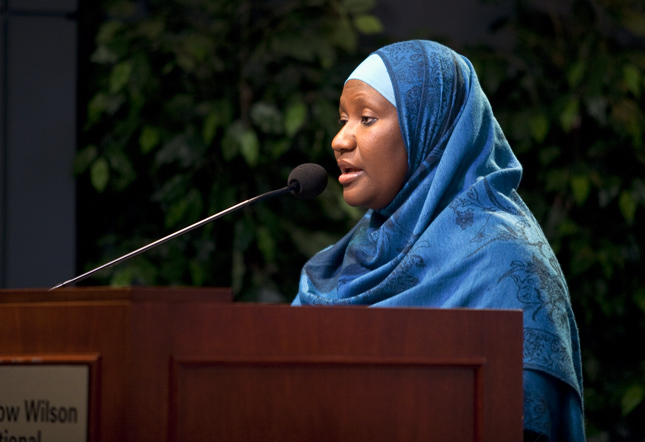
“Conflict-affected countries have some of the worst reproductive health indicators,” said Saundra Krause of the Women’s Refugee Commission at a recent Wilson Center event. “Pregnant women may deliver on the roadside or in makeshift shelters, no longer able to access whatever delivery plans they had. People fleeing their homes may have forgotten or left behind condoms and birth control methods.”
-
Food Security Comes to Capitol Hill, Part Two: Women’s Edition
›April 30, 2010 // By Schuyler NullThe focus on food security on Capitol Hill continued with Wednesday’s House Hunger Caucus panel, “Feeding a Community, Country and Continent: The Role of Women in Food Security.” According to panel organizers Women Thrive Worldwide, “over half the food in developing countries – and up to 80 percent in sub-Saharan Africa – is grown by women farmers, who also account for seven in ten of the world’s hungry.”
The panel illuminated some of the inequities routinely faced by female farmers that often prevent them from using the same inputs as men (tools, fertilizer, etc.), bar their access to credit, and force them onto less productive land.
“Women around the world face unique economic and social barriers in farming and food production,” said Nora O’Connell of Women Thrive Worldwide. “But they are key to increasing food security and ending hunger, and all international programs must take their needs into account.”
Panelist David Kauck of the International Center for Research on Women (ICRW) cited the State Department’s Consultation Document on the Global Hunger and Food Security Initiative: “Economic output could be increased by 15-40 percent and under-nutrition reduced by 15 million children simply by providing women with assets equal to those of men.”
According to the 2008 ICRW report, A Significant Shift: Women, Food Security, and Agriculture in a Global Marketplace:Women also are more likely than men to spend their income on the well-being of their families, including more nutritious foods, school fees for children and health care. Yet agricultural investments do not reflect these facts. Women in forestry, fishing and agriculture received just 7 percent of total aid for all sectors.
One of the most fundamental problems faced by women in developing countries is a lack of basic education leading to illiteracy and innumeracy, making it difficult for women to understand agricultural policy or the fair market values of their products. Therefore, men are much more likely to control valuable markets.
In addition, women are less likely to learn about and adopt new agricultural technologies and best practices. Lydia Sasu, director of the Development Action Association, said that when she attended agricultural school in Ghana she was one of only three women, compared to more than 40 men, in her class.
Women in developing countries rarely own the land they farm, which can make it difficult to apply for credit and extension services without collateral. According to the ICRW report:In Uganda, women account for approximately three out of four agricultural laborers and nine out of 10 food-producing laborers, yet they own only a fraction of the land. Women in Cameroon provide more than 75 percent of agricultural labor yet own just 10 percent of land. A 1990 study of credit schemes in Kenya, Malawi, Sierra Leone, Zambia and Zimbabwe found that women received less than 10 percent of the credit for smallholders and only 1 percent of total credit to agriculture. Women receive only 5 percent of extension services worldwide, and women in Africa access only 1 percent of available credit in the agricultural sector.
“The fundamental barrier to women in agriculture,” said USAID’s Kristy Cook, “is access to assets.” Cheryl Morden of the International Fund for Agricultural Development (IFAD) said we have reached the “tipping point,” where action on this issue seems inevitable on the international policy level. However, she questions how quickly that momentum can translate to change on the ground.
The State Department has made improving women’s lives an important part of both their Global Hunger and Food Security Initiative and the Global Health Initiative. ”Investing in the health of women, adolescents, and girls is not only the right thing to do; it is also the smart thing to do,” said Secretary of State Hillary Clinton in January.
Reproductive health and family planning services will be key to both initiatives. A policy brief by ICRW’s Margaret Greene argues that poor reproductive health can have negative effects on women’s educational and economic opportunities. As Secretary Clinton said, “When women and girls have the tools to stay healthy and the opportunity to contribute to their families’ well-being, they flourish and so do the people around them.”
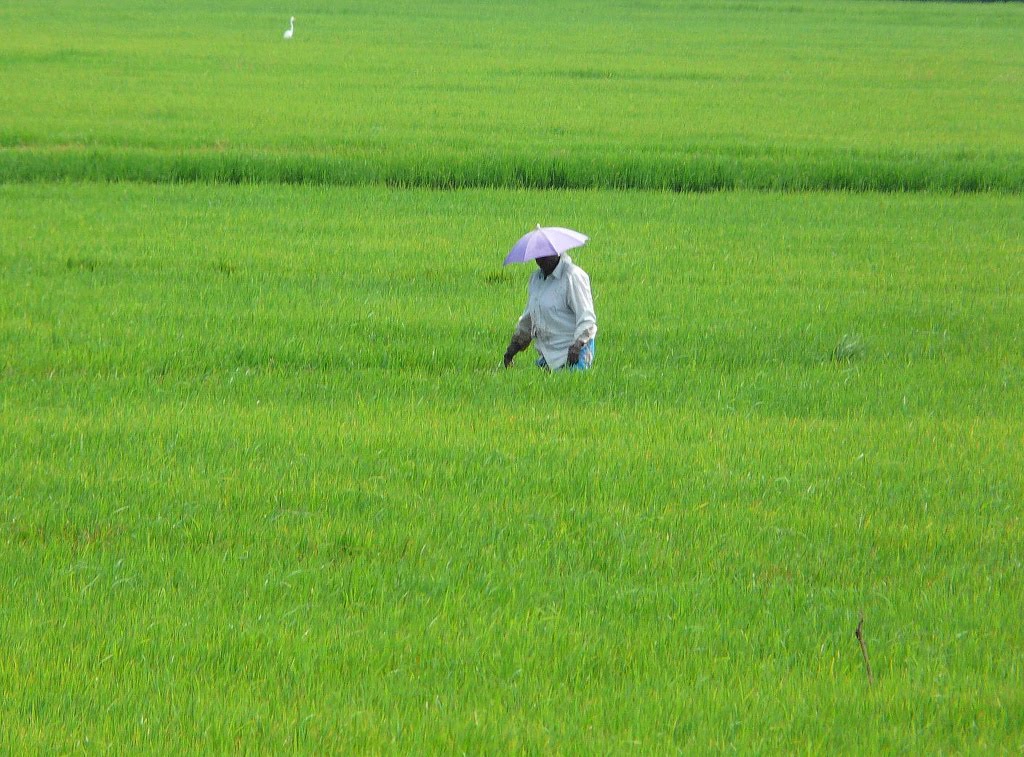
Photo Credit: “Transplanting at rainfed lowland rice in Madagascar,” courtesy of flickr user IRRI Images. -
Food Security Comes to Capitol Hill, Part One
›April 30, 2010 // By Schuyler NullThis week, the CSIS Task Force on Global Food Security released its latest report, Cultivating Global Food Security: A Strategy for U.S. Leadership on Productivity, Agricultural Research, and Trade.
According to the report, “the number of people living with chronic hunger has jumped to more than 1 billion people – one sixth of the world’s population – and those trends show no signs of reversal: between 2007 and 2008, the number of people suffering from chronic hunger in the developing world increased by 80 million. In 2009, as many as 100 million additional people were pushed into a state of food insecurity.” The riots and instability during the 2008 food crisis vividly illustrate the consequences of failing to address this problem.
The report outlines six broad recommendations for policy makers:1. Develop an integrated, comprehensive approach to food security;
At the report’s Capitol Hill launch, CSIS President John Hamre compared releasing think tank studies to “casting bread on the water, most of it disappears.” However the high profile Congressional presence—including co-chairs Representative Betty McCollum and Senators Richard Lugar and Bob Casey—proves that awareness of the global food security problem is growing.
2. Empower leadership (USAID) and ensure cross-agency coordination;
3. Support country-led (and country-specific), demand-driven plans for agriculture;
4. Elevate agricultural research and development in the United States utilizing the land-grant university system;
5. Leverage the strengths of the private sector to encourage innovation and give farmers better access to credit and markets; and
6. Renew U.S. leadership in using trade as a positive tool for foreign policy and development in order to improve stability and economic growth at home and abroad.
“We are summoned to this issue by our consciences but we also know this is a security issue,” said Sen. Casey. Along with Sen. Lugar, Casey introduced the “Global Food Security Act of 2009,” which seeks to “promote food security in foreign countries, stimulate rural economies, and improve emergency response to food crises, as well as to expand the scope of the Foreign Assistance Act of 1961 to include conservation farming, nutrition for vulnerable populations, and economic integration of persons in extreme poverty.”
Representative McCollum introduced a similar bill in the House, but neither has made much headway. Senator Lugar said that he hopes the bipartisan and bicameral nature of their bills will help this issue stay afloat during a particularly toxic political atmosphere in Washington.
The release of the CSIS report and its Congressional support is particularly timely, as USAID just announced the 20 focus countries for the “Feed the Future” Initiative, which are Ethiopia, Ghana, Kenya, Liberia, Mali, Malawi, Mozambique, Rwanda, Senegal, Tanzania, Uganda, and Zambia in Africa; Bangladesh, Cambodia, Nepal, Tajikistan in Asia; and Guatemala, Haiti, Honduras, and, Nicaragua in Latin America. The White House pledged an initial $3.5 billion over three years for the Feed the Future Initiative, with additional pledges from other G-8 and G-20 members to total $18.5 billion.
In addition, the State Department is in the midst of preparing its first-ever (and long-delayed) strategic doctrine for diplomacy and development, the QDDR, in which agricultural development is expected to have a major role.
Speaking on behalf of the State Department, Acting Deputy Assistant Secretary for Trade Policy and Programs William Craft echoed the previous testimony of Deputy Secretary of State Jacob Lew on Feed the Future, saying that the United States believes development should be on par with diplomacy and defense, and is both a strategic and moral imperative.
Next up: “Food Security Comes to Capitol Hill, Part Two” on the particular role women can play in increasing global productivity, if given the chance.
Photo Credit: “World Food Day,” courtesy of flickr user JP. -
Paul Collier Discusses the Plundering of the Planet at the World Bank
›April 27, 2010 // By Dan Asin“Nature is something that is both vulnerable and valued,” Paul Collier said yesterday at the World Bank. “It is being mismanaged…what it has turned into is a series of environmental battles between environmentalists and economists.”
Collier was giving the first public presentation of of his new book, The Plundered Planet: Why We Must—and How We Can—Manage Nature for Global Prosperity. In it, he asserts that disputes between environmentalists and economists often arise from a fundamental misunderstanding on both sides about the unique qualities and purposes of “natural assets.” This misunderstanding, he says, has created a state of natural plunder. In Plundered Planet, Collier elucidates the ethical and economic considerations for the proper management of natural assets, how a greater understanding of natural assets and better environmental management can be achieved, and lessons for development.
Paul Collier will be joining ECSP for an in-depth discussion of Plundered Planet, economics, and development at the Wilson Center in June. Until then, for a more detailed look, check out the New Security Beat’s previous coverage of Collier’s book preview with Nancy Birdsall, president of the Center for Global Development, at the U.S. Institute of Peace. -
World Bank President: Climate Policy Is Not “One-Size-Fits All”
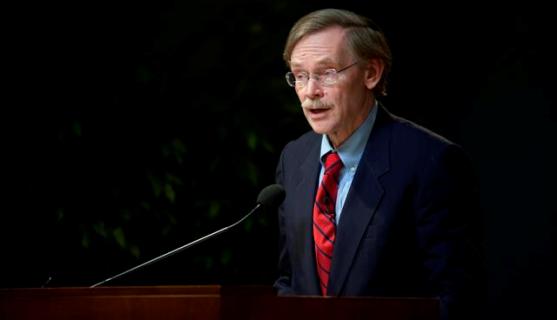
›Speaking at the Woodrow Wilson Center yesterday, World Bank President Robert Zoellick said the financial crisis indicated that developed countries should listen to developing countries, but not out of “charity or solidarity: It is self-interest.”
His prepared remarks, “The End of the Third World? Modernizing Multilateralism for a Multipolar World,” notably included a section on climate change:Take climate change: The danger is that we take a rule book from developed countries to impose a one-size-fits-all model on developing countries. And they will say no.
Climate change policy can be linked to development and win support from developing countries for low carbon growth but not if it is imposed as a straitjacket.
This is not about lack of commitment to a greener future. People in developing countries want a clean environment, too.
Developing countries need support and finance to invest in cleaner growth paths. 1.6 billion people lack access to electricity. The challenge is to support transitions to cleaner energy without sacrificing access, productivity, and growth that can pull hundreds of millions out of poverty.
Avoiding geo-politics as usual means looking at issues differently. We need to move away from the binary choice of either power or environment. We need to pursue policies that reflect the price of carbon, increase energy efficiency, develop clean energy technologies with applications in poorer countries, promote off-grid solar, innovate with geothermal, and secure win-win benefits from forest and land use policies. In the process, we can create jobs and strengthen energy security.
The developed world has prospered through hydro electricity from dams. Some do not think the developing world should have the same access to the power sources used by developed economies. For them, thinking this is as easy as flicking a switch and letting the lights burn in an empty room.
While we must take care of the environment, we cannot consign African children to homework by candlelight or deny African workers manufacturing jobs. The old developed country prism is the surest way to lose developing country support for global environment goals. -
Shape of Things to Come: Uganda’s Demographic Barriers to Democracy
›In March, Uganda’s cultural landmark, the Kasubi Tombs, were destroyed in a suspicious fire. Tensions spilled over when Ugandan President Yoweri Museveni paid a visit to the Bugandan site and found his entrance blocked by an angry crowd. According to an independent newspaper, soldiers accompanying the president opened fire, killing three civilians.
With ethnic-tinged unrest and student protests in Kampala, as well as cross-border conflicts in the north and east, Museveni, who has led Uganda since 1986, is facing a potentially serious test as elections approach early next year. The country’s demographic profile, and in particular the lack of opportunities for growing numbers of young people, will add to the country’s challenges, as I argue in a new case study of Uganda’s demography.
Uganda has the youngest population in the world, with 77 percent of its people younger than age 30. Women in Uganda have an average of 6.7 children each and 41 percent of married women have an unmet need for family planning. The population of Uganda is currently growing by about one million people per year, and given the force of its demographic momentum, Uganda’s population is likely to almost double by 2025 even if fertility declines.
Population Action International has found that countries with age structures like Uganda’s are the most likely to experience internal strife and autocratic governance. Between 1970 and 2007, 80 percent of outbreaks of civil conflict occurred in countries in which 60 percent or more of the population was younger than age 30.During that same period, 90 percent of countries with an age structure like Uganda’s had autocratic or only partially democratic governments.
Demography alone does not cause conflict. Most governments, even those with youthful populations, do not become entrenched in internal violence and upheaval. But age structure affects a country’s vulnerability to conflict, due to the demands a government faces in providing for its growing numbers.
In Uganda, young people face diminishing prospects in agriculture, the primary industry, as plot sizes shrink with each successive generation. At projected population growth rates, land density may increase 350 percent by 2050, from 122 inhabitants per km2 to a possible 551 inhabitants per km.
Only one-quarter of students who enroll in primary school reach the final grade, and even those with university degrees find few jobs. A reported youth unemployment rate of 22 percent is even higher in urban areas.
After 25 years in power, President Museveni will stand for a fourth official term in 2011. Despite growing dissent among his constituents, he appears confident of keeping his seat. Regardless of what happens next year,Uganda’s leaders must firmly commit to addressing their country’s demographic issues.
Age structure can become a window of opportunity if youth are engaged in society and couples can choose the number of children they can support. But in Uganda, that window remains far out of reach.
Three new case studies from Population Action International on Haiti, Yemen and Uganda examine the challenges specific to countries with very young age structures and recommend policy solutions.
Elizabeth Leahy Madsen is a senior research associate at Population Action International (PAI). She is the primary author of the 2007 PAI report The Shape of Things to Come: Why Age Structure Matters to a Safer, More Equitable World.
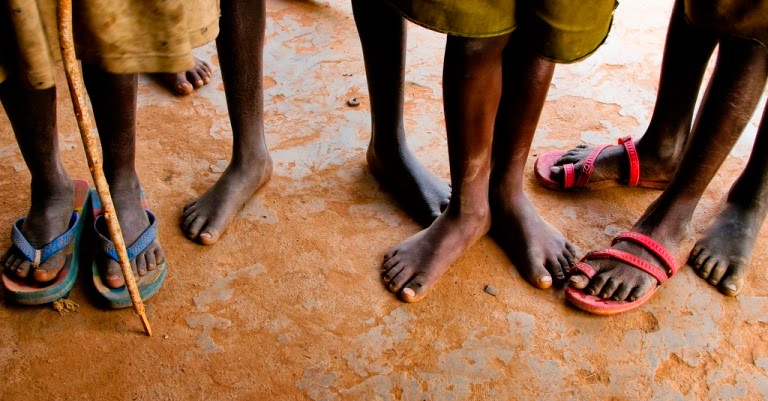
Photo Credits: “Atanga.pater.uganda,” courtesy of flickr user Kcarls. -
Shape of Things to Come: A Demographic Perspective of Haiti’s Reconstruction
›Last month, the International Donors’ Conference Towards a New Future for Haiti sought to lay the groundwork for Haiti’s long-term recovery by pledging an impressive $9.9 billion over the next decade. A large portion of the money will fund health, education, and employment efforts that are crucial to meeting the needs of Haiti’s people—particularly its youth. In a new case study of Haiti’s demography and development, Population Action International (PAI) argues that the country’s age structure should play a central role in any reconstruction strategy.
In Haiti, almost 70 percent of the population is under the age of 30, and this very youthful population affects every aspect of the country’s development prospects, from economic opportunities to security issues, political stability, gender equality, and climate change adaptation.
Haiti is at a demographic crossroads. If sound policies are in place, youthful age structures can translate into an economic asset for the country. The combination of decreasing fertility levels and a growing working-age population may open a window of opportunity for economic growth. To seize it, large-scale education and employment policies and programs should seek to raise employment rates for both male and female youth.
For Haiti to reap the benefits of this “demographic dividend,” access to reproductive health services is equally important. According to the most recent Demographic and Health Survey (2005-2006), if all unintended births were avoided, the average fertility level in the country would be 2.4 children instead of four.
But if instead, Haiti ignores the needs of its youth, the country will remain vulnerable to a variety of political and economic challenges. Youth unemployment is twice that of the rest of the population, which could have a negative impact on the country’s political stability and security situation.
The PAI report The Shape of Things to Come shows that countries with very young age structures are less likely than others to sustain democratic regimes and that age structure impacts political stability. To be an effective partner in its reconstruction, the Haitian government needs stable governance. By prioritizing education, health, and employment for young people, Haiti may reduce the risk of urban violence, help attract private investors, and speed its recovery.
Addressing demographic factors will also help Haiti achieve broader development goals. Decades of high population growth and the use of charcoal as the main source of energy have deforested 97 percent of the country, increasing Haiti’s inherent vulnerability to environmental disasters and climate change. Denuded landscapes contribute to devastating floods, especially in urban coastal zones. The lack of tree cover reduces the country’s ability to absorb carbon and causes wide variations in temperature. Due to soil erosion, Haiti’s agricultural industry is one of the least productive in the world, leading to widespread poverty and food insecurity.
The integration of demographic factors into development strategies constitutes one of the most compelling ways for Haiti to facilitate not only its reconstruction, but also address the challenges of climate change and make its population more resilient and prosperous.
Three new case studies from Population Action International on Haiti, Yemen and Uganda examine the challenges specific to countries with very young age structures and recommend policy solutions.
Béatrice Daumerie is a research fellow at Population Action International (PAI).
Photo: Haitian youth. Courtesy Flickr user NewsHour
Showing posts from category development.