-
Eliane Razafimandimby: Improving the Quality of Maternal and Child Care
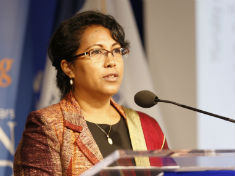
› “Even in a weak system without a quality improvement structure, it is possible to support district managers and facility providers to measure and improve quality care,” said Eliane Razafimandimby, Chief of Party of USAID’s flagship Maternal and Child Survival Program (MCSP) in Madagascar, at a recent Wilson Center event on improving the quality of reproductive, maternal, newborn, and child healthcare (RMNCH).
 -
Saving Lives: Focusing on Outcomes to Improve Maternal and Newborn Healthcare Quality
›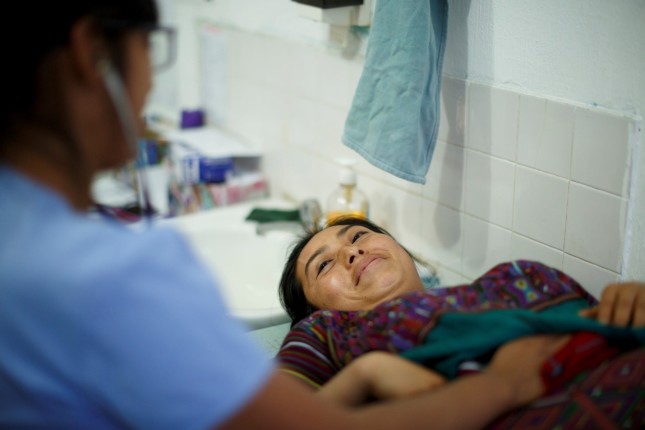
Poor quality care is now a bigger barrier to reducing mortality than insufficient access to healthcare, said Dr. Margaret Kruk, Chair of The Lancet Global Health Commission on High Quality Health Systems in the Sustainable Development Goal Era. She spoke at a recent Wilson Center event on strategies to improve and sustain high-quality reproductive, maternal, and newborn care at scale. “We estimate that 8.6 million lives are lost every year due to lack of access to high quality care, and of that 8.6 million, five million lives are lost by people who have already reached out to the health system.”
-
Mothers on the Front Lines: Armed Conflict, Aid Distribution, and Maternal and Child Health
›While most people killed in wars are male, several studies have found that “mortality among women in some high-intensity conflicts was as severe as male mortality,” said Henrik Urdal, the Director of the Peace Research Institute Oslo (PRIO), at a recent Wilson Center event on the links between maternal and child health, aid, and armed conflict. “Maternal health is a very natural place to start” when researching excess mortality and indirect deaths among women impacted by war, said Urdal.
-
Too Little Too Late: Violence Disrupts Maternal Health Care in Conflict Settings
›“One of the first victims of war is the health care system itself,” said Marco Baldan, the chief war surgeon for the International Committee of the Red Cross. Violence directed at health facilities and workers is common in conflict, despite international laws protecting medical personnel, facilities, and transport vehicles during war. -
Driven to Care: Improving Transportation to Reach Maternal Health Care in Conflict Zones
›How much time passes between a laboring woman’s decision to seek care and her arrival at a health facility? Transportation for emergency obstetric care should be swift and timely, but for many refugees in the world’s conflict zones, it is not.An analysis of refugee maternal mortality in 10 countries found that transportation problems contributed to more maternal deaths outside of refugee camps, which tend to have better access to emergency transportation services.
-
Death From Delay: Improving Maternal Health Care in Conflict Zones
›How much time passes before a woman—or her relatives—decide to seek care or emergency medical services during pregnancy? It often depends on how much they know about the services available.This information may be hard to come by in conflict-affected areas, especially among internally displaced women. According to a retrospective study of health care during the 2006 war in Lebanon, 80 percent of Lebanese pregnant women before the war sought antenatal care, while the share of displaced women seeking care was only 34.5 percent.
-
Everybody Counts: Maternal Mortality
›It’s 2018, so why are women still dying in childbirth? This episode of Everybody Counts, hosted by Jennifer D. Sciubba, a professor of political demography at Rhodes College, explores why maternal mortality is a global issue, what policy solutions can keep mothers healthy, and why valuing women is at the heart of the issue. -
A More Prosperous World: Investing in Family Planning for Sustainable Economic Growth
›“There is a close relationship between fertility rates and health on one hand, and economic growth on the other,” said Peter McPherson, President of the Association of Public Land-Grant Universities and former USAID Administrator, at the final event in a three-part series on the role of population and family planning in supporting economic growth, health, and education.
Showing posts from category maternal health.
 “Even in a weak system without a quality improvement structure, it is possible to support district managers and facility providers to measure and improve quality care,” said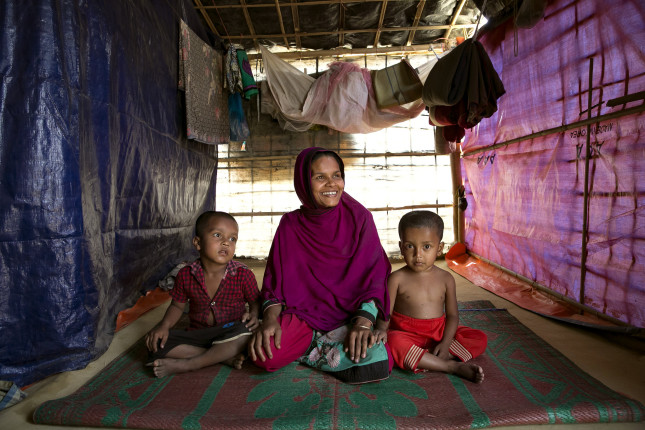
 “One of the first victims of war is the health care system itself,”
 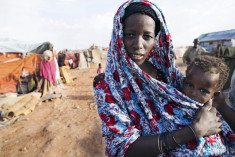 How much time passes between a laboring woman’s decision to seek care and her arrival at a health facility? Transportation for emergency obstetric care should be swift and timely, but for many refugees in the world’s conflict zones, it is not.
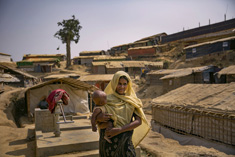 How much time passes before a woman—or her relatives—decide to seek care or emergency medical services during pregnancy? It often depends on how much they know about the services available.
 It’s 2018, so why are women still dying in childbirth? This episode of