-
East Asia’s Many Maritime Disputes and the Imperative of Energy Access
›Friction between Japan and China in the East China Sea has escalated this year to the point where jets on both sides have been scrambled and Chinese military vessels have locked their fire control radar onto their Japanese counterparts multiple times. The source of this tension is the Senkaku (as they are known in Japan) or Diaoyu (if you’re in China) Islands – specifically, who owns them.
-
Africa Can Help Feed Africa: Removing Regional Barriers to Trade in Food Staples
›We need to understand why barriers to trade exist in order to alleviate the food insecurity that confronts Africa, said Makhtar Diop, World Bank vice president for Africa, at the Wilson Center in January.
The World Bank released a new report in October 2012 that is part of a series that concentrates on intraregional trade. Africa Can Help Feed Africa: Removing Regional Barriers to Trade in Food Staples, however, is unique, Diop said, because it “moves the focus from general barriers to trade in Africa to focus on food,” so that policymakers can move away from crisis response and address food insecurity at a base level. [Video Below]
-
In Uganda, Integrating Population, Health, and Environment to Meet Development Goals
›
Fifty years after independence, Uganda has one of the highest population growth rates in the world at 3.3 percent – a rate which puts the country on track to nearly double in population over the next two decades. More than 50 percent of the population is under the age of 18. This large youth cohort will ensure that the country continues to grow for decades to come, even if couples choose – and are able – to have smaller families. And according to the State of Uganda Population Report 2011, “with more than one million people added to the population every year, the quality of [health] service delivery will suffer.”
-
‘Dialogue’ Interviews Caryle Murphy & John Sullivan: Saudi Arabia’s Demography & 2013’s Big Environment Stories
›Dialogue at the Wilson Center tackled demography and the environment last week, interviewing Pulitzer Prize-winning journalist and former Wilson Center public policy scholar Caryle Murphy about her new book, A Kingdom’s Future: Saudi Arabia Through the Eyes of Its Twentysomethings, followed by John Sullivan, director of the Environment and Health and Safety News Division for Bloomberg BNA, on the most important energy and environmental issues of 2013.
-
Goldilocks Had It Right: How to Build Resilient Societies in the 21st Century
›March 5, 2013 // By Laurie Mazur
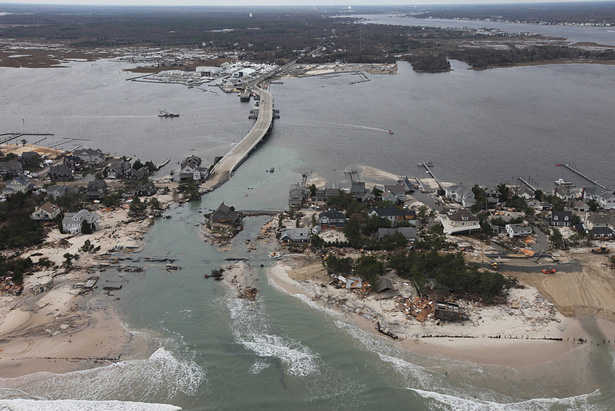
When Superstorm Sandy slammed into the U.S. East Coast last October, it was the latest in a series of “teachable moments” about our growing vulnerability to climate change.
-
Cleo Paskal and Uttam Sinha on the Geopolitical Implications of Climate Change for India and China
›India and China – “the two most important countries going forward in this century” – will both experience domestic concerns as a result of environmental change, but they are responding very differently, said Cleo Paskal, an associate fellow at Chatham House, in an interview with the Environment, Conflict, and Cooperation (ECC) Platform.
-
The Other Migration Story in Mexico: Climate Change
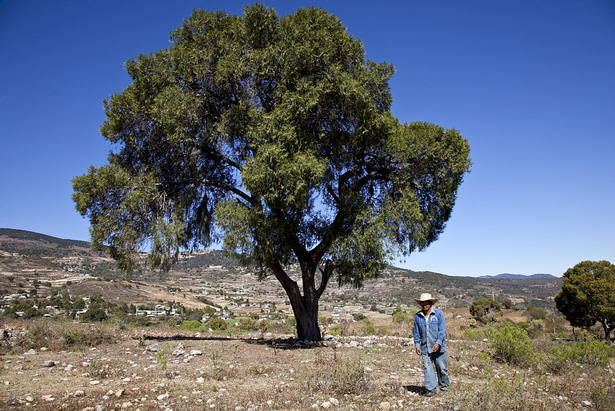
›The conversation around immigration and Mexico has long been tied to the United States and the prevailing economic conditions in both countries. But a new report from the Royal United Services Institute argues that as temperatures rise and precipitation patterns change over the course of the next century, climate too will increasingly become a driver of both internal and international migration in Mexico. [Video Below]
-
Strengthening Responses to Climate Variability in South Asia
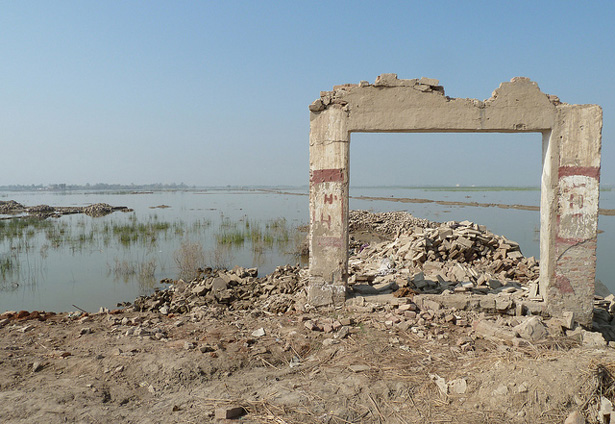
›Climate change and conflict can create a self-reinforcing feedback loop: Climate change exacerbates existing conflicts, while conflict makes adapting to climate change more difficult, said Janani Vivekananda of International Alert at the Wilson Center on February 7. [Video Below]
Showing posts from category video.