-
Death From Delay: Improving Maternal Health Care in Conflict Zones
› How much time passes before a woman—or her relatives—decide to seek care or emergency medical services during pregnancy? It often depends on how much they know about the services available.
This information may be hard to come by in conflict-affected areas, especially among internally displaced women. According to a retrospective study of health care during the 2006 war in Lebanon, 80 percent of Lebanese pregnant women before the war sought antenatal care, while the share of displaced women seeking care was only 34.5 percent.
-
Europe Takes the Lead in Climate, Energy, and Security
›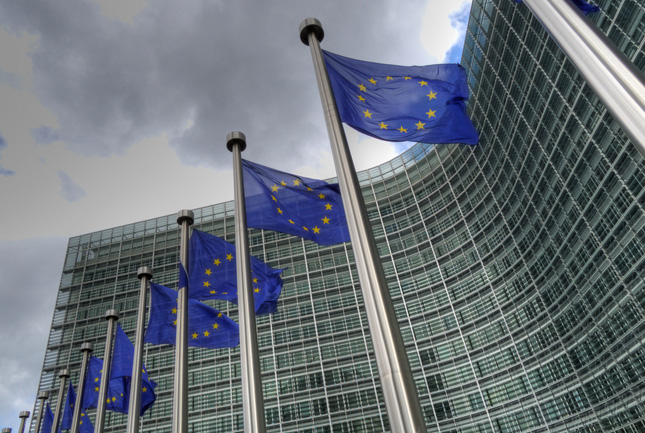
With the tumultuous NATO summit and a simmering trade war dominating stateside headlines last month, the European Union’s progress on climate-security connections has received little attention. After the U.S. government rolled back its significant efforts in early 2017, the EU and its leading members—particularly Sweden and Germany—picked up the ball. Three significant events herald what could be the start of a new era of climate-security policymaking—one under European leadership.
-
Like Water and Oil: Fish as a Geostrategic Resource
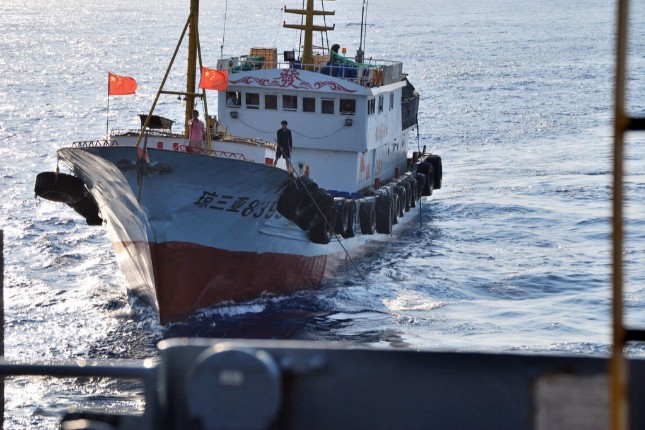
›Access to and competition over natural resources has been one of the most common triggers for conflict. Throughout the centuries, countries and communities have fought over productive agricultural land, trade routes, spices, textiles, opium, and oil, to name just a few. But the battle over one natural resource—fish—has long been overlooked. As trends in the global fish industry increasingly mirror the conflict-ridden oil sector, fish may become the newest addition to the list of resources driving geopolitical competition. There are five parallels between oil and fish that call for increasing the sustainability of the fishing industry, or we might find ourselves facing what U.S. Coast Guard Captain Jay Caputo has called “a global fish war.”
-
Forever Young: Engaging Youth to Build Stability and Reduce Violence
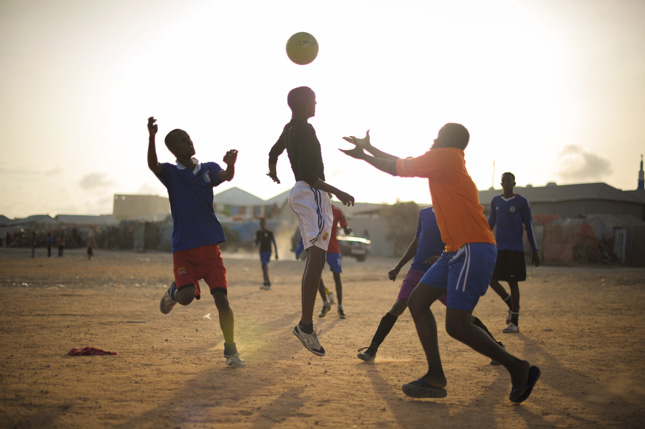
›“There are more young people in the world today than in any other time in the history of the world,” said Beza Tesfaye, Senior Researcher at Mercy Corps, at a recent event at the U.S. Institute of Peace on Mercy Corps’ efforts to engage youth in Somalia and Afghanistan in order to promote stability and prevent violence. “As we know, marginalized youths are the ones often to be recruited into violent movements. Not only do we have to focus on conflict, but we also have to put youth at the center of development programs to address these issues.”
-
Mapping Climate Security: New Dashboard Tool Visualizes Complex Vulnerability in Asia
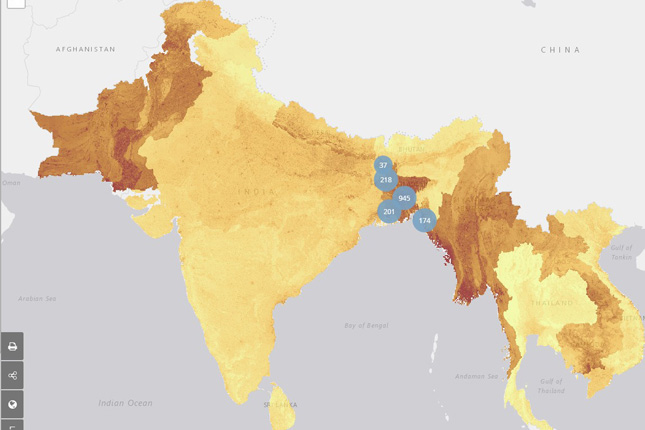
›In many parts of South and Southeast Asia, high population density and vulnerability to climate change combine with low levels of household resilience and poor governance to increase security concerns and the potential for political instability. To help identify risks and hotspots in this critical region, the Complex Emergencies and Political Stability in Asia (CEPSA) program at the University of Texas-Austin recently launched the Complex Emergencies Dashboard, which integrates raw data and modeling with mapping technology, allowing users to visually analyze regional security issues. The project was funded by the Department of Defense’s Minerva Initiative, which also supported similar work by the university’s Climate Change and African Political Stability (CCAPS) program.
-
Coastal Resilience on Capitol Hill: Protecting the United States’ Infrastructure, Economy, and Security
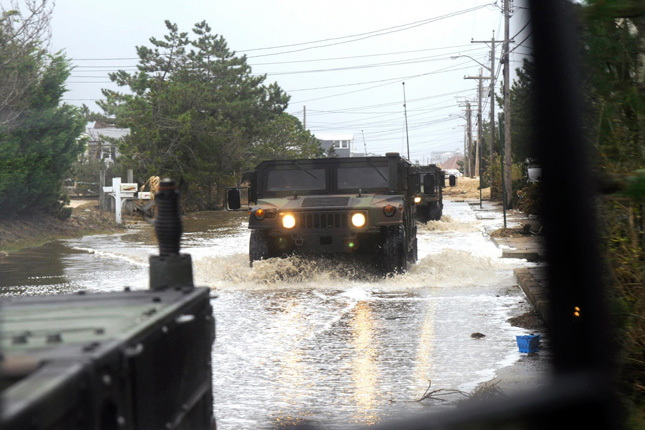
›Every dollar invested in preparing for natural disasters could save seven dollars, said Alice Hill, Research Fellow at the Hoover Institution, at a recent briefing on Capitol Hill. Catastrophic events like Superstorm Sandy present significant financial risks to U.S. businesses, the federal treasury, and the global economy. These complex emergencies have taught us that “everything is connected: our transportation system failed, our health sector failed,” said Hill, in the wake of these storms.
-
Nicaragua and the Fading of Latin America’s Youthful Clusters
›After four months of political unrest and more than 250 deaths, the calls for Nicaragua’s embattled president Daniel Ortega to step down are escalating. One of political demography’s most robust statistical findings tells us that countries where an authoritarian government rules a youthful population, any change in regime typically yields an autocracy or at best, a partial democracy. Only very rarely has a liberal democracy emerged immediately after a rebellion in a youthful country (one with a population with a median age under 26 years). Given this, if Ortega is ousted from office, what type of leader should foreign affairs analysts expect to replace him?
-
Building Coastal Resilience to Protect U.S. National Security
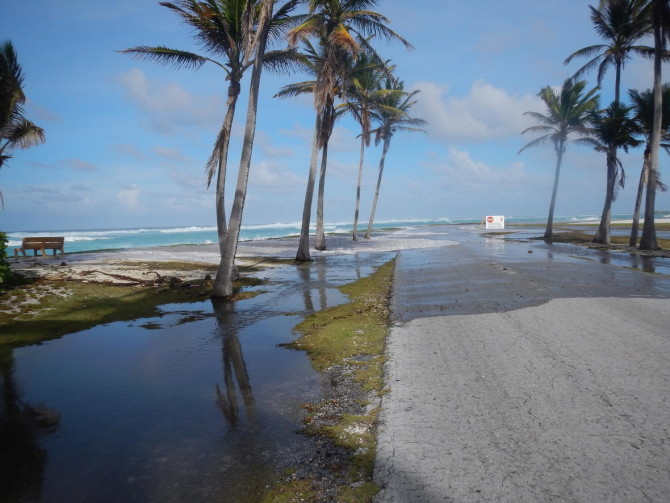
›June 28, 2018 // By Wilson Center StaffAs the Atlantic hurricane season kicks off this month, some coastal communities in the United States and small-island nations in the Caribbean are still recovering from last year’s record-breaking damage. At the same time, the heavy rains pounding the East Coast this week are part of a long-term trend towards more severe heavy rainfall events that have led to deadly floods and threaten critical U.S. military bases. Even on sunny days, cities such as Norfolk and Manila contend with high tide or “nuisance” flooding—a phenomenon that has increased as much as nine-fold since the 1960s, according to NOAA.
Showing posts from category security.
 How much time passes before a woman—or her relatives—decide to seek care or emergency medical services during pregnancy? It often depends on how much they know about the services available.