-
Top U.S. Leaders: Global Health Is a Bridge to Security
›November 14, 2012 // By Carolyn Lamere“During my career, my viewpoint changed significantly in the understanding and definition of what security really is,” said retired Admiral William J. Fallon at the Center for Strategic and International Studies (CSIS) on November 2. “My current appreciation of it is that it’s much more fundamental, much more personal, much more at the individual human level than I had thought in earlier years.”
-
Making ‘Beyond Seven Billion’: Reporting on Population, Environment, and Security
›
“When I embarked on this series, I approached it as an environmental reporter: What does a growing number of us and growing consumption mean for our planet?” said Los Angeles Times reporter Ken Weiss at the Wilson Center on October 9. Weiss, along with photographer Rick Loomis, recently completed a five-part series and multimedia presentation on global population that was the culmination of a year of research and travel through more than six countries. [Video Below]
-
Social Interaction Key to Urban Resilience, Says Harvard’s Diane Davis
›November 7, 2012 // By Payal Chandiramani“Resilience is the capacity of individuals and institutions to cope and adapt in the stress of chronic violence in ways that allow them room for maneuver and hope for the future,” said Diane Davis, Harvard professor of urbanism and development, in an interview at the Wilson Center.
-
Connecting the Dots Between Security and Land Rights in India
›Across India, where I live and work, I can clearly see the connection between land rights and peace and security.
With respect to personal safety and security: 12 percent of all murders here are related to conflicts over land.
On a provincial level: few weeks go by without newspapers here reporting on violence between communities who are battling over land.
-
Youth Bulge, Public Policy, and Peace in Pakistan
›October 26, 2012 // By Payal Chandiramani
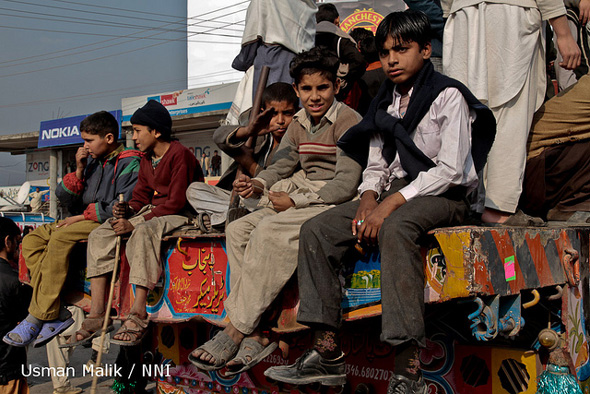
While Pakistan’s demographic challenges are perhaps well known – two-thirds of the population of 180 million is under 30 years old – increasing security concerns have prompted discussions about exactly how much the country’s youthfulness is affecting its prospects for peace. On October 10, the U.S. Institute of Peace and George Mason University’s School of Public Policy hosted a day-long conference on “Youth Bulge, Public Policy, and Peace in Pakistan” to tackle this question.
-
Michael Kugelman, Global Times
Repairs Could Stifle South Asia’s Water War
›October 19, 2012 // By Wilson Center StaffThe original version of this article, by Michael Kugelman, appeared on Global Times.
In recent weeks, militants in Pakistan have escalated their hostile rhetoric toward India. The subject of their ire is water. Hafiz Saeed, the head of militant Islamist group Jamaat-ud-Dawa, has warned that India plans “to make Pakistan barren” by preventing the waters of the Indus Basin from flowing downstream to Pakistan.
-
Maria Godoy, The Salt
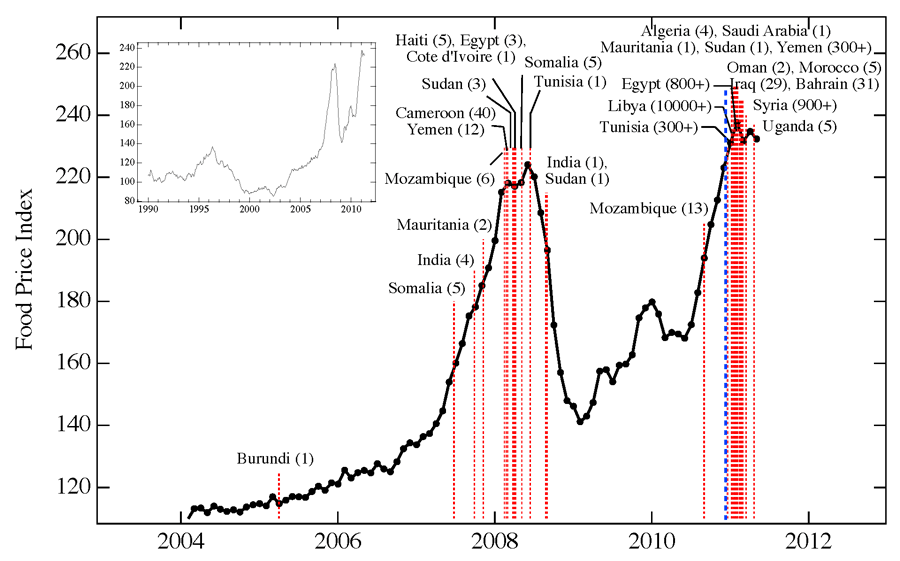
Can Riots Be Predicted? Experts Watch Food Prices
›October 19, 2012 // By Wilson Center StaffWhen French peasants stormed the Bastille on July 14, 1789, they weren’t just revolting against the monarchy’s policies. They were also hungry.
-
International Day of the Girl Child: Recognizing the Unique and Complex Vulnerability of Young Girls
›October 11, 2012 // By Schuyler NullToday is the first “International Day of the Girl Child” – a day established last year by the United Nations to acknowledge the rights and unique challenges faced by young girls around the world.
The latest UN projections put the number of women under the age of 19 at about 1.18 billion today. Especially in developing countries (though not only) these young girls often face outsized barriers to happy, healthy, and productive lives.
Showing posts from category security.