• woodrow wilson center
  • ecsp

New Security Beat

Subscribe:
  • rss
  • mail-to
  • Who We Are
  • Topics
    • Population
    • Environment
    • Security
    • Health
    • Development
  • Columns
    • China Environment Forum
    • Choke Point
    • Dot-Mom
    • Friday Podcasts
    • Navigating the Poles
    • Reading Radar
  • Multimedia
    • Water Stories (Podcast Series)
    • Backdraft (Podcast Series)
    • Tracking the Energy Titans (Interactive)
  • Films
    • Water, Conflict, and Peacebuilding (Animated Short)
    • Paving the Way (Ethiopia)
    • Broken Landscape (India)
    • Scaling the Mountain (Nepal)
    • Healthy People, Healthy Environment (Tanzania)
  • Publications
  • Events
  • Contact Us

NewSecurityBeat

The blog of the Wilson Center's Environmental Change and Security Program
Showing posts from category security.
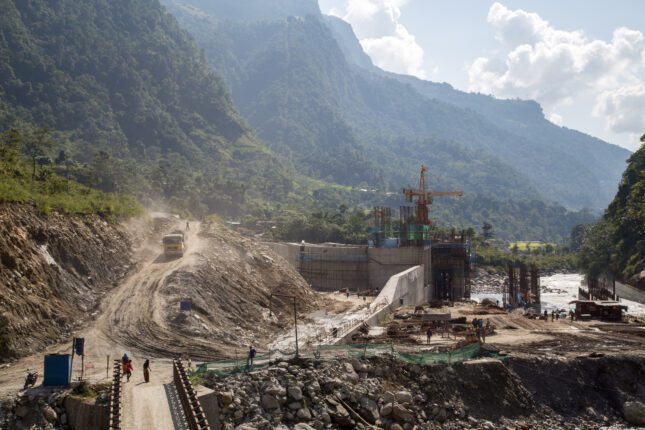
  • Water as a Tool for Resilience in Times of Crisis

    ›
    From the Wilson Center  //  Water Security for a Resilient World  //  May 30, 2019  //  By Amanda King
    14713951618_ad4b12e620_k
    This article is part of ECSP’s Water Security for a Resilient World series, a partnership with USAID’s Sustainable Water Partnership and Winrock International to share stories about global water security.

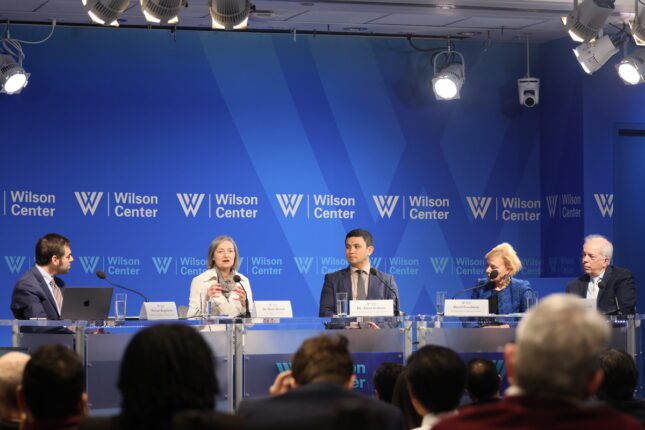
    Water serves as a tool for resilience only when access to it is consistent and the system for making it consistent is in place, said David De Armey, Director of International Partnerships for Water for Good, an international NGO. He spoke at a recent Wilson Center event, “Water as a Tool for Resilience in Times of Crisis,” the second event in a three-part series, Water Security for a Resilient World, sponsored by the Wilson Center, Winrock International, the Sustainable Water Partnership, and USAID. Water for Good monitors 80 percent of wells across seven provinces in Central African Republic (CAR), he said. By keeping the water infrastructure working, the nonprofit creates a stable environment within an unstable country. “Thus,” he said, “we see reliability and services as a tool for resilience.”

    MORE
  • Environmental Security Risks: How to Plan for Disasters in the Face of Uncertainty

    ›
    Guest Contributor  //  May 21, 2019  //  By Chad M. Briggs & Miriam Matejova

    How do we plan for disasters that have never occurred before? One million species are at risk of extinction in the near future from environmental changes. The frequency of historic tropical storms is increasing. The rapidly melting permafrost in the Arctic is placing unprecedented pressures on northern infrastructure. Given the overwhelming and unpredictable nature of new disaster risks, it is not clear what the appropriate responses should be. Our book, Disaster Security: Using Military and Intelligence Planning for Energy and Environmental Risks, addresses how to assess unique environmental hazards and disaster risks, based on tools used by the U.S. intelligence and military communities. The book draws on lessons learned from developing, applying, and translating scenarios and simulations (or wargames) to plan for future environmental security risks.

    MORE
  • Climate and Conflict: Where Environment, Ethnicity, and Socioeconomic Power Intersect

    ›
    Reading Radar  //  May 20, 2019  //  By Benjamin Dills

    PSD-Special-Issue-Climate-Change-Cover-1574x2023_cAs researchers investigate the connection between climate change and conflict, the relative power of communities and individuals attempting to cope with climate change has become a recurring theme. While climate change may not directly cause conflict, it may be inextricably woven into pre-existing conflicts of power, ethnicity, and economic interest.

    MORE
  • New Report Addresses Climate and Fragility Risks in the Lake Chad Region

    ›
    May 15, 2019  //  By Truett Sparkman
    Shoring Up Stability

    Contrary to popular belief, Lake Chad is not shrinking, according to Shoring up Stability: Addressing Climate and Fragility Risks in the Lake Chad Region, a new report from adelphi. This finding has profound implications for how the governments of countries bordering Lake Chad (Nigeria, Niger, Chad, and Cameroon) as well as the international community should address the conflict trap in which the people of the region are caught. “Supporting the people of the basin,” write the authors, “is not a function of saving Lake Chad from desiccation.” 

    MORE
  • A Warmer Arctic Presents Challenges and Opportunities

    ›
    Guest Contributor  //  April 30, 2019  //  By Kelly McFarland

    A smallboat crew from the Coast Guard Cutter Alex Haley medevacs a man suffering a broken arm from the Chinese research vessel Xue Long, 15 nautical miles from Nome, Alaska, Sept. 23, 2017. The smallboat crew embarked the man and transferred him to the Alex Haley for further transfer to Nome, Alaska. U.S. Coast Guard photo.

    As Arctic ice melts, we can physically see glaciers retreating. But what we can’t yet see is the exact effect climate change will have on the environment, humans, economies, and national security. Less ice for longer periods each year will likely bring opportunities and related challenges as Arctic and non-Arctic states jockey for position.

    MORE
  • To Mitigate Climate-Fragility Risks, Build Preventative Capacity in Fragile States

    ›
    On the Beat  //  April 23, 2019  //  By Truett Sparkman
    Bangladesh Flood

    “When states face fragility and climate risks simultaneously, the risks and challenges are compounded,” according to The Intersection of Global Fragility and Climate Risks, a new global report commissioned by USAID, which was presented during a recent USAID Adaptation Community Meeting webcast. States facing major climate hazards, such as flooding, drought, and sea level rise, will be forced to contend with the cost of humanitarian and adaptation responses to mitigate the physical and livelihood risks threatening their populations. Fragile states struggling with issues of legitimacy in the social, economic, political, and security spheres may become overwhelmed by the process and cost of redirecting limited resources to address climate-induced disasters.  

    MORE
  • The “Push” Factor: Central American Farmers, Free Trade, and Migration

    ›
    April 17, 2019  //  By Kyla Peterson
    31113016297_608dde4777_o

    The number of migrants traveling from Central American countries (particularly El Salvador, Guatemala, and Honduras) destined for the United States has rapidly increased in recent years. In 2018, 87 percent of Central American immigrants came from those three countries, which account for most of the migrants at the U.S. southern border. Their numbers will likely only increase considering the Trump administration’s plan to cut around $700 million in aid to these three countries. The absence of aid will reduce countries’ ability to confront the violence, crime, and government instability within their borders—which act as some of the more notorious drivers of the movement north.

    MORE
  • Fostering Citizen Enforcement and Rule of Law Could Cut Down Illegal Logging

    ›
    On the Beat  //  April 11, 2019  //  By Kyla Peterson
    Hauling Rosewood Logging

    “The trade in illegal timber products—those harvested and exported in contravention of the law of the producer country—is entangled in corruption, conflict, insecure land rights, and poor governance,” said Sandra Nichols Thiam, Senior Attorney of the Environmental Law Institute. She moderated a panel titled “Citizen Enforcement in the Forestry Sector” hosted by the Environmental Law Institute that explored illegal logging within the forest sector. Illegal harvesting of timber accounts for roughly 50 percent to 90 percent of forest activities in major producing countries within the Amazon Basin, Central Africa and Southeast Asia, said Thiam. This illegal timber trade is estimated to be worth from $30 billion to 100 billion dollars annually. Dismantling this extensive illegal enterprise would help promote biodiversity conservation, climate mitigation, human rights and sustainable development.

    MORE
Newer Posts   Older Posts
View full site

Join the Conversation

  • RSS
  • subscribe
  • facebook
  • G+
  • twitter
  • iTunes
  • podomatic
  • youtube
Tweets by NewSecurityBeat

Trending Stories

  • unfccclogo1
  • Pop at COP: Population and Family Planning at the UN Climate Negotiations

Featured Media

Backdraft Podcast

play Backdraft
Podcasts

More »

What You're Saying

  • Volunteers,At,The,Lagos,Food,Bank,Initiative,Outreach,To,Ikotun, Pan-African Response to COVID-19: New Forms of Environmental Peacebuilding Emerge
    Rashida Salifu: Great piece 👍🏾 Africa as a continent has suffered this unfortunate pandemic.But it has also...
  • A desert road near Kuqa An Unholy Trinity: Xinjiang’s Unhealthy Relationship With Coal, Water, and the Quest for Development
    Ismail: It is more historically accurate to refer to Xinjiang as East Turkistan.
  • shutterstock_1779654803 Leverage COVID-19 Data Collection Networks for Environmental Peacebuilding
    Carsten Pran: Thanks for reading! It will be interesting to see how society adapts to droves of new information in...

What We’re Reading

  • Rising rates of food instability in Latin America threaten women and Venezuelan migrants
  • Treetop sensors help Indonesia eavesdrop on forests to cut logging
  • 'Seat at the table': Women's land rights seen as key to climate fight
  • A Surprise in Africa: Air Pollution Falls as Economies Rise
  • Himalayan glacier disaster highlights climate change risks
More »
  • woodrow
  • ecsp
  • RSS Feed
  • YouTube
  • Twitter
  • Facebook
  • Home
  • Who We Are
  • Publications
  • Events
  • Wilson Center
  • Contact Us
  • Print Friendly Page

© Copyright 2007-2021. Environmental Change and Security Program.

Woodrow Wilson International Center for Scholars. All rights reserved.

Developed by Vico Rock Media

Environmental Change and Security Program

Woodrow Wilson International Center for Scholars

Ronald Reagan Building and International Trade Center

  • One Woodrow Wilson Plaza
  • 1300 Pennsylvania Ave., NW
  • Washington, DC 20004-3027

T 202-691-4000