-
Dark Forests: Interview With Bopha Phorn on Investigating Land Deals, Logging, Gender Issues in Cambodia
›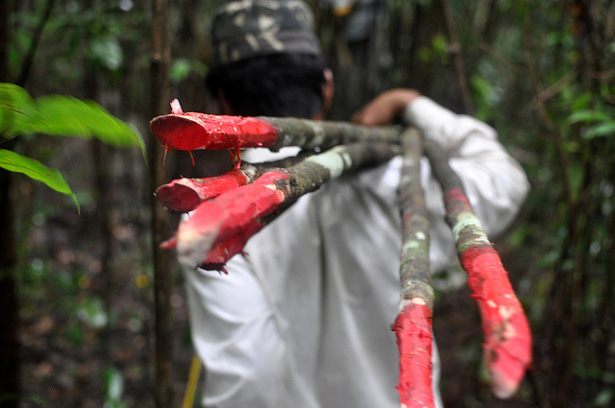
Cambodia is a young democracy in transition. It has the highest rate of urbanization in Southeast Asia, but the lowest percentage of current urban dwellers and widespread poverty. The Mekong River, on which millions of rural Cambodians rely, is being dammed at a rapid pace, both upstream, beyond the country’s borders, and within. Aided by weak land laws, both foreign and domestic industrial forces have staked claim to large swaths of the country for logging and rubber plantations, displacing thousands.
-
Bringing Natural Resources to the Table: ELI, UNEP Launch New Environmental Peacebuilding Platform
›
To date, despite their demonstrated importance in both conflict recovery and the risk of conflict recurrence, natural resources have been largely ignored or downplayed in post-conflict settings around the world.
-
Roger-Mark De Souza on Illuminating the Connections Between Population Dynamics, Resilience, Conflict
›“When you look at the resiliency literature, there’s very often discussion around population and population dynamics, but no one ever knows what to do with it,” says ECSP Director Roger-Mark De Souza in this week’s podcast.
-
Linking Oil and War: Review of ‘Petro-Aggression’
›In Petro-Aggression: When Oil Causes War, Jeff Colgan provides an indispensable starting point for researchers interested in the relationship between oil and international conflict.
-
Andrew Freedman, Climate Central
Typhoon Haiyan Foretells Challenges for U.S. Military in Warming World
›November 14, 2013 // By Wilson Center StaffSuper Typhoon Haiyan left the central Philippines in ruins, with a staggering death toll that could climb well above 10,000. The U.S. military is leading the international response to the devastation, along with international aid agencies. The Pentagon has dispatched an aircraft carrier and five other Navy ships, plus a separate group of at least 90 marines and specially trained humanitarian relief teams to the area.
-
A Dialogue on Pakistan’s Galloping Urbanization
›Pakistan, long a nation defined by its large rural populations and dominant agricultural industries, is undergoing a dramatic urban shift.
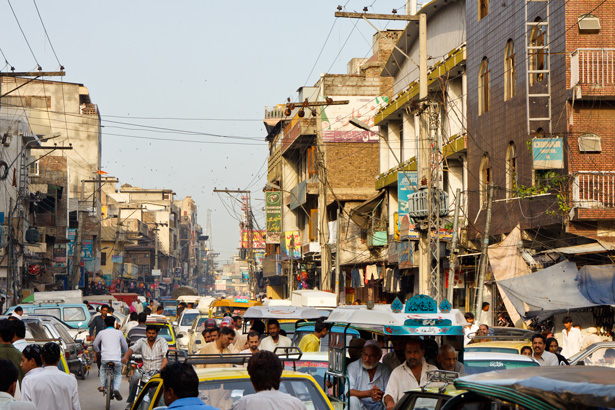
According to UN Population Division estimates, the country is urbanizing at a three percent annual rate – the fastest pace in South Asia. In barely 10 years, nearly 50 percent of Pakistan’s 180 million people will live in cities (a third do today). Pakistani government projections using density-based rather than administrative definitions of urbanization suggest that Pakistan’s urban population has already reached 50 percent.
-
Jacqueline H. Wilson, U.S. Institute of Peace
Can Aquifer Discovery in Kenya Bring Peace to Desolate Region?
›October 28, 2013 // By Wilson Center StaffThe people of northern Kenya currently face many daily hardships. Primarily pastoralists by livelihood, their cycle of life focuses on the basics – securing food and water for family and livestock, constructing shelter from the unforgiving sun, and finding sustenance when periodic droughts ravage the region. A 2011 drought affected millions of people, and tens of thousands of livestock died. Approximately 90 percent of the area’s population lives below the poverty line.
-
Katherine Carter, Fund for Peace
Is Youth Bulge a “Magic Indicator” for the Failed States Index?
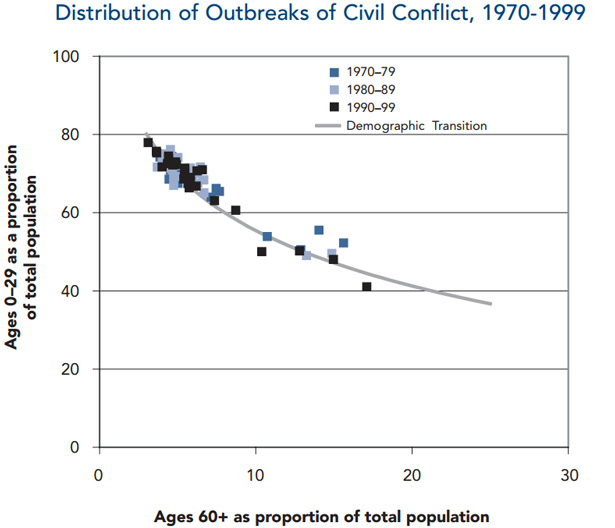
›October 17, 2013 // By Wilson Center StaffToday approximately 44 percent of the world’s 7.2 billion people are under 24 years old – and 26 percent are under 14. Of those 7.2 billion people, a staggering 82 percent live in less developed regions of the world – primarily sub-Saharan Africa and Asia. Currently, the global median age is 29.2 years old, a sharp contrast to Europe, for example, where the median age is 41.
Showing posts from category security.