-
Yemen: Revisiting Demography After the Arab Spring
›April 17, 2012 // By Elizabeth Leahy Madsen
Along with other countries where the Arab Spring caught hold, Yemen has been gripped by major upheaval over the past year. Although President Ali Abdullah Saleh finally ceded power in February after his administration’s violent reprisals failed to deter protesters, the country remains at a crossroads. As its political future continues to evolve, the new government must also address a range of deep-seated economic and social challenges. In addition to claiming more than 2,000 lives, the crisis has undermined Yemenis’ livelihoods and even their access to food. A recent World Food Program survey found that more than one-fifth of Yemen’s population is living in conditions of “severe food insecurity” – double the rate measured three years ago – and another fifth is facing moderate difficulty in feeding themselves and their families.
-
Geoff Dabelko On ‘The Diane Rehm Show’ Discussing Global Water Security
›April 13, 2012 // By Wilson Center StaffECSP Director Geoff Dabelko was recently a guest on The Diane Rehm Show to discuss the just-released U.S. intelligence community assessment of world water security. He was joined by co-panelists retired Maj. Gen. Richard Engel (USAF) of the National Intelligence Council’s Environment and Natural Resources Program (a key figure in preparing the report), Jessica Troell of the International Water Program at the Environmental Law Institute, and Steve Fleischli of the Natural Resources Defense Council.
The Department of State-requested assessment (outlined in more detail, here and here) is a very positive contribution, said Dabelko. It “moves away from the arm-waving, headline-grabbing, water wars frame – the kind of sky-is-falling frame that is intuitively appealing and certainly appealing for politicians and headline writers, but doesn’t really reflect the reality.” He continued:What this report instead does, is recognize that there’s been an awful lot of cooperation around water even in the face of scarcity and that that cooperation in part helps us avoid conflicts, whether they’re violent or political, and that we should invest in those institutions that help us get to cooperation.
Visit the show’s program page to listen to the full segment, or read the transcript here.
It also suggests that it’s inadequate and incorrect to think of water as just a single-sector issue. The report is quite clear in connecting it to energy, connecting it to food, connecting it to health, economic development, agriculture obviously, and so that recognition [in] analysis sounds in some way straightforward, but unfortunately, when we organize our responses, we often respond in sector, and there’s not nearly enough communication and cooperation.
And finally, the report does say that the future may not look like the past, and so while we don’t have evidence of states fighting one another over water – and the judgment of the report is in the next 10 years, we won’t see that – it does hold out the prospect for as we go farther down the line, in terms of higher levels of consumption and higher levels of population, that we need to pay special attention because there’s some particular river basins in parts of the world where, as I said, the future may not look like the past and we have greater concerns for higher levels of conflict.
Sources/Image Credit: The Diane Rehm Show. -
Invest in Women’s Health to Improve Sub-Saharan African Food Security, Says PRB
›“Future food needs depend on our investments in women and girls, and particularly their reproductive health,” says the Population Reference Bureau’s Jason Bremner in a short video on population growth and food security (above). Understanding why, where, and how quickly populations are growing, and responding to that growth with integrated programming that addresses needs across development sectors, are crucial steps towards a food secure future, he says.
Reducing Food Insecurity by Meeting Unmet Needs
In sub-Saharan Africa, where nearly one-fourth of the population lives with some degree of food insecurity, persistently high fertility rates help drive population growth, according to the policy brief that accompanies Bremner’s video.
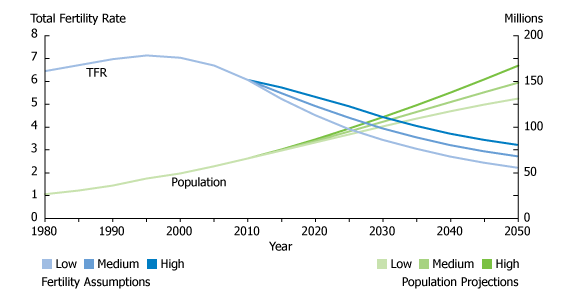
On average, women in the region have 5.1 children, more than twice the global average total fertility rate (TFR) of 2.5. The United Nation’s medium-variant projections (which Bremner notes are often used to predict future food need) show the region more than doubling in size by 2050, but that projection rests on the assumption that the average TFR will drop to three by mid-century.
As many as two-thirds of sub-Saharan African women want to space or limit their births, but do not use modern contraception. While the reasons for not using modern contraception are many, ranging from cultural to logistical, the lack of funding for family planning and reproductive health services remains a serious impediment to improving contraceptive prevalence and, in turn, lowering fertility rates.
“Current levels of funding for family planning and reproductive health from donors and African governments fail to meet current needs, much less the future needs,” writes Bremner.
Almost 40 percent of the region’s population is younger than 15 years old and has “yet to enter their reproductive years,” writes Bremner. “Consequently, the reproductive choices of today’s young people will greatly influence future population size and food needs in the region.”Fertility Assumptions and Population Projections in the Democratic Republic of Congo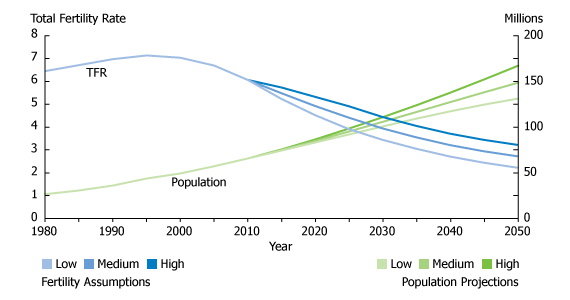
Family Planning Is One Piece of an Integrated Puzzle
Increasing funding for family planning services would be a boon to the region, but Bremner cautions that viewing sub-Saharan Africa’s rapid population growth solely from a health perspective and in isolation from other development needs would be inherently limiting.
“Slowing population growth through voluntary family planning programs demands stronger support from a variety of development sectors, including finance, agriculture, water, and the environment,” Bremner writes. A multi-sector approach that addresses population, health, livelihood, and environment challenges could mitigate future food insecurity more effectively than single-track programming that addresses sub-Saharan Africa’s various development needs in isolation from one another.
Improving women’s role in agriculture, for example, could help minimize food insecurity on a regional scale, Bremner writes. Women make up, on average, half the agricultural labor force in sub-Saharan Africa, and yet it is more difficult for them to own arable land, obtain loans, and afford basic essentials like fertilizer that can help boost agricultural productivity. Furthermore, women’s traditional household responsibilities, like fetching water, often cut into the amount of time they are able to give to farming. With those limitations lifted, women could offer enormous capacity for meeting future food needs.
Given the complex and interconnected nature of the development challenges facing sub-Saharan Africa, integrated cross-sector programming, with an emphasis on meeting family planning needs, is essential to reducing total fertility rates while improving food security over the long-term, according to Bremner.
“Investments in women’s agriculture, education, and health are critical to improving food security in sub-Saharan Africa,” he writes.
“Improving access to family planning is a critical piece of fulfilling future food needs,” he adds, “and food security and nutrition advocates must add their voices to support investments in women and girls and voluntary family planning as essential complements to agriculture and food policy solutions.”
Sources: Population Reference Bureau.
Video Credit: Population Reference Bureau. -
Impressions of London’s Global Change Conference
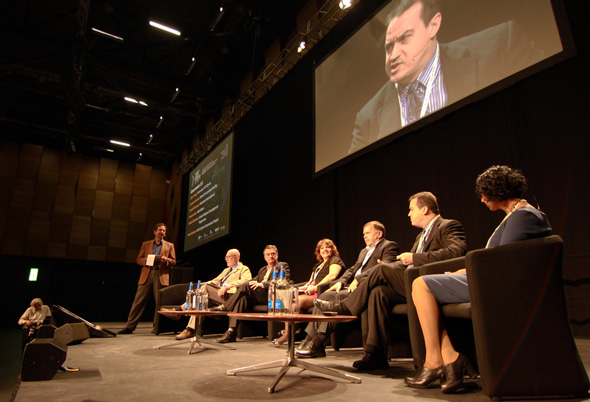
›April 11, 2012 // By Wilson Center StaffThe ECSP delegation to the 2012 Planet Under Pressure conference in London kept a keen eye on discussions of population and demographic dynamics during plenary and breakout sessions. And while the European frame of these topics resembles a much more open discussion of population pressures, presentations repeatedly looked at a broad suite of development challenges, avoiding the urge to elevate one challenge over another.
Out of the hundreds of panels during the week, we counted four that explicitly addressed population (one was hidden in the “Climate Compatible Development” program).
We polled a few participants on their take-aways from the conference, including Bishnu Upretti of the Swiss National Centre of Competence in Research (above). Upretti’s focus is on South Asia, where water and food insecurity, poverty, population, and political tensions – all of which fit under the conference’s broad “global change” heading – are major issues. He came away with an overall positive impression, particularly in the conference’s potential as input for the upcoming Rio+20 UN Conference on Sustainable Development.
But some were not so optimistic about the overall global picture. “It’s all been a bit of a failure really,” said Chris Rapley of University College London on environmental change (below). “Humanity has proved itself incapable either of believing it, or even…getting a grip on the impact that it’s having on the planet.”
Though upbeat about progress in the natural sciences, Rapley argued that without better defining and communicating the consequences, threats, and risks at play, other political and economic concerns will continue to trump the climate and environment concerns.
“We can talk…in very general terms, but to both people and politicians and business people – all three parts of society that have to work together…really coherently to solve this problem – that sort of rather vague ‘gosh it looks a bit gloomy down there but we can’t tell you precisely what’s going to happen’ doesn’t cut the ice,” he lamented.
A Bridge Too Far?
At a conference like this, where topics are wildly diverse and overwhelming, distilling an easy narrative is difficult. Planet Under Pressure was a dizzying collection of natural scientists, inventors, students, journalists, professors, social scientists, and more. Collecting a group like this can shed light on dynamic and innovative work, not to mention foster collaboration on a tangible scale. However, finding grand solutions to the sheer number of challenges, or pressures, placed on the planet isn’t easy.
Yes, the planet is under pressure and this means the international community needs to talk about sustainability, climate change, and overall development in order to ensure a healthy planet for future generations, but nuanced discussion of difficult topics like population dynamics and human health are still a periphery part of the conversation.
The Planet Under Pressure Declaration – the collaborative statement intended to reflect the key messages emerging from the conference – leaves a lot to be desired in this regard. Sarah Fisher, a research and communications officer at the Population and Sustainability Network, suggested text for the declaration that included mention of population dynamics, including growth, urbanization, aging, and migration, in its framing of sustainable development, as well as explicit reference to the importance of human health and wellbeing.
But the final draft of the declaration was largely devoid of these issues, instead focusing more narrowly on environmental degradation and straightforward natural resource management.
For those looking to bridge the gap between the social and natural sciences, then, the focus shifts to the upcoming Rio+20 summit. The specter of the Earth Summit was tangible throughout the conference. From panels to informal discussions, the message was clear: there’s a lot more to be done.
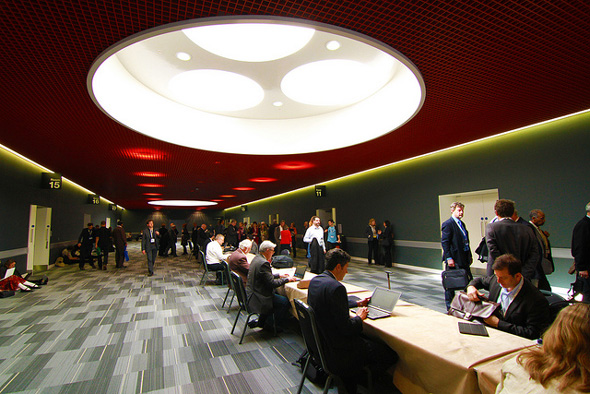
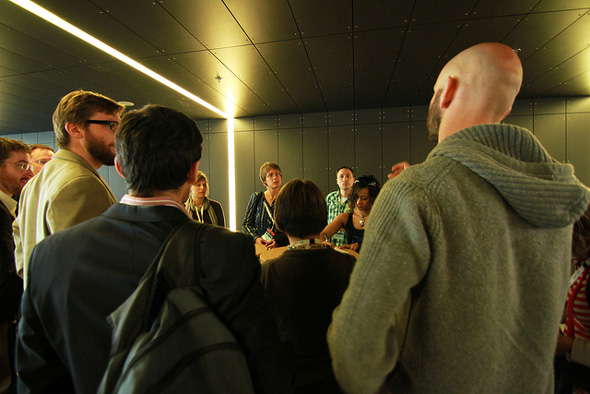
For full population-related coverage from the conference, see our “Planet 2012 tag”. You can also join the conversation on Twitter (#Planet2012). Pictures from the event are available on our Facebook and Flickr pages – enjoy a few below.Photo and Video Credit: Sean Peoples/Wilson Center. -
Reproductive Health an Essential Part of Climate Compatible Development
›April 11, 2012 // By Sandeep BathalaECSP was at London’s 2012 Planet Under Pressure conference following all of the most pertinent population, health, and security events.
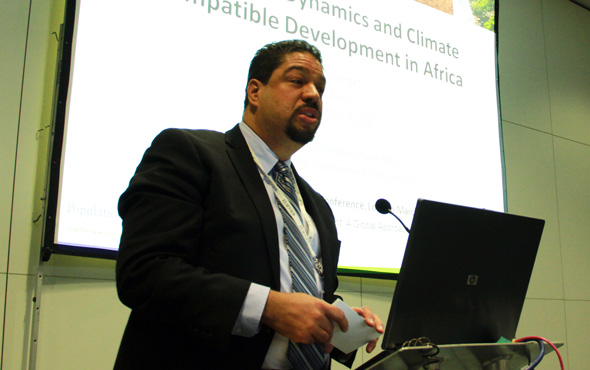
At a panel on “climate compatible development” at this year’s Planet Under Pressure global change conference, Population Action International’s Roger-Mark De Souza was the lone voice to speak about demographics. He presented a detailed analysis of population trends, based on collaboration with the Kenya-based African Institute for Development Policy.
“The link between population dynamics and sustainable development is strong and inseparable – as is the link between population dynamics, reproductive health, and gender equality,” said De Souza. These linkages were emphasized by the UN at the International Conference on Population and Development, held in Cairo in 1994, as well as during the original Rio Conference on Environment and Development in 1992.
“Climate compatible development” is a novel development paradigm being developed by the Climate and Development Knowledge Network and defined as “development that minimizes the harm caused by climate impacts, while maximizing the many human development opportunities presented by a low emissions more resilient future.”The key tenet of this development framework is an emphasis on climate strategies that embrace development goals and integrate opportunities alongside the threats of a changing climate. In this respect, climate compatible development is seen as moving beyond the traditional separation of adaptation, mitigation, and development strategies. It challenges policymakers to consider “triple win” strategies that result in lower emissions, better resilience, and development – simultaneously.
Although developed nations are historically the major contributors of greenhouse gases due to comparatively high levels of consumption, developing countries are the most vulnerable to consequences of climate change. Emerging evidence shows that rapid population growth in developing countries exacerbates this vulnerability and undermines resilience to the effects of climate change, said De Souza. Socioeconomic improvement will also increase the levels of consumption and emissions from developing countries.
“Meeting women and their partners’ needs for family planning can yield the ‘triple win’ strategy envisaged in the climate development framework,” De Souza said. “Meeting unmet family planning needs would help build resilience and strengthen household and community resilience to climate change; slow the growth of greenhouse gases; and enhance development outcomes by improving and expanding health, schooling, and economic opportunities.”
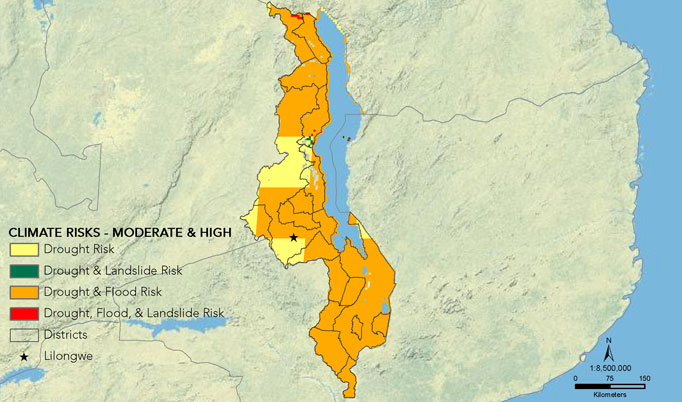
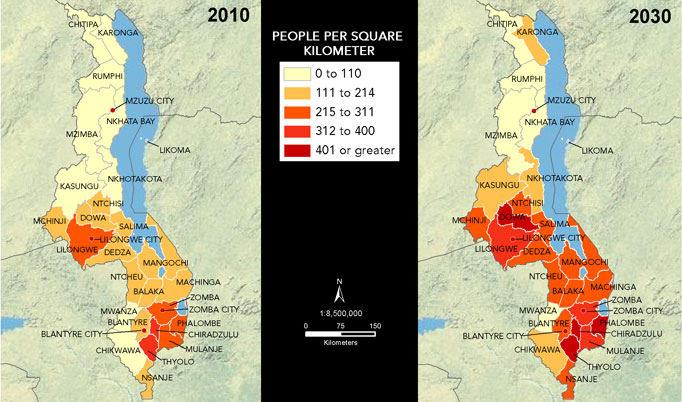
Decision makers engaged in climate change policy planning and implementation at local, national, and international levels should have access to evidence on population trends and their implications on efforts to adapt to climate change as well as the overall development process, De Souza said.He presented new maps and analysis for Africa, particularly Malawi and Kenya, developed by PAI, building on earlier mapping work which identified 26 global population and climate change hotspots – countries that are experiencing rapid population growth, low resilience to climate change, and high projected declines in agricultural production.
“PAI’s work is a clear demonstration of how better decision making can be informed by the right analysis, in the right format, at the right time,” said Natasha Grist, head of research at the Climate Knowledge and Development Network.
“Most of the hotspot countries have high levels of fertility partly because of the inability of women and their partners to access and use contraception,” said De Souza. He continued:Investing in voluntary health programs that meet family planning needs could, therefore, slow population growth and reduce vulnerability to climate change impacts. This is especially important because women, especially those who live in poverty, are likely to be most affected by the negative effects of climate change and also bear the disproportionate burden of having unplanned children due to lack of contraception.
In conclusion, said De Souza, “global institutions and frameworks that support and promote climate compatible development can enhance the impact of their work by recognizing and incorporating population dynamics and reproductive health in their adaptation and development strategies.”
For full population-related coverage from the conference, see our “Planet 2012 tag.” Pictures from the event are available on our Facebook and Flickr pages, and you can join the conversation on Twitter (#Planet2012).
Sources: Climate and Development Knowledge Network, IPCC, Population Action International.
Photo Credit: Sean Peoples/Wilson Center; Maps: Population Action International. -
A New Land Security Agenda to Enable Sustainable, Equitable Development
›The recent news that overseas investors have acquired over 10 percent of Australia’s farmland and 9 percent of water entitlements in its agriculture sector has struck a political chord in the country. Large grain-producing nations like Brazil and Argentina have passed laws to restrict the foreign ownership of land. In other global grain hubs, like Ukraine and Russia, compromised harvests due to droughts could result in export restrictions. In a globalized economy, the combination of scarcity, market and population pressures, and weather volatility will make fertile land an increasingly precious resource.
A shift is underway in global financial markets, where global investors perceive that owning what grows on the land – or better still, owning the land itself – may be a hedge against the risks of more volatile financial markets. A surge in farmland investments is expected to grow over the next decade is due to a number of combined pressures: a growing global demand for commodities, rising commodity prices, ecological limits, and the fact that farmland is a “real asset” that offers diversification to the portfolios of investors at a time of market volatility.
The need to increase food production against the backdrop of resource limits, social vulnerability, and population growth, puts the question of land at the center of a new security agenda.
In sub-Saharan Africa large-scale acquisitions of land that neglect local livelihoods and resource scarcity, commonly referred to as “land grabs,” put the region’s future in the balance. Not all land investments have negative consequences, but given the lower levels of land tenure by communities and the fragility of human security in sub-Saharan Africa, regulating land investments with foresight is an urgent issue. Population growth and climate change underpin this agenda. A worse-than-average drought, exacerbated by climate change, may be all that is needed in certain places to realize the political, humanitarian, and ecological risks that are slowly building momentum.
From Land Grabs to Land Stewardship
Progress now depends on moving from a land grabs debate to land stewardship solutions. This shift, which the Earth Security Initiative summarized in a report published this month, The Land Security Agenda: How Investor Risks in Farmland Create Opportunities for Sustainability, requires an improved understanding by investors and political leaders of three priorities: managing land degradation, protecting human rights by focusing on food security and land ownership, and keeping economies within ecological – especially water – limits.
The agenda we have developed discusses why these issues form part of a new risk management agenda for investors as well as for countries seeking to attract foreign capital, whose economic competitiveness and political stability may be compromised by these trends. But managing these risks, we argue, will require making human rights and ecological limits a central feature of a new investment paradigm.
A range of international investors is already searching for solutions to engage practically with this debate. Among those with whom we have engaged throughout the study are individual investment funds, people seeking change within the financial sector, and investor networks such as the UN-backed Principles of Responsible Investment. Recently, governments, international organizations and civil society groups have also agreed on a set of voluntary guidelines for land governance under the auspices of the Committee on World Food Security. These developments are positive steps, but their voluntary nature remains problematic. The focus must now be placed on operationalizing their recommendations to ensure real accountability and creating political incentives in host countries to regulate their land to ensure long-term and equitable prosperity.
A Call to Action
In The Land Security Agenda we call on investors to turn their attention to their land and commodities portfolios, as well as the investments currently under due diligence, and begin to ask how soil resilience, the prosperity of local people, and freshwater limits are being considered. We recommend beginning to assess the risks of countries according to how well their governments are managing these issues.
We similarly call on heads of state in countries seeking to attract large investments in land to become more aware that these risks may undermine their country’s wealth, their stability, and economic competitiveness. Political leadership is needed to champion and enforce regulations that will encourage investments and modernization while protecting a country’s social and natural capital.
Some of the recommendations we have developed, which would help set the tone for investors and governments to move from voluntary principles to action, include:- Define land security parameters: Establish a set of verifiable measures that allows stakeholders to distinguish those land investments that advance equitable and sustainable prosperity from those that do not. Based on these criteria, which we suggest must consider people, water, and soil, it is possible to advance their integration into three important areas of the investment cycle: the identification of investment opportunities that build positive value, the due diligence process, and the performance reviews of fund managers.
- Build better country risk profiles: If the population of a given country is dependent on agriculture for livelihoods, shouldn’t issues like soil erosion, water availability and lack of recognition for people’s land rights increase that country’s sovereign risk? We think so and now seek to develop a “land security index” to help investors and host country governments assimilate these trends into their decisions as well as increase the advocacy capacity of local civil society.
- Advance the formal recognition of land rights on a large scale: The universal call for the prior and informed consent of communities must be supported, but will be of little practical value if communities do not hold the legal rights to their land or are not well informed about their rights and the commercial opportunities available to them. Civil society groups working to advance good governance, land titling, and capacity building – many of whom we have spoken to during this study – are in a position to help create a “land security partnership” that builds technical and political momentum for the formal recognition of land rights on a large scale, as well as the resourcing and oversight that government agencies will require to implement them.
Alejandro Litovsky is the founder and director of the Earth Security Initiative and lead author of the report. The Land Security Agenda can be downloaded here.
Sources: DGC Asset Management, Land Commodities Asset Management, Telegraph.
Image Credit: Cover of the The Land Security Agenda. -
Mia Foreman, Behind the Numbers
Serving the Reproductive Health Needs of Urban Communities in Nairobi
›The original version of this article, by Mia Foreman, appeared on the Population Reference Bureau’s Behind the Numbers blog.
Kenya’s population is growing rapidly, more than tripling from 10.9 million people in 1969 to 38.6 million in 2009. According to the United Nations, the annual population growth rate between 2010 and 2015 is 2.7 percent with 22.5 percent of the population residing in urban areas in 2011.
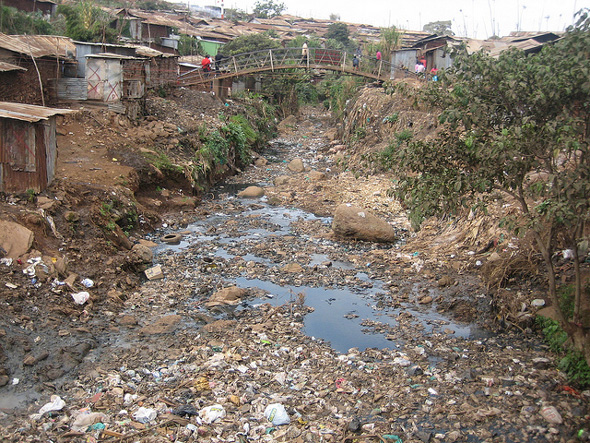
One area that has seen tremendous growth is Nairobi’s largest slum, Kibera. While experts have given estimates ranging from 270,000 to 2,000,000 residents, Kibera is a large area of informal settlements plagued by challenges such as the lack of electricity, job opportunities, and high levels of violence.
While it may be easier to focus on what is lacking in Kibera, there are also many services being provided in the community including affordable and quality reproductive health care by organizations such as Marie Stopes Kenya.
Marie Stopes Kenya was established in Kenya in 1985 as a locally registered nongovernmental organization. It is Kenya’s largest and most specialized sexual reproductive health and family planning organization and is known for providing a wide range of high-quality, affordable, and client-centered services to men, women, and youth throughout Kenya. In 1997, Marie Stopes Kenya opened its first clinic in Kibera and began offering reproductive health services at an affordable rate for residents.
Continue reading on Behind the Numbers.
Sources: UN Population Division.
Photo Credit: “The Kibera ‘river’,” courtesy of Dara Lipton and flickr user The Advocacy Project. -
Youth, Aging, and Governance: A Political Demography Workshop at the Monterey Institute of International Studies
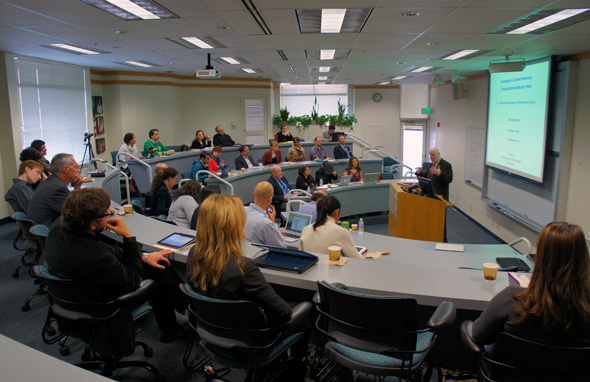
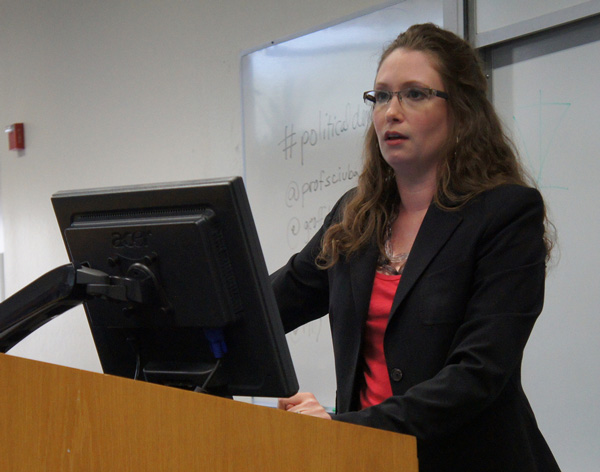
›April 5, 2012 // By Schuyler Null“Demography is sexy – it’s about nothing but sex and death (and migration),” said Rhodes College Professor Jennifer Sciubba at the Monterey Institute of International Studies during a workshop on March 30.
Jack Goldstone of James Madison University, Richard Cincotta of the Stimson Center, and ECSP’s Geoff Dabelko joined Sciubba in a workshop for students and faculty on key developments in political demography. Sciubba and Cincotta were contributors to Goldstone’s recently released edited volume, Demography: How Population Changes Are Reshaping International Security and National Politics.
“Demography is changing the entire economic and strategic divisions of the world,” Goldstone told the room. “We’ve had a 15 year increase in life expectancy just in the last half century,” and today, “90 percent of children under 10 are growing up in developing countries.”
Many countries, said Goldstone, are caught in a difficult race between growth and governance, with governments struggling to provide services and opportunity to their growing populations. This challenge is especially acute in cities, which for the first time in human history are home to the majority of all people.
At the same time, aging is a phenomenon that will affect many developed countries. In the United Sates, the baby boomers are becoming “the grayest generation,” Goldstone said, and similar imbalances between the number of working age people and their dependent elders will soon affect Western Europe, Japan, Korea, Russia, and others.
Re-Examining the Aging Narrative
Some have predicted this “graying of the great powers” will have disastrous consequences for many of the G8, as state pension costs blunt economic growth and innovation, military adventurousness, and global influence, but Jennifer Sciubba presented a case for why fears may be overblown.
When discussing the aging phenomenon in developing countries, many analysts focus too closely on the fiscal environment, argued Sciubba. This creates tunnel vision that ignores the potential coping mechanisms that states have at their disposal. Alliances, for example, are under-accounted for, she said, and closer European Union and even NATO integration could help ameliorate the individual issues faced by aging countries like Germany, France, and Italy.She also pointed to evidence that the developing world’s declining fertility may be have been “artificially depressed” by large proportions of women that delayed pregnancy starting in the 1990s. But now the average age of childbearing has stopped rising. The UN total fertility rate projections for industrialized states for the period 2005 to 2010 was revised upward from 1.35 children per woman in 2006 to 1.64 in 2008 and 1.71 in 2010.
This brings into focus a key leverage point for many developed countries that is not often discussed in traditional conversations about aging: making the workplace friendlier for women. Offering money to couples to have children does not work, said Sciubba – women do not make a simple monetary cost-benefit analysis when they decide to have children. Much more likely is a calculation about the cost to their professional career. Therefore, instituting more liberal leave policies and making it harder for employers to fire both men and women for taking maternity or paternity leave is more likely to have a real impact on fertility rates.
The growing efficiency – and retirement age – of today’s workers can blunt the effect of older workforces on developed economies, said Sciubba. And the stability, strong institutions, and legal protections for innovation are all advantages that will continue to attract the best and the brightest from developing countries.
The competing phenomena of aging in the developed world and continued growth in the developing – which some have dubbed the “demographic divide” – will likely make immigration a very important, possibly friction-inducing issue in the coming decades. Goldstone pointed to the challenges Europe is having today coping with immigrants from North Africa and the Middle East as a possible harbinger of things to come.
Applying Demographic Theory: The Age Structural Maturity Model
While many regions will continue to experience population growth for the next two decades, including sub-Saharan Africa, the Middle East, and parts of East and South Asia and Latin America, the overall global trend is towards older populations. This is good news for democracy, according to Richard Cincotta.
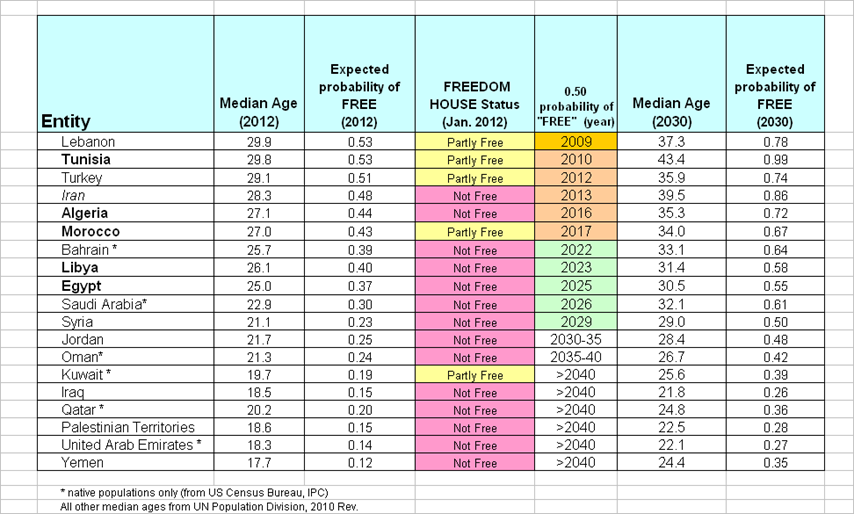
Cincotta, who consults with the National Intelligence Council on demographic issues, explained his “age structural maturity” model, which finds a historical correlation between the median age of countries and their Freedom House scores (an annual global assessments of political rights and civil liberties). Older populations tend to have more liberal regimes, while the opposite is true in younger populations. Combining this model with demographic projections, one can predict when it will become likely for democracy to emerge as a country ages. Before the Arab Spring – to some disbelief at the time – Cincotta used the model to predict that Tunisia would reach a 50/50 chance of achieving liberal democracy in 2011 (see more on this in his posts about Tunisia and the Arab Spring).
For those youthful countries that do achieve some level of liberal democracy, the model predicts they have a high likelihood of falling back towards authoritarianism (Mali is a tragic recent example).
This model, said Cincotta, can be a useful tool for analysts to challenge and add to their assessments. For example, it paints a bleak picture for democracy in Afghanistan (median age 16.6 years old), Iraq (18.5), or Yemen (17.7) and a comparatively rosier one for Tunisia (29.8), Libya (26.1), and Egypt (25.0). Some other observations may useful as well: no monarch has survived without some limits of power being introduced after countries reach a median age of 35, and military rulers too never pass that mark.
The age structural maturity model is, however, not perfect, Cincotta said. The most common outliers are autocracies (Freedom House score of “not free”) and partial democracies (“partly free”) with one-party regimes (China, North Korea), regimes led by charismatic “founder figures” (Cuba, Singapore), or those that where the regime is either supported or intimidated by a nearby autocratic state (Belarus).
Like all analyses, the model has its limitations, said Cincotta, but if used as a tool to generate “alternative hypotheses,” it can help predict dramatic political changes, like the Arab Spring. The research also suggests that the “third wave” of democratization is not over and will in fact continue to expand as countries with younger populations mature.
In conclusion, the panelists recommended the students find ways to include political demography in their work moving forward. “Consider it an alternative tool that may be useful,” said Geoff Dabelko. Policymakers today are overburdened with information and conventional analyses can sometimes become stuck in familiar lines of thought – demography can supplement these or shake them up by providing alternative narratives.
Sources: UN Population Division.
Photo Credit: Schuyler Null/Wilson Center; chart courtesy of Richard Cincotta.
Showing posts from category population.