Showing posts from category population.
-
Three New Reports Highlight Ongoing Significance of Youth Demographics in Global Trends
›January 2, 2012 // By Elizabeth Leahy MadsenAmidst world population reaching seven billion and last year’s Arab Spring, which in some nations is continuing into this winter, it can be easy to miss emerging pieces of research that tell us something relatively objective about youth and instability. Three new studies give practitioners and policymakers a stronger foundation of evidence to highlight the challenges and opportunities facing the world’s largest generation of young people.
Results of a recent UNICEF staff survey indicate that the people responsible for the UN’s efforts targeting children and youth are seriously concerned about demographic and economic dynamics. Asked to review a list of 20 “global trends,” UNICEF staff rated “growing disparities” and “youth bulge and youth unemployment” as the most significant to children. The results, which the agency will soon publish in a paper on “The Next Generation and Global Trends,” also indicate that staff members feel that UNICEF has a strong capacity to influence the future of these trends.
UNICEF’s recent “Child Outlook” report on global trends discusses the issues highlighted in the survey. The report notes that although many countries are moving toward middle-income status, poverty rates remain stubbornly high, indicating that economic development does not benefit all equally. Income and consumption in such countries tend to be concentrated among the wealthiest households. “While many families will prosper, others are being left behind,” the report explains.
“Tensions and discouragement arising from youth unemployment, combined with higher food prices and fiscal contractions, may have contributed to increased civil unrest, protests, and political instability,” UNICEF asserts. In many developing countries, the number of young people entering the labor market far surpasses the number of available jobs. Although some youth are not working because they are enrolled in secondary or tertiary education, low rates of youth participation in the workforce often are not a matter of choice. Young people, especially those with low levels of education and from poorer families, are often unable to find secure, decent jobs. More than one-quarter of all young people with jobs worldwide live below the poverty line of $1.25 per day.
Economic Pressures on Youth in East Africa
Two other research projects – one published, one still underway – provide additional context to the combination of demographic and economic challenges that face the world’s young people. In the first, part of a recent special U.S. Institute of Peace series on South Sudan, Stephanie Schwartz and Wilson Center fellow Marc Sommers probe the expectations of and obstacles faced by youth in the newly created country.
According to the incipient government’s statistics agency, 72 percent of South Sudan’s population is younger than 30, which places it among the 20 youngest age structures in the world. Only 40 percent of youth ages 15 to 24 are literate, and nearly 80 percent of households depend on agriculture for their income. Based on interviews conducted with urban and rural youth in three areas of South Sudan, the authors find that the pressure of paying rising dowry costs is the most salient issue facing young men, while young women are treated as economic assets with no influence in their own future. The authors’ research suggests that “some young men join armed gangs, at least in part, because they believe it will help them pay dowries.”
Although many young people in South Sudan aspire to the stability of government work, the limited number of jobs and shortage of relevant skills inhibit their aspirations. With an underdeveloped private sector, few opportunities for training, and nepotistic practices in hiring, there is little work for those living in towns and urban areas beyond manual labor and selling goods. The authors recommend that education and job training be expanded, with a focus on equitable access among young people from varied geographic backgrounds.
Across the border in northern Uganda, Chris Blattman, an associate professor of political science at Yale, has been studying the social effects of the government’s youth employment program started in 2007. The program offered grants to small groups of young people for vocational training or to fund the costs of starting a new business. Although a full paper has not yet been published, preliminary findings indicate strong economic benefits of the program which in turn improve social cohesion and community participation while diminishing aggression and “disputes with authorities” among young men. If they bear out, the results may well confirm the oft-repeated policy recommendation that focusing on youth employment is critical to improving national development as well as reducing the likelihood of instability and conflict.
In the year of seven billion, we heard much about the need to invest in young people and the tremendous potential they embody, for demographic dividends as well as overall development. Yet 2011 was also a year of tremendous upheaval, much of which was driven by young people – and their older counterparts – seeking representative and democratic governance. This should serve as a reminder that youth can be a remarkable force for positive change, but in too many places – South Sudan among them – their opportunities, prospects, and contributions are constrained. As the UNICEF survey results reiterate how important this issue is to development programming, the Uganda research may be another important piece of evidence that direct investment in young people reaps tangible results not only for them, but also for society.
Elizabeth Leahy Madsen is a consultant on political demography for the Wilson Center’s Environmental Change and Security Program and senior technical advisor at Futures Group. She was previously a senior research associate at Population Action International.
Sources: Bill and Melinda Gates Institute for Population and Reproductive Health, Chris Blattman, ILO, Sommers and Schwartz (2011), South Sudan National Bureau of Statistics, UNICEF, World Bank.
Photo Credit: “UNAMID Peacekeeper Speaks with Sudanese Youth,” courtesy of UN Photo/Albert Gonzalez Farran. -
IRP Editors Cover Rwanda’s Population, Health, and Environment Challenges
›The original version of this article appeared on the International Reporting Project website.
The International Reporting Project (IRP) and 12 senior editors and producers from across the United States traveled to Rwanda this year to learn about issues affecting Rwanda and other countries in Africa and to help them improve their news organizations’ international coverage. Some of the editors focused on Rwanda’s extensive population, health, and environmental challenges:
Nicholas Aster, founder and publisher of San Francisco’s Triple Pundit, covered sustainable development in Kigali, coffee’s empowerment potential, and eco-tourism sites like Volcanoes National Park. Aster also became interested in Rwanda’s efforts to avert disaster by corralling Lake Kivu’s CO2 reserves into a power supply. At the close of his trip, Aster reflected on Rwanda’s sustainability goals in a photo essay.
Tom Paulson, host and reporter for KPLU’s Humanosphere, discovered the positive side of aid and development in Rwanda, including girls’ education initiatives and coffee farming improvements. Moreoever, Paulson documented the Gatekeepers’ trip to Volcanoes National Park, including a visit from a mountain gorilla who became a little too friendly. Paulson has also posted several questions the Gatekeepers asked President Paul Kagame when they met with him, including his policies on restricting free speech, curbing population growth, and preventing another genocide. At the close of the trip, Paulson composed a photo slideshow that shows a growing, vibrant Rwanda, and he also outlined 10 reasons why the complex and sometimes contradictory country can’t be described in a sound-bite.
Sue Horton, op-ed and Sunday Opinion editor of the Los Angeles Times, began chronicling her trip with a survey of Rwanda’s history on genocide, governance, and gorillas. On the road to meet Rwanda’s famed gorillas, Horton noted Rwanda’s strengths and challenges: its ambitious vision for the future encourages a growth in infrastructure and the country has showed impressive gains in healthcare provision and access, but Kigali is relocating residents who don’t fit the image.
The deputy managing editor of Global Post, Andrew Meldrum, also found a note of optimism in witnessing how far Rwanda has come since the genocide, particularly after hearing the testimonies of the genocide’s youngest victims: children born of sexual violence during the genocide. And his Global Post colleague Jon Rosen delves into the country’s population growth and the government’s approach to family planning.
In addition to the Gatekeeper Editor Trips, the IRP offers individual Fellowships to U.S. reporters to travel overseas on five-week reporting trips. In 2009, IRP Fellow Perry Beeman discovered a Rwanda similar to that which the Gatekeepers encountered: a country that has made much progress, but still has many challenges ahead. Beeman, who also was a public policy scholar at the Woodrow Wilson Center, created a multimedia series, “Renewal in Rwanda”, for The Des Moines Register; his reporting garnered him an Overseas Press Club citation for Best Reporting in 2010.
Rwandans, Beeman found, are dedicated to conservation. President Kagame is committed to the environment and is driven to develop clean, sustainable power and to convert from subsistence agriculture to a stronger, more diversified economy. But everyone has a hand in this effort, including schoolchildren who report on conservation in song, dance, and dramatic arts. Beeman also examined efforts to preserve the Gishwati Forest, including gorilla and chimpanzee preservation efforts from villagers to businessmen to researchers. Beeman emphasized the importance of immersing oneself in an environment in order to report on it, and he did so by, among other things, tracking wild chimpanzees in the forest.
For more information about IRP’s Fellowships and Gatekeeper Editor trips, visit their website at InternationalReportingProject.org.
Photo Credit: “The Broadsheet in Kyovu, Kigali,” courtesy of flickr user noodlepie (Graham Holliday). -
In Somalia, Beyond the Immediate Crises, Demography Reveals a Long-Term Challenge
›December 21, 2011 // By Elizabeth Leahy MadsenIn the nearly 20 years since the infamous intervention that resulted in the deaths of dozens of American and UN peacekeeping soldiers on the streets of Mogadishu, Somalia has become the epitome of a “failed state.” Neighboring countries, global bodies, and aid agencies are rushing to respond to the country’s rapidly evolving political, security and humanitarian crises.
Diplomatic attention has focused on decentralized, weak governance that is divided among the Al Shabab insurgency, clan warlords, and a hamstrung and largely ineffective Transitional Federal Government, whose control does not extend beyond the capital. Foreign militaries have had to devote naval resources to curtailing daring and far-reaching acts of piracy against civilian and military vessels from networks based in Somalia. Aid groups have been stymied in their efforts to stem famine as access to populations in the hardest-hit areas has been cut off by Al Shabab and food aid has been stolen. Most recently, Kenyan and, reportedly, Ethiopian forces have crossed the border, extending the reach of the country’s political crisis. Hundreds of thousands of have fled conditions of hunger, illness, and violence into neighboring countries.
Perhaps the deepest woe of a “failed state” is that its problems are deep-seated and cannot be solved during the brief span of a UN meeting or the news cycle following the latest terrorist attack. Amid the extraordinary efforts to battle the country’s crises, one of the most important underlying structural factors is often overlooked: the country’s unusual demographic picture.
A Demographic Outlier
Somalia is a global outlier in demographic terms, with rates of fertility (6.4 children per woman), infant mortality (107 deaths per 1,000 births), and maternal mortality (1,200 deaths per 100,000 live births) all above the already-high averages for sub-Saharan Africa. These demographic indicators are both a reflection of the abysmal state of health care in the country and a warning that its economic and security challenges are unlikely to be easily resolved.Research shows that where at least 60 percent of the population is younger than 30 years old, countries are more prone to outbreaks of civil conflict, and the risk increases as the proportional size of the “youth bulge” grows. In Somalia, 70 percent of the population is younger than 30, a level comparable to Iraq and the Palestinian Territories. With little to no improvements in health care, Somalia’s age structure has remained unchanged over the past 40 years. Unlike dozens of other countries where fertility has declined significantly in recent decades, Somali women have nearly as many children on average today as they did in the 1970s. The current total fertility rate of 6.4 children per woman is only a 12 percent decline from the 1970 rate.
Despite high infant mortality – more than 10 percent of children die before turning one – this sustained high fertility rate has generated rapid population growth, with each successive generation larger than the next. Somalia’s population has almost tripled since 1970, from 3.6 to 9.3 million, although population density remains low (one-third the world average). If the fertility rate remains constant at the current level – not an unreasonable projection considering how stagnant it has been over past decades – Somalia would be home to 33 million people by 2050. Even if the fertility rate drops to near four children per woman, as projected in the UN’s medium variant, the population would still triple to 28 million by mid-century given the demographic momentum of decades of high fertility.
The fertility decline built into the UN’s medium variant projection – which would still place Somalia among the highest total fertility rates in the world by 2050 – is unlikely without steady and major improvements in the country’s health system, particularly women’s health. But with decades of conflict, weak governance and little investment, the environment for reproductive health services is dire.
A recent World Health Organization assessment described “unacceptable levels of unmet need, extreme inequities in access…slow progress…[and] underinvestment and poorly coordinated actions.” Pregnancy and childbirth are major risks to women’s well-being. Somali women have a one in 14 chance of dying from maternal causes over their lifetimes, the second-highest risk in the world. Funding to improve reproductive and maternal health care remains too low to meet demand. The United Nations Population Fund reports that donors spent about $6 million on population and reproductive health programs in 2008, about one-third as much as was spent in Benin and Burundi, which have smaller populations.
The Future for Youth
Instability and violence have become entrenched in Somalia; according to the Armed Conflict Dataset, civil conflict occurred in 12 of the past 20 years. The direct causes of the conflict are typically recorded as struggles for power and resources among competing clans. But in considering the underlying causes of conflict, demographic security scholars have suggested that very young age structures such as Somalia’s can create both motive and opportunity for recruitment into a violent uprising. As ever-growing numbers of young people face adulthood with few prospects for employment, hopelessness or desperation can make them vulnerable to the promise of well-being and identity offered by a political faction or rebel group.
There are 1.7 million people between the ages of 15 and 24 in Somalia today, with another 2.5 million following in the next ten-year age cohort. With opportunities for education, jobs, and equitable participation in society, these youth would represent a promising future for their country. Unfortunately, such opportunities are not afforded to most of them. A United Nations survey found that the secondary school enrollment rate is just six percent, with poverty and early marriage keeping many young people out of school. World Bank data from 2002 show that two-thirds of urban working-age adults and 41 percent of those in rural areas were unemployed. Nearly half of the population lives on less than $1 per day.
Youth Education, Economic Opportunities Could Increase Stability
While global attention centers on the government’s commitment to a new roadmap for peace and the efforts of the African Union’s peacekeeping forces to drive Al Shabab out of Mogadishu, development agencies have recognized demographic security as an important component of Somalia’s future.
The United Nations Children’s Fund is supporting schools for displaced children in Mogadishu, saying in a press release that “providing them with learning opportunities in a safe environment is critical for the country’s long-term stability and growth.”
The U.S. Agency for International Development (USAID) has announced plans for a new program called the Somali Youth Leaders Initiative, which aims to improve young people’s access to secondary education and economic opportunities and to increase their civic participation. In designing the program, USAID noted “the recruitment of boys and men by extremist organizations and piracy networks” and “the common perception that an increasing youth population is a potentially destabilizing force.”
As the October 4 bombing at the Education Ministry in Mogadishu showed, young people are often the victims of the country’s instability. Programs such as those of UNICEF and USAID that empower young people to capitalize on their potential should be a greater focus among initiatives to address Somalia’s long-term future as well as its immediate crises.
Elizabeth Leahy Madsen is a consultant on political demography for the Wilson Center’s Environmental Change and Security Program and former senior research associate at Population Action International.
Sources: BBC, Population Action International, The New York Times, UCDP/PRIO, UNICEF, UNESCO, UN Population Division, UN Population Fund, Urdal (2006), USAID, World Bank, World Health Organization.
Image Credit: “Somalia Suffers from Worst Drought in Century,” courtesy of flickr user United Nations Photo/Stuart Price; charts arranged by Elizabeth Leahy Madsen, data from the UN Population Division and World Health Organization. -
From Dakar: Explaining Population Growth and Family Planning to Environmentalists
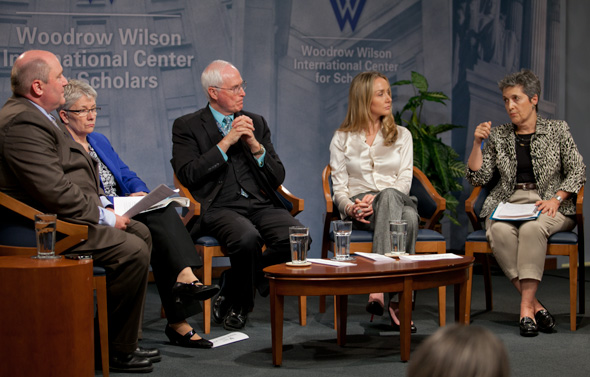
›December 19, 2011 // By Sandeep Bathala“There is a growing recognition that population is a key driver of environmental, development, governance, and security challenges; however, family planning is not a traditional tool, nor is it often considered an ‘appropriate’ one, for responding to food, water, climate, or conflict,” said Roger-Mark De Souza at a November 30 panel discussion at the 2011 International Conference on Family Planning in Dakar, Senegal. “This presents a challenge for us: How can we change perceptions of family planning so that it becomes part of the solution to wider problems, including natural resource scarcity, lack of economic development, gender inequity, and instability?”
De Souza, vice president of research and director of the climate program at Population Action International (PAI), was joined by Sandeep Bathala, program associate with the Wilson Center’s Environmental Change and Security Program; Robert Engelman, president of Worldwatch Institute; and Daisy Magaña, fellow with the GoJoven Program, for a session on “Reaching Out at Rio: Explaining Population Growth and Family Planning to Environmentalists.”
Population Dynamics Part of Climate Vulnerability
“Advocates…need to communicate that empowering women to make their own reproductive choices will improve both their individual well-being and our collective environment,” said Engelman. According to research conducted on behalf of Americans for UNFPA, messages that focus on women – their health or empowerment – resonate well with American environmentalists, as they do with broader audiences.
PAI’s interactive mapping website shows that high levels of unmet need for family planning and rapid population growth rates are common in countries with low levels of resilience to climate change and high levels of projected decline in agricultural production, said De Souza. “Family planning services can be one element of a multi-pronged strategy to reduce especially women’s vulnerability to these interlocking vulnerabilities,” he said.
“Currently, population growth is viewed as a challenge to addressing climate change-related vulnerabilities, but family planning services are commonly left out of conversations about ways to reduce these vulnerabilities.” This is a lost opportunity, said De Souza: “We can integrate family planning into wider environmental, development, and peace-building efforts.”
At the recent UN Climate Change Conference in Durban, a side event on reproductive health and climate was well-attended. However, as panelist Esther Agbarakwe of the Africa Youth Initiative on Climate Change noted, population was not part of the conference‘s official discussion, due to lack of knowledge and fears of population control. PAI is currently working with UNFPA to produce a series of training modules on population and climate change that will help environmentalists, climate change activists, and researchers better understand and explore these connections.
Tapping the Youth Base
Bathala, formerly the Sierra Club’s Global Population and Environment Program director, discussed how the Sierra Club, one of the only major grassroots conservation organizations with a population program, uses youth outreach to raise awareness on the links between the environment, reproductive health, and women’s rights.
Because young people constitute over half of the world’s population, the Sierra Club focuses on empowering youth leaders to make the connection between environmental issues and sexual and reproductive health and rights. The Population and Environment Program reaches youth directly by organizing summits and multi-state campus tours featuring young people from around the world sharing compelling stories with their peers.
“The program provides youth and adult activists with materials, communication strategies, and leadership training,” Bathala said. “With these tools, the activists then educate their community members, campus, and decision-makers about the need for measures that increase access to family planning while addressing poverty, women’s empowerment, and environmental protection.”
In April, fellow panel member and Belize-native Daisy Magaña joined one of the Sierra Club’s U.S. tours to discuss the GoJoven program, which convenes and support youth reproductive health champions throughout Latin America. Through GoJoven, Magaña has worked to expand adolescent reproductive and sexual health choices, services, policies, and programs in Belize.
In a blog post, Magaña discussed how her message was simple: Don’t give up. “If you think being active on environmental and sexual rights issues is hard to do here, imagine doing it in a deeply conservative [Catholic] country like mine,” she told U.S. students.
Sierra Club also leads story tours to functioning population, health, and environment programs in the field, including a 2009 trip to Guatemala and Belize in conjunction with GoJoven. Through visits to 10 project sites, two U.S.-based youth advocates witnessed first-hand the challenges and opportunities associated with community-based sexual and reproductive health programs, significantly enhancing their ability to be pro-active messengers in their own communities. The tour helped the Sierra Club build an international network of young people committed to social and policy change in their countries.
Looking Forward: Finding Ways To Highlight Integration
While recognition of the connections between population growth and environmental impacts is growing, the experience of the panelists shows that it takes innovative methods to reach both the environmental and family planning communities. A similar panel later this winter at the Wilson Center will include representatives of Americans for UNFPA discussing their research on talking to environmentalists about reproductive health and population growth.
With the UN Conference on Sustainable Development (Rio+20) coming in June of next year, highlighting successful strategies is crucial in order to pave the way for better integration in the future.
Event ResourcesImage Credit: Roger-Mark De Souza/Population Action International. -
Jake Naughton, Pulitzer Center for Crisis Reporting
Pulitzer Center Launches Collaborative Reporting Project on Reproductive Health
›
The original version of this article, by Jake Naughton, appeared on the Pulitzer Center for Crisis Reporting blog.
The Pulitzer Center launched its collaborative reproductive health-reporting project at this year’s International Conference on Family Planning (ICFP) in Dakar, Senegal. The project brings together four journalists from Africa and four from the United States who will collaborate to enhance local and international reporting about reproductive health across the continent.
The African journalists are Mae Azango of Liberia, Estelle Ellis of South Africa, Sam Olukoya of Nigeria, and Ken Opala of Kenya. Their U.S. counterparts are Christian Science Monitor correspondent Jina Moore; New Yorker editorial staffer Alexis Okeowo; and the Pulitzer Center’s managing director Nathalie Applewhite and visual media coordinator Jake Naughton.
More than two thousand reproductive health professionals and hundreds of journalists from all over the world participated in the conference, which sought to shine a spotlight on the unmet need for family planning services worldwide, and to focus on integrating family planning into general health services.
Continue reading on the Pulitzer Center for Crisis Reporting blog.
Video Credit: “Meet the Journalists: Dakar,” courtesy of the Pulitzer Center. -
Watch: Dr. Vik Mohan on Integrating Family Planning and Conservation in Madagascar
›The integration of population, health, and environment programming “enables us to create synergies that mean we are more effective at achieving both health and conservation goals,” said Dr. Vik Mohan, director of sexual and reproductive health programming for Blue Ventures, in an interview with ECSP at the 2011 International Conference on Family Planning.
After Blue Ventures established their first clinic in 2007 in the village of Andavadoaka, on Madagascar’s southwest coast, “we felt immense pressure to scale up our intervention,” said Mohan. “We started with one clinic in one village, and now we have a multi-site service covering all 40 villages that we partner with for our community-based conservation work,” he said.
According to data compiled by Blue Ventures, the average total fertility rate in the region is 6.7 children per woman. The London-based eco-tourism-turned health and environment NGO offers a variety of family planning services to meet local demand, including mobile outreach clinics and community-based distribution of contraceptives. They also partner with Marie Stopes International to offer long-acting and permanent methods of contraception for those that want it.
“This Model Can Be Taken to Scale”
By integrating conservation and reproductive health messaging and service delivery, “we are getting greater buy-in from the community because they all see the added value of the breadth of things that we offer them,” Mohan said. “Men who came to hear about fisheries management get to hear about family planning technologies, practically for the first time in their lives.”
The fishermen are able to see the links between food security and population growth through their own experience, he added. “We believe very passionately this model can be taken to scale,” Mohan said. “This is something that could be easily replicated in other regions. Definitely in other coastal regions, but almost certainly in other remote areas – perhaps areas of high biodiversity where there are existing projects, perhaps conservation projects – but where there is an unmet need for healthcare and family planning in particular.”
“My advice to other organizations, whether you are doing healthcare or whether you are doing conservation, is just think holistically,” said Mohan. “If you are a conservation organization that recognizes that there is an unmet healthcare need for the communities that you work with, then…don’t be afraid to ask those questions, and don’t be afraid to build capacity to meet the need, if you find one. Or, don’t be afraid to partner with health NGOs to enable that need to be met.”
For more on Blue Ventures’ integrated efforts, see also ECSP FOCUS Issue 23, “To Live With the Sea: Reproductive Health Care and Marine Conservation in Madagascar,” co-authored by Vik Mohan. -
Famine and Food Insecurity in the Horn of Africa: A Man-Made Disaster?
›This year’s drought in the Horn of Africa has been the region’s worst in decades and has exploded into a humanitarian catastrophe affecting millions. In Somalia, where the drought is layered on top of two decades of conflict and an extremely weak state, the impact of the drought has been most damaging. Somalia is the only country in the region where the UN has declared famine zones. And, even though the UN recently upgraded three of Somalia’s six famine areas to “lesser emergencies,” four million Somalis – more than half the country’s population – remain in urgent need of food and general humanitarian aid.
The drought may have been what sparked the current crisis, but other, longer-term factors, like a sustained lack of agricultural development, extreme rural poverty, and changing weather patterns, not to mention Somalia’s lack of functioning government, set the stage.
A Long-Term Crisis in the Making
“Lack of rainfall over several seasons is the most immediate and most visible cause of the current humanitarian crisis in the Horn of Africa,” said Jim Hansen of the Consultative Group on International Agricultural Research (CGIAR) in a brief video produced this summer by the International Research Institute for Climate and Society at Columbia University (watch above). Much of the Horn’s population “depends on rain-fed agriculture and pastoralism for their livelihoods and sustenance,” said Hansen. Already “quite poor and…locked in poverty for quite a long time,” environmental and resource degradation, paired with rapid population growth, have compounded their vulnerability to extreme events, he said.
Throughout the region, resilience to crises like the current drought has been weakened by decades of poor agricultural planning, “driven more by shifts in ideology than any real evidence among some of the key international development organizations,” said Hansen. That poor planning has made communities more dependent on humanitarian aid when poor weather hits, which in turn forces aid groups to redirect resources away from longer-term development and towards short-term disaster relief instead, Hansen said.
While these problems exist across the Horn of Africa, Hansen points out that the crisis has been most damaging in Somalia, which he attributes to the country’s weak governance and to international aid groups’ limited ability to operate in the country.
“Northern Kenya, southern Ethiopia, and Somalia have similar severity of drought, but the humanitarian crisis is much more severe – the loss of livelihood and life is greater in Somalia largely because the government is weaker,” he said.
The Government’s Role
Owen Barder, a senior fellow at the Center for Global Development, draws a more direct line between governance and famine in the Horn. “In Somalia…there’s a complete breakdown of government, and the consequence is the famine that we’re seeing,” said Barder during a Center for Global Development podcast. The country has been without a functioning government since 1991, when civil war broke out. It has since become “the most food-insecure nation in the world” and, as described by Foreign Policy, “the international community’s longest-running failure.”
Barder raised two points about the government’s role in famine. One, that access to information – in this case an early warning system monitoring drought conditions – can minimize the humanitarian impact of any given natural disaster; and two, that a country’s government must be able to translate that information into action in order for it to actually make a difference.
Barder is not alone in emphasizing the state’s role as a driver of the famine. Edward Carr, a AAAS science fellow with USAID, wrote in July, when the UN first declared famine in Somalia, that attributing the famine solely to drought is “a horrible abdication of responsibility for the human causes of this tragedy.”
Charles Kenny, also a senior fellow at the Center for Global Development, went even further on Foreign Policy, arguing that famine, or “mass starvation as an intentional act of governance,” should be categorized as a crime and prosecutable at the International Criminal Court.
Al Shabab and the Months Ahead
As of late November, the United Nations estimated that tens of thousands had died in Somalia alone since drought began this spring. Though USAID’s Famine Early Warning Systems Network (FEWSNET) reports that famine has now subsided in three of the six southern regions it initially struck, a quarter of a million Somalis remain at risk of “imminent starvation,” according to the UN.
According to FEWSNET, famine should not reappear in the foreseeable future, assuming aid groups can maintain current distribution levels – a key caveat. Ten days after FEWSNET issued its analysis, however, Al Shabab, the Al Qaeda-linked militant organization that controls much of southern Somalia, banned 16 aid groups, including UNICEF and the World Health Organization, from operating in the areas under its control. UNICEF spokesman Jaya Murthy told the BBC that the move would put “about 160,000 severely malnourished children…at imminent risk of death.”
Fighting in southern Somalia between Al Shabab and Kenyan and Ethiopian forces is adding another layer to the country’s humanitarian crisis. The UN Office of the High Commissioner for Refugees reported that, as of late November, the fighting had become the primary driver of internal displacement, replacing drought and famine as the key drivers during the first three quarters of the year. The UNHCR estimated that, between the drought and the conflict, 1.46 million Somalis have been displaced.
Meanwhile, the rainy season is picking up, and although that’s good news for farmers and pastoralists, it also means that Somalis will be vulnerable to diseases like measles, typhoid, and cholera, which can spread quickly through overcrowded, under-supplied IDP camps. Somalis still living under Al Shabab’s control are prohibited from getting vaccinations, amplifying their vulnerability to disease in the coming months.
These latest developments offer strong evidence that policy decisions can exacerbate the human toll of natural disasters. From Barder’s perspective, that is reason for optimism. “We have the information, we have the capacity to prevent it from happening,” he said.
For more on Somalia’s underlying demographic issues, see Elizabeth Leahy Madsen’s post “In Somalia, Beyond the Immediate Crises, Demography Reveals a Long-Term Challenge.”
Sources: AlertNet, Associated Press, BBC, Famine Early Warning Systems Network, Foreign Policy, Huffington Post, The New York Times, UNHCR, UN News Centre, Voice of America.
Video Credit: “Jim Hansen on Food Security in East Africa,” courtesy of the International Research Institute for Climate and Society on vimeo; image credit: FEWSNET/USAID. -
Can “Climate-Smart Agriculture” Help Feed Africa’s Growing Population?
›December 13, 2011 // By Brenda ZuluFood production needs to increase 70 percent by 2050 to meet the demands of a growing world population, said former UN Secretary-General Kofi Annan in a keynote address on “climate-smart agriculture” at a COP-17 event hosted by the World Bank and African Union. Annan, who is now chairman of the Alliance for a Green Revolution in Africa (AGRA), said this was a particular concern in Africa, where four out of five citizens are dependent on agriculture for their livelihoods.
One in seven people in the world do not have enough food to eat, Annan said, and climate change is expected to make this challenge more difficult to overcome. Climate-smart agriculture includes a wide variety of techniques that help increase the resilience of communities and protect them from extreme weather events, such as terracing to prevent soil erosion, improving weather forecasting, managing water runoff, and developing irrigation systems.
“Climate change affects us by undermining our resource base through water and soil degradation,” said Prime Minister of Ethiopia Meles Zenawi at the event. “There is need to protect the resources and to rehabilitate green areas of our land.” He said that since 70 percent of Africans are small-scale farmers and that most of the poor in Africa were farmers, there is no better way to fight poverty on the continent than through agriculture.
South African President Jacob Zuma said at the event that given that the UN projects a population of more than nine billion people in the world by 2050, agriculture should be a priority as it is more vulnerable to climate change than any other sector.
“Climate-smart agriculture includes proven practical techniques such as mulching, intercropping, conservation agriculture, integrated crop management and agro forestry, improved grazing, and innovative better weather management,” he said, all of which have the potential to help increase crop yields.
Mary Robinson, chair of the Global Leaders Council for Reproductive Health, said there could be no smart agriculture without integrating women’s issues, because climate change affects women disproportionately. “Women make the connection between climate-smart agriculture, food security, and gender,” she said.
“Our ability to feed the growing population under climate variability and change will require new expertise and harmonized efforts,” said Robinson.
Annan agreed, saying African women should be fully involved in early action that can support technical assistance, such as screening agriculture plans to ensure they are “climate smart” as well as integrating climate resilience and mitigation into ongoing poverty-reduction programs and testing new approaches.
But according to Brylyne Chitsunge, a farmer from Pretoria speaking on the panel, things will need to change considerably from the status quo. “The small-scale farmer remains very much marginalized in institutions,” she said. “They exist on paper but they really don’t exist.”
Brenda Zulu is a member of Women’s Edition for Population Reference Bureau and a freelance writer based in Zambia. Her reporting from the COP-17 meeting in Durban (see the “From Durban” series on New Security Beat) is part of a joint effort by the Aspen Institute, Population Action International, and the Wilson Center.
Sources: World Bank, World Food Programme.
Photo Credit: “Cultivated hillsides,” courtesy of flickr user coda (Damien du Toit).