-
John Pielemeier: Population, Health, and Environment Programs Need to Prove It Before Becoming Mainstream
›
A new model of integrated development, combining population, health and environment (PHE) interventions, is efficient, effective, and relatively inexpensive. But more rigorous program evaluations are necessary to prove its value, argues John Pielemeier in this week’s podcast.
-
New Film Explains Blue Ventures’ Integrated Approach to Development and Conservation in Madagascar
›Blue Ventures has become a leader in the population, health, and environment (PHE) community through its work with the remote, semi-nomadic Vezo people living along Madagascar’s southwestern coast. In a new short documentary, The Freedom to Choose: Empowering Communities to Live With the Sea, Blue Ventures describes how their approach has helped the Vezo respond to the combined challenges of resource scarcity, poor reproductive health, and unsustainable livelihoods.
-
Kathleen Mogelgaard: Four Steps to Better Link Climate Adaptation and Reproductive Health Strategies
›Climate change vulnerability is closely tied to population dynamics, says Kathleen Mogelgaard in this week’s podcast. “We know that population size, composition and spatial distribution around the world is constantly changing, and that these changes do have implications for climate change exposure, sensitivity, and adaptive capacity – the three elements of vulnerability.”
-
In Nepal, Integrating Forest and Family Health Is Improving Lives
›March 24, 2014 // By Sean Peoples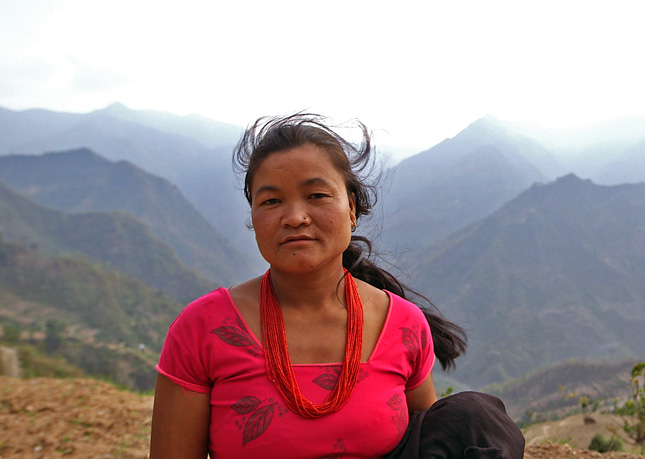
For years, the Chepang people have lived off the land in Nepal’s forested central foothills. Communities cleared trees to start small subsistence farms, harvested the surrounding area for firewood, and eventually moved on after the wood, soil, and water were depleted.
-
Measurement Matters: Understanding Water Scarcity in an Increasingly Complex World
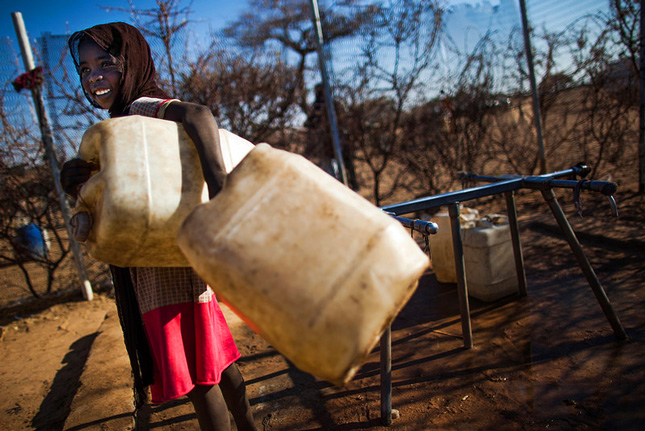
›March 21, 2014 // By Kathleen MogelgaardIt was a scorching hot April afternoon in Keur Moussa, a small farming community about 60 kilometers outside Dakar, Senegal. The landscape was mostly barren and very dry, and a fine red dust settled into our clothes as we walked with community leaders to learn about their efforts to cope with a changing environment. In this part of the world, adapting to climate change is figuring out how to manage water: how to survive for long periods without it, and what to do when too much comes at unexpected times.
-
Big Changes Need Big Stories: The Year Ahead in Environment and Energy Reporting
›While climate change has enjoyed a recent spike in news coverage, journalists face a constant challenge to bring sustained attention to other environmental stories, including resource scarcity, the changing oceans, and demographic change. [Video Below]
-
Deepa Pullanikkatil: Climate Adaptation Efforts Reveal Health-Environment Links in Malawi
›
Effective development interventions often require thinking outside the box. In southern Malawi’s Lake Chilwa basin, where environmental degradation, public health, and population dynamics intersect in unpredictable ways, people like Deepa Pullanikkatil of Leadership for Environment and Development (LEAD) are challenging conventional thinking with promising results.
-
Environmental Impacts of Household Size, Bringing Family Planning Outside the Health Sector
›What are the environmental implications of changing household sizes? A recent article by Mason Bradbury, M. Nils Peterson, and Jianguo Liu, published in Population and Environment, analyzes data from 213 countries over 400 years and finds the average number of occupants per home tends to decline as population grows. This dynamic, they write, indicates that accommodating housing could prove to be one of “the greatest environmental challenges of the twenty-first century.” As countries develop and urbanize, “according to convergence theory, household size decreases (often from greater than five to less than three).” Other cultural shifts, like increasing divorce rates, urban sprawl driven by rising affluence, decreasing numbers of multigenerational households, and larger houses (in the United States, homes more than doubled in size between 1950 and 2002, according to the article) compound the issue. As population growth continues in parts of the world, these trends pose critical questions for conservation and environmental sustainability, since “households are the end consumers of most natural resources and ecosystem services.”
Showing posts from category population.