• woodrow wilson center
  • ecsp

New Security Beat

Subscribe:
  • rss
  • mail-to
  • Who We Are
  • Topics
    • Population
    • Environment
    • Security
    • Health
    • Development
  • Columns
    • China Environment Forum
    • Choke Point
    • Dot-Mom
    • Friday Podcasts
    • Navigating the Poles
    • Reading Radar
  • Multimedia
    • Water Stories (Podcast Series)
    • Backdraft (Podcast Series)
    • Tracking the Energy Titans (Interactive)
  • Films
    • Water, Conflict, and Peacebuilding (Animated Short)
    • Paving the Way (Ethiopia)
    • Broken Landscape (India)
    • Scaling the Mountain (Nepal)
    • Healthy People, Healthy Environment (Tanzania)
  • Publications
  • Events
  • Contact Us

NewSecurityBeat

The blog of the Wilson Center's Environmental Change and Security Program
Showing posts from category population.
  • Transforming Africa: Women and Young People Will Drive Progress

    ›
    From the Wilson Center  //  On the Beat  //  June 18, 2019  //  By Nazra Amin
    48079286236_e14c613c02_o

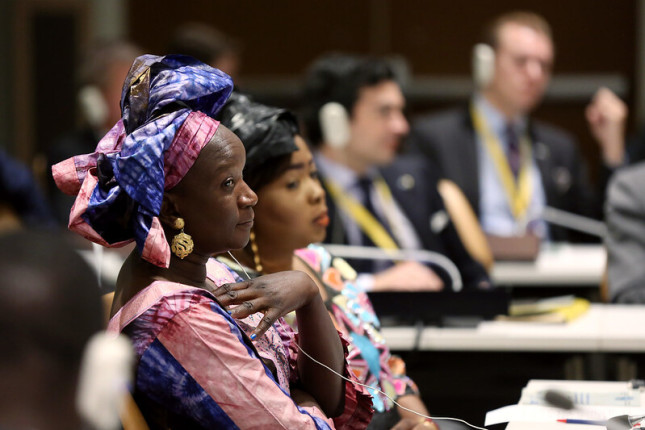
    “Too often in the United States, the narrative that we hear about Africa is one of poverty, war, and ineffective or failed states. It is a crisis, a place best engaged through aid packages and humanitarian assistance,” said Keith Lee, President and Chief Operating Officer of Brown Capital Management at a recent Wilson Center event hosted by the Africa Program. “This has never been the entire story, and today more than ever, Africa is undergoing enormous transformations that challenge this narrative,” Lee said.

    MORE
  • Africa in Transition: Highlights from a Conversation on Investing in Youth for Economic Prosperity

    ›
    Africa in Transition  //  Friday Podcasts  //  May 24, 2019  //  By Benjamin Bosland
    33745824268_1e4e142d29_k

    Africa in Transition, a new series hosted by the Wilson Center and the Population Institute, explores the role of population trends—migration, urbanization, fertility, maternal mortality—in shaping sub-Saharan Africa’s chances for prosperity, health, and security. In this podcast, we share highlights from the first Africa in Transition event. Parfait Eloundou-Enyegue, Professor at Cornell University, starts the conversation by reminding us that “African countries are in the middle of multiple transitions that have the potential to create opportunities for prosperity, growth, and increased human capital, but also to create greater inequality. The challenge, therefore, is to build prosperity, but to do it for all.”

    MORE
  • Africa’s Future Workforce: Investing in Youth for Economic Prosperity and Equity

    ›
    Africa in Transition  //  From the Wilson Center  //  May 1, 2019  //  By Elizabeth Wang
    10561922545_8569d68ca8_k

    “African countries are not in the middle of one transition, they are in the midst of several transitions,” said Parfait Eloundou-Enyegue, Professor and Chair of the Department of Development Sociology at Cornell University, at a recent Wilson Center event on demographic trends on the continent, and investing in youth to ensure economic prosperity. “All of these transitions are an opportunity for prosperity, an opportunity for growth, an opportunity to build human capital,” said Eloundou-Enyugue. However, demographic, cultural, political, and economic changes can also exacerbate existing inequalities between and within countries. The challenge is not only to build prosperity, but to do it for all, said Eloundou-Enyegue.

    MORE
  • More Countries Want to Invest in Caring. Here’s How They Should Do It

    ›
    Dot-Mom  //  Guest Contributor  //  January 10, 2019  //  By Sarah Degnan-Kambou
    Apolitical Care More Countries

    This piece by Sarah Degnan-Kambou is part of Apolitical’s spotlight series on the care economy, in partnership with the Wilson Center.

    At long last, my husband and I are empty-nesters. We have always worked in high-pressure jobs, and while the children were young, I put in plenty of non-work hours to care for them and for the household. My husband was unfailingly helpful, but now that our children are grown, I’m ready to renegotiate our “to do” list.

    MORE
  • New Security Beat’s Biggest Stories of 2018

    ›
    What You Are Reading  //  January 9, 2019  //  By Benjamin Dills
    30145079477_4431ce2f42_k

    In 2018, our readers came to New Security Beat to understand how individuals and communities cope in the face of environmental uncertainty, particularly when the rule of law, natural resource management, and social services are lacking.

    MORE
  • The Tetherball Effect: How Efforts to Stop Migration Backfire

    ›
    Guest Contributor  //  January 7, 2019  //  By Loren B. Landau & Iriann Freemantle
    2976016514_cb625e6438_o

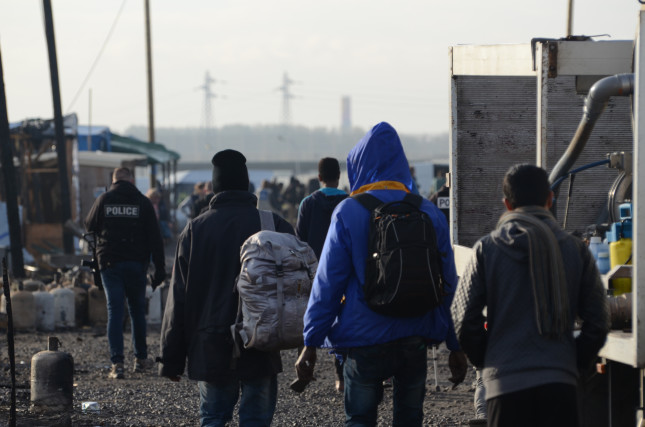
    Fears of Central American caravans and Saharan smugglers keep European and U.S. leaders up at night. Desperate to manage migration, they turn to short-term fixes, which include blocking borders and supporting authoritarian leaders to contain people—their own citizens and others—before they get close to Europe or the United States. This bit of political theater appeals to some, but has limited effects in overall numbers. The long game consists of addressing root causes so people no longer feel compelled to move at all. But this too will do little to prevent migration north. If anything, it will encourage more people to move.

    MORE
  • Innovative Approaches Empower Adolescent Girls to Live HIV-free Lives

    ›
    Dot-Mom  //  From the Wilson Center  //  December 20, 2018  //  By Isabel Griffith
    Picture1

    “Everyone in the community knew that I was the next [to get pregnant], but I was so determined that until I achieve my dream of becoming an accountant, I will not drop out of school, and I will not get pregnant,” said Rebecca Acio, a 19-year-old Ambassador for the Strengthening School-Community Accountability for Girls’ Education (SAGE) DREAMS Project, Uganda. She spoke at a recent Wilson Center event on emerging lessons from the DREAMS Innovation Challenge. As a peer educator at her school in Lira, Uganda, and a temporary dropout herself, Acio “knew what it cost to be a dropout” and worked to identify other at-risk girls to encourage them to stay in school.

    MORE
  • The Care Gap: How Can Government Get Men To Do More?

    ›
    Guest Contributor  //  December 6, 2018  //  By Gary Barker
    Child Care

    This Q&A with Gary Barker is part of Apolitical’s spotlight series on the care economy, in partnership with the Wilson Center.

    The care economy raises a huge range of problems and opportunities for governments, but one issue that is more or less constant across the world is the uneven distribution of unpaid care work: this tends to fall far more on women.

    MORE
Newer Posts   Older Posts
View full site

Join the Conversation

  • RSS
  • subscribe
  • facebook
  • G+
  • twitter
  • iTunes
  • podomatic
  • youtube
Tweets by NewSecurityBeat

Trending Stories

  • unfccclogo1
  • Pop at COP: Population and Family Planning at the UN Climate Negotiations

Featured Media

Backdraft Podcast

play Backdraft
Podcasts

More »

What You're Saying

  • Volunteers,At,The,Lagos,Food,Bank,Initiative,Outreach,To,Ikotun, Pan-African Response to COVID-19: New Forms of Environmental Peacebuilding Emerge
    Rashida Salifu: Great piece 👍🏾 Africa as a continent has suffered this unfortunate pandemic.But it has also...
  • A desert road near Kuqa An Unholy Trinity: Xinjiang’s Unhealthy Relationship With Coal, Water, and the Quest for Development
    Ismail: It is more historically accurate to refer to Xinjiang as East Turkistan.
  • shutterstock_1779654803 Leverage COVID-19 Data Collection Networks for Environmental Peacebuilding
    Carsten Pran: Thanks for reading! It will be interesting to see how society adapts to droves of new information in...

What We’re Reading

  • Rising rates of food instability in Latin America threaten women and Venezuelan migrants
  • Treetop sensors help Indonesia eavesdrop on forests to cut logging
  • 'Seat at the table': Women's land rights seen as key to climate fight
  • A Surprise in Africa: Air Pollution Falls as Economies Rise
  • Himalayan glacier disaster highlights climate change risks
More »
  • woodrow
  • ecsp
  • RSS Feed
  • YouTube
  • Twitter
  • Facebook
  • Home
  • Who We Are
  • Publications
  • Events
  • Wilson Center
  • Contact Us
  • Print Friendly Page

© Copyright 2007-2021. Environmental Change and Security Program.

Woodrow Wilson International Center for Scholars. All rights reserved.

Developed by Vico Rock Media

Environmental Change and Security Program

Woodrow Wilson International Center for Scholars

Ronald Reagan Building and International Trade Center

  • One Woodrow Wilson Plaza
  • 1300 Pennsylvania Ave., NW
  • Washington, DC 20004-3027

T 202-691-4000