

-
Green Revolution Fallout Plagues India’s Punjab Region
›August 21, 2008 // By Sonia Schmanski India’s Punjab region faces a host of troubles: In the last 10 years, 100,000 of India’s desperate farmers—many of them Punjabi—have been driven to suicide by their inability to repay loans; half a century of heavy fertilizer use in Punjab has led to soaring cancer rates; water tables in the region sink as much as 100 feet per year, the result of decades of rice production in a naturally dry area; overwatering has brought salts to the soil’s surface, making large tracts of land unusable; and by some accounts, 40 percent of Punjab’s youth and nearly half of its agricultural workforce are addicted to heroin. In a series of reports from Punjab published in Slate magazine, Mira Kamdar argues that the economic, security, and environmental problems facing India can ultimately be traced back some 40 years to the policies of the Green Revolution. The drive to feed India’s rapidly growing population put enormous pressure on Punjab’s land and left consideration for sustainability on the back burner, according to Kamdar, who argues that these issues now threaten to paralyze India’s agricultural sector.
The Green Revolution alleviated the chronic famines that historically plagued India. Hybrid seed varieties, extensive irrigation schemes, and the heavy-handed use of chemical fertilizers and pesticides transformed Punjab into an agricultural powerhouse. It comprises only 1.5 percent of India’s territory, but it produces 60 percent of the country’s wheat and 45 percent of its rice. Yet Kamdar wonders whether India will be able to “feed a growing population in the face of environmental collapse and growing political instability fueled by scarcity.”
With little hope for economic stability, Punjab’s youth are increasingly turning to the drug trade for income, and Punjab’s impoverished citizens, many of whom feel exploited and left behind by the Indian government, are attractive recruits for separatist groups. “Conditions affecting the livelihood of the majority of people in poor countries [or regions] are at the heart of the internal violence” so often found there, according to a report from the International Peace Research Institute (PRIO).
Due to the effects of climate change, the 400 million additional people projected to live in India by 2080 may have to make do with a nearly 40 percent decline in agricultural production during the same period, according to the Peterson Institute for International Economics. Current policies will do little to alleviate the pressures colliding in Punjab. The government—as well as the World Bank, international agriculture corporations, and Indian companies—favors privately funded, large-scale industrial operations. Palaniappan Chidambaram, India’s minister of finance, is focused on developing India’s agricultural capacity, and is not terribly concerned with the consequences for the environment, security, or human health. Small-scale farming is quickly becoming a thing of the past.
Many countries face the challenge of feeding a growing population with diminishing output, and find doing so in an ecologically responsible manner difficult. Ultimately, though, the case of India shows that increasing output at such dramatic cost to human and environmental health is unsustainable, as it quickly creates complex and intractable problems of its own.
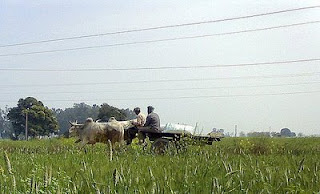
Photo: Punjabi farmers transport fertilizer from a nearby village. Courtesy of Flickr user Aman Tur.
-
Population Reference Bureau Releases 2008 World Population Data Sheet
›August 20, 2008 // By Sonia SchmanskiThe Population Reference Bureau (PRB) officially launched its 2008 World Population Data Sheet yesterday at the National Press Club. The 2008 Data Sheet features key population, health, environmental, and economic indicators for more than 200 countries. New in this year’s edition, co-authored by Carl Haub and Mary Mederios Kent, are data on percent of population in urban areas, number of vehicles per 100,000 people, and percent of population with access to improved drinking water.
Several findings highlight the significant health inequalities between wealthy and poor countries. For example, while around 1 in 6,000 women in developed countries dies from pregnancy-related causes, in the 50 least-developed countries, the risk is an astonishing 1 in 22. Because maternal mortality is generally seen as a proxy for the general state of a country’s health care system, these statistics point to alarming systemic health care failings in many of the world’s least-developed countries.
The 2008 World Population Data Sheet also highlights disparities between developed and developing countries in population growth rate trends; as wealthier countries’ populations stagnate or even begin to decline, the populations of the world’s poorest countries continue to grow at a rapid clip. PRB president Bill Butz noted that “[n]early all of the world population growth is now concentrated in the world’s poorer countries,” and that “[e]ven the small amount of overall growth in the wealthier nations will largely result from immigration.” As Kent pointed out at yesterday’s press conference, the United States is the major exception to this trend, because most of its population growth over the next several decades will come from natural increase.Unfortunately, the countries with the least access to improved water sources—and therefore some of the highest rates of diarrheal disease and child malnutrition—have among the world’s fastest-growing populations. For instance, in Ethiopia, which has a total fertility rate of 5.3 births per woman, only 42 percent of the population has access to an improved water source, and in Afghanistan, which has a total fertility rate of 6.8, the figure is a mere 22 percent.
-
Weekly Reading
›“Over the next twenty years physical pressures – population, resource, energy, climatic, and environmental – could combine with rapid social, cultural, technological, and geopolitical change to create greater uncertainty,” warns the newly released 2008 National Defense Strategy. Demographic trends, resource scarcity, and environmental change all inform the updated strategy, which encourages international cooperation to address these impending challenges.
The “Population Forum” in the September issue of WorldWatch Magazine “reveals that empowering women to make their own family size choices…is the best strategy to tackle population growth” and the environmental and security problems linked to it. A short history of population trends is available online; the website offers free previews of Lori Hunter’s article on PHE and gender, as well as “Population and Security” by Elizabeth Leahy and ECSP’s own Sean Peoples. Bernard Orimbo links population growth and environmental degradation in his native Kenya, and PAI staff discuss urbanization.
Climate change threatens to exaggerate the challenges faced by the billions of people worldwide who depend upon natural resources for their survival. But the competition and, at times, violent conflict that results from increased resource scarcity is not a given; the recently released World Resources Report 2008 finds that “well-designed, community-based enterprises” can ease the environmental burden on natural resources and pave the way for sustainable dependence on the land.
At the 2008 World Expo’s “Water and Conflict Resolution” week, municipal representatives working with Friends of the Earth Middle East (FoEME) presented case studies from its “Good Water Neighbors” programs: cross-border solutions for the Lower Jordan River; the Jordan River Peace Park project; and the town of Auja in the Jordan River Valley. Speaking about these programs the Wilson Center, FOEME’s Gidon Bromberg said that “by working together, not only do we advance the environmental issues…we also advance peace between our peoples.” -
Population, Natural Resource Pressures Could Ignite Human-Wildlife Conflict in Laos
›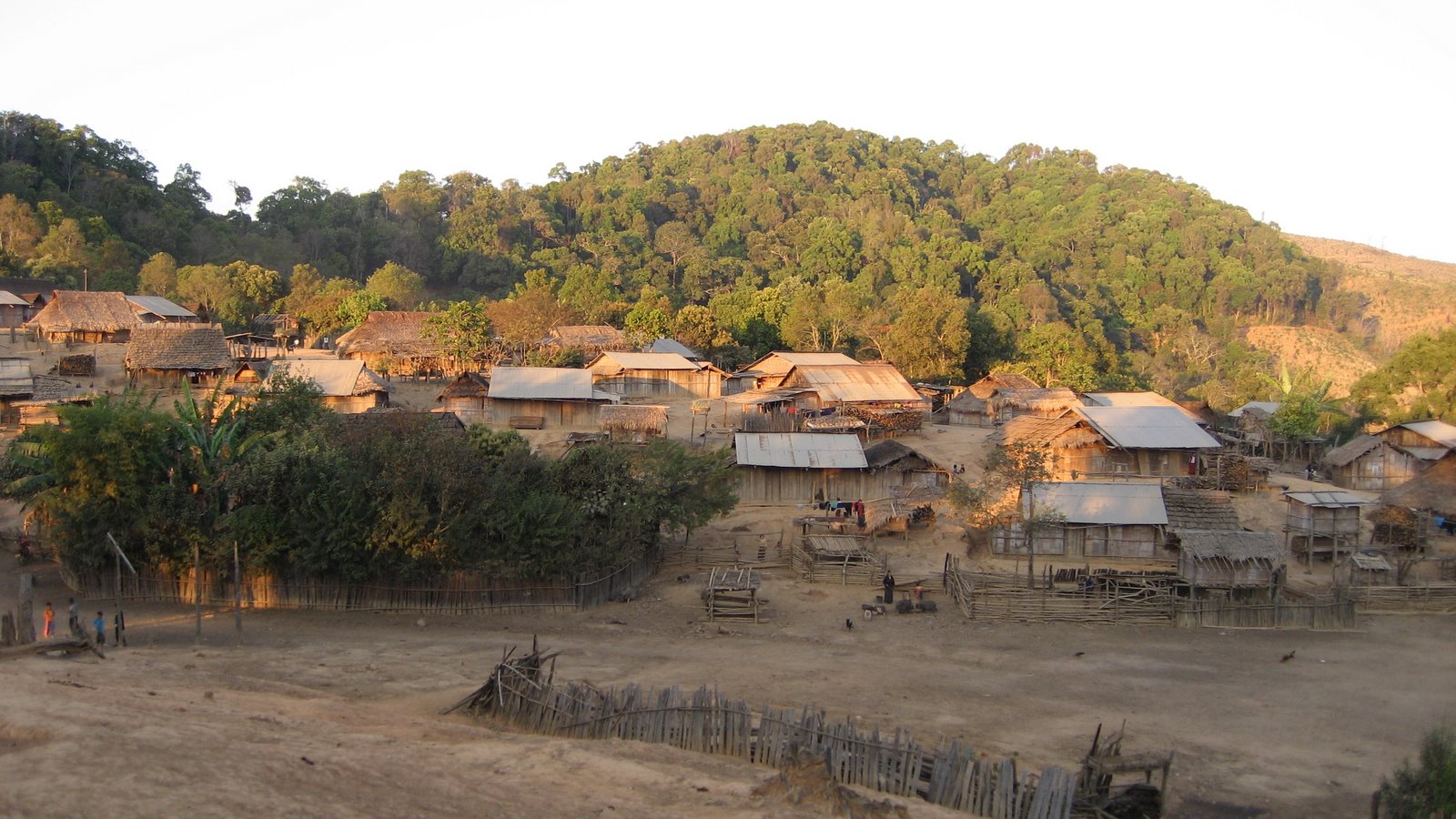 High population growth, limited arable land, and soaring rice prices in Lao People’s Democratic Republic mean that land access is critical for food security. At the same time, there is immense pressure to convert forests and small-scale agricultural land into commercial plantations for rubber, coffee, and other valuable crops. Together, these factors are significant threats not only to people, but to wildlife and biodiversity as well. They are also resulting in the emergence of new tensions between people and wildlife across the Lao landscape.
 -
Averting a Global Freshwater Crisis
›August 7, 2008 // By Karen BencalaWith more than one billion people lacking adequate access to freshwater, the world is already experiencing a vast set of challenges. In the not-so-distant future, as the global population continues to grow and as the impacts of climate change are felt, the problem will intensify. In this month’s issue of Scientific American, Harvard professor Peter Rogers unpacks the multiple factors contributing to this scarcity and proposes six priority actions to alleviate some of this stress.
Rogers’ key message is: “If a crisis arises in the coming decades, it will not be for lack of know-how; it will come from a lack of foresight and from an unwillingness to spend the needed money.” He points out that it is the combination of climate change and continued population growth that will have a devastating affect on local water scarcity. However, water scarcity is not only driven by demand outweighing supply, but also by the pollution of our water supply and by the wasting of water by individuals, industry, and our water-supply systems.
To address these issues, Rogers proposes six priority recommendations:- Set higher prices for water use. In the United States and other developed countries, water is so cheap that “it seems almost free,” so there is little incentive to conserve or reuse. Increasing the price of water supply would drive conservation. For instance, municipalities would be more likely to fix leaks in water-supply systems and to invest in water reuse.
- Improve irrigation efficiency. With approximately 70 percent of available freshwater going to agriculture, increasing the efficiency of irrigation systems—fixing leaks, creating low-loss storage capabilities, and more efficiently applying water to crops—would create a volume of water that could go to other uses.
- Supply “virtual water.” “Virtual water” refers to the amount of water used to produce a product. If arid and semiarid areas imported more food or other water-intensive products, this import of virtual water would allow the limited water that is available to go to other uses, such as drinking water or industry. Implementing this recommendation would require the liberalization of trade in farm products and a reduction in tariffs. Given the highly contested debates about farm subsides in the United States and the EU, this seems a far-off proposition.
- Use dry or low-water devices for sanitation. This would reduce the amount of water used for sanitation and could also reduce the use of fossil fuel-based fertilizers if the solid waste were collected and composted for farming purposes.
- Use desalination to increase supply. Once limited by high costs and high energy demands, desalination technologies are nearing commercial viability.
- Invest in water. Major investment in existing technologies to conserve water, maintain and replace infrastructure, and construct sanitation systems will be needed to stave off a water crisis. According to the article, Booz Allen Hamilton estimates that a $1 trillion annual investment in these sectors will be required to meet the world’s water needs through 2030.
-
Senate Bill Links Population Growth to Conflict, Environmental Degradation
›August 1, 2008 // By Meaghan ParkerThe Senate’s FY 2009 foreign assistance bill cites the stresses “caused by high rates of population growth, which contribute to competition for limited resources, environmental degradation, malnutrition, poverty and conflict” in its recommendation for funding family planning. The $520 million in funding is $15 million above the FY08 level and $219 million above President Bush’s request. This noteworthy new language cements the re-emergence of population issues in Congress, following the record $600 million in reproductive health funding recently approved by the House (also nearly double Bush’s request).
According to an email from Tod Preston of Population Action International, “it is the first time in several years (at least) that population language like this has been included in the foreign assistance bill, and it will almost certainly remain as is.” The impact of rapid population growth on critical issues “referenced in the report (i.e., malnutrition, environmental degradation, poverty and conflict) is getting back on the ‘radar screen’ of policymakers and the media,” which “should help increase support for programs such as voluntary family planning and girls’ education, which we know help reduce population growth rates,” he said.
-
WWF Uses Integrated Programs to Protect Environment
›August 1, 2008 // By Daniel Gleick“The health of our planet is inextricably linked to the health of people,” says Judy Oglethorpe, director of World Wildlife Federation’s Community Conservation program in “The Human Face of Conservation” (WWF Focus, July/August, 2008). While the links between population, health, and environmental degradation are fairly well understood, environmental groups have largely neglected to incorporate family planning or health programs in their conservation efforts.
Several WWF initiatives are breaking this trend, spreading awareness of ecological issues by integrating health or livelihood strategies. In Mozambique, illegal industrial fishing was leading to conflict with local fishermen, who were left with smaller catches of smaller fish. The WWF program helped authorities crack down on illegal fishing and set aside “replenishment zones” for fish to spawn and grow. As a result, local fishermen “have seen dramatic increases in the size of individual fish and in their overall catch outside these zones – and in their earnings,” allowing them to feed their families.
WWF is also diversifying its focus by partnering with other organizations to bring family planning services to poor communities, including in the Khata corridor of Nepal. “It’s really difficult for women living in remote regions to have access to modern family planning and basic healthcare,” said Population, Health, and Environment senior program officer Cara Honzak. By providing basic family planning services, women in these communities are able to control the growth of their families. With this opportunity, it is easier for communities to support and manage themselves, and reduced population pressures on the environment help maintain their local forest ecosystems.
Programs such as these are popular and effective, because by considering both human and natural needs, both sides can be winners. Said the manager of an initiative in Namibia, “When communities can earn as much – or more – by conserving wild land as they can by burning and planting it, potential conflicts can be turned into win-win situations for both people and wildlife.”
-
Online Discussions Examine Environment-Migration Connections
›July 29, 2008 // By Wilson Center StaffShare your thoughts and ask experts questions about “climate refugees” and other hot environmental migration topics at two upcoming online discussions.
On July 30, from 1-2 p.m., Population Reference Bureau’s Jason Bremner will take questions on “Environmental Change: What Are the Links With Migration?” Bremner, who spent several years studying migration and environment links in the Galapagos and Amazon regions in Latin America, will answer your questions about the relationships between migration and the environment, current trends, and future migrations related to environmental change. You may submit questions in advance or during the discussion at http://discuss.prb.org
From August 18-29, a cyberseminar sponsored by PERN and the Environmental Change & Security Program tackles “Environmentally Induced Population Displacements.” In an online seminar, experts and network members will analyze the evidence for environment’s role in migration, including the potential for future population displacements as a result of climate change. PERN Cyberseminars are conducted using a standard email discussion list; instructions are online.
Showing posts from category population.
 India’s Punjab region faces a host of troubles: In the last 10 years, 100,000 of India’s desperate farmers—many of them Punjabi—have been

