

-
PODCAST – Forests for the Future: Family Planning in Nepal’s Terai Arc Landscape
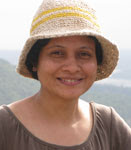
›April 3, 2009 // By Wilson Center Staff“The Terai Arc Landscape has a very high population growth rate; people are very much dependent on the natural resources,” says Sabita Thapa in this podcast from the Environmental Change and Security Program.“We are especially working through the population, health, and environment project to address the issues of forest conversion, forest encroachment, and fuel extraction,” explains Thapa
 .
. In this podcast, Thapa, now an environmental advisor with the United Nations Development Programme in the Solomon Islands, and Dhan Rai, senior project manager with World Wildlife Fund-Nepal, discuss WWF’s PHE program in Nepal’s Terai region.
To learn more about PHE in Nepal, read FOCUS Issue 18, “Forests for the Future: Family Planning in Nepal’s Terai Region.”
And for additional resources, please visit our PHE webpage.
Photo: Sabita Thapa. Courtesy of Meaghan Parker. -
PODCAST – A Discussion on Climate Change and Security: Arctic Links and U.S. Intelligence Community Responses
›February 24, 2009 // By Wilson Center Staff“The climate issue also very clearly illustrates the whole complexity of the security issue,” says Henrik Selin. “Arctic melting is a national security issue in the traditional national security kind of way.” In this podcast from the Environmental Change and Security Program, Selin, assistant professor of international relations at Boston University, and Stacy VanDeveer, associate professor of political science at the University of New Hampshire, sat down with ECSP Director Geoff Dabelko to discuss the resonance of climate change in the U.S. security community.
VanDeveer and Selin were in Washington to speak at a January 12 event, “Governing the Climate: Lessons From the National Conference on Climate Governance.” VanDeveer has frequently coauthored articles with Dabelko, including “It’s Capacity, Stupid: International Assistance and National Implementation” in Global Governance, “European Insecurities: Can’t Live With ’Em, Can’t Shoot ‘Em” in Security Dialogue, and “Environmental Cooperation and Regional Peace: Baltic Politics, Programs, and Prospects” in Environmental Peacemaking. -
PODCAST – Lester Brown on Climate Change and Energy Security
›November 13, 2008 // By Wilson Center Staff“When looking at what we need to do, I think stabilizing climate, stabilizing population are the two big ones. If we fail at either of those…civilization is in serious trouble,” warns Lester Brown, founder of the Earth Policy Institute in Washington, DC, in the latest podcast from the Environmental Change and Security Program (ECSP). Following a recent event, “Thinking Outside the Grid: An Aggressive Approach to Climate and Energy,” co-sponsored by Wilson Center on the Hill and ECSP, Brown elaborated on the themes of his latest book, Plan B 3.0: Mobilizing to Save Civilization, and addressed climate change’s impact on natural resources, food security, and energy independence. He argues that the United States must critically re-examine its energy infrastructure and invest heavily in alternative energy technologies. -
PODCAST – Wouter Veening on Environment-Security Linkages
›October 29, 2008 // By Wilson Center StaffEnvironmentalists from around the world gathered in Barcelona from October 5-14, 2008, to discuss issues impacting a sustainable world at the World Conservation Congress. ECSP Director Geoff Dabelko interviewed Wouter Veening, co-founder and chairman of the Institute for Environmental Security (IES) in The Hague, following his discussion of “Environment and Security Challenges for Change.” In this podcast, Veening discusses the impact of climate change on traditional security threats and the global implications of failing to effectively address this issue. Dabelko analyzes related environment-security links in a chapter in IES’s Inventory on Environmental and Security Policies and Practices, as well as in numerous Grist dispatches from the IES 2004 Hague Conference on Environment, Security, and Sustainable Development. -
PODCAST – Sharing the Forest: Protecting Gorillas and Helping Families in Uganda
›October 9, 2008 // By Wilson Center Staff<href=”https://d3i11i4ld2ygwb.cloudfront.net/uploads/2012/07/Kalema-Zikusoka1.png”>
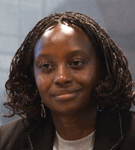
Gladys Kalema-Zikusoka is founder and CEO of Conservation Through Public Health (CTPH), an NGO that seeks to save the endangered mountain gorillas of Uganda’s Bwindi Impenetrable National Park and improve the health and livelihoods of people living on the outskirts of Bwindi. Close proximity of humans and gorillas has resulted in the transfer of a number of diseases, including tuberculosis and scabies. In this podcast, Kalema-Zikusoka describes CTPH’s success providing integrated health services, educating people about family planning methods, reducing human–wildlife conflict, and improving local livelihoods. In “Sharing the Forest: Protecting Gorillas and Helping Families in Uganda,” the latest issue in ECSP’s Focus series, Kalema-Zikusoka and coauthor Lynne Gaffikan write that “members of these communities have the potential to serve as model stewards of the country’s natural resource wealth”–if their health needs are met and livelihoods improved. Kalema-Zikusoka recently spoke at the Wilson Center on human, animal, and ecosystem health and population-health-environment lessons from East Africa.
Sharing the Forest-Protecting Gorillas and Helping Families in Uganda: Download
Photo: Gladys Kalema-Zikusoka. Courtesy of Heidi Fancher and the Woodrow Wilson Center. -
PODCAST – Virunga National Park and Conflict in the DRC
›September 11, 2008 // By Geoffrey D. Dabelko“The resource base is a point of contact for local residents, refugees, rebel groups, park rangers, [and the] military as they struggle to survive,” says Richard Matthew of the University of California, Irvine, in this podcast interview, describing the significance of Virunga National Park to the diverse collection of actors in the eastern Democratic Republic of the Congo. Matthew cites a fundamental tension between the needs of the park—which is home to some of the few remaining mountain gorillas in the world—and the desperate humanitarian needs of the people living in and around it. On a recent assessment trip to the area for the UN Environment Programme (UNEP), Matthew and his colleagues met with many of these groups to help find ways to reduce pressure on the park’s natural resources, while recognizing they are key to the livelihoods of millions of needy people in the region.I also asked Matthew to highlight some of the human security topics he and his colleagues pursue at the Center for Unconventional Security Affairs at UC Irvine. One such topic is microfinance. “Microfinance lending rarely takes into consideration the environmental impact and conflict-inducing impacts,” says Matthew. He and his colleagues are convening practitioners and conducting research on practical ways to “green” and reduce the conflict-generating impacts of this increasingly popular development strategy.
I conducted this interview in a noisy UN cafeteria in New York City. We were both in town to meet with David Jensen and colleagues from UNEP’s Disasters and Conflicts Programme and the UN Peacebuilding Commission. Expect a podcast and article soon from Jensen on the New Security Beat and in the Woodrow Wilson Center’s Environmental Change and Security Program Report, respectively.
Photo: A charcoal checkpoint in Virunga National Park. Courtesy of Richard Matthew. -
PODCAST – Water Stories with Circle of Blue’s Carl Ganter
›May 21, 2008 // By Geoffrey D. DabelkoCarl Ganter is a journalist with a mission. We tend to think journalists are supposed to be impartial observers, but much good reporting is done by journalists who are passionate about their subjects. And Carl is that—passionate about water, in its many forms, locations, and roles. Water and human health. Water and politics. Water and conflict. Water and food. Water and girls’ education. Water and ecosystems. Water and…
I could keep going because water is so central to so many natural and social systems. So central, in fact, that we often miss its critical importance, even when it is right in front of us.
Carl, his wife and fellow journalist Eileen, and an all-star team of journalists have come together under the banner of Circle of Blue to try to reveal the many faces of water: faces of joy when girls are freed from spending hours each day walking to collect water for their families, and faces of grief, as 2-4 million people every year—most of them children—die from complications associated with diarrhea.
We at the Woodrow Wilson Center have been lucky to have Carl as a working group member in our Navigating Peace Water Initiative.
I interviewed Carl about his work with Circle of Blue and their Water News website when he was last in Washington. -
PODCAST – Fishing for Families: Reproductive Health and Integrated Coastal Management in the Philippines
›April 28, 2008 // By Sean PeoplesAt the Third National Population-Health-Environment (PHE) Conference in Tagaytay City, Philippines, ECSP editor Meaghan Parker spoke with Joan Castro of PATH Foundation Philippines, Inc., who manages the Integrated Population and Coastal Resource Management or IPOPCORM project. The Philippines’ rapidly rising population has overwhelmed the fisheries that have traditionally supported the country, but IPOPCORM’s innovative and integrative approach may save families along with the fish and their habitats. In the following podcast, Castro discusses how IPOPCORM’s integrated approach improves reproductive health and coastal resource management more than programs that focus exclusively on reproductive health or the environment—and at a lower total cost. A description of IPOPCORM and its results is available in “Fishing for Families,” the latest issue in our FOCUS series. For more information on population-health-environment connections, please visit our website, www.wilsoncenter.org/phe.
Showing posts from category podcast.
 .
.  Gladys Kalema-Zikusoka is founder and CEO of
  I also asked Matthew to highlight some of the human security topics he and his colleagues pursue at the

