-
Emmy Simmons: To Improve Food Security and Prevent Conflict, Think and Commit Long Term
›
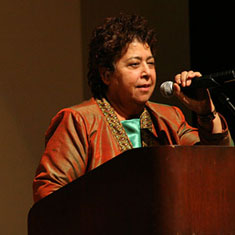
“Food is really fundamental to people’s daily existence, and the price or the access to that food is clearly important to them, and people will turn out in the streets when that price spike is unanticipated,” says Emmy Simmons, author of Harvesting Peace: Food Security, Conflict, and Cooperation, in this week’s podcast.
Simmons gives an overview of the latest edition of ECSP Report, which examines how conflict affects food security, and how food security affects conflict.
-
From Octopus Conservation to Disaster Relief: Vik Mohan on PHE in Madagascar
›
When Tropical Cyclone Haruna struck in February 2013, leaving thousands without shelter and tens of thousands without water, it was a test for Blue Ventures’ integrated approach to development in southwest Madagascar. According to Dr. Vik Mohan, they passed.
“By the time the first aid organization arrived just to collect information, we had distributed to 17 villages already,” Mohan says in this week’s podcast. “We were the mouthpiece of the community, and because of our infrastructure on the ground, because of our good relationships with the community, we were able to procure and disseminate supplies that the community needed.”
-
Complicated Causality: Edward Carr on Food Security and Conflict
›
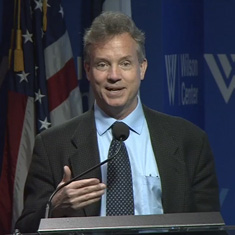
“It seems to me the food security linkage suffers from the same problem that an awful lot of the environment and conflict literature suffers from: There are more negative cases than positive cases,” says Edward Carr in this week’s podcast. “In other words, you have a lot of cases where there is a [food] price spike and no violence or no conflict.”
-
Geoff Dabelko on Avoiding Conflict From Climate Adaptation
›
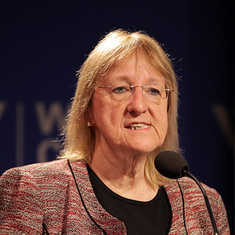
Although major global action remains stymied in many respects, policymakers around the world are increasingly at least recognizing the need to increase resilience to the effects of climate change. But are the consequences from hastily implemented initiatives being adequately considered? Perhaps not.
-
DOD’s Daniel Chiu: Climate, Energy Concerns Emblematic of Future Security Challenges
›
Factoring in the costs of fuel in operations, both in terms of the monetary and battlefield effect, is a relatively new development for the U.S. military. “Our view was, when we were at war, we would bear those costs,” says U.S. Deputy Assistant Secretary of Defense for Strategy Daniel Chiu in this week’s podcast. “However, as we have started to appreciate the nature of the kinds of military challenges we face, we’ve realized this is not a sustainable approach.”
-
Taliban Return Threatens Gains in Girls’ Education, Says Razia Jan
›
“There has never been a school for girls in this area; no one really offered them this option,” says Razia Jan in this week’s podcast. “Whenever I see these girls and I talk to my students, I can’t tell you how honored I am that my girls are getting educations.”
Since 2008, Jan has managed the Zabuli Education Center, an all-girls school located in Afghanistan’s Deh’Subz district. With the support of her organization, Razia’s Ray of Hope Foundation, the school provides free kindergarten-through-ninth-grade education to 400 Afghan girls.
-
Rear Admiral Neil Morisetti on Opportunities for Transatlantic Cooperation on Climate Change, Energy
›
“We’ve got real pressure on key natural resources: food, water, energy, and land,” says Rear Admiral Neil Morisetti, the U.K. Foreign and Commonwealth Office’s special representative on climate change, in this week’s podcast. “But what we haven’t got, if I can use the words of Winston Churchill, we haven’t got ‘action this day.’”
“Morisetti spoke at the Wilson Center on June 6 for the launch of The Climate and Energy Nexus: Challenges and Opportunities for Transatlantic Security, by CNA and the Royal United Services Institute. As climate change threatens stability in some places, energy security has emerged as a key vulnerability to Western militaries’ abilities to respond to conflict and assist in disaster relief operations, says Morisetti.
-
Mark Montgomery: More Data on Urban-to-Urban Migration Needed
›“If I ask you to consider the image in your mind of a migrant girl, probably you – like me – have a vision of a girl embarking from a rural village on a trek to the city,” says Mark Montgomery of the Population Council in this week’s podcast. But, “Is that what the empirical realities show?”
Perhaps not: “It is far more common for urban and migrant girls to come from other cities and towns than it is for them to come from rural villages,” he explains.
Showing posts from category podcast.