• woodrow wilson center
  • ecsp

New Security Beat

Subscribe:
  • rss
  • mail-to
  • Who We Are
  • Topics
    • Population
    • Environment
    • Security
    • Health
    • Development
  • Columns
    • China Environment Forum
    • Choke Point
    • Dot-Mom
    • Friday Podcasts
    • Navigating the Poles
    • Reading Radar
  • Multimedia
    • Water Stories (Podcast Series)
    • Backdraft (Podcast Series)
    • Tracking the Energy Titans (Interactive)
  • Films
    • Water, Conflict, and Peacebuilding (Animated Short)
    • Paving the Way (Ethiopia)
    • Broken Landscape (India)
    • Scaling the Mountain (Nepal)
    • Healthy People, Healthy Environment (Tanzania)
  • Publications
  • Events
  • Contact Us

NewSecurityBeat

The blog of the Wilson Center's Environmental Change and Security Program
Showing posts from category global health.
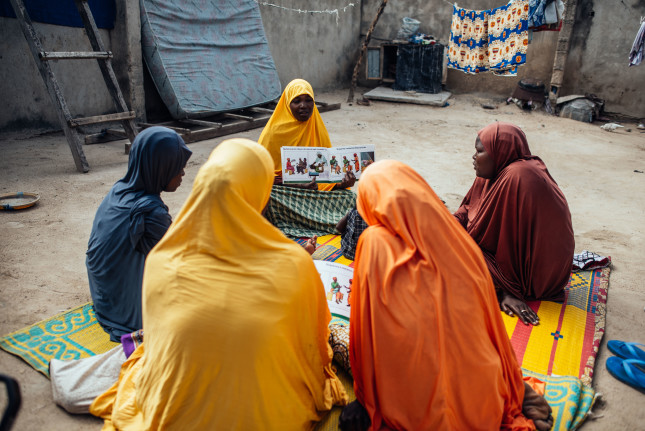
  • Investing in Girls and Women Could Set Stage for Peace, Development in Sahel

    ›
    Africa in Transition  //  Guest Contributor  //  April 21, 2020  //  By Alisha Graves
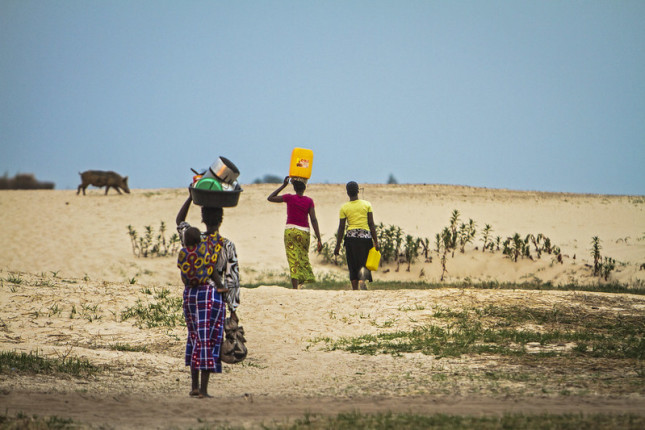
    6909831401_100950f913_c

    The coronavirus pandemic has people throughout the world pondering how humankind should respond to a public health crisis. While individual countries are managing the crisis with varying degrees of success, we can all agree that the Covid-19 pandemic is commanding the international community’s attention. By contrast, it is much harder to get the world to care about the long-term public health crisis unfolding in the West African Sahel.

    MORE
  • We Must Address Exotic Wildlife Consumption to Avoid the Next Global Pandemic

    ›
    Covid-19  //  Guest Contributor  //  April 20, 2020  //  By Candace Famiglietti & Maria Ivanova

    A suspect in the transmission of Covid-19 to humans, pangolins are the most trafficked animal in the world despite the ban on trade by the Convention on International Trade in Endangered Species of Wild Flora and Fauna (CITES). Currently on the Red List of the International Union for Conservation of Nature (IUCN), pangolins are armadillo-looking mammals found in Asia and Africa but are more closely related to cats and dogs. Humans hunt them for their scales used in traditional medicine and the fashion industry and for their meat, which is considered a delicacy. Asian pangolins have become critically endangered, and poachers have turned to trafficking African species, most destined for China and Vietnam. According to TRAFFIC, a leading non-governmental organization working on wildlife trade, twenty tons of pangolins are trafficked each year, putting them on the fast track to extinction. 

    MORE
  • Gender and the “War” on Covid-19

    ›
    Covid-19  //  Dot-Mom  //  Guest Contributor  //  April 17, 2020  //  By Christina Ewig

    U.S. Air National Guard Tech. Sgt. Matt Miller, 140th Wing occupational safety specialist, and Airman 1st Class Ryan Terry, 233rd Space Warning Squadron security forces, assigned to Task Force Shelter Support for the Colorado National Guard’s COVID-19 response, discuss the status of support with the staff and a volunteer nurse Rebekah Maciorowski, at a motel where people without homes are lodged, Denver, Colo., April 10, 2020. Members of the Colorado National Guard volunteer to support state and local officials combat the Corona Virus Pandemic by assisting multiple agencies in the state of Colorado. (U.S. Air National Guard photo by Senior Master Sgt. John Rohrer)

    This article originally appeared on The Gender Policy Report.

    The rhetoric of war is all around us during the Covid-19 pandemic, from the World Health Organization to historical takes. More critical assessments note that this war, like others, will hurt the most vulnerable. In a recent essay, feminist political scientist Cynthia Enloe takes issue with this rhetoric, pointing to the historic ways in which wars have led to “racist, homophobic, and anti-Semitic practices.” Whether or not war rhetoric is helpful at this crucial moment, the current pandemic should be a wake-up call to expand what investments we consider essential to our national security, how we value work, and who gets called a hero.

    MORE
  • The Covid-19 Crisis in Africa

    ›
    Covid-19  //  On the Beat  //  April 16, 2020  //  By Wania Yad
    UNICEF Ethiopia PPE

    “African countries are facing a severe health crisis. As of this morning, there are 14,573 confirmed cases of Covid-19 and 790 deaths in 52 out of 54 countries,” said Judd Devermont, director the Center for Strategic and International Studies’ Africa Program, at an April 13th event on the impacts of Covid-19 in Africa. The World Health Organization has estimated a 5 percent drop in Africa’s GDP and the United Nations Economic Commission for Africa (UNECA) believes that as many as 20 million jobs will be lost. There is also a political dimension to this crisis, as governments struggle to deliver services, provide safety and security, and allow people to continue livelihoods, said Judd.

    MORE
  • How Women with Multiple Sclerosis Can Navigate Pregnancy

    ›
    CODE BLUE  //  Dot-Mom  //  April 15, 2020  //  By Kim Ramsey

    ms mhi code blue

    Multiple sclerosis (MS) is a non-communicable disease that affects maternal health. MS is an unpredictable chronic disease of the central nervous system that disrupts the flow of information within the brain, and between the brain and body. The progress of this disease, its severity, and specific symptoms cannot yet be predicted and varies by individual. Symptoms may disappear or diminish completely, or they may persist and worsen over time. Typical symptoms include fatigue, numbness and tingling, blurred vision, imbalance, pain, and problems with memory and concentration.

    MORE
  • Migrant Workers in India: Insecurity in the Time of Coronavirus

    ›
    Covid-19  //  Guest Contributor  //  April 14, 2020  //  By Chantal Krcmar
    shutterstock_1699000093

    “The only certainty is uncertainty,” Pliny the Elder reportedly said. Though all historical times are full of uncertainties, some seem more so than others. This is one of those times.

    A major slowdown of the Indian economy was brewing and completely spilled over when I got to India in September 2019 to start my dissertation fieldwork on Indian women construction workers’ experiences and conceptualizations of Human Security. Wages stagnated. Consumer spending fell. Construction, real estate, and other industries were sent reeling. Construction workers’ livelihoods were teetering on the brink. Uncertainty became the backbone of their existence.

    MORE
  • Real-time Data Could Save More People from Covid-19

    ›
    Covid-19  //  Guest Contributor  //  April 9, 2020  //  By Rose Nzyoka & Vikas Dwivedi
    49746351556_67aaccab0a_o

    It’s clear that the virus that causes Covid-19 travels freely. It needs no visa, having breached many points of entry. Experts at Imperial College London estimate that “in the absence of interventions, Covid-19 would have resulted in 7 billion infections and 40 million deaths globally this year.” Now is the time for governments to get ahead of the curve and respond to the emergency. It’s time to take a whole-of-government approach to strengthen testing at points of entry and institute mass testing at various points as South Korea did.

    MORE
  • To Reduce U.S. Maternal Mortality, Take Aim at Non-Communicable Diseases

    ›
    CODE BLUE  //  Dot-Mom  //  April 8, 2020  //  By Wanda Nicholson

    shutterstock_604198985

    Every day there are more than 800 maternal deaths worldwide. Who are these women? They are reproductive women across the globe. They are our sisters, aunts, friends, and co-workers. They are leaders in our community, family members, and caregivers. When assessing the state of maternal morbidity and mortality in the United States, one must consider not only what we know, but also what must change.

    MORE
Newer Posts   Older Posts
View full site

Join the Conversation

  • RSS
  • subscribe
  • facebook
  • G+
  • twitter
  • iTunes
  • podomatic
  • youtube
Tweets by NewSecurityBeat

Trending Stories

  • unfccclogo1
  • Pop at COP: Population and Family Planning at the UN Climate Negotiations

Featured Media

Backdraft Podcast

play Backdraft
Podcasts

More »

What You're Saying

  • Volunteers,At,The,Lagos,Food,Bank,Initiative,Outreach,To,Ikotun, Pan-African Response to COVID-19: New Forms of Environmental Peacebuilding Emerge
    Rashida Salifu: Great piece 👍🏾 Africa as a continent has suffered this unfortunate pandemic.But it has also...
  • A desert road near Kuqa An Unholy Trinity: Xinjiang’s Unhealthy Relationship With Coal, Water, and the Quest for Development
    Ismail: It is more historically accurate to refer to Xinjiang as East Turkistan.
  • shutterstock_1779654803 Leverage COVID-19 Data Collection Networks for Environmental Peacebuilding
    Carsten Pran: Thanks for reading! It will be interesting to see how society adapts to droves of new information in...

What We’re Reading

  • Rising rates of food instability in Latin America threaten women and Venezuelan migrants
  • Treetop sensors help Indonesia eavesdrop on forests to cut logging
  • 'Seat at the table': Women's land rights seen as key to climate fight
  • A Surprise in Africa: Air Pollution Falls as Economies Rise
  • Himalayan glacier disaster highlights climate change risks
More »
  • woodrow
  • ecsp
  • RSS Feed
  • YouTube
  • Twitter
  • Facebook
  • Home
  • Who We Are
  • Publications
  • Events
  • Wilson Center
  • Contact Us
  • Print Friendly Page

© Copyright 2007-2021. Environmental Change and Security Program.

Woodrow Wilson International Center for Scholars. All rights reserved.

Developed by Vico Rock Media

Environmental Change and Security Program

Woodrow Wilson International Center for Scholars

Ronald Reagan Building and International Trade Center

  • One Woodrow Wilson Plaza
  • 1300 Pennsylvania Ave., NW
  • Washington, DC 20004-3027

T 202-691-4000