-
ECSP Weekly Watch | May 6 – 10
›
A window into what we are reading at the Wilson Center’s Environmental Change and Security Program
2024 World Migration Report Highlights Climate-Food-Mobility Nexus (International Organization for Migration)
The International Organization for Migration’s flagship World Migration Report 2024 highlights a wide variety of factors contributing to global migration, including conflict, economic or political insecurity, and climate change. Between 2020 and 2022 the number of asylum seekers increased more than 30% to 5.4 million people. The report centers climate change’s impact on food security as a core driver of migration. In 2022, 275 million people faced acute food insecurity, which represents a 146% increase since 2016.
-
Q&A: Midwives as a Vital Climate Solution
›Dot-Mom // Guest Contributor // Q&A // May 3, 2024 // By Esther Bander, Rosemary Ngougu, Eugenia Mensah, Angeline Houman & Pandora Hardtman
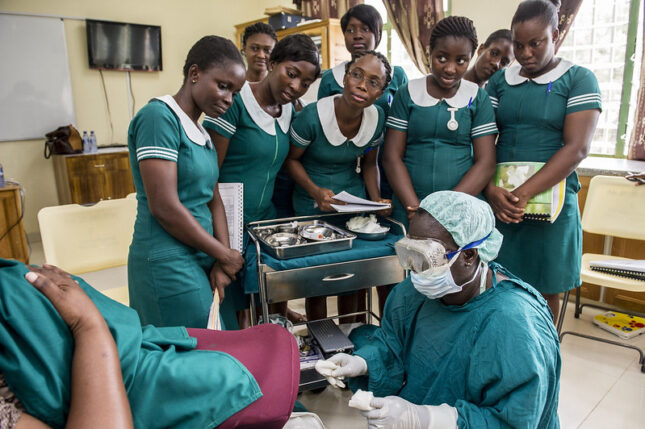
May 5th is the International Day of the Midwife. This year’s theme, “Midwives: A Vital Climate Solution,” acknowledges the role that midwives play by delivering environmentally sustainable health services, adapting health systems to climate change, and as first responders when climate-related disasters occur. Empowering a resilient health workforce with midwives as first contacts for maternal health care can improve universal health coverage through reductions in environmental impact, as well as more efficient, less costly health systems, and stronger local economies.
-
ECSP Weekly Watch: April 22 – 26
›A window into what we are reading at the Wilson Center’s Environmental Change and Security ProgramInter-American Court of Human Rights Hears from Climate Victims (The Guardian)
Globally, courts are increasingly linking climate change and human rights violations. Earlier this month, for example, the European Court of Human Rights ruled that weak Swiss government policies violated human rights. Another hearing on the opposite side of the world this week will examine states’ legal responsibilities to tackle climate change. In an inquiry instigated by Colombia and Chile, the Inter-American Court of Human Rights will define states’ legal responsibilities to tackle climate change. It will be the third international court tasked with providing an advisory opinion on climate change, but the only one focusing on human rights.
-
An Essential Handbook for Reproductive Global Health
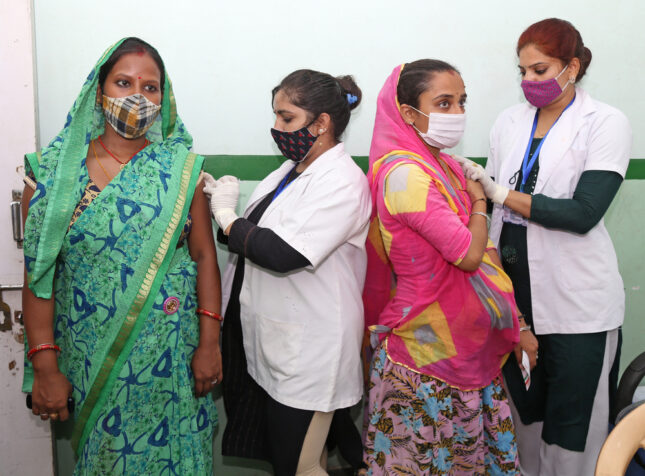
›Dot-Mom // Guest Contributor // April 24, 2024 // By Cecilia Van Hollen & Nayantara Sheoran AppletonAs the world becomes increasingly interconnected through travel, communication, and information, interdisciplinary approaches to address global and reproductive health issues are crucial. And as the politics of reproductive healthcare are shifting in uneven ways across the globe, the need for deep understanding of local contexts within a globalized world is ever more vital. Our recently published, co-edited Wiley Blackwell handbook, A Companion to the Anthropology of Reproductive Medicine and Technology provides a sweeping overview of studies of reproduction from an anthropologically informed lens with a commitment to interdisciplinary approaches at the intersection of medical anthropology, feminist Science and Technology Studies (STS), global and public health, and critical analyses of both gender and sexuality and of race and ethnicity.
-
ECSP Weekly Watch: April 15 – 19
›UNFPA’s State of World Population 2024 Report Highlights SRHR Inequalities (UNFPA)
Over the last 30 years, the world has made immense progress in improving sexual and reproductive health and rights (SRHR) for women and girls around the world. Since 1994, when governments agreed that SRHR was a cornerstone of international development at the Cairo International Conference on Population, rates of unintended pregnancies have fallen 20%, 162 countries have adopted anti-domestic violence laws, and maternal deaths have decreased by 34%.
-
Humanity Beyond Borders
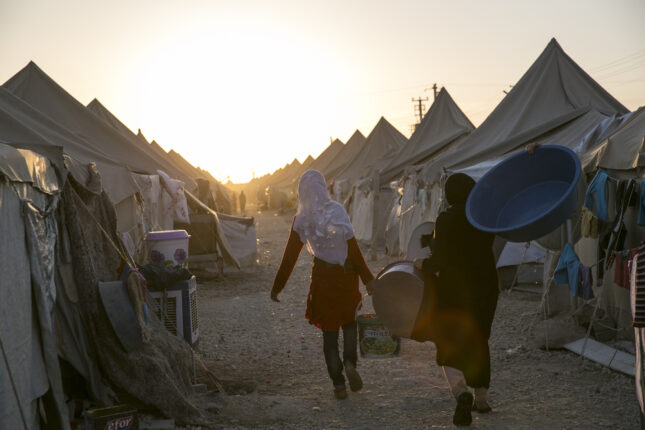
›“The health care challenges faced by refugees and displaced people are complex and multi-dimensional,” said John Thon Majok, Director of the Wilson Center’s Refugee and Forced Displacement Initiative (RAFDI). “This requires not only understanding the drivers of displacement but also analysis of the barriers to healthcare as well as innovative ways to address them.”
-
ECSP Weekly Watch | April 8 – 12
›A window into what we are reading at the Wilson Center’s Environmental Change and Security Program
Cholera in Southern Africa Linked to Climate Threats (The New Humanitarian)
In Southern Africa, climate change is encouraging rural-to-urban migration that is also creating a public health crisis. Cholera outbreaks have infected 188,000 Southern Africans since 2022, with 4,100 deaths. Zambia currently faces the harshest impacts, with 705 reported deaths and 21,000 infections since October. Its president, Hakainde Hichilema, even called for citizens to move out of cities to prevent the spread of cholera in January—largely due to increasing concern of the diseases’ spread in informal settlements.
-
International Day for Maternal Health and Rights: Promoting the Right to Health for Pregnant People Globally
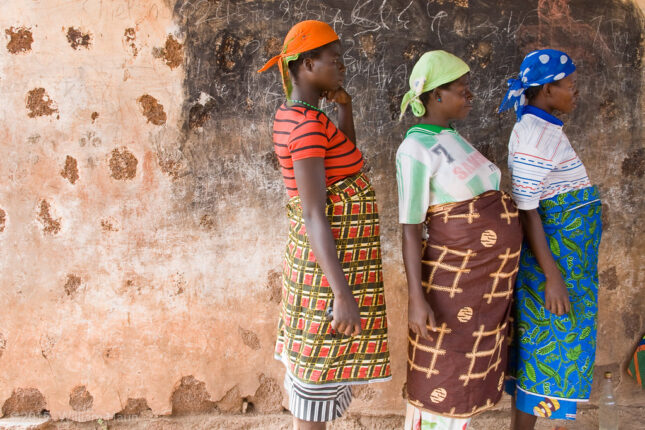
›April 11 is the International Day for Maternal Health and Rights. Globally, 800 women die each day from preventable causes due to pregnancy and childbirth. Improving maternal health outcomes and preventing maternal deaths requires a human rights-based approach that protects a person’s right to survive childbirth, to access high-quality health care, to government accountability, to equity and non-discrimination when accessing care, and to family planning and contraception. Enshrining these rights for all pregnant people is key to meaningful progress towards the prevention of maternal deaths globally.
Showing posts from category global health.