-
Accessing Justice for Gender-Based Violence in Humanitarian Settings
›
Gender-based violence (GBV) is a global epidemic rooted in gender inequality and an imbalance in power dynamics. All persons are at risk of violence because of their gender or perceived gender. Women and girls—including transgender women and girls—experience disproportionate gender-based violence, and this violence is even more prevalent among women and girls who have been forcibly displaced.
-
Blue Jeans Contaminating Blue Oceans: The Expanding Microfiber Footprint of Our Clothes
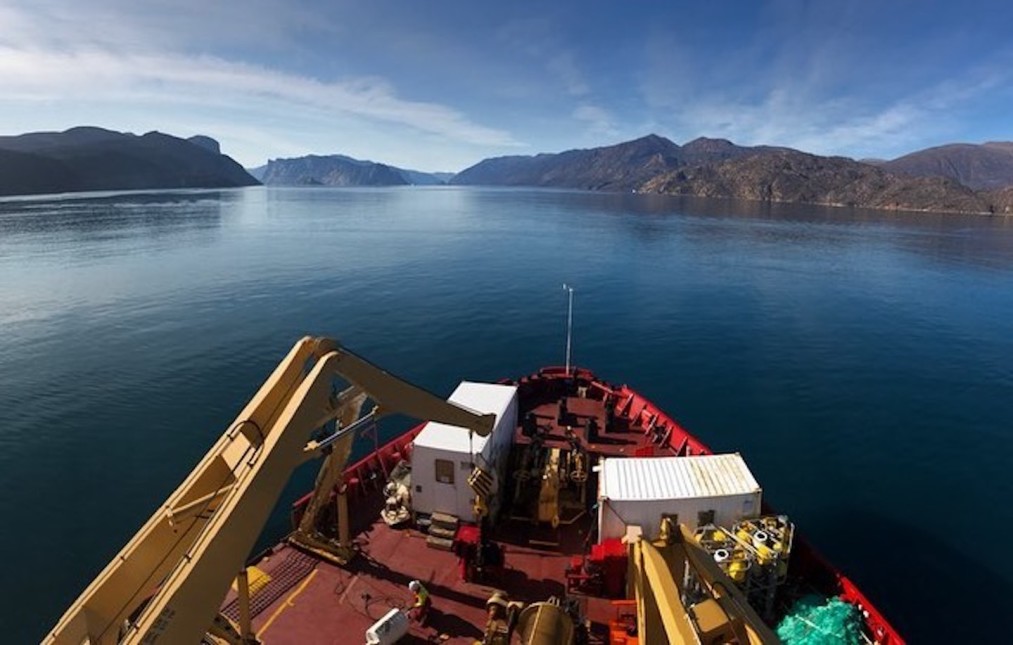
›The Arctic is believed to be a pristine environment, far removed from littered city streets and toxic industrial emissions. I study human pollution and I found it hard to believe that my fellow researchers and I would find so much litter out here. It was even harder to believe that what we uncovered closely resembled the contents of my own closet, over 3,000 kilometers (2,000 miles) away in Toronto. -
COVID-19 Pandemic Exacerbates Violence Against Refugee Women and Girls
›Currently, refugee women and girls are facing three concurrent crises: their ongoing humanitarian crisis, the health crisis of the COVID-19 pandemic, and the invisible crisis of gender-based violence (GBV). COVID-19 has severely worsened various dimensions of inequality for refugee women and girls. A 2020 report found that 73 percent of forcibly displaced women interviewed across 15 African countries reported elevated cases of domestic or intimate partner violence due to the pandemic. In addition, 51 percent reported sexual violence and 32 percent observed a rise in early and forced marriages.
-
Security Implications of Asia Pacific States’ Restrictions on Internal Migration
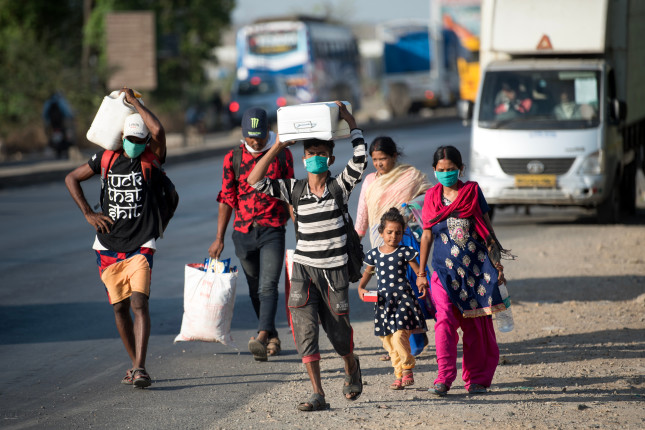
›As the COVID-19 pandemic reached all corners of the world, countries rapidly introduced a series of containment policies to stop its spread, including school and workplace closures, restrictions on gathering size, and limits to population movement. In contrast to complete or partial border closures for foreign nationals, restrictions on population movements within one’s country have received much less attention, despite the fact that most countries introduced restrictions on internal migration during the pandemic in the form of bans on inter- or intra-provincial travel, or partial or complete lockdowns. With over 300 million internal migrants in India and 261 million in China (out of an estimated 760 million internal migrants worldwide), these barriers to mobility are particularly acute in Asia. But are they effective?
-
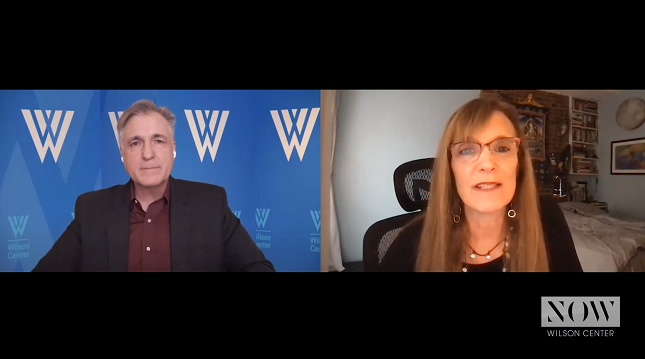
Avoiding the Next Pandemic: A NOW Interview with Sharon Guynup
›For microbes, there are no boundaries. “They jump the Darwinian divide,” says Sharon Guynup, Environmental Journalist and Wilson Center Global Fellow, in a new episode of Wilson NOW. “Because of human alteration to the planet, we [are] increasing the emergence of new zoonotic diseases,” says Guynup.
-
Imagine a Future Without Single-Use Plastics
›If producing plastic waste were a race, Japan would be rushing for the gold medal. Japan and the United States both rank the highest per capita for plastic packaging waste in the world. Former Prime Minister Shinzo Abe’s administration set a goal to reduce Japan’s plastic waste production by 25 percent by 2030 and recent polls show the majority of the Japanese public wants strong actions to reduce plastic waste. Nevertheless, Japan is not doing enough to stem the tide of plastic entering the ocean. If Japan and the rest of the world fail to act more boldly, global oceanic plastic waste could triple by 2040. Current commitments of governments and corporations would only reduce global plastic leakage seven percent below the business-as-usual scenario. Japan’s current waste management system prioritizes recycling and incineration, encouraging a make-take-waste linear model of plastic consumption. Japan needs a circular economy built on a culture of reduction and reuse instead of single-use plastics.
-
The Care Economy is the Backbone of the Economy
›“Pandemic recovery plans cannot simply work to bring economies back to their pre-COVID status,” said Katrina Fotovat, Senior Official in the Office of Global Women’s Issues at the U.S. Department of State. She spoke at a recent event hosted by the Wilson Center’s Maternal Health Initiative and Middle East Project in collaboration with EMD Serono, the healthcare business of Merck KGaA, Darmstadt, Germany, on recognizing women’s paid and unpaid work during COVID-19 recovery. Economic recovery plans must include the most undervalued industries and marginalized workers, especially women, she said.
-
Women’s Work is Essential and Undervalued During the COVID-19 Pandemic
›“Nearly 70 percent of the lowest wage workers in the United States are women,” said Nicole Berner, General Counsel to the Service Employees International Union (SEIU) at a recent event on the COVID-19 pandemic’s impact on women and essential workers, hosted by the Global Institute for Women’s Leadership.
Showing posts from category global health.