• woodrow wilson center
  • ecsp

New Security Beat

Subscribe:
  • rss
  • mail-to
  • Who We Are
  • Topics
    • Population
    • Environment
    • Security
    • Health
    • Development
  • Columns
    • China Environment Forum
    • Choke Point
    • Dot-Mom
    • Friday Podcasts
    • Navigating the Poles
    • Reading Radar
  • Multimedia
    • Water Stories (Podcast Series)
    • Backdraft (Podcast Series)
    • Tracking the Energy Titans (Interactive)
  • Films
    • Water, Conflict, and Peacebuilding (Animated Short)
    • Paving the Way (Ethiopia)
    • Broken Landscape (India)
    • Scaling the Mountain (Nepal)
    • Healthy People, Healthy Environment (Tanzania)
  • Publications
  • Events
  • Contact Us

NewSecurityBeat

The blog of the Wilson Center's Environmental Change and Security Program
Showing posts from category featured.
  • Military Leaders: Climate Change, Energy, National Security Are Inextricably Linked

    ›
    From the Wilson Center  //  November 9, 2015  //  By Schuyler Null
    oil fires

    In the midst of a minefield on day two of Desert Storm Task Force Ripper, Marine Corps Operations Officer Richard Zilmer stepped out of his armored personnel carrier, squinted up at the sky, and saw nothing but black from horizon to horizon. Iraqi forces, trying desperately to blunt the attack of coalition armies, had set fire to hundreds of Kuwaiti oil wells and oil-filled trenches.

    MORE
  • The Renewable Energy Era Has Already Started

    ›
    Guest Contributor  //  November 5, 2015  //  By Mohamed T. El-Ashry
    distributed solar_India

    The world has entered a new energy era. Last year, for the first time in four decades, the global economy grew without an increase in CO2 emissions, according to the Renewable Energy Policy Network for the 21st Century.

    MORE
  • What’s the Impact of China’s Cap-and-Trade Program?

    ›
    China Environment Forum  //  November 4, 2015  //  By Zhou Yang

    China’s announcement of a nationwide cap-and-trade program is a sign that the government is serious in its “war against pollution,” says China Environment Forum Director Jennifer Turner, and it may help move the climate change discussion in the United States too.

    MORE
  • Finding the Path: Increasing Contraceptive Choice in Africa’s Most Populous Countries

    ›
    From the Wilson Center  //  November 2, 2015  //  By Deepshri Mathur
    community health worker

    More than 225 million women in developing countries want to avoid or delay pregnancy but are not using safe, modern, and effective contraceptive methods. Such a gap between women’s contraceptive behavior and reproductive goals is called an unmet need for family planning, and no region has more unmet need than sub-Saharan Africa. [Video Below]

    MORE
  • Managing Expectations for the Paris Climate Conference and Beyond

    ›
    From the Wilson Center  //  October 30, 2015  //  By Rachel E. Golden Kroner
    bonn climate conference

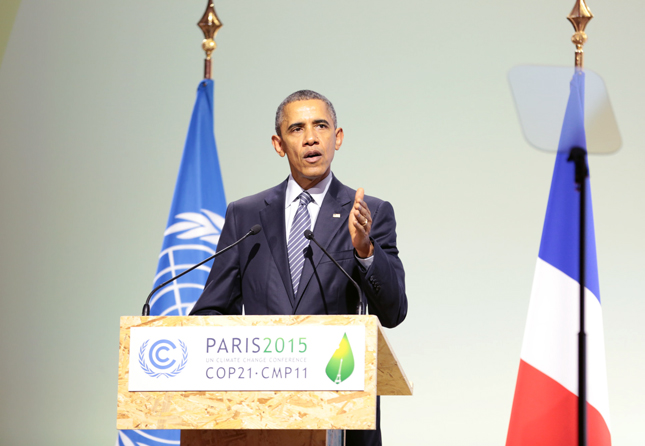
    The focus of the global community on the outcomes of the Paris Conference of Parties (COP) to the UN Framework Convention on Climate Change (UNFCCC) in December is unprecedented. The world awaits, anticipating the details of an international and legally-binding agreement to address climate change. [Video Below]

    MORE
  • A Little Bit of Sugar Helps the Pill Go Down: Resilience, Peace, and Family Planning

    ›
    October 26, 2015  //  By Roger-Mark De Souza
    Jharana Kumari Tharu - female community health volunteer in Bina

    Adapted from a commentary on “The Pill Is Mightier Than the Sword,” which appeared in the International Journal of Health Policy and Management.

    A recent article by Malcolm Potts, Aafreen Mahmood, and Alisha Graves of the University of California Berkeley’s OASIS Initiative notes that family planning has an important role to play in building peace by increasing women’s empowerment and their agency. “The pill is mightier than the sword,” as they put it.

    MORE
  • In India, Lower Castes and Tribals Being Left Behind in Maternal Health

    ›
    Dot-Mom  //  October 22, 2015  //  By Sandeep Bathala
    Indian-tribal-women

    Maternal mortality causes 56,000 deaths every year in India, accounting for 20 percent of maternal deaths around the world. Women who are born into the lower castes or are tribals – India’s indigenous groups – are especially likely to lack access to quality health care. Over 40 percent of these women also belong to the lowest wealth quintile.

    MORE
  • Growing Role of Armed Forces in Disaster Relief a Dangerous Trend for Latin America

    ›
    Guest Contributor  //  October 22, 2015  //  By Pablo Scuticchio
    Chile tsunami

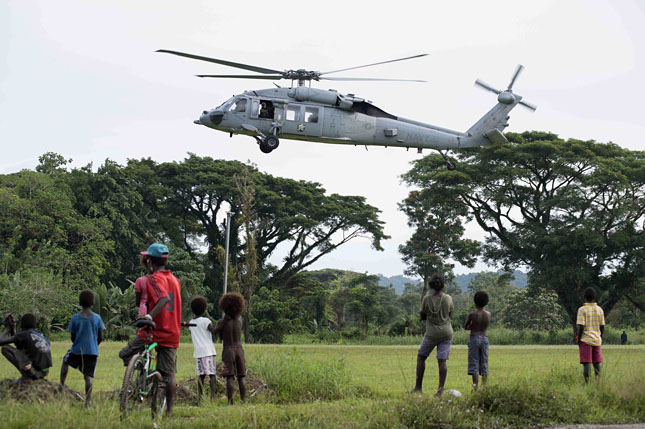
    From earthquakes to floods, when natural disasters strike, the military is often called on to bolster civilian responses. Policymakers throughout Latin America in particular are increasingly relying on the armed forces for emergency assistance.

    MORE
Newer Posts   Older Posts
View full site

Join the Conversation

  • RSS
  • subscribe
  • facebook
  • G+
  • twitter
  • iTunes
  • podomatic
  • youtube
Tweets by NewSecurityBeat

Trending Stories

  • unfccclogo1
  • Pop at COP: Population and Family Planning at the UN Climate Negotiations

Featured Media

Backdraft Podcast

play Backdraft
Podcasts

More »

What You're Saying

  • Volunteers,At,The,Lagos,Food,Bank,Initiative,Outreach,To,Ikotun, Pan-African Response to COVID-19: New Forms of Environmental Peacebuilding Emerge
    Rashida Salifu: Great piece 👍🏾 Africa as a continent has suffered this unfortunate pandemic.But it has also...
  • A desert road near Kuqa An Unholy Trinity: Xinjiang’s Unhealthy Relationship With Coal, Water, and the Quest for Development
    Ismail: It is more historically accurate to refer to Xinjiang as East Turkistan.
  • shutterstock_1779654803 Leverage COVID-19 Data Collection Networks for Environmental Peacebuilding
    Carsten Pran: Thanks for reading! It will be interesting to see how society adapts to droves of new information in...

What We’re Reading

  • Rising rates of food instability in Latin America threaten women and Venezuelan migrants
  • Treetop sensors help Indonesia eavesdrop on forests to cut logging
  • 'Seat at the table': Women's land rights seen as key to climate fight
  • A Surprise in Africa: Air Pollution Falls as Economies Rise
  • Himalayan glacier disaster highlights climate change risks
More »
  • woodrow
  • ecsp
  • RSS Feed
  • YouTube
  • Twitter
  • Facebook
  • Home
  • Who We Are
  • Publications
  • Events
  • Wilson Center
  • Contact Us
  • Print Friendly Page

© Copyright 2007-2021. Environmental Change and Security Program.

Woodrow Wilson International Center for Scholars. All rights reserved.

Developed by Vico Rock Media

Environmental Change and Security Program

Woodrow Wilson International Center for Scholars

Ronald Reagan Building and International Trade Center

  • One Woodrow Wilson Plaza
  • 1300 Pennsylvania Ave., NW
  • Washington, DC 20004-3027

T 202-691-4000