-
Managing Sludge Mountains: What Beijing Can Learn From Brazil
›
Just days before the 2016 Summer Olympics began in Rio de Janeiro, the Brazilian city faced an unsavory problem: how to handle its overwhelming sewage. Nearly half of Rio’s municipal wastewater flowed untreated into Guanabara Bay, where the waters were so polluted by sludge that direct contact was deemed a health hazard to Olympic athletes.
-
Women on the Front Lines of Change: Empowerment in the Face of Climate and Displacement
›
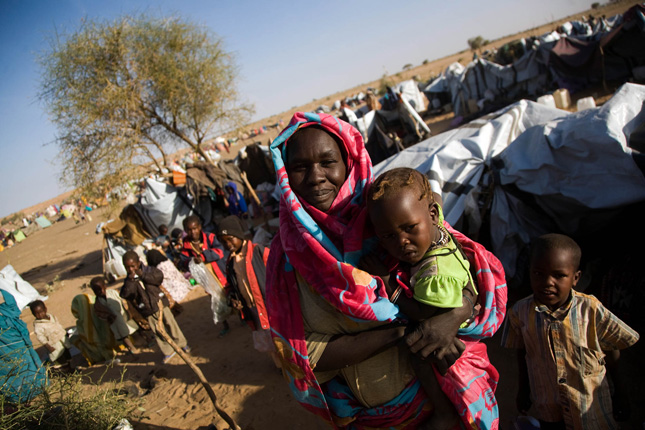
With a swiftly changing climate comes rapidly rising sea levels, more frequent storms, and rising inequality. Slow yet consistent events like sea-level rise, as well as extreme events like hurricanes and other climate disasters, can force women and families from their homes. As the climate continues to change, adaptation will become more difficult, spurring some to leave home in search of safer ground. In the face of climate-induced instability, women are not just on the frontline of impacts, but also at the forefront of solutions.
-
Environmental Cooperation Can Facilitate Peace Between States
›Environmental stress and climate change can accelerate instability and conflict—but shared environmental problems can also be a source of cooperation and facilitate peacemaking between states. Transnational environmental problems are common threats and often cross national boundaries, requiring international cooperation to address. In turn, this cooperation can provide a good entry point for building trust and cooperation.
-
The Role of Water Stress in Instability and Conflict
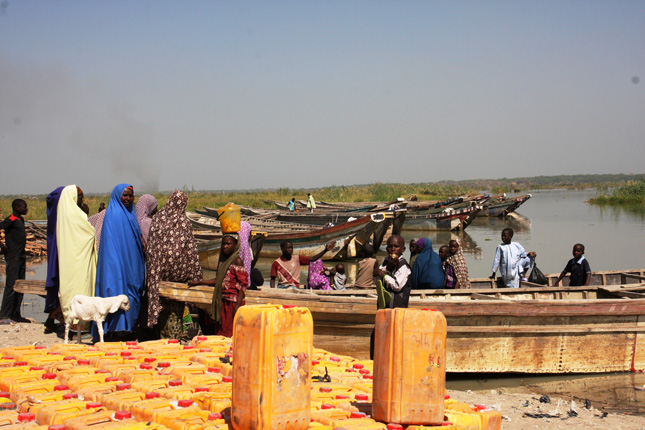
›“The demand for water will not be linear,” said Vice Admiral Lee Gunn (USN-Ret,), currently vice chairman of the CNA Military Advisory Board, at a recent Wilson Center event on water and security. As people’s quality of life improves, “the demand for water will increase as well. And so the stresses that we already see around the world—the arguments over basin rights for water, the depletion of water in major cities around the world—we think will aggravate problems that already are beginning to manifest themselves,” he said.
-
Panacea for the Pacific? Evaluating Community-Based Climate Change Adaptation
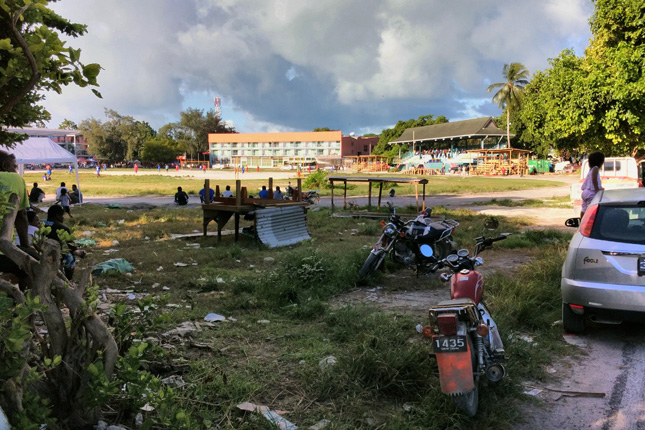
›Guest Contributor // February 22, 2018 // By Rachel Clissold, Tahlia Clark, Benjamin Priebbenow & Karen McNamaraThe Australian government’s recent Foreign Policy White Paper has been criticized for its underwhelming climate change section. Penny Wong, the current opposition leader in the Australian Senate, said that its acknowledgement of the need to support a more resilient Pacific region “rings hollow in light of the Abbott/Turnbull Government’s massive aid cuts.” But despite these criticisms, the Australian government continues to support a range of climate change initiatives in the Pacific. Increasingly, Australian Aid and its fellow donors, including USAID, JICA and GIZ, take a community-based approach to climate adaptation. Germany’s GIZ, for example, carries out community-level adaptation activities for all beneficiaries in the Pacific; and USAID has highlighted its community-level projects as important models. Our recent evaluation of some of these community-level adaptation programs in Vanuatu and Kiribati found that they provide some development benefits, including increased awareness, empowerment, cooperation, and self-esteem, but that it is too soon to tell whether this approach can reduce long-term vulnerability to climate change.
-
Maps of Mayhem: Predicting the Location of Civil War Violence
›Over the past decade, we have seen a resurgence of civil conflicts in Africa, the Middle East, and southeast Asia, as weak states are increasingly threatened by non-state actors, such as organized crime groups, terrorist organizations, and insurgents. These wars endanger millions of people—including some of the world’s most at-risk populations—by exposing them not only to violence, but also displacement, environmental degradation, and economic destruction. To effectively protect them, leaders and policymakers need to be able to predict exactly where, when, and how insurgent violence will break out and spread.
-
On Streetlights and Stereotypes: Selection Bias in the Climate-Conflict Literature
›Scholarly attention to the links between climate change and conflict has increased. But which places are analyzed most frequently by researchers, and what are the implications of their choices?
-
Safe Passage: China Takes Steps to Protect Shorebirds Migrating From Australia to the Arctic
›Every year, millions of shorebirds migrate to the Arctic to breed—some coming from as far away as Australia and New Zealand—and then head back again. Nearly all of the birds making this journey spend time in the food-rich intertidal mudflats of the Yellow Sea ecoregion, on the east coast of China and the west coasts of the Korean peninsula. But as China’s economy has grown, around 70 percent of the intertidal mudflats in the Yellow Sea area have disappeared—the land drained and “reclaimed” for development. All of the more than 30 species of shorebirds that rely on the mudflats are declining, and those that stop there twice a year are declining at a faster rate than those that stop only once. If the current trajectory continues, the Yellow Sea—once known as the cradle of China—will become the epicenter of extinction.
Showing posts from category featured.