-
Panelists Call for Creation of World Commission to Handle Solar Radiation Management
›
“Right now, it’s the Wild West in regard to governance with geoengineering,” said Paul Wapner, a professor at the School of International Service at American University at a recent panel about solar radiation management (SRM) at the Arizona State University’s Washington Center. According to the Governing Solar Radiation Management report which was the focus of the event, SRM, which theoretically would cool the planet by reflecting sunlight back into space, may be a viable last-resort option if climate change mitigation and adaptation efforts fail. Wapner said that “there’s a danger in SRM, there’s a danger in climate change. And, balancing those risks is part of the exercise and will continue to be part of the exercise.”
-
Power Play: Can Micro-Hydropower Electrify Remote Afghanistan and Promote Peace?
›
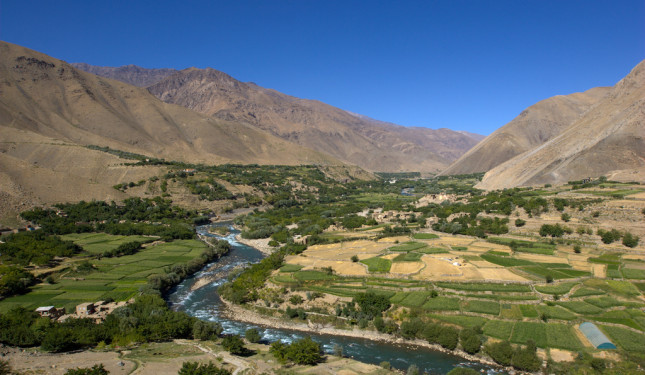
After close to 40 years of armed conflict, Afghanistan may be poised to begin a period of economic recovery. Electrifying remote areas and establishing pervasive political control is critical to its success. India is currently planning and funding several major hydropower projects along the Kabul River and its tributaries. Micro-hydropower is bringing electricity to remote areas such as the Banda Miralamji Village in eastern Nangarhar Province. However, in some areas far from the capital, the central government in Kabul and opposition groups are struggling for control and influence. While electrification of a village often eases poverty, health concerns, and improves communication, it does not always benefit the government in Kabul.
-
Does Demographic Change Set the Pace of Development?
›The research presented in this article was subsequently published in a peer-reviewed article: https://doi.org/10.1093/acrefore/9780190228637.013.327
This year, 2018, marks the 60th anniversary of a landmark publication by a pair of academic social scientists who first recognized the close relationship between population age structure (the distribution of a country’s population, by age) and development. In Population Growth and Development in Low Income Countries (Princeton U. Press, 1958), demographer Ansley Coale (1917-2002) and economist Edgar M. Hoover (1907-1992) theorized that eventual declines in fertility would transform developing-country age structures. Coale and Hoover demonstrated that these newly transformed age structures would exhibit larger shares of citizens in the working ages, and smaller shares of dependent children and seniors (Fig. 1). This transition, they argued, would someday help lift countries with youthful populations in Asia, Latin America, and Africa out of the low-income bracket.
-
Aaron Wolf on Transboundary Water Conflict and Cooperation
›Friday Podcasts // Water Stories (Podcast Series) // November 30, 2018 // By Evan Barnard & Sharif Wahab“Countries—even countries that don’t like each other much—have, and continue to have, conversations over water resources, even when they won’t about other issues,” says Aaron Wolf, Director of Water Conflict Management and Transformation at Oregon State University, in this week’s Water Stories podcast. -
How a Healthcare Company is Helping Tackle Unpaid Carers’ Health Problems
›As populations age, countries around the globe are beginning to focus attention on unpaid caregivers. Such people typically spend hours each day bathing, feeding, and helping an elderly or disabled relative. Often, they undermine their own health and career to take care of a loved one.
-
International Water Cooperation Opens the Door to Peacemaking
›Although water is an essential input for agriculture and industrial production, it is also scarce in many regions. When it crosses international borders via shared rivers, lakes and aquifers, it can become a source of conflict and contention. Yet while water can be a source of instability, especially in the face of climate change, it can also be a source or catalyst for cooperation and even peace.
-
Fishing without Permission: The Uncertainties and Future of Illegal Commercial Fishing
›In September, Ambassador David Balton, a Senior Fellow at the Wilson Center’s Polar Initiative, testified before the Subcommittee on Oceans, Atmosphere, Fisheries, and Coast Guard, testifying against illegal, unreported, and unregulated fishing (IUU fishing). “We don’t even know just how much illegal fishing is going on,” said Ambassador David Balton, a Senior Fellow at the Wilson Center’s Polar Institute, in a recent Wilson Center NOW interview. IUU fishing is a major threat to the global fisheries industry as well as the oceans. “Even when nations get together and establish rules for fisheries or stocks across jurisdictional lines, it’s difficult to enforce the rules against everyone, and there is unfortunately a high percentage of illegal fishing that takes place.”
-
Recycled Water Could Solve Beijing’s Water Woes, But Implementation Falls Short
›Huo Chang grows visibly exasperated as he speaks about his city’s water crisis. From his office in Beijing’s largest state-owned environmental investment and service company, China Energy Conservation and Environmental Protection Group (CECEP), the water expert explains how Beijing is in the throes of a population and economic boom that has left its water resources both polluted and depleted. In response to these opposing pressures, the city turned to controversial measures to avoid a Cape Town-like Day Zero crisis in which Beijing would no longer be able to meet the daily water needs of its population of nearly 22 million.
Showing posts from category featured.

 “Countries—even countries that don’t like each other much—have, and continue to have, conversations over water resources, even when they won’t about other issues,” says