-
All the Population Future We Cannot See
› In the quarter century the Wilson Center’s Environmental Change and Security Program has been pondering the issues for which it’s named, the world’s demographic future has been wobbling. A key concern of analysts: How many people will farmers need to feed in 2050? Mainstream projections have teetered between 8.9 billion and 9.8 billion, amounting to an increase of between 13 and 21 percent over today’s 7.7 billion. This significant variation in projections is rarely acknowledged by prognosticators. Many simply round up today’s latest guess and state confidently that there will be 10 billion people in 2050—though just a few years ago, the number most confidently stated was 9 billion.
 -
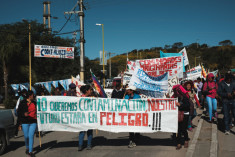
Protecting the Protectors: Environmental Defenders and the Future of Environmental Peacebuilding
›Early scholarship on environmental peacemaking recognized the important role that local civil-society can play in promoting regional cooperation while, at the same time, pressuring governments to protect the environment. For example, in the late 1980s/early 1990s, nongovernmental organizations (NGOs), such as the Union for Defense of the Aral Sea and Amu Darya in Uzbekistan and the Dashowuz Ecological Club in Turkmenistan, were at the forefront of the fight to restore the Aral Sea and protect the region’s biodiversity. -
Foresight for Action | Weathering the Storm: Improving Predictive Capabilities for Extreme Weather and Water Events in the Caribbean
›For two weeks, Hurricane Dorian, one of the strongest hurricanes to make landfall in the Pacific, decimated large swaths of the Caribbean displacing 70,000 people and killing at least 50. Natural disasters like Hurricane Dorian in the Caribbean have only been worsening over the last decade, a trend often attributed to warming oceanic and atmospheric temperatures.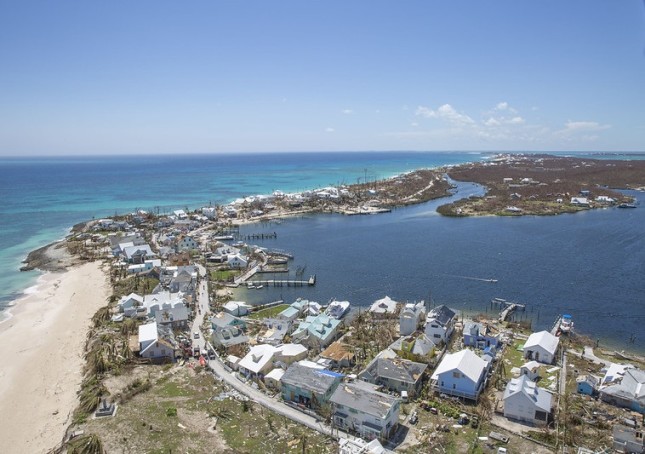
-
By, for, and of the People: How Citizen Science Enhances Water Security
›In the Peruvian Andes, where cropland is irrigated and water availability is variable at best, knowledge of highland hydrology is crucial to survival. However, until recently, the locals did not have adequate information to be able to use their water efficiently. So the community worked with a nonprofit to develop a non-specialist/non-researcher run data-gathering project to monitor the water in the region to optimize its use: in short, they developed a citizen science project.
-
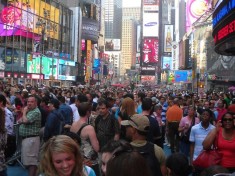
Three Trends to Track in Population-Environment-Security
›Exactly 25 years ago the international community met in Cairo for the 1994 International Conference on Population and Development. In the aftermath of the Cold War, ethnic conflict seemed to be exploding globally and research on the role of population growth and resource scarcity found an eager audience among policy makers struggling to understand this new international disorder. ECSP’s founding in that same year positioned the program as a leader in bringing together the scholarly and policy communities around non-traditional security issues over the last 25 years. The last two-and-a-half decades have brought tremendous change in population trends, environmental change, and the security landscape. Over the next 25 years three trends will shape the agenda of those working on the nexus of population-environment-security issues. -
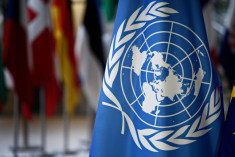
To Address Climate Risks, Advance Climate Security in the United Nations
›Climate change is widely recognised as one of the major forces shaping the future. Climate impacts illustrate in stark clarity how human actions fundamentally affect the basic physical processes of the planet with vast and, in the worst cases, disastrous consequences for communities around the world. Given these profound impacts, climate change is increasingly treated as a security risk. As a changing climate is causing and will continue to cause diverse impacts across the globe, the associated security challenges are multifaceted. They involve human, community, state, and international security risks, and will require responses across all levels of decision-making, from the local to international. -
Without the Enforcement of Environmental Laws, Petroleum Infrastructure Projects in Timor-Leste Come at a Cost
›Ignoring environmental laws in Timor-Leste to build a petroleum infrastructure project could mean serious problems for communities including environmental destruction, loss of land, and loss of livelihoods. Communities are already facing some of these problems because project proponents haven’t fulfilled their legal obligations to do extensive environmental research and planning to mitigate any damage to the local environment. The supporters have also failed to meaningfully involve local communities, including interested experts, academics, and civil society groups, in this process.
-
Foresight for Action | Ecosystem Degradation, Transnational Migration, and Political Instability: Three Main Tipping Points for East Africa
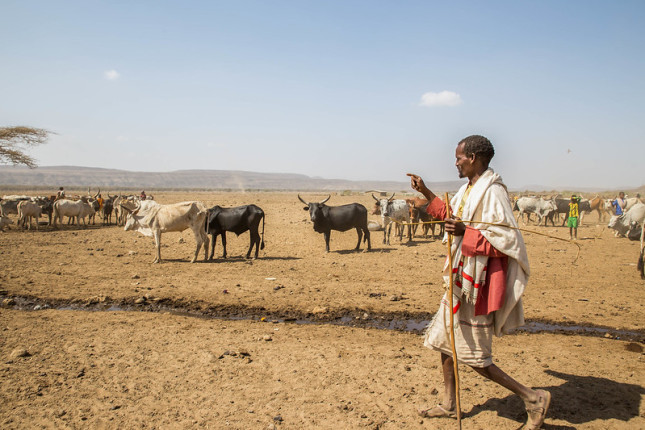
›The Horn of Africa faces critical security and climate risks. Persistent droughts have precipitated the onset of food insecurity and waterborne disease, while heavy rain events such as Cyclone Sagar have caused widespread flooding, mudslides, and wind damage. These challenges are increasing in severity against a backdrop of changing demographic trends—including rapid population growth, increased migration, and urbanization—and power struggles both within and between countries in the region.
Showing posts from category environment.
 In the quarter century the Wilson Center’s Environmental Change and Security Program has been pondering the issues for which it’s named, the world’s demographic future has been wobbling. A key concern of analysts: How many people will farmers need to feed in 2050? Mainstream projections have teetered between 8.9 billion and 9.8 billion, amounting to an increase of between 13 and 21 percent over today’s 7.7 billion. This significant variation in projections is rarely acknowledged by prognosticators. Many simply round up today’s latest guess and state confidently that there will be 10 billion people in 2050—though just a few years ago, the number most confidently stated was 9 billion.
 Early scholarship on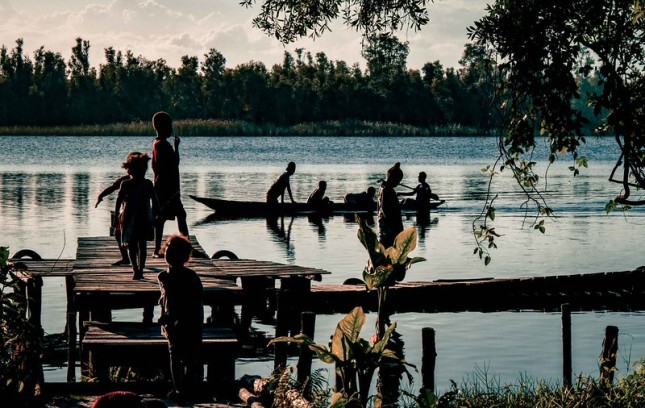
 Exactly 25 years ago the international community met in Cairo for the
  Climate change is widely recognised as one of the major forces shaping the future. Climate impacts illustrate in stark clarity how human actions fundamentally affect the basic physical processes of the planet with vast and, in the worst cases, disastrous consequences for communities around the world. Given these profound impacts, climate change is increasingly treated as a security risk. As a changing climate is causing and will continue to cause diverse impacts across the globe, the associated security challenges are multifaceted. They involve human, community, state, and international security risks, and will require responses across all levels of decision-making, from the local to international.